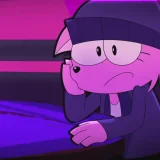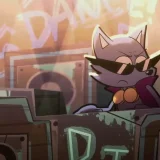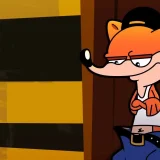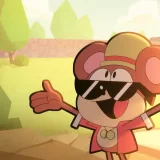
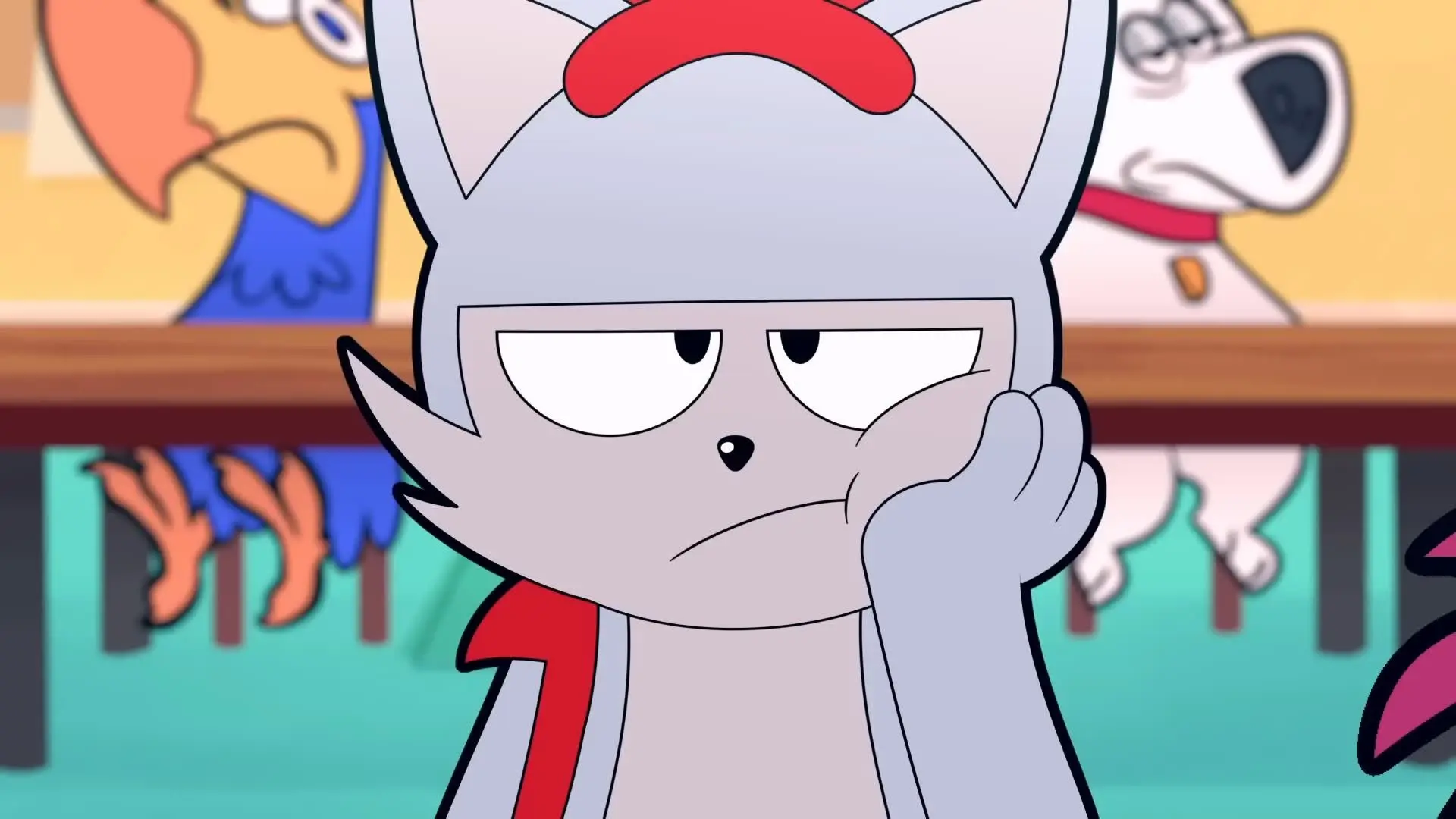
Clay is the introverted, socially allergic half of the show’s core duo–an anthropomorphic cat whose default setting is “no, thanks.” Where Rob chases experiences, Clay dodges them, which makes him a perfect pressure valve for the series’ comedy of teen discomfort. His reluctance isn’t laziness; it’s self-preservation in a world that keeps trying to draft him into chaos.
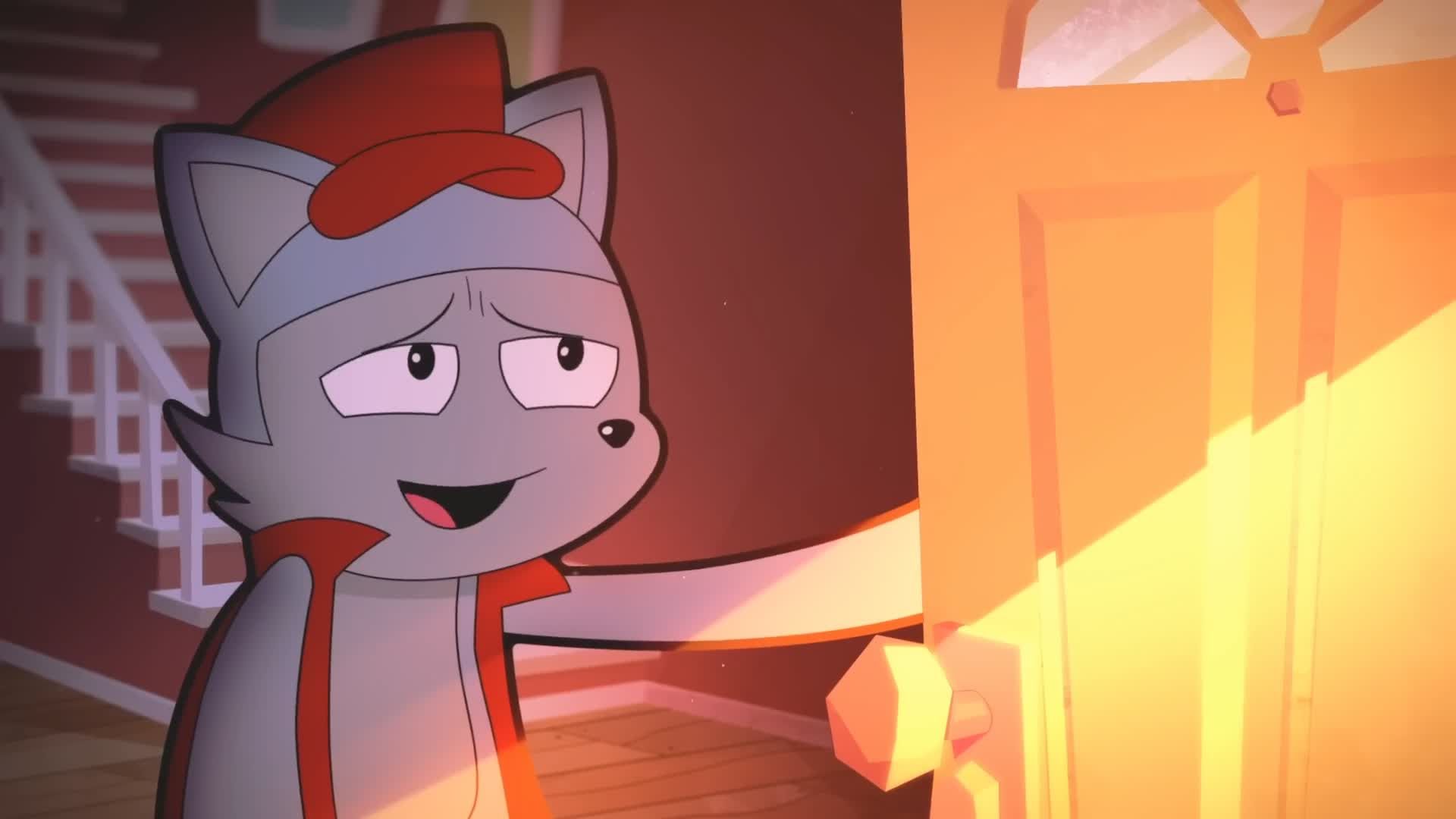
Debut Episode and Early Impressions
Clay debuts in the pilot episode “Clubbing,” spending the school day parrying Rob’s hype about an under-18s night at the community center. From the first scene, he’s the guy muttering that this will “suck,” and the episode promptly proves him right–buses, bouncers, and blowups included. The premiere, released September 8, 2024, frames Clay as the anti-party protagonist whose boundaries are about to be tested.
“I didn’t want to come–my mom made me.”
Visual Identity and Aesthetic
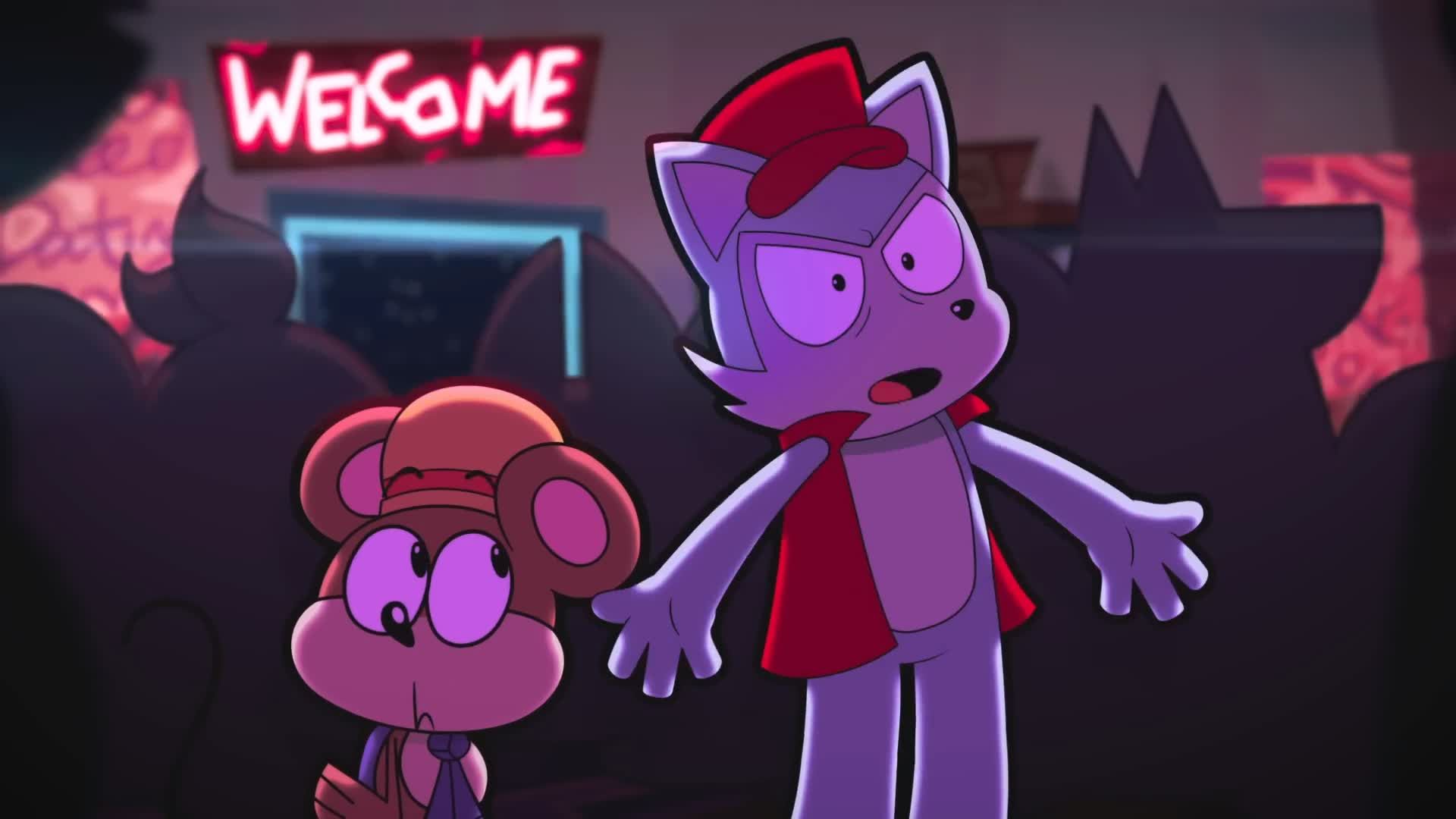
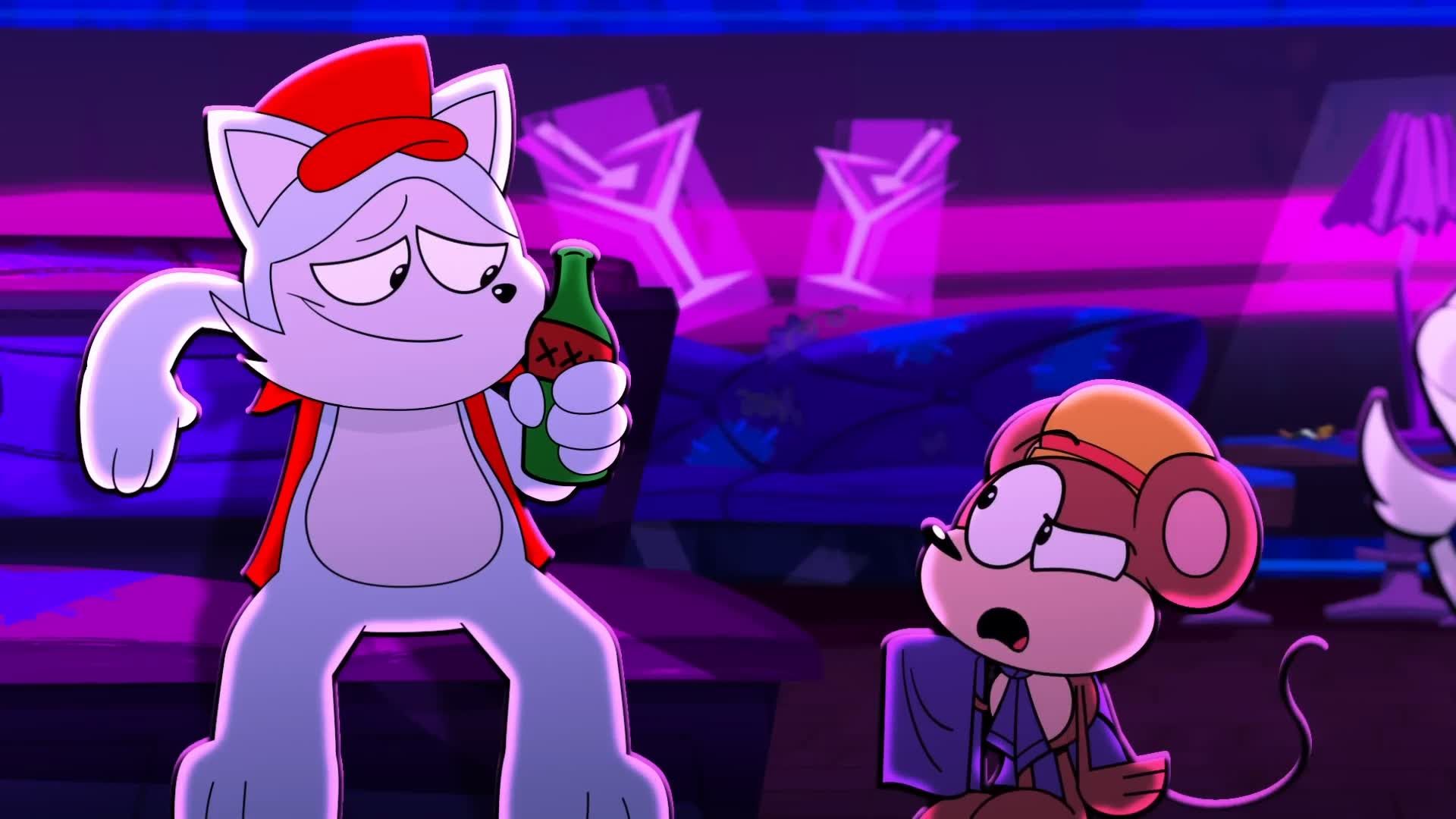
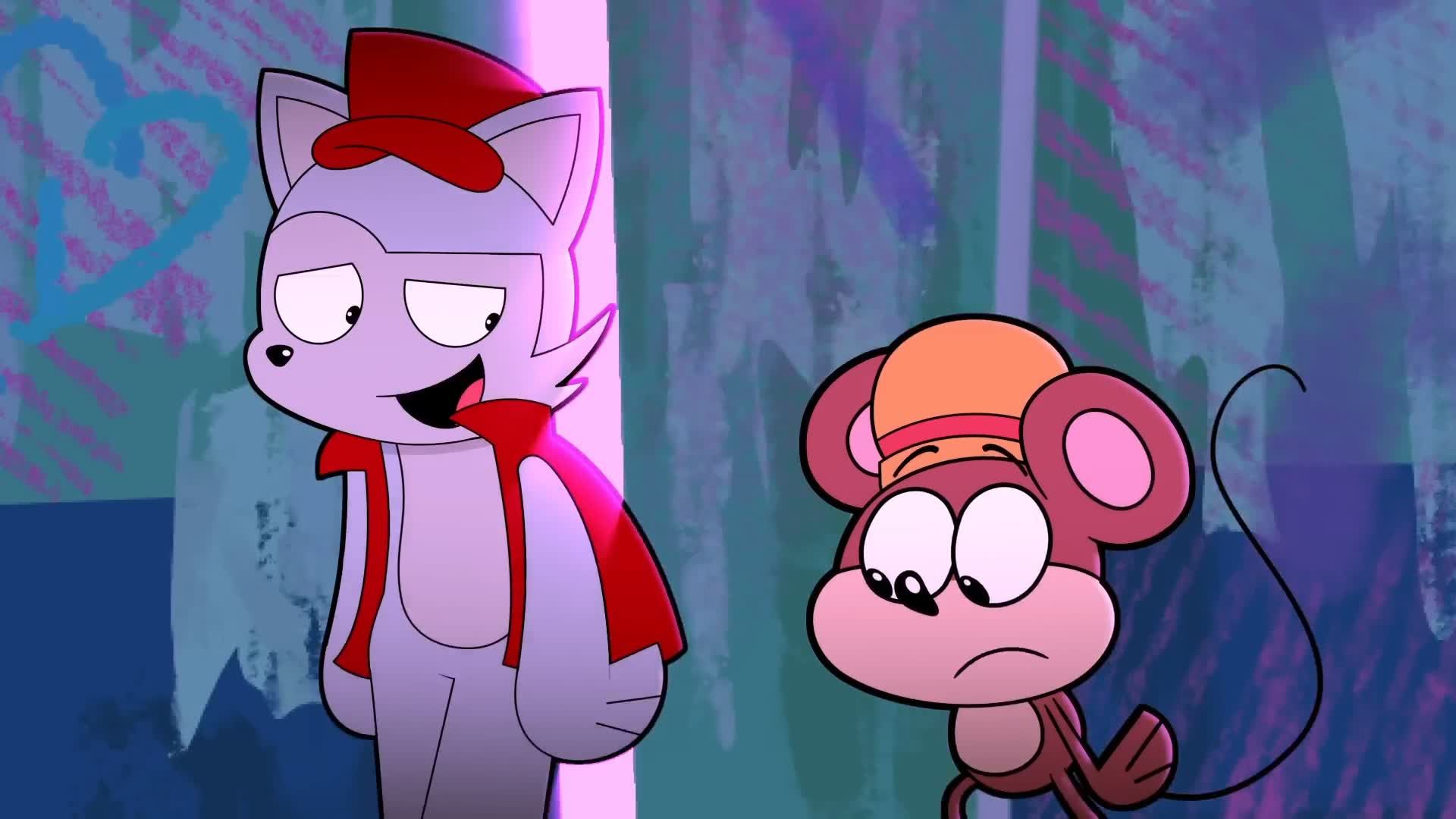
Tall, gray, and perennially hunched, Clay’s silhouette reads tired before he speaks. His ears sit low and flick up at sudden stimuli; his small black nose and narrowed eyes complete the “leave me alone” vibe. Wardrobe: sleeveless red jacket and a red cap–casual, slightly slackerish, and consistent. Early designs reportedly featured a longer tail (later dropped), reinforcing the clean, readable shape language the series settled on.
Personality Layers and Internal Drives
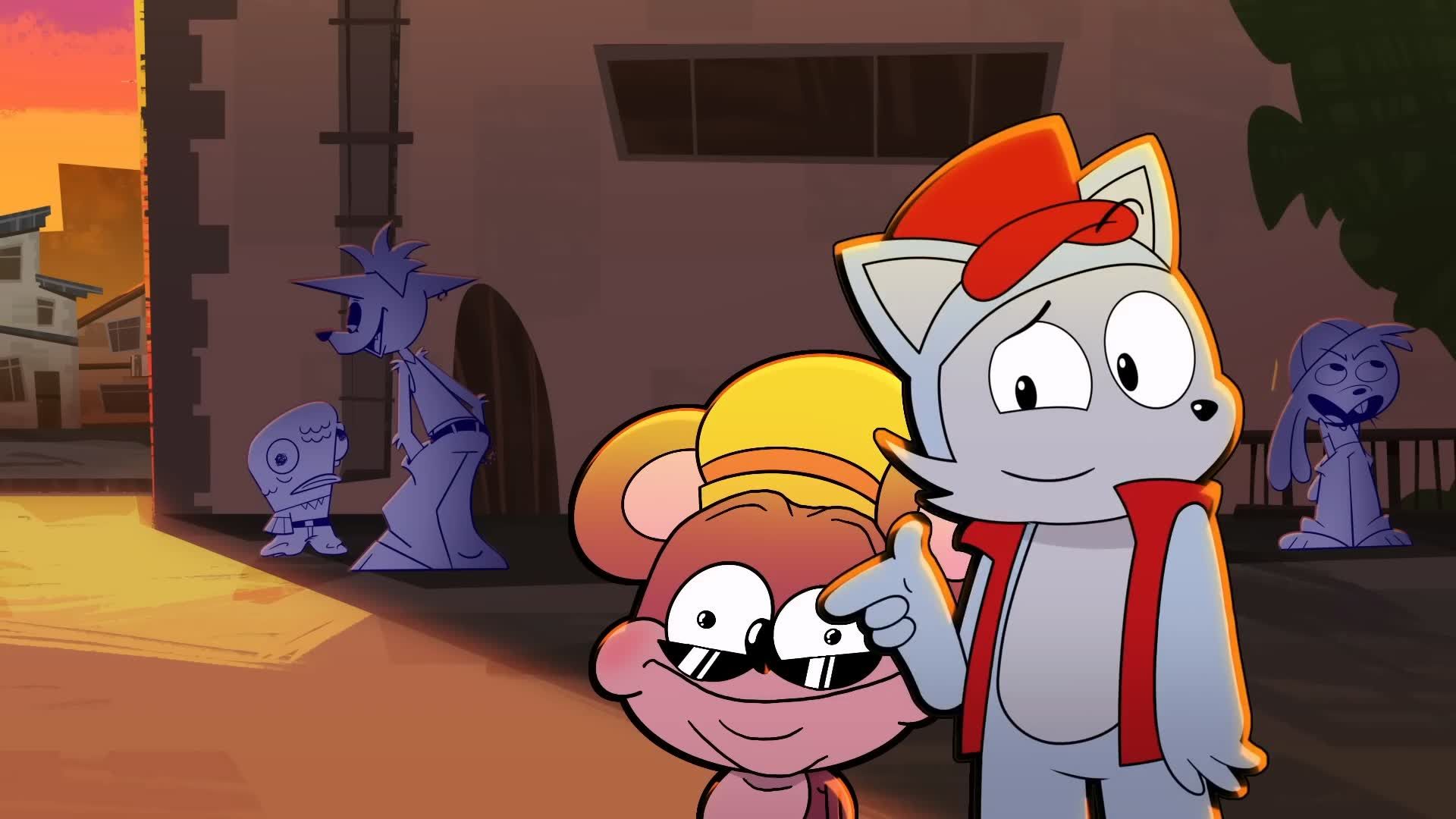
On the surface: prickly, curt, and allergic to crowds. Underneath: hyper-observant and quietly principled. Clay’s default cynicism masks a simple drive–to avoid being used or humiliated. He recoils from performative “fun” but will show up for a friend when it counts, which is why his eventual snap in the club feels less like a tantrum and more like a boundary being enforced.
Skills, Talents, and Limitations
- Strengths: Sharp BS detector; resistant to peer pressure; surprising backbone when pushed.
- Social literacy: Reads ulterior motives fast (sees through the “hold our jackets” grift).
- Limitations: Anxiety in loud spaces; over-avoidance that blocks new connections; brittle mood when cornered.
Core Relationships and Alliances
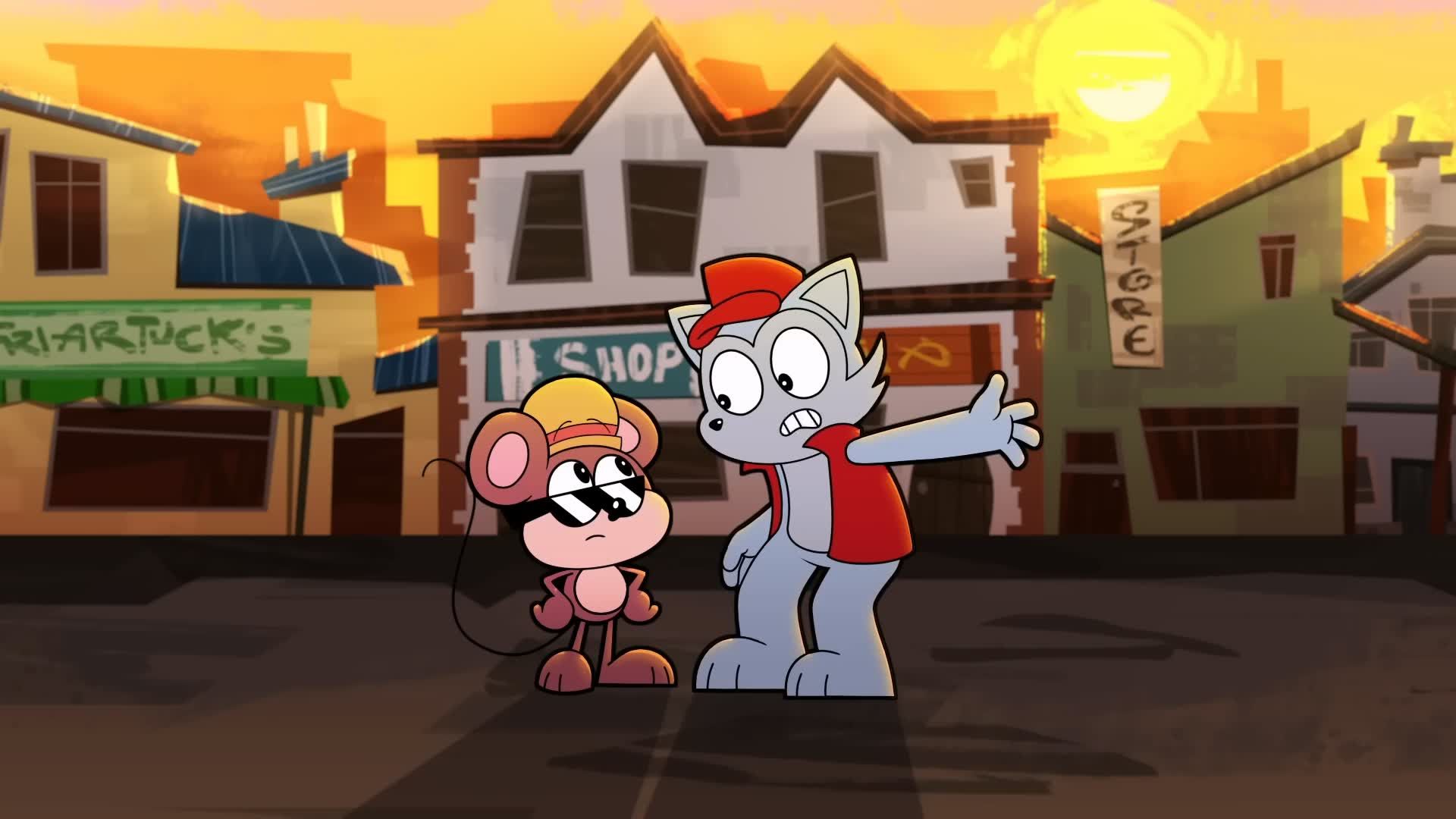
Rob: Best friend and chaos courier. Rob’s do-gooder optimism grates on Clay, but also drags him into life, kicking and screaming. Their Red-Oni/Blue-Oni polarity powers most scenes–hope colliding with “please no.” Bully Guy: A walking boundary violation who turns Clay’s quiet night into a gauntlet. Bouncers & Club Staff: Institutional friction that validates Clay’s pessimism and primes his outburst.
Milestone Episodes and Plot Beats
The pilot packs Clay’s greatest hits: refusing the invite, getting dragged anyway, enduring a gouged bus fare, clashing with the bouncers, and navigating a petty social ecosystem that keeps trying to make him the butt of the joke. The escalating jacket fiasco and the confrontation with Bully Guy’s circle tee up Clay’s decisive boundary-setting moment.
Evolution of Clay’s Arc
For most of “Clubbing,” Clay is pure recoil. Then, after hours of nickel-and-dimed indignities and second-hand embarrassment, he detonates–shredding the jacket discourse and resetting the social order. It’s a small arc, but crucial: the series signals that Clay won’t always swallow it, and when he doesn’t, it’s not random–it’s earned by cumulative disrespect.
“Jesus Christ–just shut the hell up about these goddamn jackets already.”
Moral Dilemmas and Decisions
Clay’s central dilemma is participation versus self-respect. Is “going along” kindness or self-betrayal? The pilot edges him from passive avoidance to active refusal. He protects Rob when the crowd’s cruelty veers into exploitation, even if it means becoming the loudest person in the room for once.
Running Gags and Signature Lines
Running bits include Clay’s deadpan “no” to anything resembling fun, his pocket-locked hands stance, and the way he turns basic logistics (bus fares, coat checks) into existential indictments. His snappiest line–the jacket blow-up–quickly became a fan shorthand for hitting a wall with fake politeness.
“I’m already forced to stand in the cold… my hands aren’t leaving my pockets till I get home.”
Themes and Symbolic Readings
Clay embodies boundaries, consent, and the right to silence in a culture obsessed with “the experience.” He’s the avatar of teens who find clubs hellish and social rules arbitrary. Through him, the show lampoons small-time authoritarianism (bouncers, fees, dress codes) and the way “be nice” gets weaponized to make you carry everyone else’s stuff–literally and metaphorically.
Creation Process and Voice/Performance Notes
Visual design favors strong silhouette and readable expression: hunched posture, low ears, bold red accents. Performance-wise, Michael Kovach’s delivery threads abrasive dryness with flickers of vulnerability; even a muttered “fine” lands like a complete sentence. Early model tweaks (like dropping the long tail) streamlined animation consistency without losing character identity.
Community Response and Fan Theories
Fans quickly pegged Clay as the “Blue Oni” to Rob’s “Red”–the cynic whose spikes hide a protective streak. Discourse often centers on whether Clay’s misanthropy is armor or attitude, and whether Rob’s relentless friendliness is enabling or growth-fuel. Even detractors of the pilot tend to single out Clay as the anchor that makes the chaos legible.
Lasting Impact on Catching Up
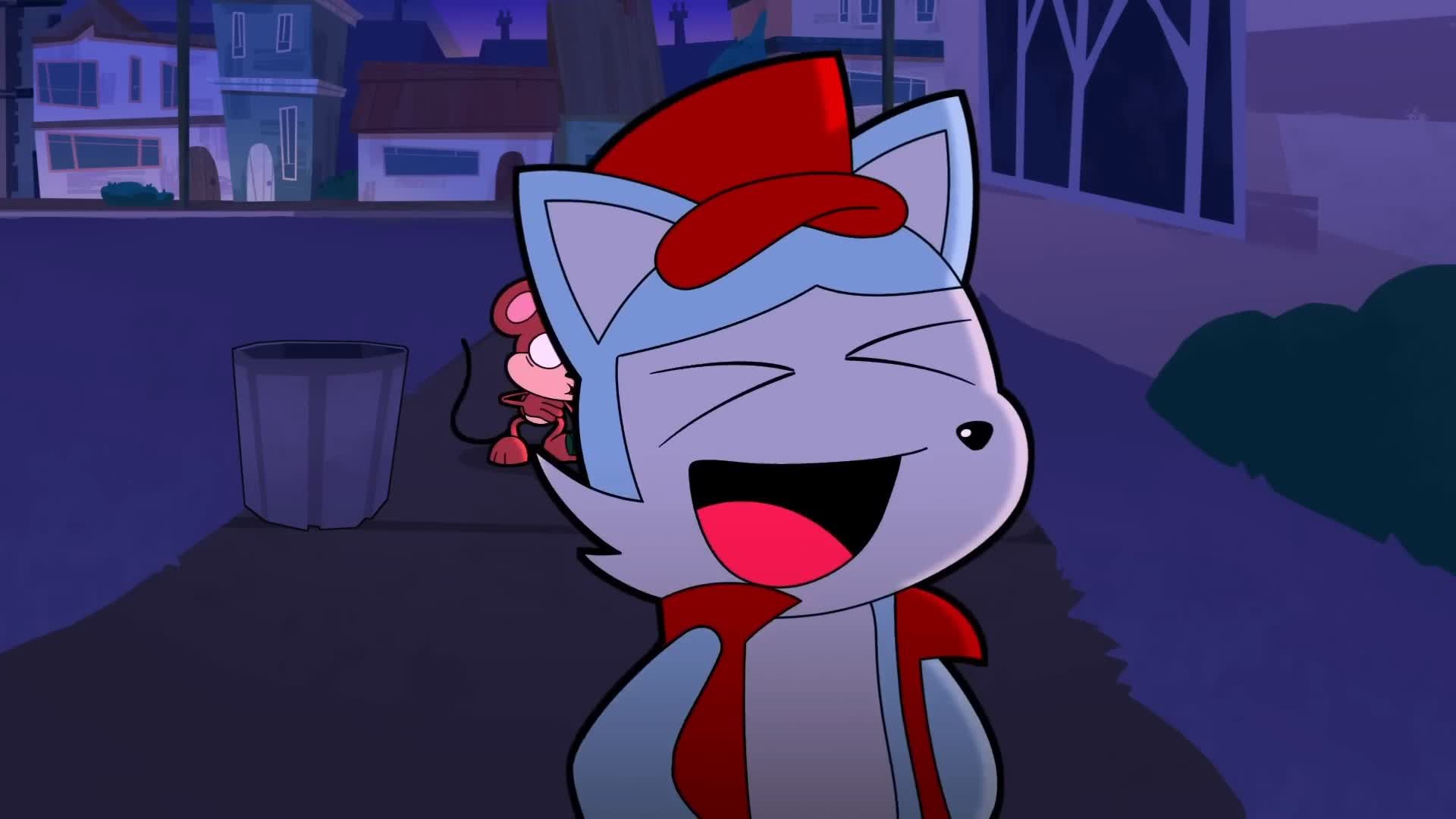
Clay gives the series a spine: a character who says “no” until “no” stops working, then chooses where to spend his “yes.” That choice–when to care, when to push back–turns throwaway teen nights into stories worth telling, and it keeps the Rob-Clay dynamic crackling instead of cloying.