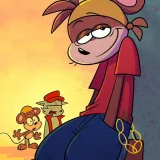
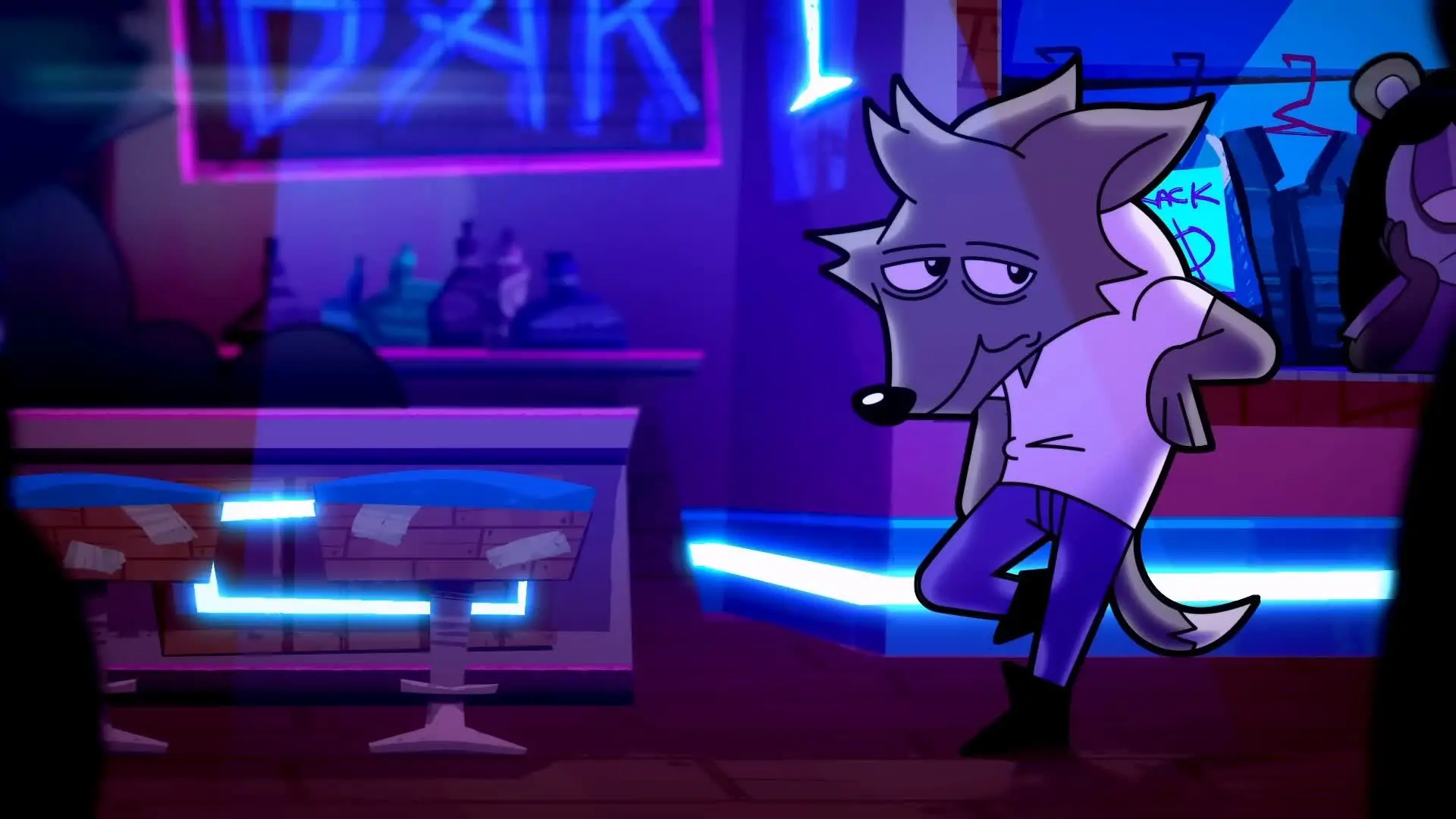
Bully Guy is the schoolyard menace of Catching Up: a lanky grey wolf who thrives on cheap dominance plays and public embarrassment. He exists to puncture Rob’s forced swagger and Clay’s fragile peace, showing how one loud jerk can hijack a room. He’s not a mastermind–he’s social sandpaper. That’s the point: he catalyzes conflict, escalates scenes, and makes the eventual pushback feel earned.
Introduction in the Narrative
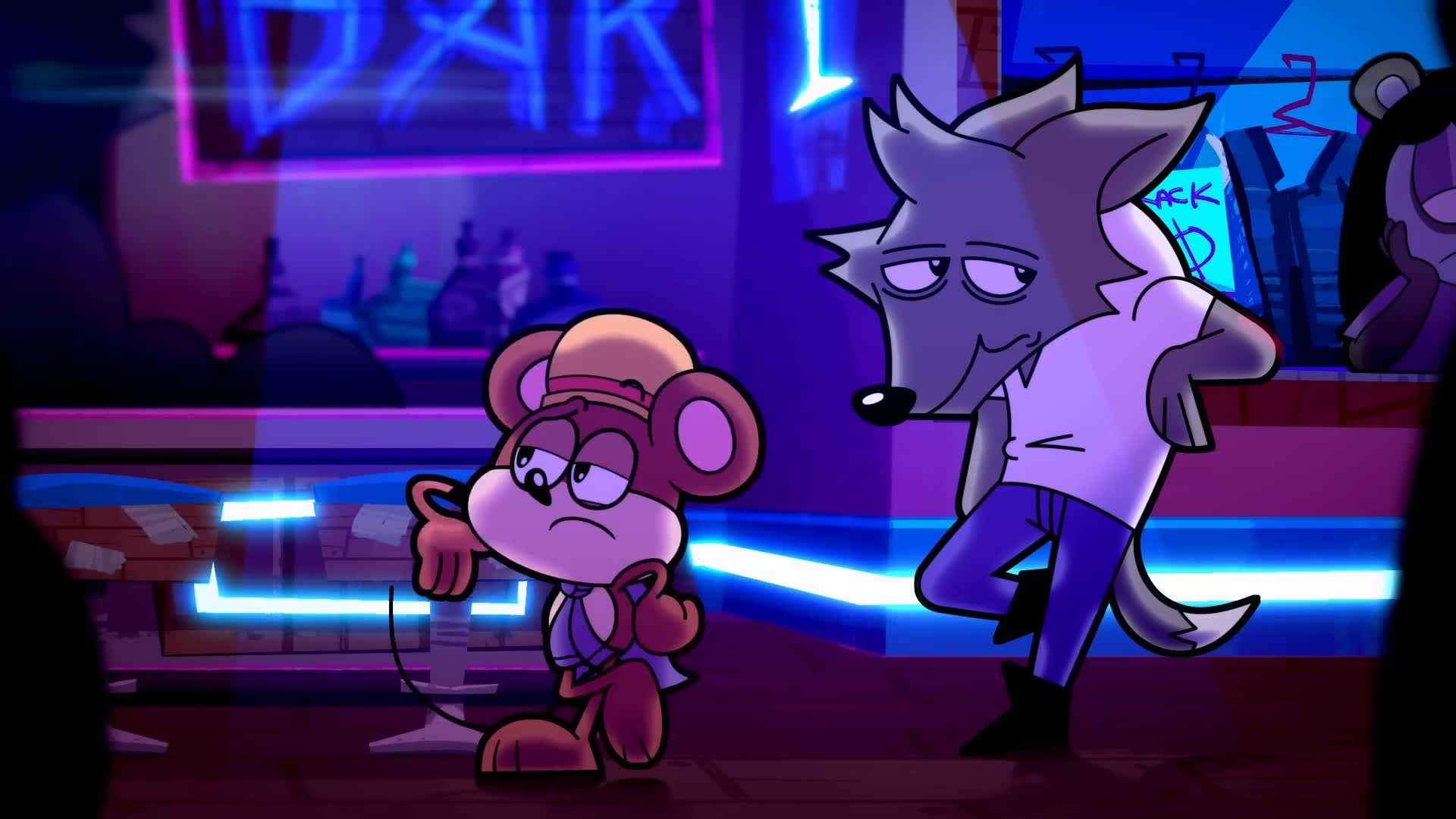
He first shows up in the school hallway, where he trips Clay and mocks him, immediately establishing himself as the local threat orbiting our leads. The episode keeps threading him through the day–from the bus to the club–so that every stage of Rob’s “perfect night” has a fresh obstacle shaped like this guy’s ego.
Visual Style and Iconic Props
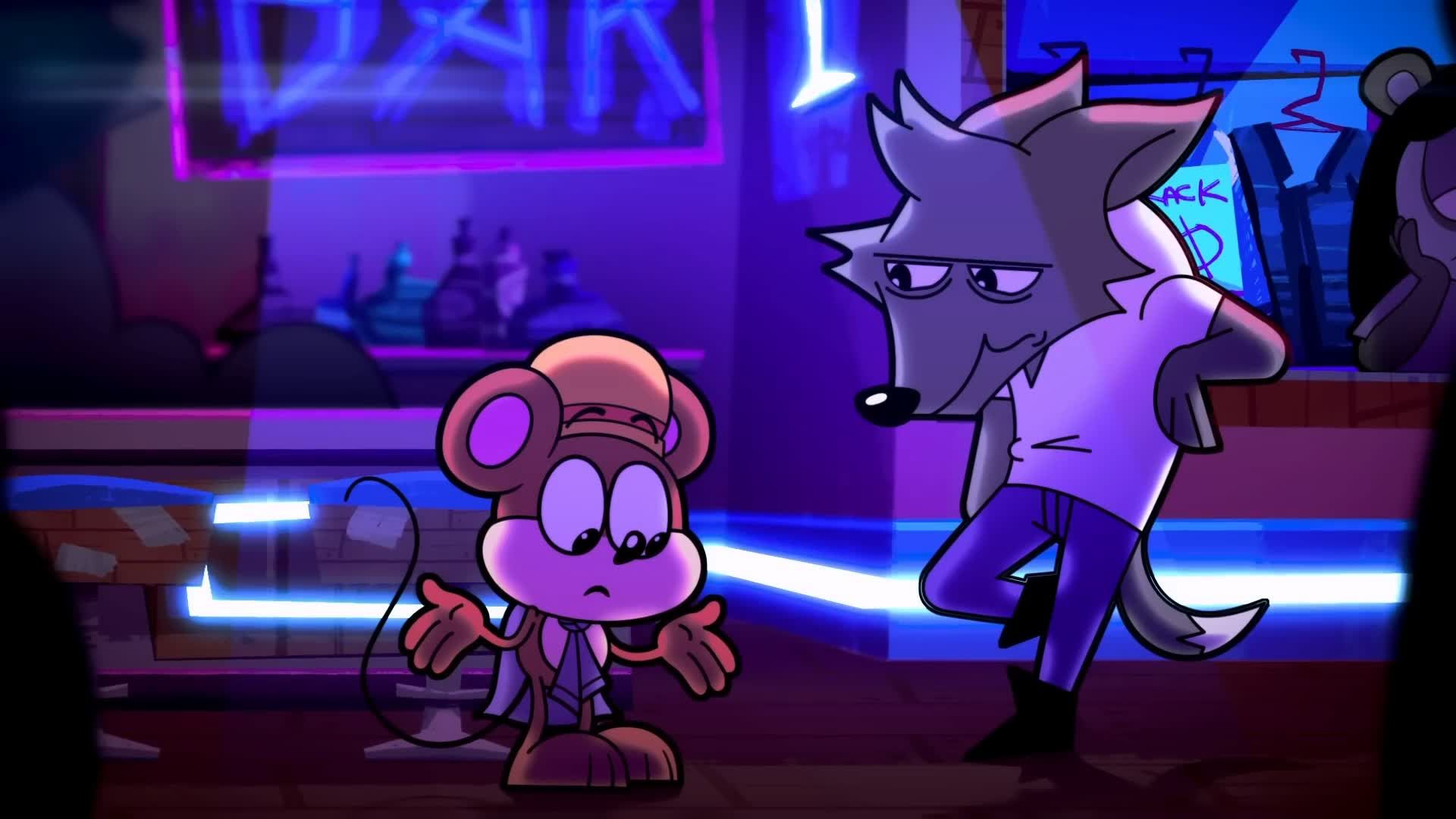
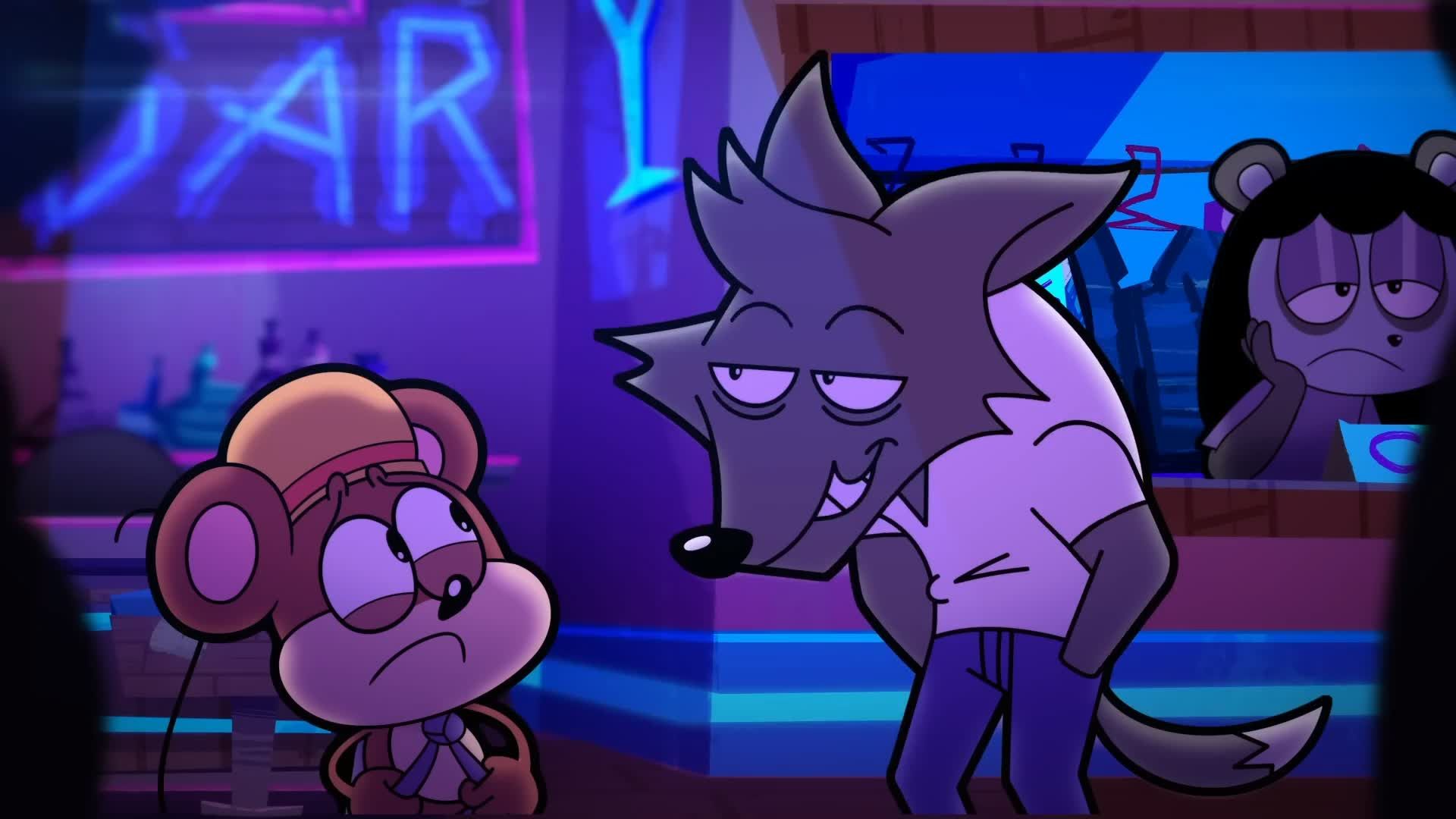
Tall, slouched posture, baggy eyes, and a wrinkled, permanently unimpressed mouth. He usually rocks a plain white shirt, blue jeans, and black shoes–basic drip that screams “I run on attitude, not aesthetics.” He doesn’t need props to read as dangerous; the prop is his proximity–looming over Clay, cutting off paths, and crowding conversations.
Personality and Motivations
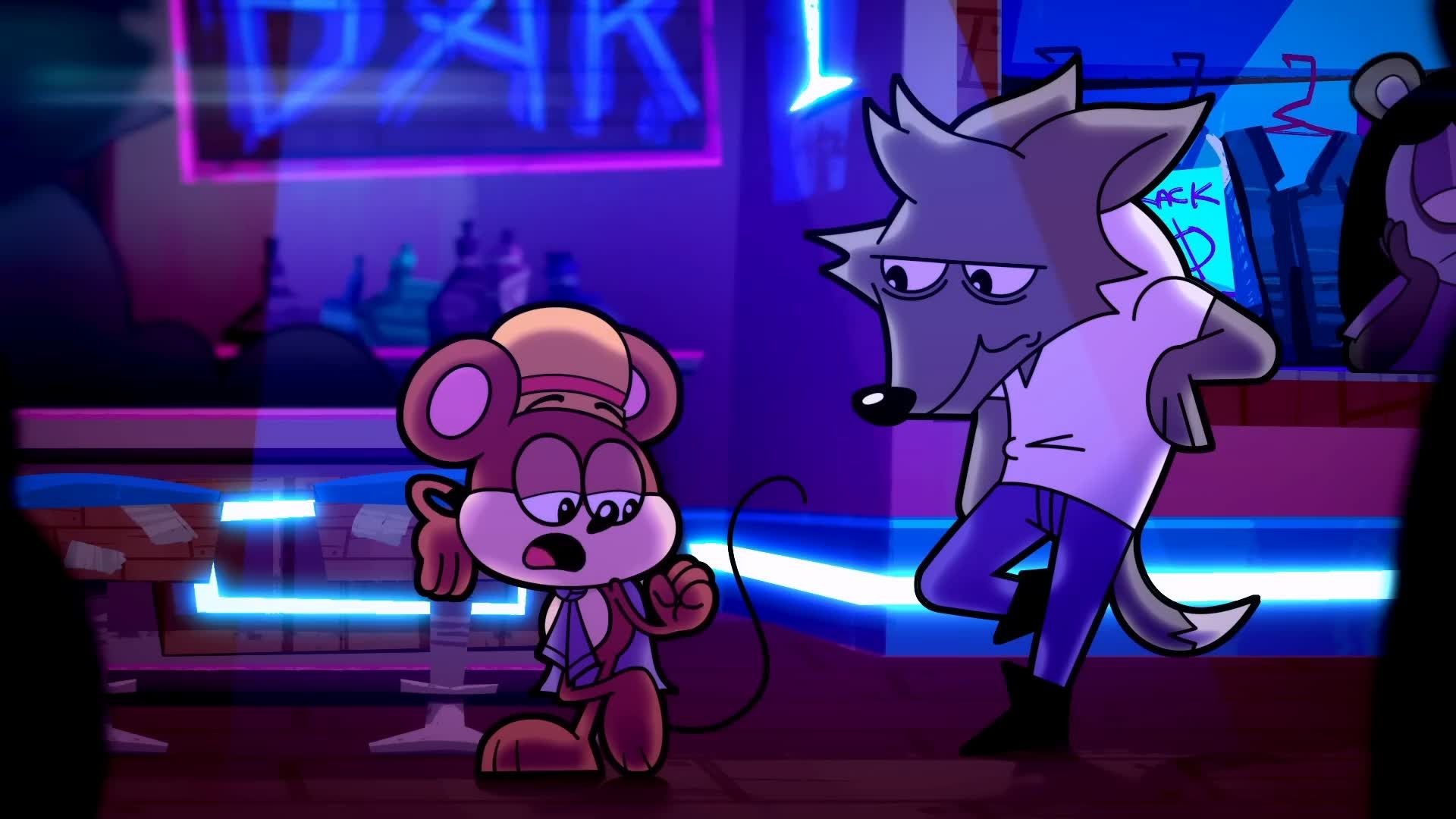
Petty, territorial, and performative. Bully Guy bullies because it’s easy and because the crowd lets him. His motivation is control in small, public ways: trip someone, heckle them, claim a girlfriend as territory, flex at the club. He’s addicted to the micro-hit of status he gets when others flinch.
“Nice freaking job walking there, idiot.”
Tactics, Strengths, and Weaknesses
- Tactics: Trip-and-taunt, crowding people’s space, baiting with fake friendliness (“come here, I want to show you something”), and weaponizing girlfriends as social shields.
- Strengths: Confidence, physical presence, and instinct for public humiliation that shuts targets down fast.
- Weaknesses: Thin skin, zero introspection, and tunnel vision–he underestimates Clay and overplays every hand.
Relationships and Rivalries
Clay: Preferred target. Clay’s reluctance and closed-off vibe make him look like easy prey–until it backfires. Rob: Annoys Bully Guy by crashing his social perimeter at the club, turning posturing into a slow-burn feud. Pink Cat (girlfriend): Used as proof-of-status; Bully Guy treats her more like a trophy than a partner, and it shows in how he polices anyone near her.
“Yo, what’s your problem, man? You almost just stepped at my girlfriend.”
Turning Points and Pivotal Scenes
The hallway trip sets the tone; the bus spectacle expands it; the club confrontation solidifies it. At the community center, his “watch it” routine and chest-thumping push Clay toward a breaking point. The night’s escalating pressure ends up less about Bully Guy winning and more about Clay and Rob refusing to keep orbiting his ego.
Character Growth (or Lack Thereof)
Bully Guy doesn’t grow; he exposes growth in others. He’s a static pressure plate: step on him and he clicks the trap. That design is deliberate–his stasis throws Clay’s surge of courage into sharper relief and underscores Rob’s gradual shift from performative cool to actually having his friend’s back.
Sources of Conflict and Stakes
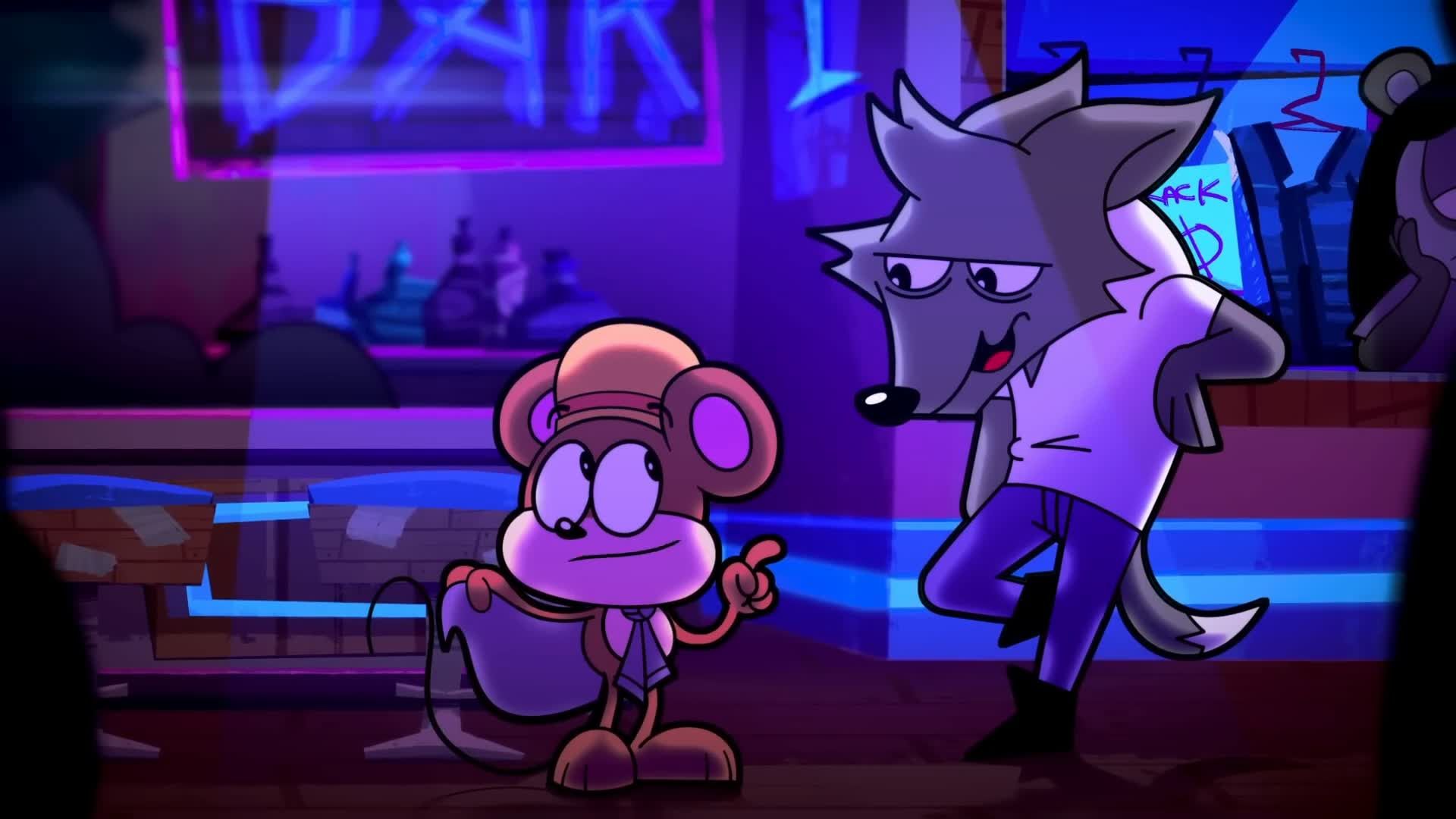
Stakes are social: humiliation in public, getting physically pushed around, and having a night derailed by one dude’s insecurity. He raises the price of inaction; every scene he’s in asks whether Clay will keep absorbing hits or finally check the bully.
“Hey, you–come over here. I want to show you something.”
Humor, Irony, and Satire Elements
The comedy lands in the mismatch: a try-hard teen treating a community-center dance like a warzone. His alpha act is exaggerated just enough to be ridiculous, especially when contrasted with Rob’s overeager pickup lines and the club’s hilariously strict rules. The satire targets teen status theater–who stands where, who belongs, and why anyone cares.
Themes Bully Guy Embodies
Gatekeeping & Territory: policing space and partners; Performative Masculinity: volume over substance; Social Courage: he’s the necessary antagonist that forces Clay to pick a lane–hide or push back. He also embodies how casual cruelty can snowball a normal day into a survival exercise.
Production Insights and Inspiration
As a character type, Bully Guy leans into the classic high-school antagonist, but filtered through the show’s anthropomorphic aesthetic and snarky pacing. He’s voiced in English by Kellen Goff, whose textured delivery sells both the sneer and the performative swagger. Keeping him visually plain and emotionally loud makes him read instantly in busy scenes without stealing focus from the leads.
Role in the Larger Catching Up Universe
Bully Guy is a recurring stress test for the protagonists–an ambient hazard that the world naturally spawns. He grounds the show’s slice-of-life stakes and gives future episodes a ready-made friction source wherever teens gather: halls, buses, lines, and dance floors.