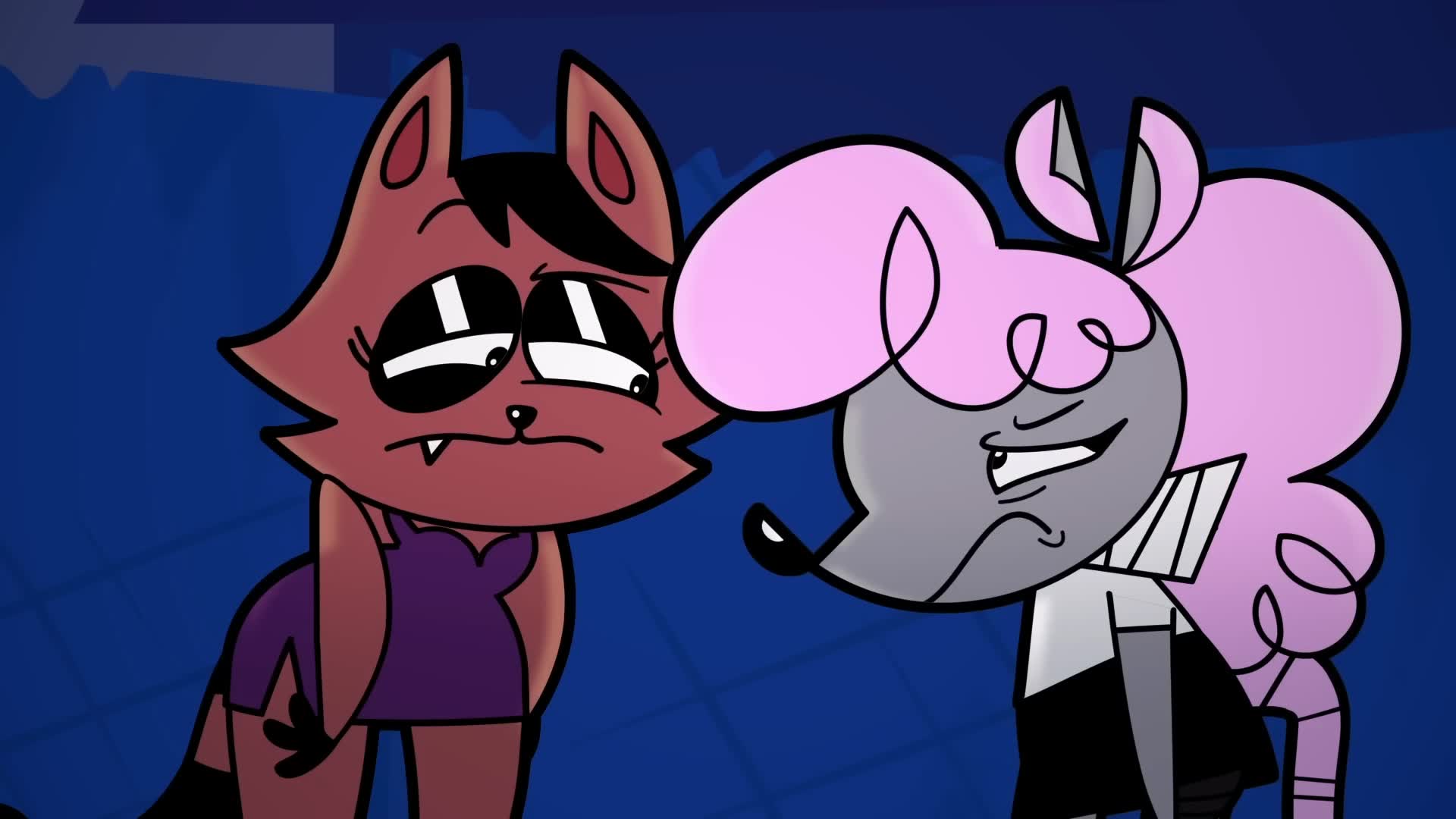
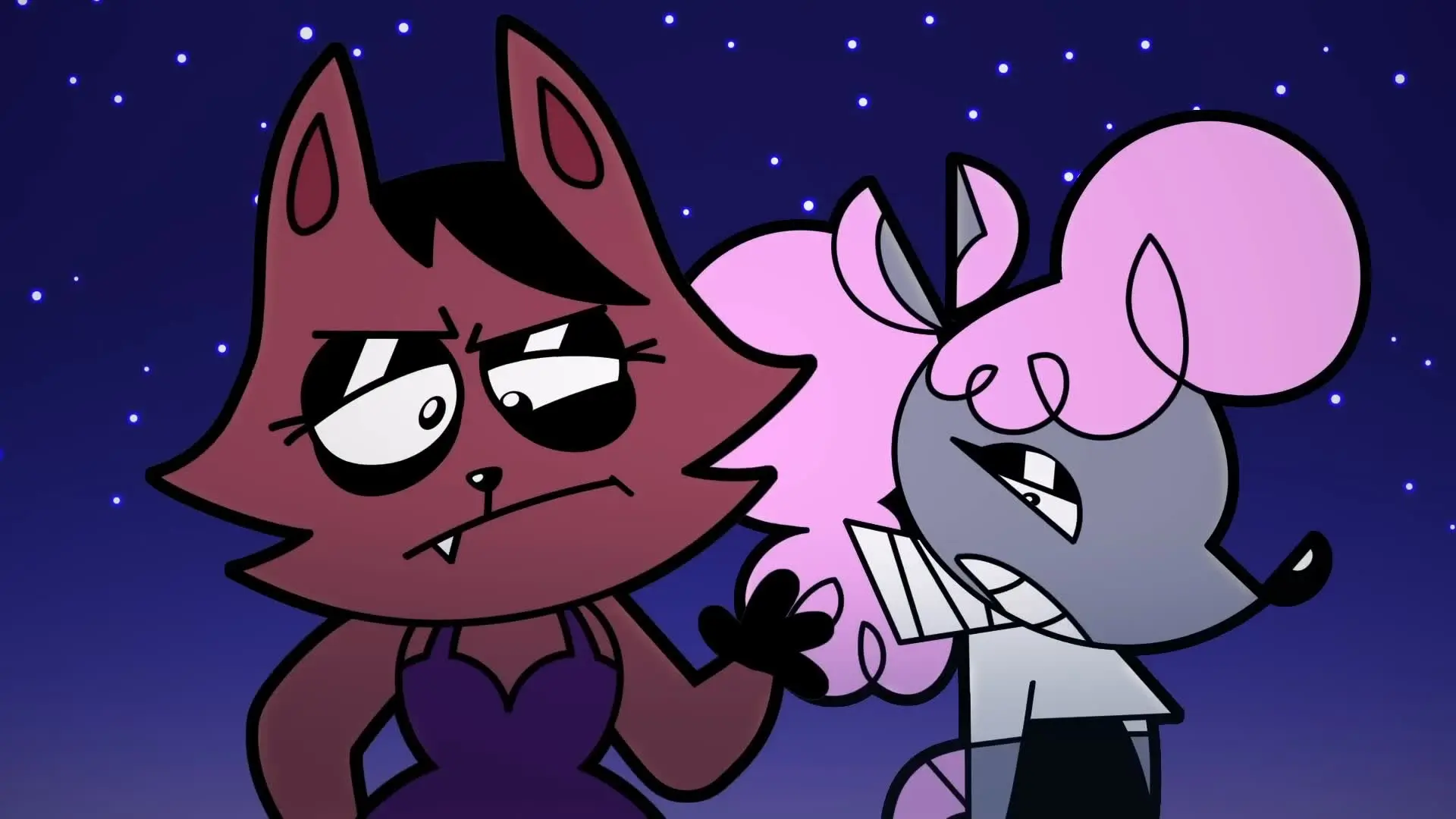
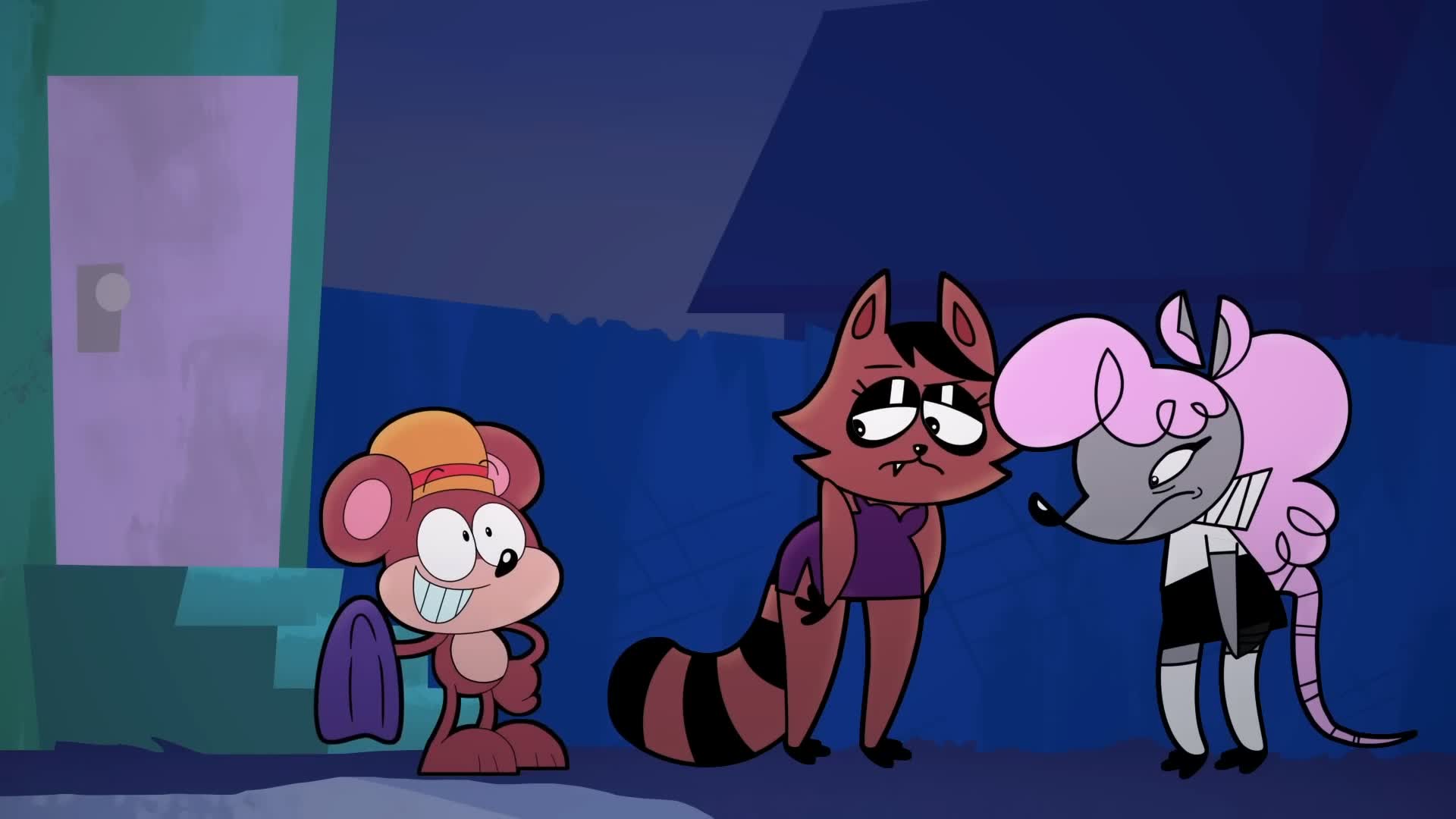
Raccoon & Ferret are the pilot’s on-floor antagonists in Catching Up. However, the label is a little misleading: inside the episode the duo function as a raccoon girl paired with Clare, an opossum whose look and credit line make her distinct from the “dead ferret” gag at the door. Therefore, the pair operate as a compact pressure machine during “Clubbing”–they needle Rob, dismiss Clay, and keep the social temperature just hot enough that a small mistake can boil over. Next, because the show prefers reaction and blocking over exposition, their power shows up in the edit: quick cuts to the duo tilt conversations away from the leads, while their deadpan responses drain momentum from try-hard jokes. As a result, these two become the scene’s informal referees; they never need a monologue to set the rules because the room already follows their rhythm. Finally, their presence clarifies a core theme: status isn’t announced, it’s enforced in tiny choices–who gets time, who gets ignored, and who learns the cost of pushing when the crowd says stop.
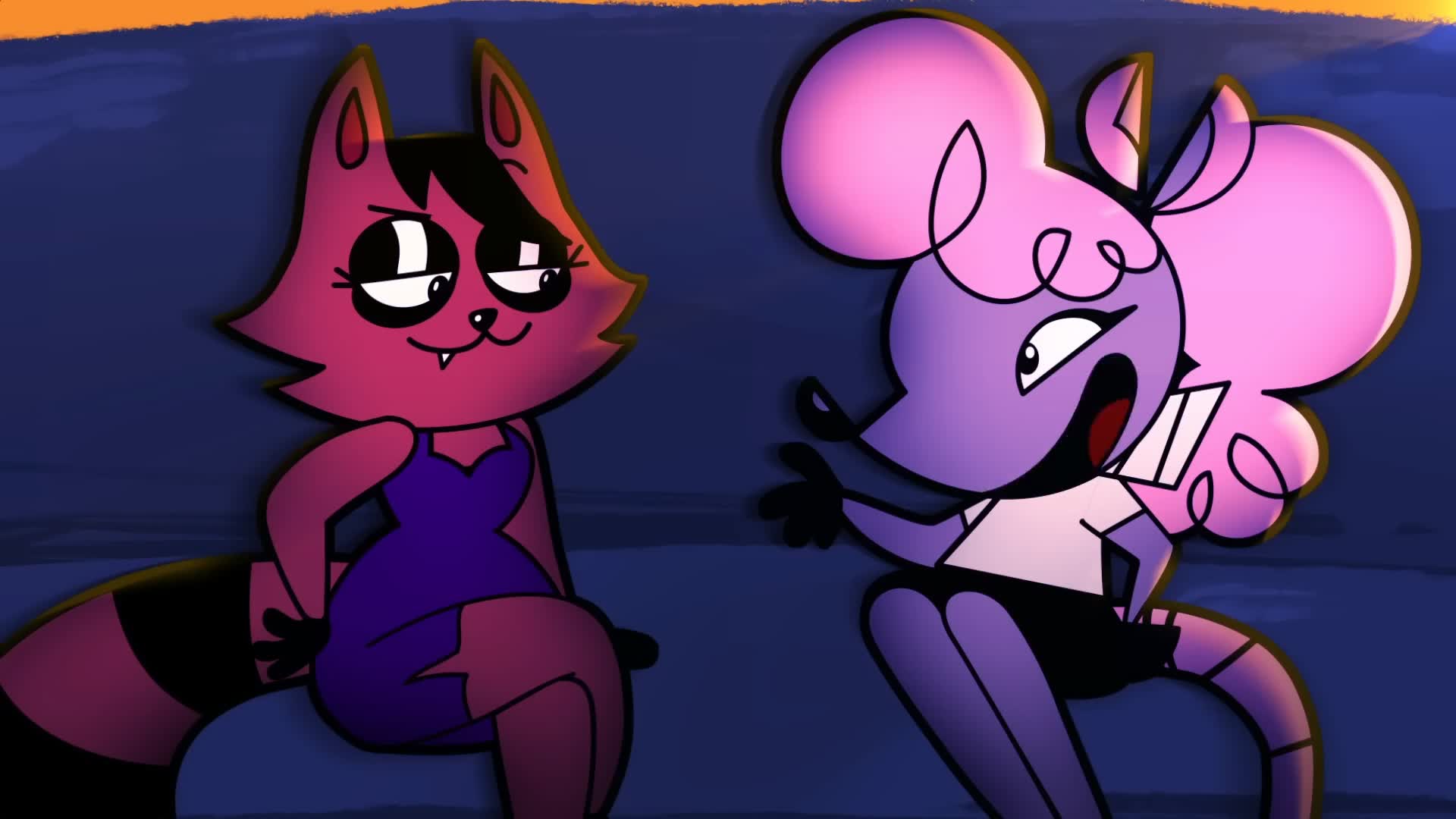
Origin and first appearance
However you map the pilot, Raccoon & Ferret first read as a unit in “Clubbing” (September 8, 2024), the teen run-night at the community center known as LUUB. Then, as the camera sketches the venue–entrance, floor, bar–the lens starts catching their tandem body language: the raccoon holds the eye with a sharp, short bob of hair and a clean purple dress; Clare stands nearby with a white-sleeved top, a black skirt, and a pink ponytail, scanning whoever approaches. Next, the episode uses them the way slice-of-life comedies use well-placed extras: they set the baseline for what “belongs” here. When a suitor rambles, the duo’s stillness says “move along.” When a joke lands, the raccoon’s small smile gives the room permission to keep going. Meanwhile, the strictness established at the door–the no-trainers policy and its brutal enforcement–hangs over these two; they never break posted rules, but they weaponize unposted ones like time, attention, and the freedom to walk away. Consequently, their first appearance does not announce villains; it introduces practiced regulars whose cool decides which conversations survive the music. As a result, every later beat with Rob and Clay plays better because the stakes are already visible in the duo’s looks.
Personality and key traits
| Trait | Explanation |
|---|---|
| Predatory gossip | They trade in tidbits and timing, not shouting. A few choice words or a pointed whisper can stall a newcomer’s confidence without ever drawing security. |
| Time wasters | The pair excel at making other people wait: “come back later,” “hold this,” “we’re busy.” The delay becomes a soft punishment that reads as effortless power. |
| Alpha–beta rhythm | The raccoon tends to lead with eye contact and posture, while Clare trails a half-beat behind, reinforcing or undercutting with a quiet aside. The hierarchy is subtle but consistent. |
| Boundary awareness | They never test posted rules after the entrance scene sets the tone; instead, they exploit social ones–who speaks first, who owes a favor, who gets ignored. |
| Low-key cruelty | Dismissal is their weapon of choice. A flat look after a heartfelt line hurts more than a put-down, and it plays funnier in a noisy room. |
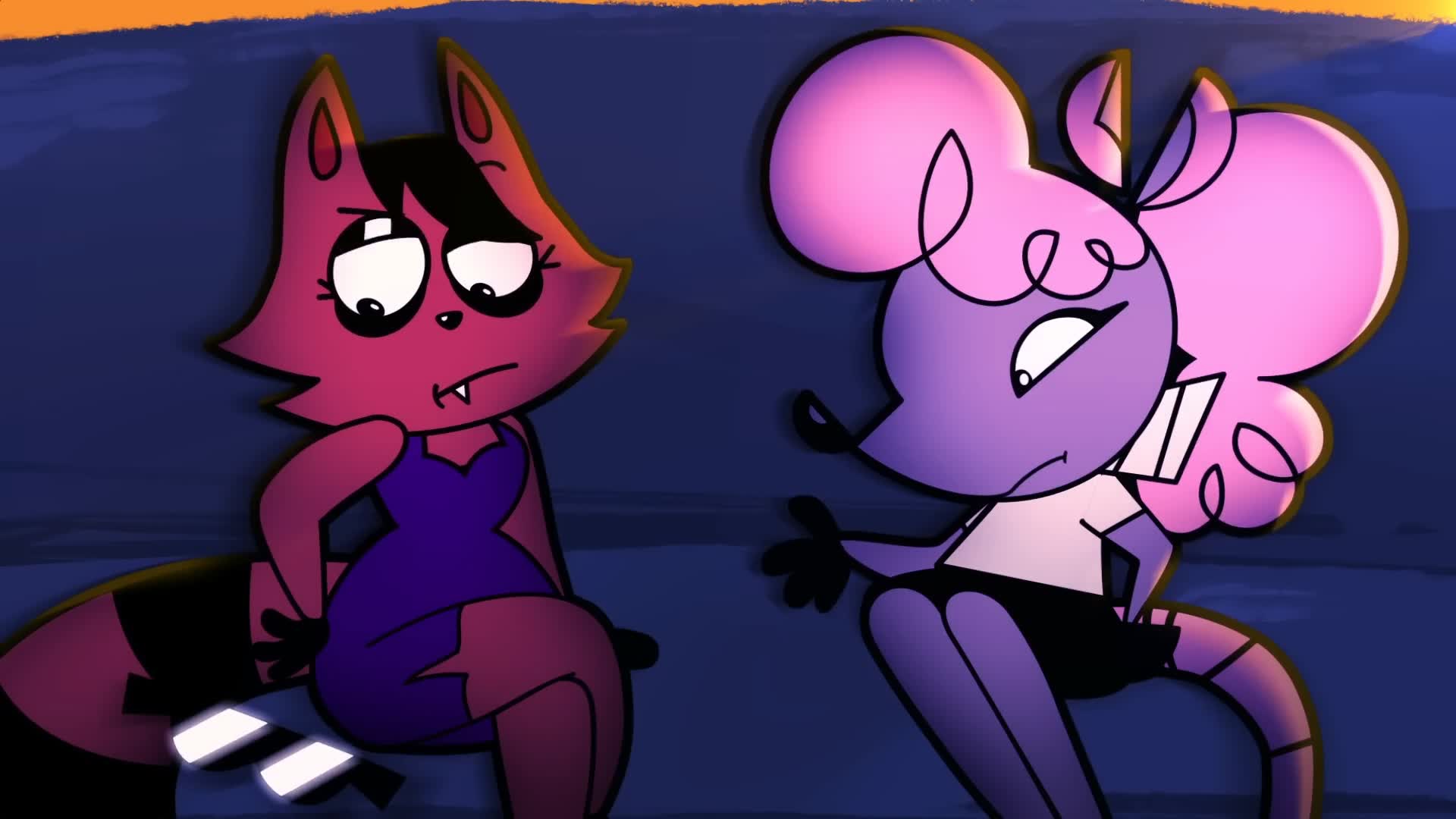
Story arcs and development
Arc 1 – The bar lane baseline. Start: Early passes across LUUB fix the geography–door drama, dance floor sway, and a bar lane where the duo loiter within earshot of everything. Then: The raccoon accepts attention without chasing it; Clare punctuates with small, surgical comments that redirect overeager kids. Their presence gives editors a place to land whenever the floor scatters. As a result: The audience learns the room’s unwritten rules through them: if they don’t reward a moment, it didn’t matter. That bias–what the duo decides to notice–frames the leads’ efforts as uphill work from the outset.
Arc 2 – Rob’s optimism meets the sieve. Start: Rob bounces between clusters, selling harmless charm and volunteering for little gestures because he wants to belong. Then: The pair deflect with polite indifference–one word answers, tiny nods, a turn of the shoulder that transfers the weight of the exchange back onto him. The point is not humiliation; it’s labor. As a result: The night quietly turns Rob into a messenger boy for other people’s priorities, which supports the pilot’s thesis that generosity without leverage becomes unpaid work in public spaces.
Arc 3 – Clay’s pressure cooker (Spoiler). Start: Clay tries small talk near the counter and on the walk-throughs, but social noise piles up–door severity, fumbled jokes, and a dozen moments like the duo’s cool dismissal. Then: The raccoon’s non-reaction and Clare’s aside register as one more “no,” and the story finally snaps: Clay raises his voice, the music cuts, and every eye turns. As a result: The duo do not gloat; they simply still. That stillness, held in silence, functions as the crowd’s verdict and flips the night from awkward to tense without a single line from them.
Arc 4 – Aftermath and normalization. Start: Once DJ McNulty rides the track back in, the room needs plausible deniability: the party must feel like a party again. Then: The pair resume an easy rhythm–lean, listen, glance–signaling that the ledger has updated and the floor can move. As a result: The pilot exits with the sense that authority and culture–not speeches–reset public life. The duo remain what they were at the start: the room’s gatekeepers, amused and unthreatened.
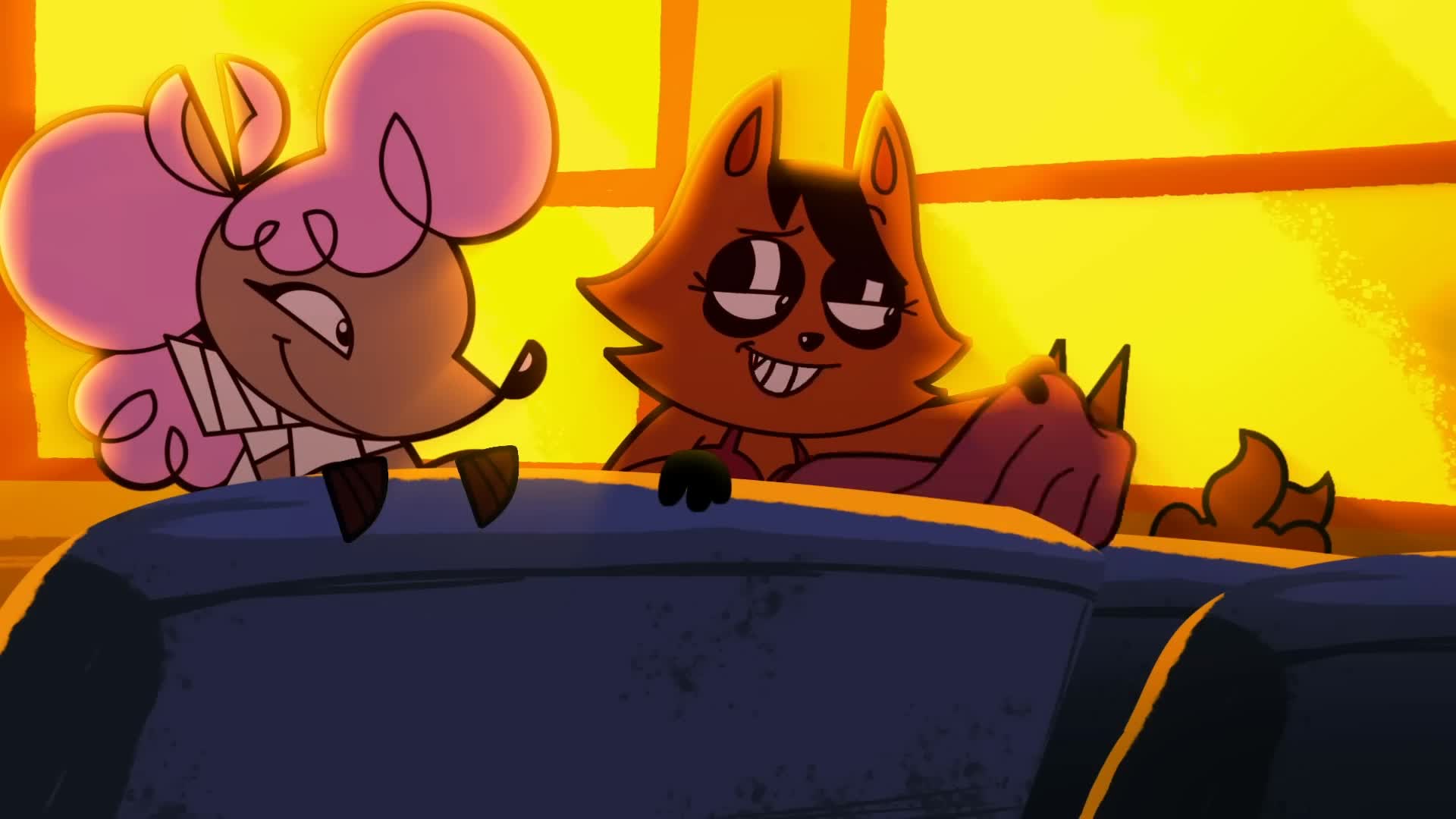
Relationships with other characters
| Name | Role vs. Raccoon & Ferret | Dynamics |
|---|---|---|
| Clay | Target of dismissal | His tentative approaches meet cool silence. Their non-responses stack onto other frictions and help push him toward the outburst that defines the night. |
| Rob | Easy mark | He offers help; they let him carry the burden and the awkwardness. The exchange reveals how generosity can be leveraged against the generous. |
| Jessica Jacobs | Parallel center | Jessica anchors the counter from a different social angle–dry, controlled, unimpressed. The duo’s presence across the lane creates a two-pole system the leads must navigate. |
| Snazzy Jacobs | Neighbor and foil | Snazzy’s calm contrasts with the duo’s sharper edges. Her micro-reactions land as verdicts; theirs land as tests the boys tend to fail. |
| Bully Guy | Occasional ally | Shared scenes suggest social proximity rather than friendship. His blunt force complements their soft power when the pilot needs pressure to rise. |
| DJ McNulty | Ambient authority | They never need to coordinate; his sudden silences frame their looks as official. When the music dies, their stillness becomes the room’s judgment. |
| Bouncers | Institutional backdrop | The door’s brutality explains why the duo never test posted rules. Their influence depends on social leverage, not physical enforcement. |
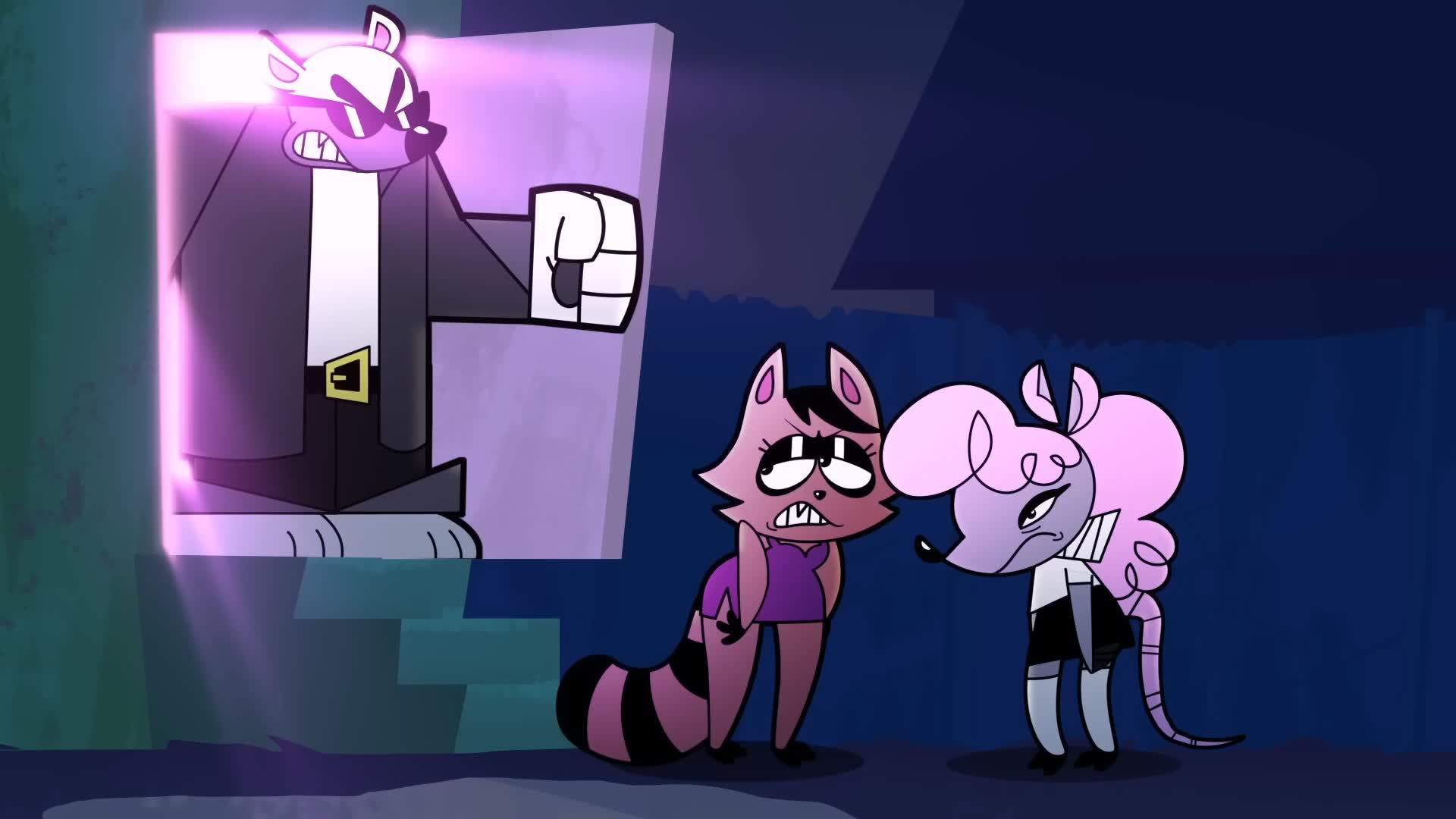
Appearance, symbols, and recurring motifs
Visually, Raccoon & Ferret rely on readable shapes and complementary silhouettes. Then, the raccoon’s design does the fast work–short black hair, a tidy purple dress, and the ringed tail that flashes in crowd shots. Next to her, Clare’s opossum features soften the outline–pink ponytail, white-sleeved top, black skirt, white socks, and black shoes–so the pair read as coordinated without matching. In addition, the show positions them where magenta and blue lighting bounce off the counter, which lets small head tilts and eye darts register even when the frame is busy. Therefore, the strongest motif is not a prop but a behavior: attention economy. They reward little and withhold often, and editors build jokes on that timing. As a result, the duo become a moving symbol for the pilot’s social math–who earns patience, who gets stonewalled, and how quickly a party turns when the popular kids get bored.
Fandom and alternative names
- Raccoon & Ferret
- Raccoon & Clare
- Raccoon and Opossum
- Mean Girls Duo
- Club Gatekeepers
- R&F
- Bar-Lane Duo
Interesting details and quotes
- The pair are treated as the main antagonists of the pilot’s “Clubbing” night, a status reinforced by character listings that group them with the leads’ enemies.
- Despite the page title, the second member is credited as Clare and designed as an opossum; the “Ferret” label is a fandom shorthand that stuck early.
- The raccoon has been listed with a voice credit for Miranda Parkin, while Mark Wilkins voices Clare–an intentionally offbeat casting choice that fits the show’s cameo-heavy pilot.
- They appear exclusively in “Clubbing” (September 8, 2024) to date, yet their crowd work shaped much of the episode’s discourse on status and etiquette.
- Editors use them as timing anchors: cut to the duo for a cool read, then back to the leads for the punchline or the flinch.
- Both Rob and Clay list the pair among personal antagonists, which tracks with how often the night forces those two to negotiate the duo’s attention.
- The entrance scene’s “no trainers” brutality and the later dance-floor silence rhyme with the duo’s social power: in this club, rule-keeping and vibe-keeping share the same spine.
Well, how does that work?
– Clay’s flustered line elsewhere in the sequence that mirrors how the duo keep him off-balance.Now, try not to get TOO many girls.
– Rob’s dad’s deadpan send-off that the duo’s indifference later turns into a running joke at Rob’s expense.