
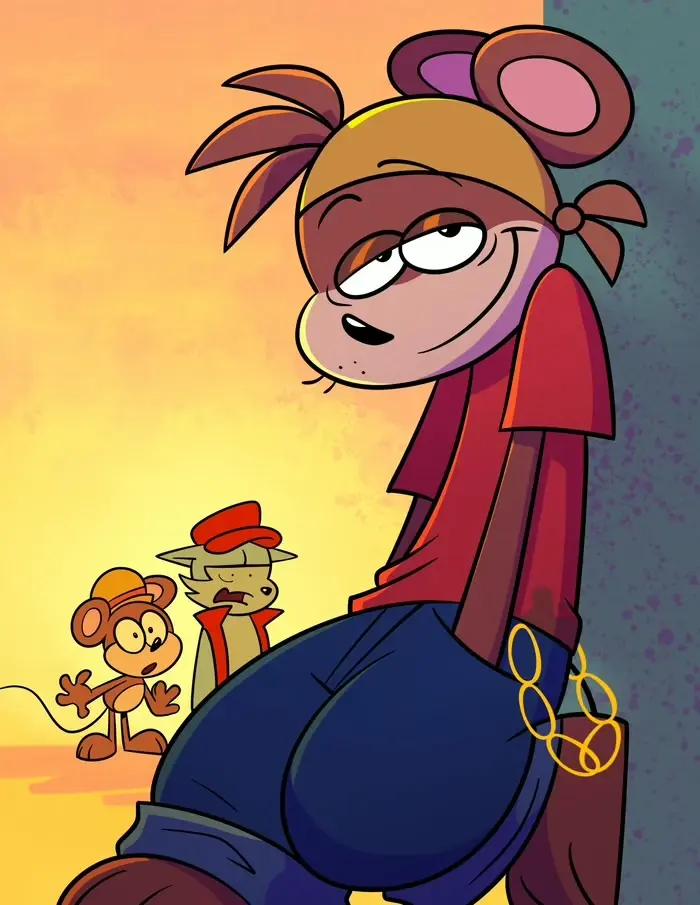
Roy is a fast-talking crowd-reader in Catching Up. However, instead of dominating scenes with speeches, he moves through the pilot’s club night like a breeze–testing the room, cracking light jokes, and adjusting pace when attention doesn’t follow. Therefore, Roy functions as a tonal counterweight to Clay’s social anxiety: when Clay tightens up, Roy loosens; when Clay stalls, Roy improvises. Next, the edit treats him as a mover–he pops into the bar lane, drifts past the dance floor, shows up outside by the door, and later appears in quick car shots that reinforce his self-possessed vibe. In addition, his confidence never quite becomes cruelty; he tends to shrug off rejection rather than escalate, which keeps the episode’s humor pointed but humane. As a result, the character helps the pilot demonstrate a core rule of the LUUB venue: status is a rhythm you surf, not a prize you seize, and Roy usually knows where the beat lands.
Origin and first appearance
Then, early in “Clubbing” (), Roy enters the neon wash of the community-center “club” already moving with the crowd. He threads between clusters near the bar–where Jessica and Snazzy Jacobs hold court–and checks whether a breezy line will open a conversation. Next, the camera treats him as connective tissue: he shows up in the same passes that map the door, the floor, and the counter, which lets viewers measure how the night is going by how he adapts. Meanwhile, a brief outside sequence places him near security; he doesn’t pick a fight, but his posture reads as the kind of kid who believes he can talk his way past most inconvenience. Consequently, when the pilot’s mood swings–from jokey chatter to sudden silence after Clay’s outburst–Roy’s reactions sell the pivot without undercutting the tension. Finally, intercut car shots of him smirking and laughing underline that his confidence isn’t just club-mask bravado; it’s a personality baseline that survives the venue’s hard edges and returns intact by episode’s end.
Personality and key traits
| Trait | Explanation |
|---|---|
| Breezy confidence | Roy enters conversations lightly and exits cleanly. If a line doesn’t land, he pivots rather than press, which keeps awkwardness from sticking to him. |
| Adaptive timing | He listens for DJ cues and crowd noise, dropping in when the room can hear him and backing off when it can’t. The knack reads as social intelligence, not scheming. |
| Low-friction humor | His jokes fit into existing rhythms. He rarely demands the spotlight; instead, he riffs on whatever energy is already there. |
| Unflappable posture | Outside by the door or under a bouncer’s stare, he holds his frame. The calm doesn’t equal recklessness; it’s the practiced habit of not taking bait. |
| Loyal orbit | He cycles back to Rob and Clay after solo circuits, which makes the trio feel like a real friend unit even when they’re not in the same frame. |
Story arcs and development
Arc 1 – The bar-lane stress test. Start: Roy slides into the counter corridor where Jessica and Snazzy Jacobs quietly police attention. Then: He tries a few easy lines, reads their cool, and chooses not to overstay. The move reframes his charisma as permission-based–he knows the difference between a welcome and a wall. As a result: The pilot uses him to teach a rule Clay will later break: you don’t win attention by forcing it; you win it by aligning with the room.
Arc 2 – Balcony/outside recalibration. Start: After the bar run, a cut finds Roy with Rob and Clay in outdoor space, body language looser and voices lower. Then: He leads the pace–leaning on the railing, trading small grins, and letting the scene breathe before anyone tries the next move. The reset suggests he knows how to step back from the club’s churn without abandoning the night. As a result: The sequence rounds him out: he isn’t only a flirt; he’s a pressure-valve friend who helps the group regroup between attempts.
Arc 3 – Door authority and the stare-down. Start: Near LUUB’s entrance, Roy ends up face-to-face with a bouncer whose rules already defined the night. Then: He doesn’t escalate; he waits, tests a line, and accepts the boundary when it’s clear. The beat plays funnier because the show has already shown what happens when someone actually crosses a line outside. As a result: Roy’s judgment reads as survival skill, not cowardice–he lives to keep the night going rather than trying to win a confrontation no one else wins.
Arc 4 – The car-scene coda. Start: In quick, warmly lit shots, Roy drives and laughs, removed from the club’s purple haze. Then: The body language tells the story: shoulders easy, eyes forward, a grin that doesn’t need an audience. It’s the same kid as on the floor, only with the volume turned down. As a result: The montage functions as character proof–his vibe isn’t borrowed from the room; it’s portable. The night may have dented his batting average, but not his baseline confidence.
Relationships with other characters
| Character | Role vs. Roy | Dynamics |
|---|---|---|
| Rob | Friend and co-conspirator | Rob’s eagerness complements Roy’s ease. Roy backs him up, then peels away to test other lanes, returning with intel and momentum. |
| Clay | Foil under pressure | Clay tightens as Roy loosens. Roy’s light touch often fails to transfer, which highlights Clay’s habit of saying the quiet part out loud. |
| Jessica Jacobs | Bar-area gatekeeper | He tries smooth entries; she decides whether the moment breathes. Their exchanges show how attention economics run the counter. |
| Snazzy Jacobs | Parallel judge | Her synced reads with Jessica give Roy clear, unspoken feedback. He knows when to bow out because the duo never over-signals. |
| DJ McNulty | Ambient rhythm setter | Roy times approaches to the mix. When the music dies after Clay’s shout, Roy’s calm helps the room reset once the beat returns. |
| Bouncer | Boundary in flesh | Roy acknowledges the door’s authority without theatrics. The non-fight underlines that he’s here to play the long game, not win a single argument. |
| Jacket Girl | Counter presence | He flirts lightly around the coat gag orbit; her amusement is limited. Roy doesn’t force it, which keeps the joke on the situation, not on him. |
Appearance, symbols, and recurring motifs
Visually, Roy reads as easy confidence in motion: upright posture, shoulders back, hands free, and a relaxed, half-crooked smile that can pass for bravado or charm depending on light and angle. Then, the show frames him where color does character work–magenta and blue washes at LUUB for flirt and flow, warmer ambers in the car to signal decompression. Therefore, gesture becomes his strongest symbol: a casual lean at the bar, a slight chin raise toward security, a steering-wheel tap that keeps time with an unheard track. Next, the edit repeats a motif of approach-and-peel-off–Roy enters, tests, exits–which encodes his method as readable pattern rather than unpredictable noise. As a result, even viewers who catch the pilot once can describe him cleanly: the guy who can make a moment lighter without needing to win it, and who knows when a room wants a joke and when it wants space.
Fandom and alternative names
- Roy
- Cool Guy Roy
- Bar-Lane Roy
- Balcony Roy
- Driver Roy
- Club Night Roy
- Roy (Clubbing)
Interesting details and quotes
- Roy debuts in the pilot “Clubbing” (), appearing across bar, floor, and exterior beats.
- The character often shares frames with both Rob and Clay, which helps the pilot triangulate three different coping styles: eager, anxious, and breezy.
- Quick car inserts–grins, a laugh, a relaxed grip–work as a silent character study that confirms his vibe outside crowd pressure.
- His best moments depend on timing with the soundtrack; he rarely fights the mix and instead rides transitions to enter or exit cleanly.
- The door’s strictness shapes his restraint outside; he reads posted rules as hard limits and avoids making himself the story.
- Roy’s bar interactions play better as light checks than sustained games; he trades lobs, not volleys, which keeps rejection low-stakes and funny.
- Editors frequently cut back to him after heavier beats to restore breathable rhythm without softening the consequences.
No trainers.
– the entrance mantra that defines the night’s stakes and explains Roy’s respect for boundaries.It’s yours now.
– a counter punchline from the coat gag orbit that frames his decision to keep things casual and mobile.