

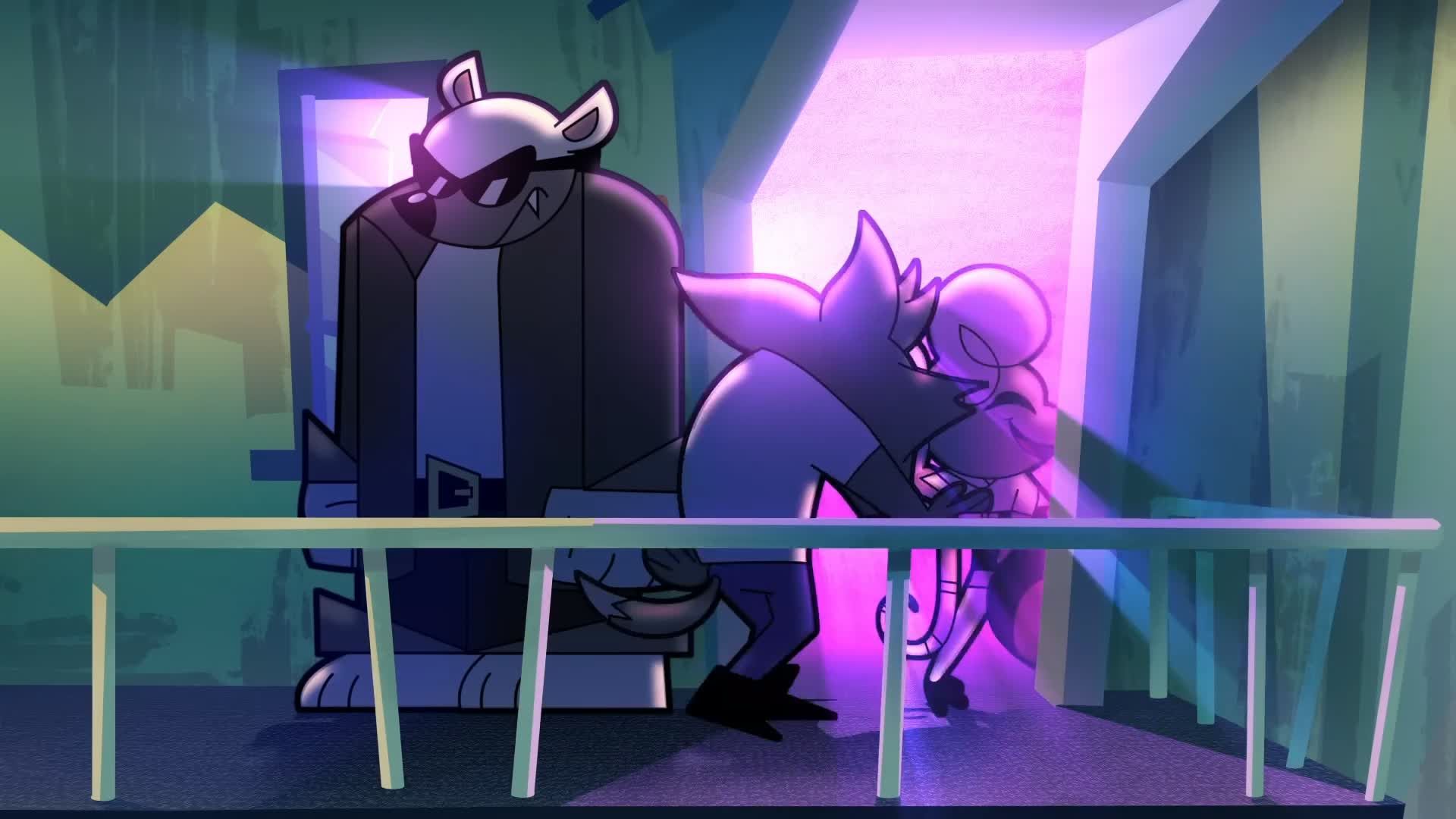
The Bouncers are the deadpan gatekeepers stationed at the community center’s under-18s club in Catching Up. Functioning as both obstacles and comedic foils, they embody the unforgiving rules of teen nightlife: dress codes, arbitrary fees, and zero chill. Their presence frames the episode’s stakes for Rob and Clay–getting in, staying in, and surviving the weird little tyrannies of a “fun” night out.
First Appearance and Role in the Series
The Bouncers debut in the pilot episode “Clubbing”, where they enforce the venue’s code and shape the night’s chaos. One Bouncer patrols the entrance, while others handle inside enforcement (including an overzealous coat check). Their job is simple–control entry and keep order–but their no-nonsense approach escalates the episode’s conflicts and punchlines, often at Rob’s expense and Clay’s patience.
Visual Design and Signature Traits
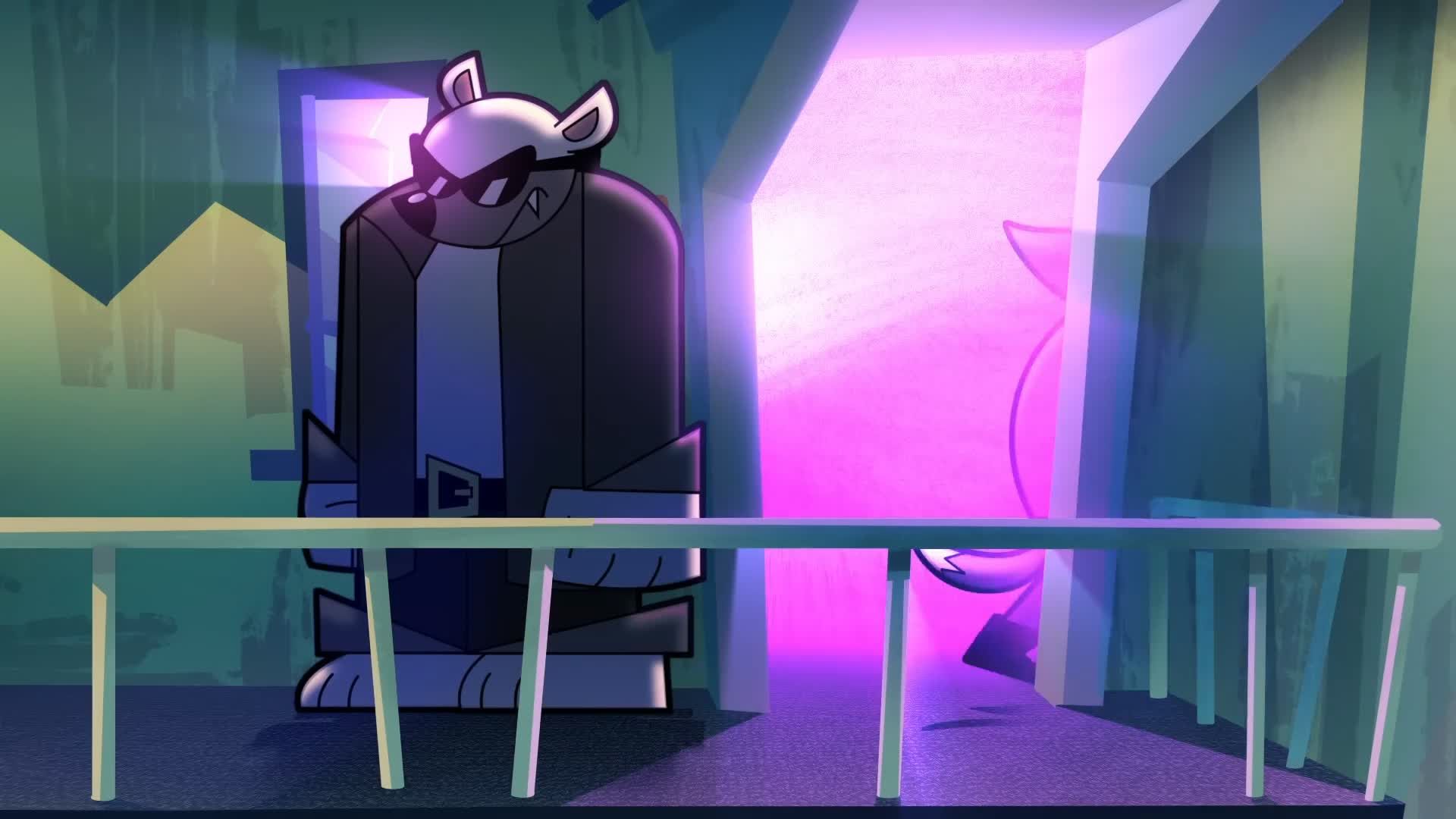
The Outside Bouncer is instantly recognizable: unbuttoned black coat over a light shirt, black pants with a bold belt buckle, and the ever-present sunglasses. The look screams “authority with attitude,” a pared-down silhouette that reads clearly even in busy club scenes. Inside, the Bouncers share the same minimal, squared-off styling–broad shoulders, rigid posture, flat affect–communicating implacable rule-enforcement before they say a word.
Personality Profile
Taciturn, literal, and terminally unimpressed. The Bouncers don’t bargain; they decree. Their humor is unintentional–brutally straight-faced lines that land like punchlines because they collide with teen expectations. They’re loyal to the community center’s rules above all, operating with the moral certainty of a dress-code zealot.
No trainers.
Skills and Abilities
- Crowd control: Efficient at gatekeeping, scanning lines, and shutting down arguments.
- Intimidation: Minimal words, maximum pressure; posture and silence do the heavy lifting.
- Procedural rigor: From footwear bans to on-the-spot coat policies, they enforce without hesitation.

Key Relationships
Rob: Sees the bouncers as obstacles between him and a “cool” night, repeatedly tripping over their rules.
Clay: Wants nothing to do with any of it; the bouncers’ rigidity amplifies his anxiety and eventual snap-moment.
Club patrons: To the Bouncers, everyone’s a potential infraction. They’re not personal; they’re institutional.
Defining Episodes and Moments
At the door, the Outside Bouncer enforces the no-trainers policy with absolute finality, setting the tone for the night and even strangling Dead Ferret for showing up in the wrong shoes. Inside, a Bouncer runs a “leave it here” coat solution that turns into a $30 tax on common sense, a perfect skewering of petty club economics. The Bouncers’ stonewalling bounces Rob’s schemes and Clay’s reluctance into a final pressure-release later in the night.
I said no trainers.
Character Arc and Development
The Bouncers don’t “grow” so much as they crystallize–their lack of development is the joke. They’re fixtures, not protagonists: the immovable object against which Rob’s bravado and Clay’s discomfort grind until something snaps. Their consistency provides the episode’s rhythm–each interaction resets the power dynamic back to “house rules win.”

Conflicts and Challenges
Their biggest challenge is the same as every bouncer’s: teens who think they’re the exception. Every plea (“but they’re new trainers”) and workaround (coats, favors, lines) meets the same result–policy beats improvisation. When the night gets messy, they double down instead of loosening up, which keeps the comedy sharp and the stakes contained.
Humor and Catchphrases
The humor is clipped and authoritarian: terse refusals, matter-of-fact fees, and a total inability to read the room in any way that helps Rob. Their most quotable lines hit like brick walls–funny because they’re so blunt.
That’ll be $30.
Symbolism and Thematic Function
The Bouncers symbolize adolescent gatekeeping–those first brush-ups with arbitrary adult authority. “No trainers” isn’t really about shoes; it’s about who gets to belong and who gets bounced. By making the rule enforcers unflappable, the show spotlights how institutional logic steamrolls individual logic, pushing Clay to finally assert himself.

Behind the Scenes and Creation Notes
The pilot’s club setup gives the series a clean comedy engine: strict rules, hopeful teens, and social friction. Notably, the Inside Bouncers are voiced in English by Zach Hadel (a.k.a. PsychicPebbles), whose flat, slightly sardonic delivery fits the character’s stone-faced vibe, as part of the wider Catching Up voice cast. The broader series vision emphasizes universal teen rites of passage–first nights out, petty humiliations–filtered through a snarky, early-2000s aesthetic.
Legacy within Catching Up
Even as minor characters, the Bouncers left a mark across the Catching Up character roster. “No trainers” and the coat-check bit became shorthand among fans for the show’s send-ups of club culture and small-time authoritarianism. They’re the kind of background fixtures that make the world feel specific–and make Rob and Clay’s misadventures sting (and land) just a little more.