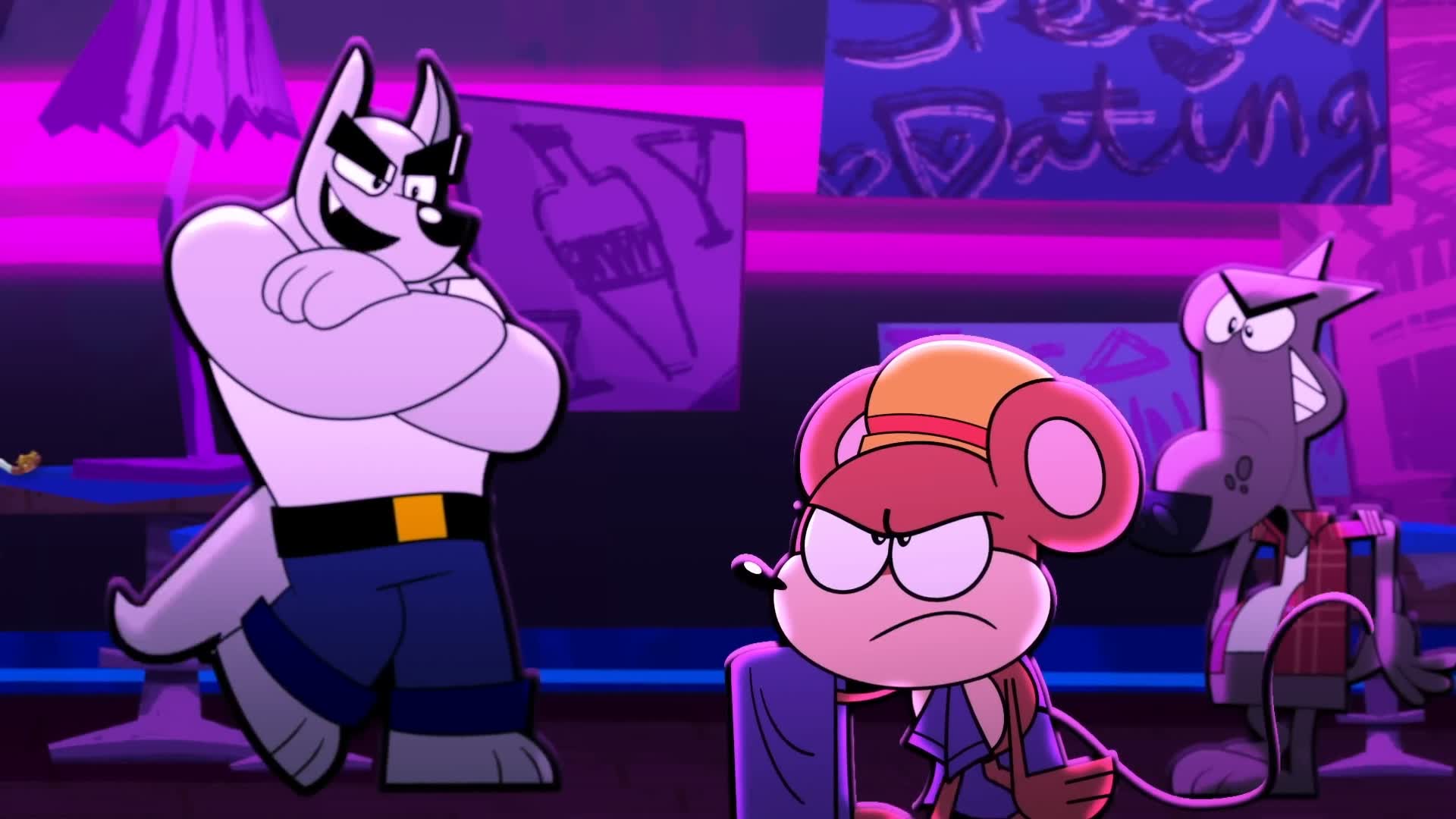
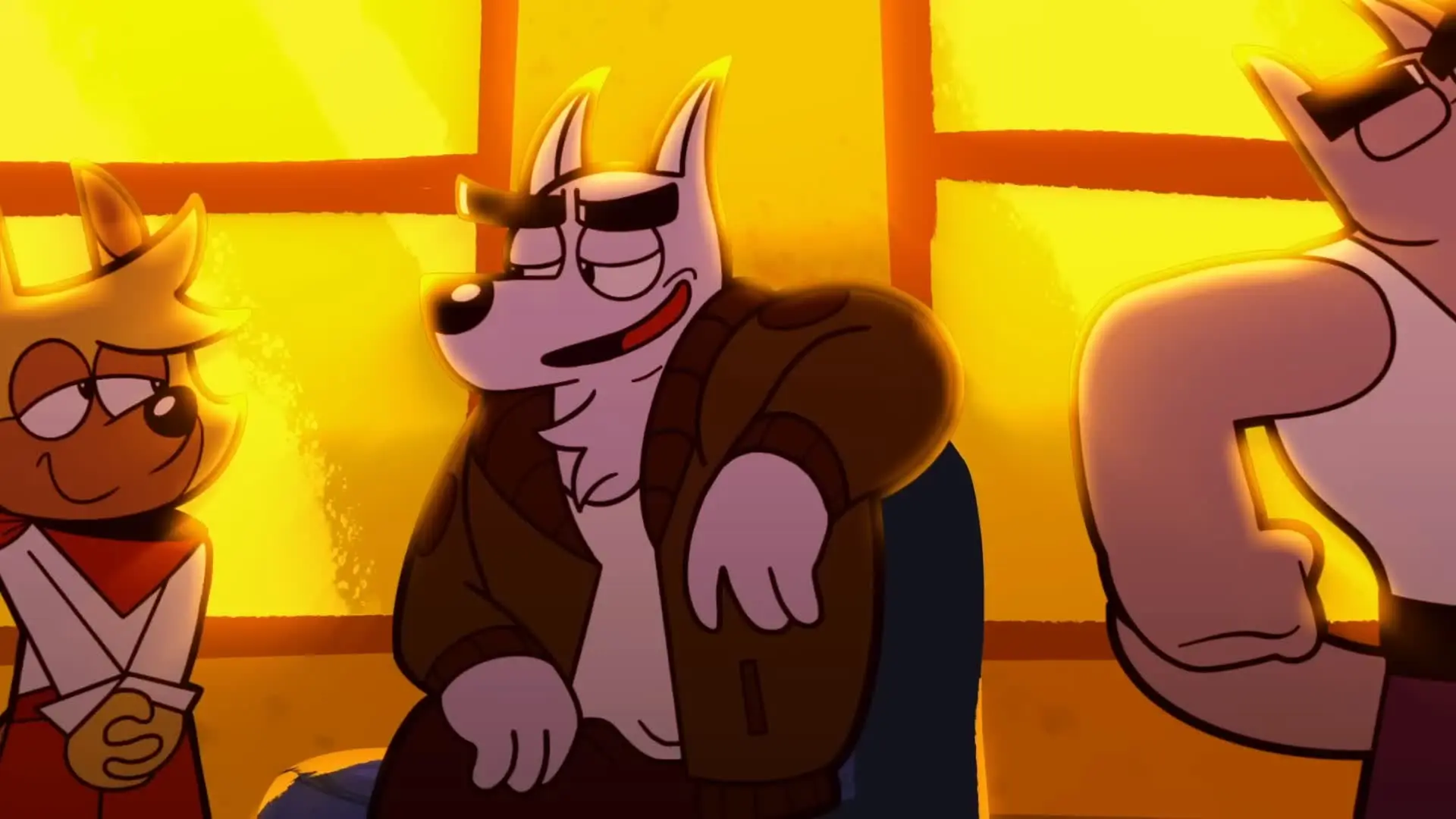
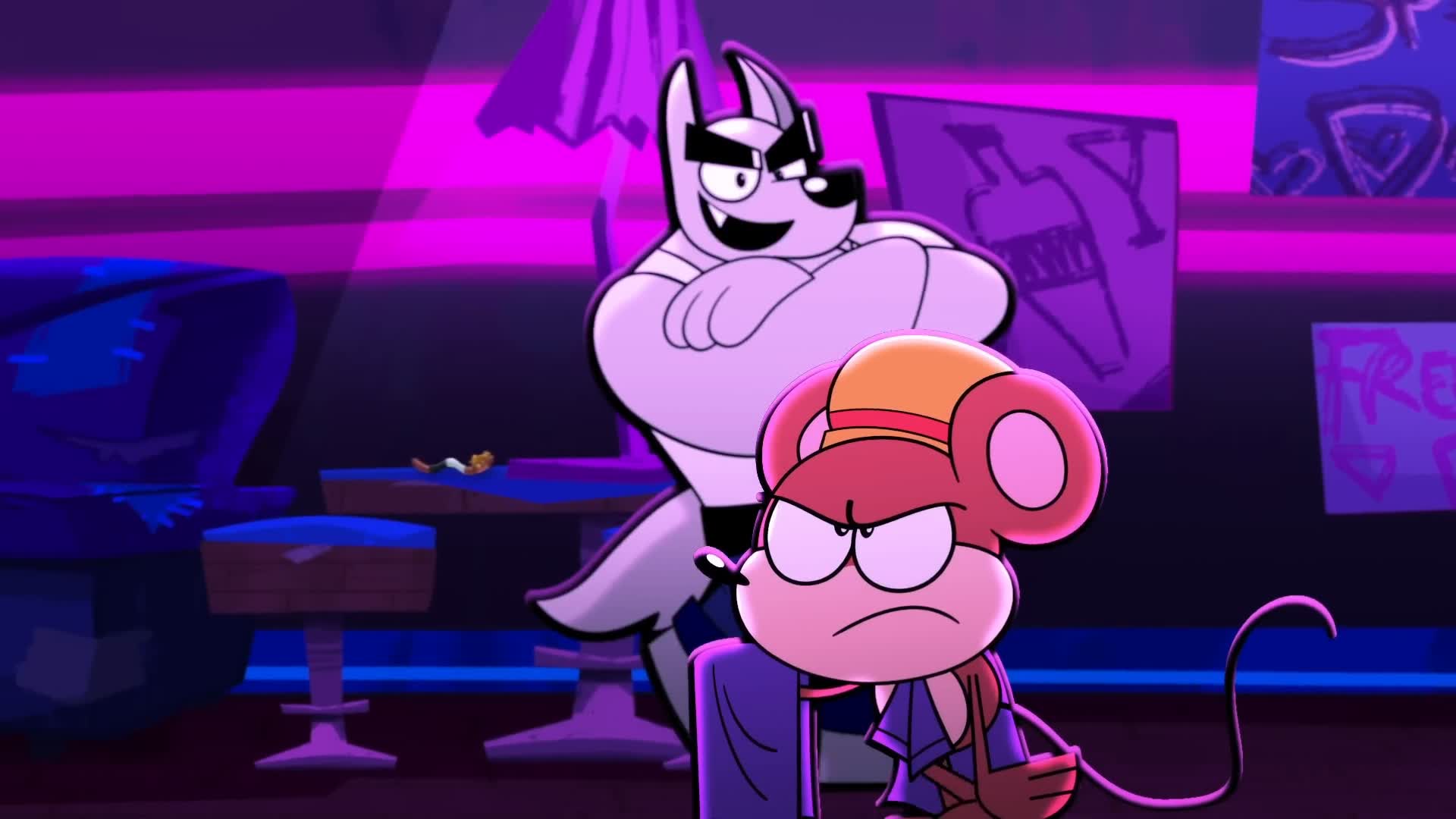
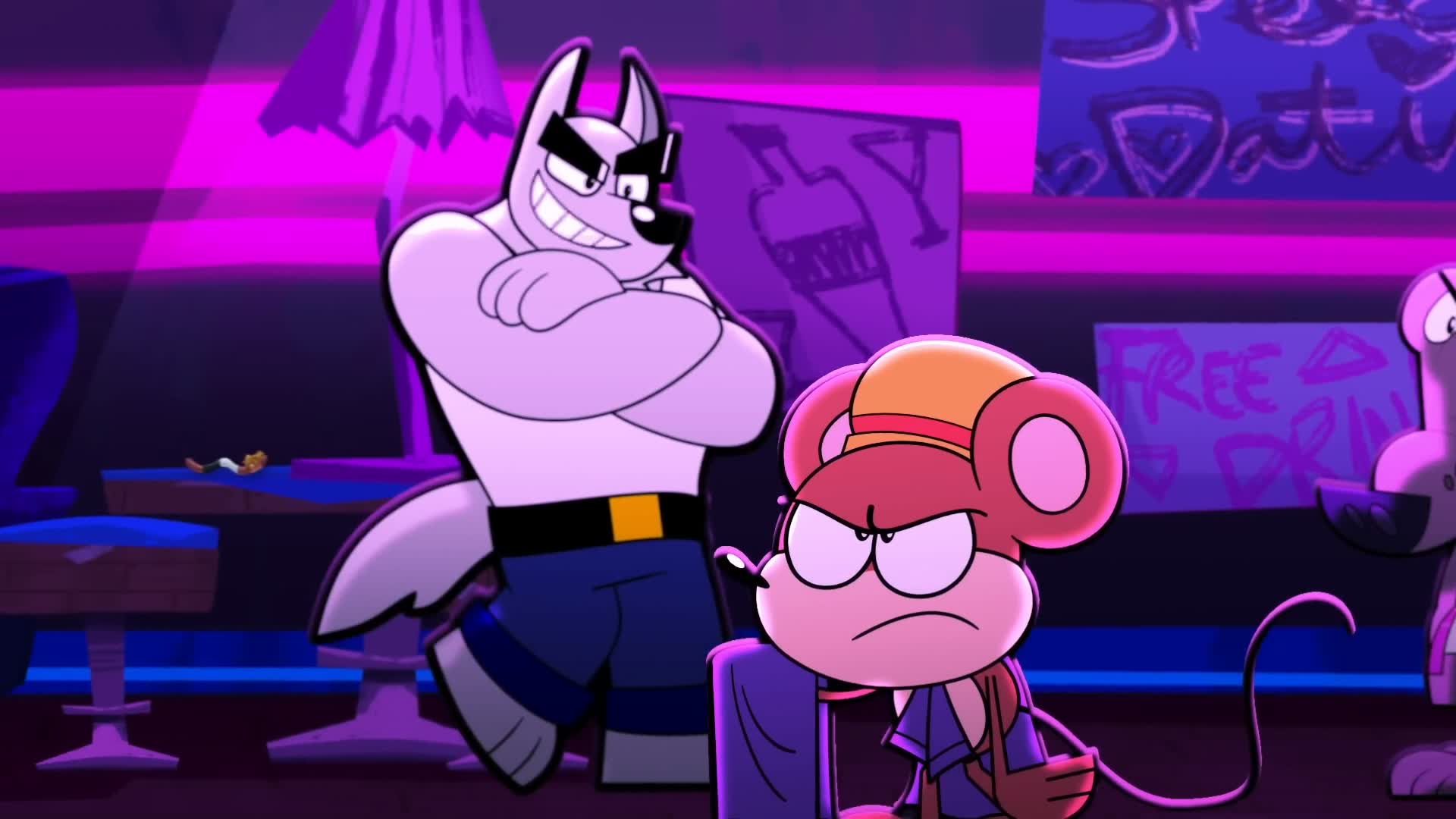
Stecher is a blink-and-you-miss-him supporting character in Catching Up. However, his single, sharp encounter with Clay during the pilot instantly defines him as more than set dressing. Therefore, the character works as a fast, comedic foil who exposes one of the show’s central tensions: Clay’s tendency to say the quiet part out loud and the social fallout that follows. Stecher’s protective outburst on behalf of his girlfriend, Worm, lands like a jump scare amid the neon haze of the community-center “club,” and it helps crystallize the series’ slice-of-life tone–ordinary teen situations that spiral because of small, human (and animal) mistakes. Next, the credits’ memorial gag for Worm turns the moment into a running punchline that fans still cite, which in turn amplifies Stecher’s footprint far beyond his seconds of screen time.
Origin and first appearance
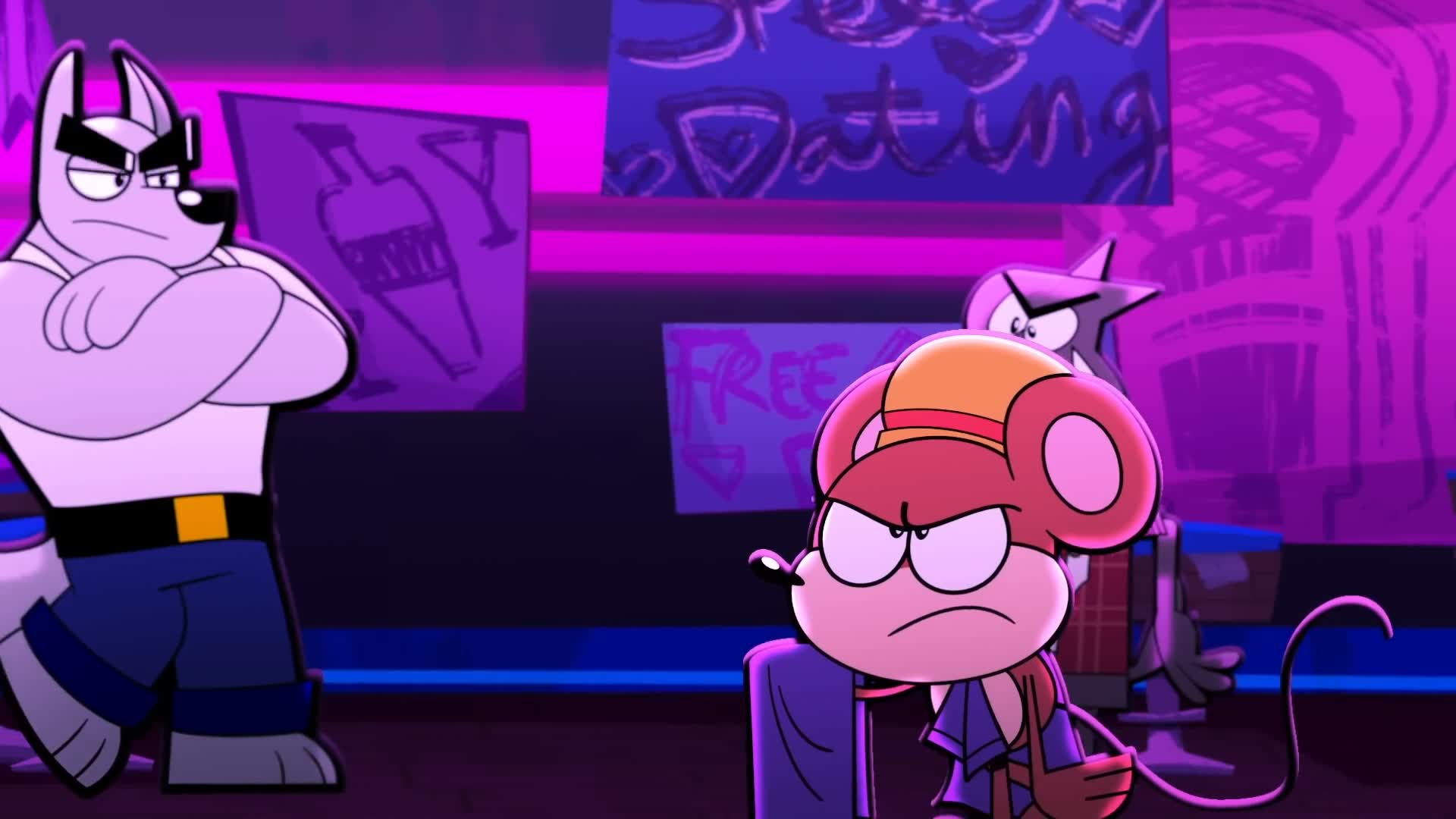
Stecher’s first and only on-screen appearance to date arrives in the pilot episode, “Clubbing.” Then, while Clay threads his way through the crowded, under-18 night at the community center, he almost steps on a tiny worm on the floor. The boyfriend–identified by fans and credits as Stecher–snaps, “Hey, you almost stepped on my girlfriend!” However, Clay, true to form, says his internal reaction out loud: “Well, how does that work?” The stray thought lands as an insult, and the boyfriend fires back with an angrier line, escalating the confrontation and sending Clay into another awkward scramble. Consequently, the moment embodies Catching Up’s comedy of mortification: a small social misread detonates into conflict. Finally, the end credits include a tongue-in-cheek “In loving memory of” image for Worm, implying an off-screen outcome and giving the bit a morbid stinger. As a result, Stecher’s cameo operates like a pressure test of Clay’s social filters and the club’s hair-trigger vibe–brief, loud, and telling.
Personality and key traits
| Trait | Description |
|---|---|
| Protective boyfriend | Stecher’s defining beat is defense. He intervenes instantly when Clay nearly steps on Worm, framing him as quick to guard people he cares about. The protection reads sincere even as the scene plays for laughs. |
| Hot-headed and direct | He confronts Clay without hesitation and escalates after Clay’s ill-timed remark. The brusque delivery and street-level phrasing mark him as a character who favors immediate, forceful responses over careful listening. |
| One-note by design | The pilot uses him as a single-purpose foil. He doesn’t get nuance or follow-up, which keeps the timing tight and keeps the focus on Clay’s social misfire. |
| Amplifier of theme | By clashing with Clay in a crowded space, he underscores the show’s theme: everyday interactions become minefields when you blurt out your thoughts. Stecher’s intensity makes that theme unmistakable. |
Story arcs and development
Arc 1 – The club confrontation (pilot “Clubbing”). Start: Clay navigates the club’s crush of bodies and signage, overthinking every step. Then: He nearly steps on Worm, drawing an instant rebuke from her boyfriend. Clay slips and says a private thought out loud, which Stecher treats as disrespect. As a result: The dust-up pushes Clay further into defensive awkwardness and punctures the club’s fun façade. The gag also sets the template for how minor characters in the pilot function–as mirrors that reflect Clay’s social blind spots.
Arc 2 – The credits stinger and fan afterlife. Start: The episode winds down with a montage of tongue-in-cheek credits. Then: A memorial image for Worm (“In loving memory of…”) reframes the earlier scene as darkly comic collateral damage of the night. As a result: Viewers retroactively attach a larger narrative shadow to a tiny moment. Stecher’s protective posture becomes ironic in hindsight, and the pair’s cameo grows into a meme that fans reference when cataloging the pilot’s grim jokes.
Arc 3 – From background extra to shorthand. Start: Stecher exists for seconds, unnamed on screen and only identified by fans and credits. Then: Because the exchange so neatly captures Catching Up’s tone–awkward honesty, instant offense, neon-lit chaos–fans adopt “Worm’s boyfriend” as a shorthand for the club’s hostility. As a result: Even without more screen time, he becomes part of the show’s vocabulary: a quick label for “that guy who will turn a minor mistake into a scene.”
Relationships with other characters
| Name | Role vs. Stecher | Dynamics |
|---|---|---|
| Worm | Girlfriend | The entire beat hinges on his protectiveness toward her after Clay nearly steps on her. The credits gag implies an off-screen fate for Worm, which ironically undercuts his ability to protect. |
| Clay | Accidental antagonist | Clay’s habit of saying inner thoughts out loud provokes Stecher. Their exchange is brief but volatile, illustrating how Clay trips social wires and how fast strangers can take offense. |
| Rob | Indirect catalyst | Rob’s insistence that Clay attend the club creates the environment where the confrontation occurs. They never interact directly, yet Rob’s push sets the stage for Stecher’s cameo. |
| Club crowd | Contextual pressure | The sea of partygoers turns a small misstep into a public flare-up. Stecher’s body language and tone play to that crowd, heightening Clay’s embarrassment. |
| Bouncers | Off-screen authority | No direct exchange with him is shown, but the ever-present security vibe frames how quickly conflict could escalate if tempers rose further. |
| DJ McNulty | Ambient presence | The DJ’s music scores the chaos; there’s no dialogue between them, yet the soundtrack and lighting underscore how out-of-proportion Stecher’s anger feels to Clay’s tiny mistake. |
Appearance, symbols, and recurring motifs
Visually, Stecher is staged as a quick, confrontational presence rather than a model-sheet showcase. However, the composition still tells us what we need: he surges into Clay’s space, voice first, posture squared, and attitude dialed up. Therefore, the design purpose is functional–sell a flash of menace in a crowded frame, then get out. The gag relies on contrast: a tiny Worm on the floor versus a full-size boyfriend who speaks for her; a neon club scored like a big night out versus the humbling reality of a community center; a casual near-misstep versus a combustible response. Next, the pilot’s recurring visual jokes–hand-lettered signage, harsh purple-blue lighting, and boxed-in compositions–turn Stecher into a motif of fragile social peace. As a result, whenever the show corners Clay in bodies and noise, you can feel the possibility of another “Stecher moment,” where a stranger’s hair-trigger pride collides with Clay’s unfiltered mouth.
Fandom and alternative names
- Worm’s Boyfriend
- Worm Guy
- Angry Boyfriend
- Protective BF
- Club Boyfriend
- Stecher (credits)
- Worm-BF
Interesting details and quotes
- Stecher belongs to the pilot’s tapestry of micro-characters–brief, pointed encounters that reveal Clay and test his patience.
- The entire “club” is a community-center under-18 event, which grounds the conflict in awkward teen reality rather than glamorous nightlife.
- His protective reaction plays as sincere yet overbearing; that tonal mix is typical of the show’s humor, which often lets one character be right and wrong at the same time.
- The credits memorial for Worm functions as a dark add-on to the joke and is a frequent talking point in fan discussions of the pilot’s edgier beats.
- Fans typically learned the boyfriend’s name from wikis and credit breakdowns; on screen he goes unnamed, which keeps the scene focused on Clay’s gaffe.
- Because the moment is short and loud, editors and meme makers often loop it to punctuate compilations of Clay’s most awkward missteps.
- The scene exemplifies the show’s use of scale for comedy: a tiny creature in danger triggers a big, immediate confrontation.
Hey, you almost stepped on my girlfriend!
Spoiler: Yo, what the f*** did you say?
– the line that escalates Clay’s slip from awkward to hostile.- As a result of this cameo, Stecher routinely appears in lists of minor Catching Up characters who “live rent-free” in the fandom’s head despite minimal screen time.