Space Tapir is one of those characters who can look tiny on paper and huge in practice. In Knights of Guinevere, she enters as the softest member of Frankie’s conscience-trio: pink, plushy, calm, and instantly reassuring in a world made of rust, debt, clinical light, and exhausted labor. That softness is not a throwaway visual joke. The pilot uses it as a delivery system for something much heavier – Frankie’s private self-talk, her guilt, her fear, and the part of her that still wants to do right even when doing right is risky, expensive, and probably stupid from a survival standpoint.
That is why Space Tapir lands differently from a normal side mascot. She is not framed as a separate creature wandering the setting with her own subplot, home base, or lore-exposition errands. Instead, the current character materials and fan documentation treat her as part of Frankie’s hallucinated “space pets,” which turns every line into a piece of character psychology. The scene gives the audience warmth, humor, and visual charm, but it also quietly reveals how lonely Frankie is, how hard she is fighting not to numb herself, and how much emotional pressure the pilot is already putting on her before the action really starts escalating.
Her one scene has only grown more interesting as the show’s franchise footprint has expanded. By spring 2026, the series around her has a full-season greenlight, official merch has pulled the trio into the broader iconography of the show, and behind-the-scenes materials have kept attention on design choices that first looked merely cute. Space Tapir still remains a pilot-only, scene-specific figure on screen, but that makes her feel concentrated rather than disposable: a small character carrying a remarkable amount of moral and thematic weight.
Space Tapir at a glance
Category Details | Role in the story | The gentle voice in Frankie’s conscience-trio, steering her toward empathy when she is alone and conflicted. | Canonical nature | Not a physical creature in the plot, but a hallucinated or internalized guide tied to Frankie’s private thought process. | Emotional function | She softens panic, slows cynicism, and keeps the choice to help Guinevere framed as a moral one rather than only a practical one. | Visual identity | Rounded pink body, small cheeks, dark eyes, plush-like simplicity, and a toy-adjacent silhouette that contrasts with the show’s industrial environments. | Voice casting | Eden Riegel voices both Space Tapir and Guinevere, a subtle connection that deepens the emotional link between Frankie’s conscience and the princess android. | Debut | The 2025 pilot. | On-screen status | As of spring 2026, she is still a one-scene, pilot-only on-screen character. | Why she stands out | Because the show uses a cute hallucinated animal to dramatize isolation, self-persuasion, and the stubborn persistence of kindness.
Space Tapir gives Frankie’s empathy a visible body.
Her design makes the pilot’s private emotional stakes easy to read without flattening them.
She helps the show balance comedy, melancholy, and moral pressure in a single scene.
Her brief appearance remains one of the cleanest statements of what the pilot thinks kindness costs.
Origin and first appearance of Space Tapir
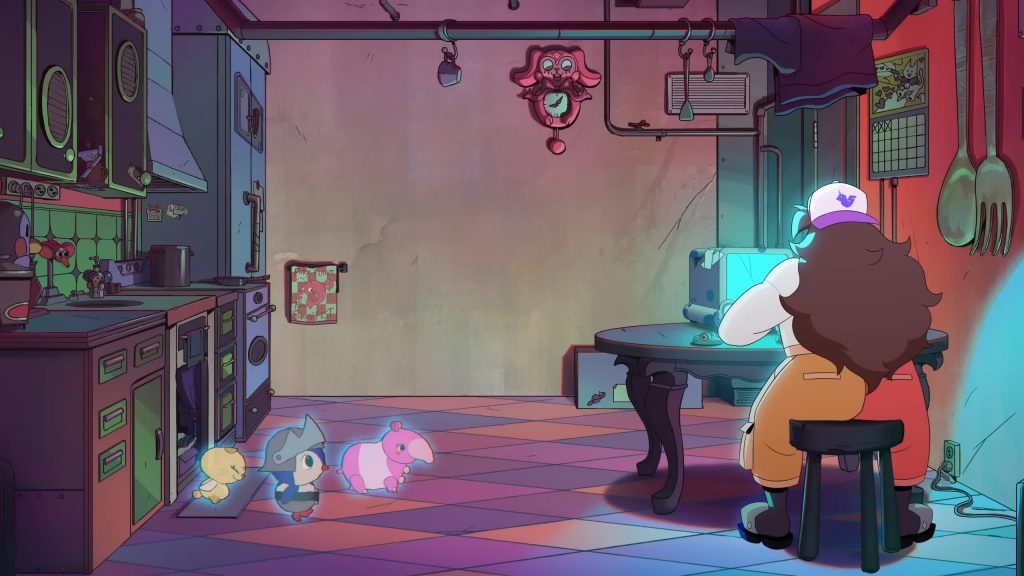
Space Tapir first appears in Frankie’s kitchen, and that setting matters as much as the dialogue. This is not a mythic introduction on a parade float, not a reveal in a dream forest, and not a surprise creature-lore detour. It happens in a tired worker’s personal space after stress has had enough time to ferment. Frankie is exhausted, uncertain, and morally stuck, which makes the arrival of the three conscience-critters feel less like fantasy entering the story and more like the story finding a visual language for an argument already happening inside her head.
The argument she is having is centered on Guinevere. Frankie does not see the broken princess unit as just damaged inventory for very long. She sees vulnerability, memory, and the possibility that a branded symbol might actually be a person. Space Tapir is the member of the trio who refuses to let Frankie talk herself out of that recognition. She does not lead with ideology, calculation, or anger. She leads with a simple insistence that the princess still matters, regardless of model, circumstance, or cost. In a series crowded with systems that rename people as products, that simplicity hits hard.
The illusion vanishes the moment Andi steps into the scene. The TV shifts to static, the atmosphere drains, the critters disappear, and the episode makes its rule clear: these figures do not survive shared reality. They belong to Frankie’s solitude. That one transition does a lot of work. It keeps the audience from reading Space Tapir as a hidden species or lore puzzle, and it makes her much more interesting as a private mechanism – the form Frankie’s better instincts take when she is alone enough to hear them.
Because of that staging, Space Tapir’s first impression is warm but also quietly sad. She is cute, yes, and easy to remember, but she only exists when Frankie is isolated enough to need a friendly version of her own conscience. That turns her debut into more than a charming beat. It becomes an x-ray of Frankie’s mental state: her imagination is alive, her stress is active, and her empathy is fighting not to be crushed by the conditions around her.
Frankie hesitates over what to do with the broken princess android.
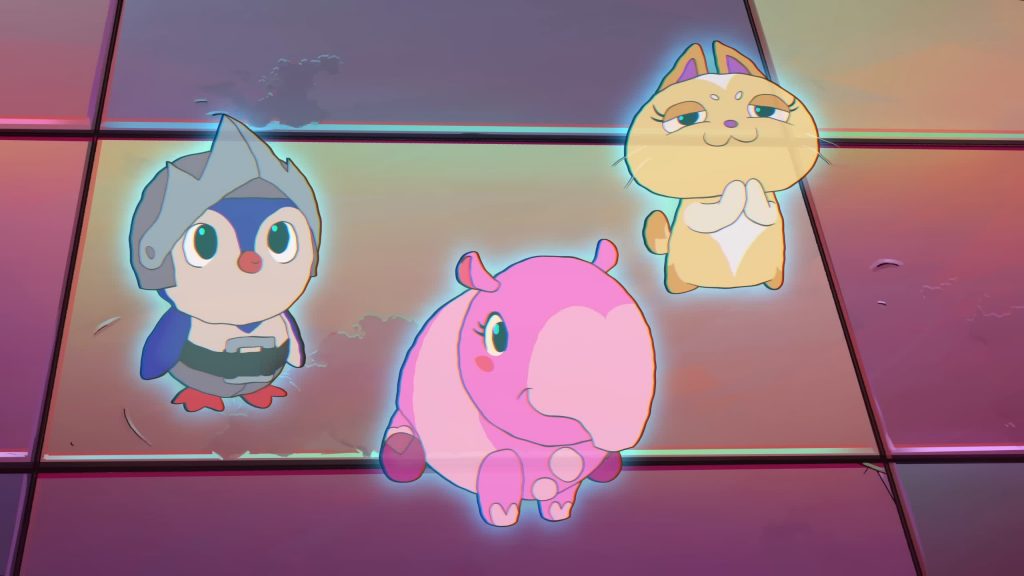
The three “space pets” appear as distinct emotional positions.
Space Tapir argues from compassion rather than rage or bravado.
Frankie moves closer to action because the moral question becomes impossible to dodge.
Andi enters and the hallucinated safety of the moment instantly collapses.
Personality and key traits of Space Tapir
Space Tapir becomes easiest to understand when placed next to Space Cat. The cat voice is sharp, mocking, and happy to weaponize contempt; it bites, it prods, and it speaks as if authority deserves ridicule on sight. Tapir counters that with calm. She does not scold Frankie into goodness, and she does not pretend the world is gentle. Instead, she offers the kind of reassurance that makes a hard choice feel emotionally possible. That is a more difficult function than it looks. In scenes about moral paralysis, the voice that keeps tenderness alive is often the hardest one to write convincingly, because it has to sound sincere without turning vague or sentimental. Space Tapir gets there by being specific, warm, and direct.
Set beside Space Penguin, she helps complete a very readable emotional triangle. The penguin embodies loyalty and courage, the cat embodies hostility and defiance, and the tapir embodies mercy. Together they transform Frankie’s inner debate into a three-part chorus. That structure matters because it keeps the scene from reducing conscience to a single clean answer. Frankie is not choosing between good and evil. She is choosing what kind of courage she wants to practice: kind courage, furious courage, or steady courage. Space Tapir represents the version that protects without hardening.
She also has one of the pilot’s most revealing tonal jobs. Space Tapir is funny in a gentle way, but she is not there to puncture the scene’s seriousness. She is there to make that seriousness bearable. The writing understands that a frightened person is more likely to keep listening to a soft voice than to a sermon, and the tapir’s warmth becomes a tool of persuasion. She is less the angel on Frankie’s shoulder than the friend-shaped interface Frankie’s mind invents so it can keep hearing itself clearly.
“Doesn’t matter what model she is. You need to go back for her.”
Trait How it appears on-screen Why it matters | Gentle moral clarity | She frames help as an obvious human obligation rather than a political thesis. | It keeps the scene emotionally grounded and makes Frankie’s guilt harder to dodge. | Warm, cautious tone | Her lines soothe rather than pressure, even when she is clearly urging action. | She acts as a calming influence inside Frankie’s stress spiral. | Private-only existence | She disappears when Andi enters and never functions as a social or public reality. | That restriction frames her as psychological, not zoological. | Fairy-tale softness | Her rounded pink design recalls toys, mascots, and child-safe fantasy. | The contrast with the show’s harsh world makes her scenes more memorable. | Emotional precision | She never speaks at random; every line pushes Frankie toward recognition and responsibility. | Her limited screen time feels concentrated rather than underwritten. | Shared vocal echo with Guinevere | The casting quietly links the conscience-voice to the princess herself. | It deepens the sense that Frankie’s empathy and Guinevere’s vulnerability are speaking across each other.
What Space Tapir does not have is just as important as what she has. She has no independent agenda, no visible resentment, no ambition, and no interest in world domination through cuteness. The absence of those traits is deliberate. The show has plenty of characters pushing systems, profits, roles, duties, and fantasies. Tapir exists outside those pressures. She is not trying to win anything. She is trying to stop Frankie from becoming the kind of person who can step over suffering because the timing is bad.
She persuades rather than commands.
She makes kindness sound practical enough to attempt.
She protects Frankie from emotional numbness as much as from panic.
Her short presence leaves a longer after-image because the scene gives her a clean, specific purpose.
Story arcs and development of Space Tapir
Kitchen counsel
Space Tapir’s first arc is tiny in screen time and large in consequence. Frankie is stuck between desire and fear: she knows what she wants to do, but she also knows what trouble it could cause. The tapir steps into that hesitation and gives compassion the first real momentum in the scene. Her role is not to hand Frankie a plan. It is to push her out of emotional paralysis. That distinction matters. Frankie still has to do all the dangerous, messy work herself. Space Tapir just helps the decision stop feeling foggy.
Because the tapir argues from care rather than strategy, the kitchen scene becomes the first place where the show tells us how Frankie wants to be, not just what she wants to achieve. She is not simply chasing a better life, money, access, or some abstract rebellion against the system. She is responding to vulnerability. Space Tapir crystallizes that response. She becomes the voice that says the choice matters before the success rate does.
Conscience triad
The second arc is structural: the trio itself. Space Tapir only works as well as she does because the scene frames Frankie’s inner life as a tiny committee. That device gives the tapir shape by contrast. In a one-voice conscience scene, she would risk feeling generic. In a three-voice debate, she becomes precise. The cat is acid, the penguin is nerve, the tapir is grace. Together they turn a moral pause into a scene with rhythm, friction, and distinct emotional tones.
The triad also says something important about the show’s worldview. The pilot does not imagine goodness as purity. Frankie’s conscience is noisy, contradictory, political, affectionate, funny, and messy. Space Tapir is the kindest voice, but she is not the only honest one. That makes her feel earned. She exists inside a broader emotional ecosystem rather than floating above the others as moral perfection.
Vanishing act and aftermath
Once Andi enters and the trio vanishes, Space Tapir’s visible arc is over. But the disappearance is not an ending so much as a handoff. The character transfers her influence into Frankie’s later actions, which is why the absence feels productive rather than abrupt. Frankie carries the burden of choice into the rest of the pilot; Space Tapir does not keep showing up to approve each step. That restraint is one of the smartest things about the scene. The pilot trusts the audience to remember her function without overusing the device.
In practical terms, that means Space Tapir develops through impact instead of screen accumulation. She changes the terms of the story, then leaves. Many minor characters feel unfinished because they vanish before doing enough. Space Tapir feels complete because her purpose is exact. She is a catalyst, not an unfinished subplot.
Why such a small arc still works
Her development is defined by concentration. She enters when Frankie most needs a soft answer, speaks just enough to shift the emotional balance, and exits before the scene can flatten her into a gimmick. The pilot’s economy is part of the character’s strength. If Space Tapir had followed Frankie around for the next twenty minutes, the impact might have thinned. Because she leaves early, the audience keeps measuring later choices against that first quiet push toward mercy.
Story beat What Space Tapir does Effect on the pilot | Frankie hesitates | Gives compassion a voice and shape. | The choice to help Guinevere becomes emotionally legible. | Triad debate unfolds | Balances harsher and braver counsel from the other hallucinations. | Frankie’s inner life feels layered instead of simplified. | Reality interrupts | Disappears the instant Andi enters. | The scene is framed as psychological, not fantastical lore. | Later action continues | Leaves no physical trace, only motivation. | Frankie has to live out the decision on her own.
Space Tapir in the wider cast and world
The pressure behind her scene comes from the world governed by Olivia Park. Even without direct interaction, Space Tapir reads like an answer to Olivia’s version of control. Olivia preserves narratives by force, by protocol, by ownership, by deciding what form care is allowed to take. Tapir pushes Frankie toward unsanctioned care – risky, personal, unprofitable care. The contrast is one of the clearest invisible oppositions in the pilot.
She also stands at odds with the survival math embodied by Sparky. His world is all leverage, resale value, and pressure from above; he has reasons for thinking that way, and the show never makes him cartoonishly simple. But Space Tapir cuts across that logic by insisting that value can appear before profit. She is the presence in Frankie’s head that makes a human question out of something the dockside economy would rather treat as salvage.
Placed against the myth-building legacy of Orville Park, the tapir feels even more subversive. Orville industrialized wonder. He turned fantasy into infrastructure, branding, and permanent spectacle. Space Tapir turns fantasy back into something intimate and protective. She looks as if she belongs to the same design universe, but she does not serve the same power. She is a toy-like shape reclaimed by conscience instead of by corporate performance.
That same distinction becomes sharper beside the systematized compassion of the Nurses. They speak softly too. They offer soothing language too. But their softness is procedural, conditional, and built to maintain order. Space Tapir’s softness has no institutional goal behind it. She speaks because Frankie needs help not disappearing into self-justifying fear. In that sense, the tapir is one of the pilot’s few genuinely non-extractive forms of care.
The pilot’s later escalation into the orbit of Sir Arthur makes her earlier appearance feel even more deliberate. Arthur is fairy-tale vocabulary turned into pursuit, armor, surveillance, and violence. Space Tapir is fairy-tale vocabulary turned into comfort and ethical clarity. Both belong to the same symbolic ecosystem, but they prove that the language of chivalry and princess-myth can either protect the vulnerable or hunt them down.
Even local, grounded figures like Reggie help explain why the tapir matters. Reggie represents the stubborn, irritated, lower-level reality beneath Park Planet – where scarcity makes patience thin and every interaction can harden into a grievance. In a world like that, Space Tapir’s warmth does not feel naïve. It feels endangered, which gives her brief presence a strange urgency. She is not just cute; she is scarce.
Her design and thematic function also rhyme with Guinevere (mascot). Both work in rounded, inviting, child-safe shapes. Both live inside the series’ fascination with how sweetness can be staged, marketed, protected, or weaponized. The difference is direction. The mascot broadcasts comfort outward to maintain a brand fantasy. Space Tapir broadcasts comfort inward to keep one frightened worker emotionally honest.
The echo continues in the dreamy register associated with the Star Pups. Those little figures help anchor the princess side of the show’s visual language, where softness means memory, innocence, and storybook promise. Space Tapir borrows that softness but relocates it into Frankie’s head. She is not part of the public fairy tale. She is what private yearning looks like after reality has gotten dirty and loud.
Seen inside the wider character index, her role becomes even clearer. Many characters in the pilot embody class pressure, authority, maintenance, ideology, or threat. Space Tapir embodies permission – permission to care, permission to act on tenderness, permission not to become emotionally efficient just because the world keeps rewarding emotional efficiency. That is a small niche in plot terms and a huge one in thematic terms.
For now, her full on-screen canon is still limited to the pilot episode, which is exactly why viewers keep returning to the kitchen scene when discussing Frankie’s morality. Space Tapir is not interesting because the show gives her tons of lore. She is interesting because the show gives her the right amount of precision. She appears, identifies the emotional truth of the moment, and vanishes before the writing can over-explain her.
Character or force How Space Tapir relates to it | Frankie | She is Frankie’s softest conscience-voice and the clearest expression of her refusal to numb herself. | Guinevere | Her shared voice casting and protective impulse tie her emotionally to the princess android. | Andi | Andi’s entrance punctures the hallucination and reasserts material reality. | Space Cat | Acts as Tapir’s foil by pushing through contempt, sarcasm, and aggression. | Space Penguin | Provides the middle register of bravery and loyalty that helps define Tapir as the gentle pole. | Olivia Park | Represents control, containment, and sanctioned storytelling – everything Tapir’s influence quietly resists. | Sparky | Embodies a profit-first reality that Tapir’s kindness-first perspective interrupts. | System at large | She is one of the only voices in the pilot not speaking for power, protocol, or commerce.
Appearance, symbols, and recurring motifs of Space Tapir
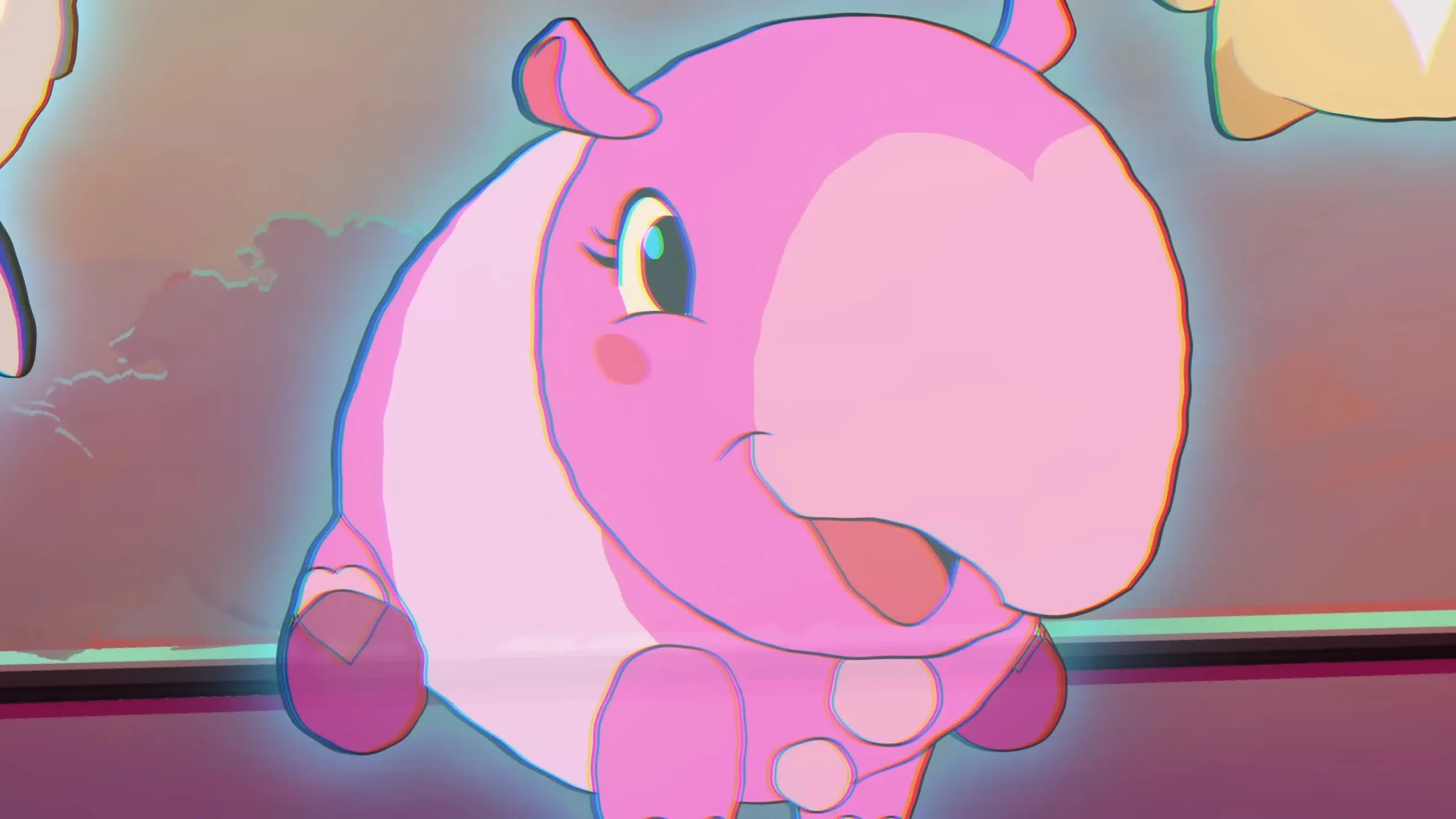
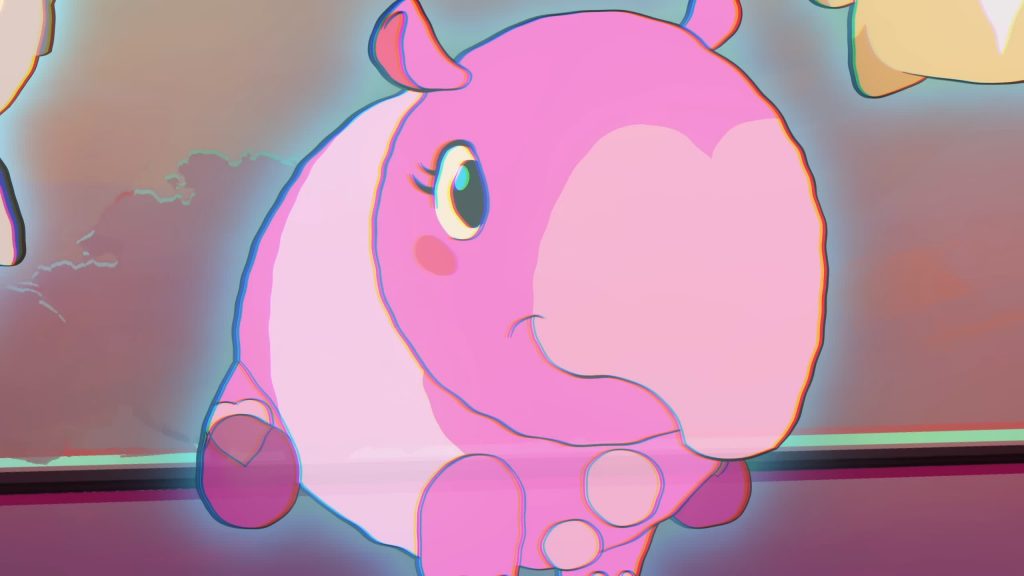
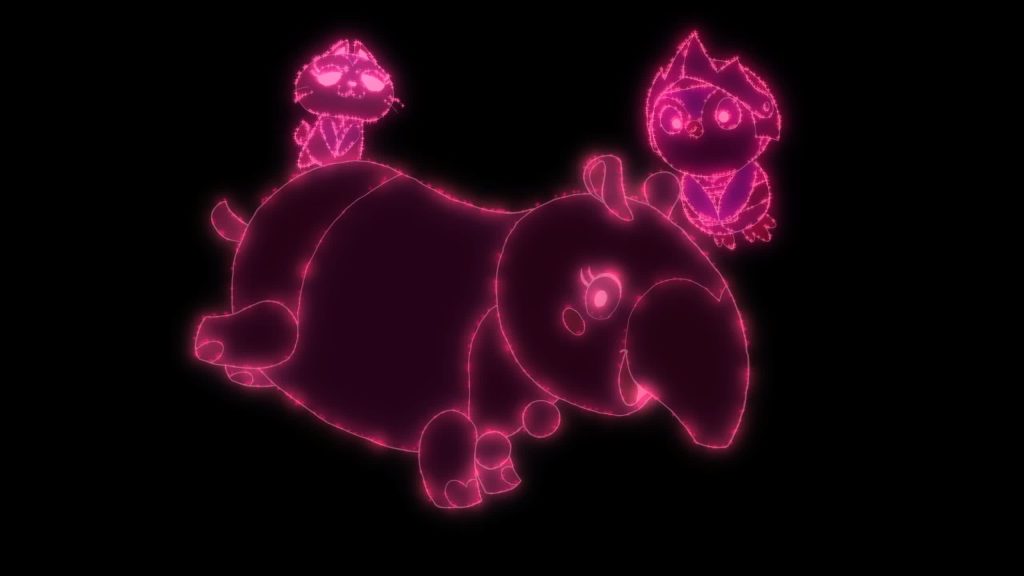
Visually, Space Tapir is built from reassurance. Two shades of pink do most of the work, with small magenta cheeks and dark, simple eyes keeping the face readable from a distance. The shape language is equally important: rounded body, soft edges, minimal detail, no threatening angles. She is designed to be processed quickly and trusted quickly. That makes sense within the scene. Frankie is not hallucinating a lecture. She is hallucinating a comfort object that can talk back.
What makes the design smart is how hard the show leans on contrast. Space Tapir appears in a series that loves rust, clinical light, bolts, cables, oily water, and architecture that feels either overbuilt or neglected. Against that environment, the tapir’s plush-toy simplicity becomes meaningful rather than merely decorative. She looks like something from a safer story trying to survive contact with a harsher one. That is exactly what Frankie’s empathy is doing too.
The face is especially effective because it refuses expressive clutter. Space Tapir does not need a huge range of features to communicate. The black eyes and tiny blush marks are enough. That economy keeps her from feeling like a living animal and nudges her closer to symbol, charm, and memory. She occupies the space between mascot and thought-bubble. The result is a character who can be endearing and slightly uncanny at the same time, which is one of the pilot’s favorite emotional registers.
Her color placement matters as well. Pink in Knights of Guinevere is rarely neutral. It often lives near brand fantasy, dream logic, or emotional softness, and Space Tapir uses that association while separating it from corporate spectacle. She is not glossy enough to feel like an ad. She feels handmade in the mind, which fits the idea that Frankie is not remembering a product exactly as designed but generating a gentle internal guide out of remembered visual language.
Even the fact that she is a tapir matters more than it first seems. A tapir is already a slightly odd, slightly toy-like animal choice for a conscience creature. That mild strangeness prevents the design from feeling overfamiliar. A bunny or kitten might have read as too obvious. A tapir keeps the sweetness but adds a faint surrealism, which suits a show constantly sliding between fairy tale, labor drama, psychological discomfort, and tech-horror.
Design element What it does visually Likely story effect | Pink palette | Signals warmth, softness, and dreamlike comfort. | Frames the character as emotionally safe even before she speaks. | Rounded silhouette | Removes threat and increases toy-like readability. | Makes her feel like a comfort-object manifestation of conscience. | Minimal face | Keeps expression simple and iconic. | Pushes her away from realism and toward symbol. | Plush-adjacent proportions | Feels child-safe and intentionally huggable. | Strengthens the contrast between inner comfort and outer danger. | Placement beside harsher designs | Makes her stand out against industrial grime and mechanized authority. | Turns “cute” into narrative information instead of decoration.
Within the trio, the design coding is also very clear. Space Cat carries a sharper, more sly and confrontational energy. Space Penguin reads sturdier and more duty-forward. Space Tapir alone looks almost fully built for gentleness. That means the audience understands the emotional split before it fully hears it. The pilot is using silhouette as pre-dialogue storytelling, and the tapir’s softness is part of that efficiency.
Why Space Tapir matters to the pilot’s themes
Space Tapir matters because she turns isolation into form. Plenty of stories tell us a character is lonely; fewer show how loneliness changes the texture of decision-making. Frankie does not just sit and think. She externalizes. She imagines companionship inside deliberation. Space Tapir is one part of that imaginary companionship, which makes her a symptom of stress but also a survival tool. The scene is funny and charming on the surface, yet there is a real melancholy underneath it: Frankie is kind enough that her conscience has to invent friends to help her keep being kind.
She also helps the pilot argue that empathy is not the opposite of anger. That is what the trio is for. Frankie contains fury, skepticism, and love at once. Space Tapir does not erase the harsher voices. She keeps them from becoming the only voices. In a setting where workers are exploited, myths are commodified, and care can be turned into corporate procedure, that distinction matters. The pilot is not asking Frankie to be passive. It is asking whether she can stay decent without becoming soft in a way that gets everybody killed. Space Tapir represents the part of that question that still believes decency is worth attempting.
The character is also central to the show’s fairy-tale-versus-infrastructure contrast. The series keeps presenting child-safe imagery and then revealing what machinery, labor, or violence is hiding beneath it. Space Tapir flips that move in miniature. She looks like she belongs to a safe fantasy, but instead of concealing harm, she reveals emotional truth. In other words, she proves that cute iconography is not inherently deceptive. It depends on who is using it and for what end.
That makes her one of the pilot’s clearest anti-cynical devices. The show is sharp about corporate myth, class hierarchy, and the repackaging of wonder into commodity. It has every right to become sneering. Space Tapir prevents that. Her presence keeps the series emotionally open. She says, in effect, that the answer to manipulative fantasy is not to kill tenderness, but to rescue tenderness from manipulation.
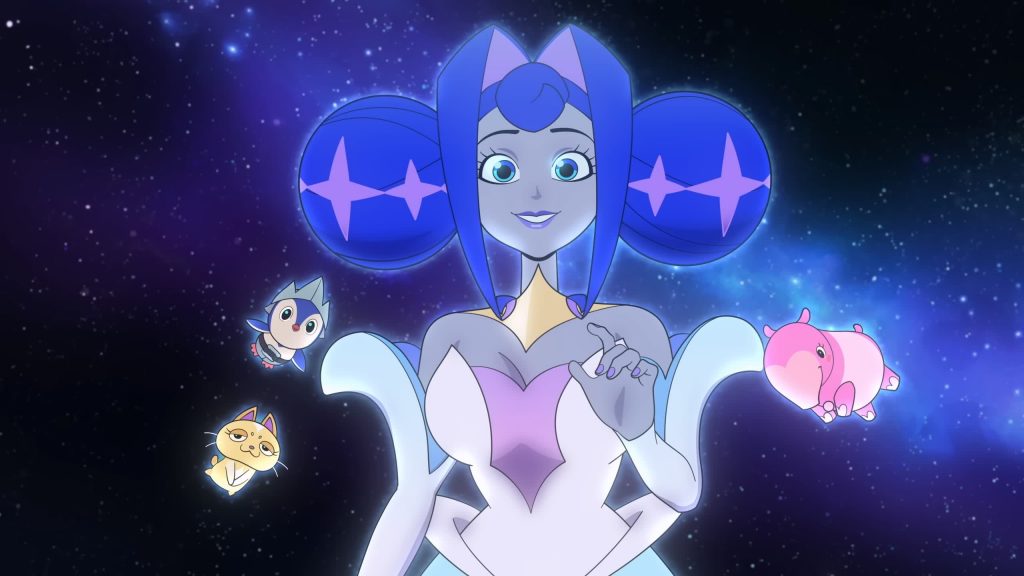
The voice-casting choice strengthens all of this. Having Eden Riegel voice both Guinevere and Space Tapir quietly suggests that Frankie’s conscience and her concern for the princess are already entangled. The tapir is not just advising Frankie to help someone. She sounds like the person being helped. That is not a literal plot revelation, but it is a beautiful emotional shortcut. Frankie’s better self and Guinevere’s vulnerability are allowed to overlap in sound before they fully overlap in plot.
Space Tapir visualizes self-talk without flattening it.
She makes empathy feel active rather than decorative.
She turns cute design into psychological information.
She preserves the pilot’s emotional warmth inside a harsh setting.
She helps the show critique fantasy branding without rejecting fantasy itself.
Current status of Space Tapir in the franchise
As of spring 2026, the most important update is simple: Space Tapir is still a pilot-only on-screen figure, but the series around her is no longer a question mark. The show has been greenlit for full production, which changes how her scene reads in retrospect. What once looked like a beautifully odd, possibly one-off bit of characterization now feels like a deliberate early tool in a larger planned story. That does not guarantee the trio will return on screen immediately, but it does make them feel more like seeded language than accidental whimsy.
At the same time, the public-facing material remains anchored in the pilot. The series is still listed with one released episode, which means Space Tapir’s canonical screen presence has not expanded yet. That gives her scene a strange durability. Because there is not a pile of sequel material to dilute or redefine her, viewers keep returning to the kitchen conversation as the definitive statement of who she is and what she is there to do.
There are also newer franchise signals that matter specifically to her visibility. The pilot art book has turned design and development notes into a bigger part of the conversation around the show. The current store listing keeps the softcover edition active while noting that the premium hardcover is sold out, which tells you the appetite for pilot-specific material is still strong. And because the official merch line now includes Space Trio plush keychains sold separately, Space Tapir has effectively crossed from “tiny hallucination in one scene” into “recognizable franchise image with standalone product identity.”
The March–April 2026 Gallery Nucleus exhibition matters for the same reason. A show like this lives heavily through visual memory, and exhibitions centered on concept work and tribute pieces naturally draw more attention to characters whose power comes from design precision rather than raw screen time. Space Tapir benefits from that kind of afterlife. She is not a lore-dense figure; she is a beautifully compressed one. The more people look at the pilot’s design thinking, the more intentional she seems.
Current franchise item Status Why it matters for Space Tapir | Series production | Full season greenlit in February 2026; release date and episode count remain undisclosed. | Her scene now reads as part of a continuing story world rather than a dead-end pilot flourish. | Released episodes | Still one publicly listed episode as of spring 2026. | Her single kitchen sequence remains the entire on-screen canon. | Pilot art book | Softcover remains listed; premium hardcover sold out; shipping window noted for mid-May on the product page. | Keeps pilot-specific design analysis active, which benefits a design-driven character like Tapir. | Official merchandise | Space Trio plush keychains include Space Tapir as a separate option. | Confirms that her image has become distinct and market-recognizable beyond the single scene. | Gallery exposure | Art exhibition ran from March 21 to April 5, 2026. | Reinforces viewer attention on the pilot’s visual symbolism and concept work. | Online reach | The pilot has continued climbing in views, keeping early imagery from the kitchen sequence in active circulation. | Space Tapir remains visible in recaps, theories, clips, and design discussion despite limited canon time.
On-screen, Space Tapir is still small.
In franchise visibility, she is bigger than she was at launch.
Her design has become merch-ready, quote-ready, and theory-friendly.
Her return is not confirmed, but the show’s continuation makes the device itself feel very reusable.
Fandom, alternative names, and official afterlife
In everyday discussion, most viewers still call her Space Tapir because the official name is already short, memorable, and weird in the right way. Fan shorthand tends to expand around function rather than replace the name entirely. “Nice Tapir” remains common because it instantly communicates her spot inside the trio, while “hallucination tapir” and “conscience tapir” appear when discussions lean more analytical. These variations do not usually compete with the official label; they orbit it, which is often a sign that a character’s role is easy to grasp even when the fandom is still early in its lifecycle.
Space Tapir – the standard official name.
Tapir – the most common shorthand in casual discussion.
Nice Tapir – fandom label tied to the trio’s emotional split.
Conscience tapir – used in analysis-heavy summaries.
Hallucination tapir – used when emphasizing her non-corporeal status.
Cosmo-pet tapir / space pet tapir – group-oriented phrasing tied to the trio.
What is striking in 2026 is how neatly the official merchandise matches the character’s function. Space Tapir works extremely well as a plush-style keychain because she was already designed like a tiny comfort object with psychological significance. Some characters get merch because they dominate scenes. Tapir gets merch because her form is instantly legible and emotionally sticky. That is a different kind of success, and it says a lot about how carefully the pilot understood the visual power of even its smallest figures.
Her afterlife in discussion also benefits from rewatch culture. A one-scene character can disappear if the scene only performs one task. Space Tapir’s scene performs several: it advances plot, reveals Frankie, establishes tone, clarifies the trio, and plants one of the pilot’s strongest emotional ideas. That is why she keeps showing up in character rankings, quote lists, design threads, and theory conversations despite having so little literal screen time.
Interesting details and memorable lines
Space Tapir is one of the cleanest examples of the pilot externalizing conscience rather than explaining it through exposition.
She is visually the softest member of the trio, which matches her emotional role almost perfectly.
Her one major quote is short, practical, and morally direct – exactly the kind of sentence Frankie most needs to hear.
The shared casting with Guinevere deepens the sense that Frankie’s compassion is already keyed to the princess.
Her disappearance when Andi enters is one of the pilot’s sharpest reality checks.
She has no independent physical agenda in the world, which is part of what keeps her psychologically focused.
The tapir choice keeps the design cute without feeling overfamiliar or generic.
Her toy-like build made the transition into official keychain merch feel almost pre-written by the design itself.
As of spring 2026, she is still a character with minimal canon footage and maximal interpretive value.
Her presence helps the pilot critique manipulative fantasy without becoming hostile to tenderness as such.
“Doesn’t matter what model she is. You need to go back for her.”“Rise, Lady Frankie!”
FAQ about Space Tapir
Is Space Tapir a real creature in the world of the show?
No, the clearest reading is that she is not a separately roaming physical being. The pilot frames her as one of Frankie’s hallucinated conscience-critters, and the scene mechanics support that reading completely. She appears when Frankie is alone and under emotional pressure, then disappears the moment ordinary social reality reasserts itself. That makes her less like a secret pet hiding in the apartment and more like a visualized thought process with a very specific emotional job.
Is Space Tapir “the good one” in a simple moral sense?
She is the kindest voice in the trio, but calling her merely “the good one” undersells the writing. Space Tapir is not there to flatten the debate into pure innocence. She is there to keep mercy present in a situation where anger and fear both have very real reasons to exist. The scene works because all three voices are honest in different ways. Tapir is just the one arguing that compassion should still get a vote.
Why does it matter that she shares a voice actor with Guinevere?
Because it quietly fuses two emotional lines in Frankie’s story. Guinevere is the vulnerable figure Frankie wants to help; Space Tapir is the conscience voice urging her to help. When those roles share a voice, the show creates an echo between the person in need and the part of Frankie capable of responding. It is subtle enough not to feel like a neon sign, but strong enough to deepen the scene if you notice it.
Will Space Tapir return in future episodes?
There is no public confirmation yet, but the character is easy to imagine returning because the device is built into Frankie rather than tied to a one-time external plot mechanic. If the series revisits Frankie’s inner life, isolation, guilt, or moral indecision, the space pets – including Space Tapir – remain an elegant way to make that internal struggle visible. The current status of the franchise makes such a return feel plausible even if it is not announced.
Why do fans remember her so strongly with so little screen time?
Because the scene does several jobs at once and Space Tapir sits right at the center of that efficiency. She is funny without turning the moment into a gag. She is cute without being empty. She advances plot without sounding mechanical. She reveals Frankie without requiring a monologue. And she embodies one of the pilot’s key beliefs: kindness is not weakness, just one of the few resources the system cannot fully automate.
What does her design say about the show?
It says the show understands contrast as theme, not decoration. Space Tapir looks like she belongs in a children’s bedtime story, yet she appears inside a grim industrial sci-fi thriller and still makes perfect sense there. That is basically Knights of Guinevere in miniature: fairy-tale imagery crossing paths with labor, control, surveillance, memory, and dread. Her design proves the show can use softness to tell the truth instead of just to sell illusion.
Is Space Tapir important enough to have official merch?
Yes, and that is one of the most interesting recent developments around the character. The official Space Trio keychain line gives Space Tapir standalone merchandise visibility, which means the franchise has recognized that her image is memorable enough to live outside the single scene. For a character with such limited canon footage, that says a lot about how well the pilot’s design language connected.
What is the simplest way to describe Space Tapir’s purpose?
She is Frankie’s empathy, made small, pink, friendly, and impossible to ignore for one crucial moment. That is the cleanest summary. Everything else – the hallucination angle, the toy-like design, the shared voice with Guinevere, the contrast with the other two critters, the lingering popularity afterward – grows out of that core function.