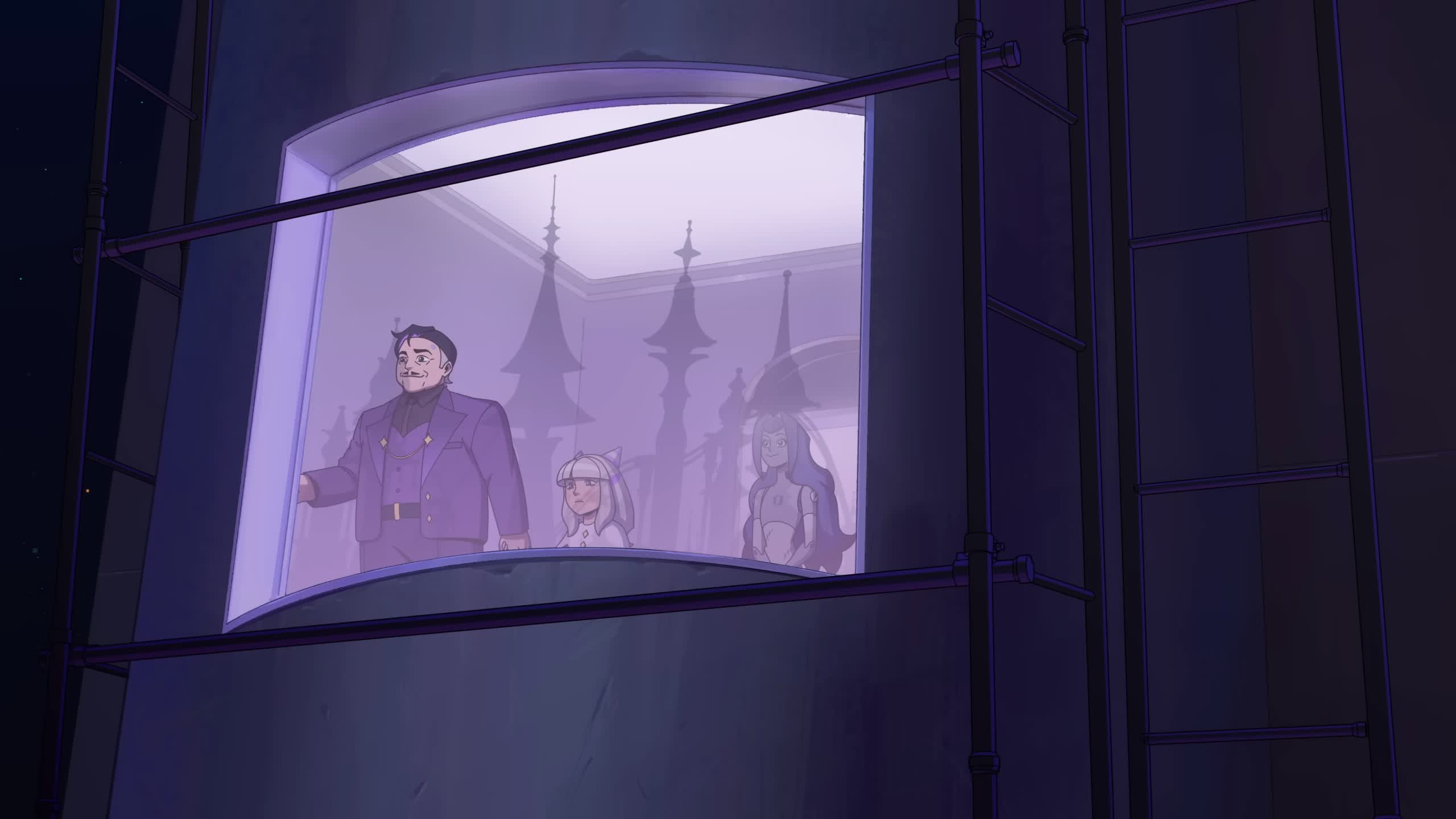
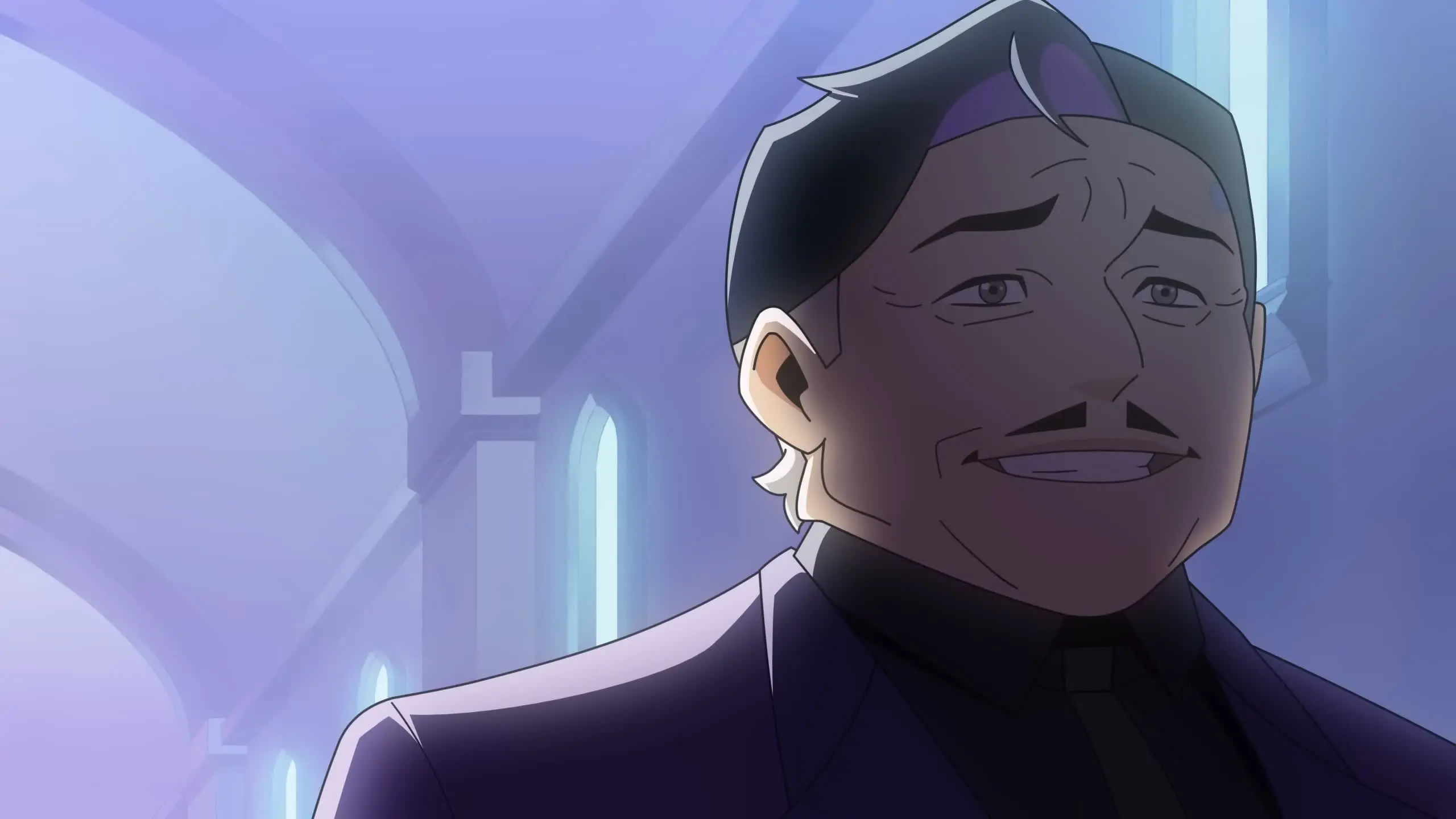
Orville Park is a charismatic showman and meticulous builder who positions Park Planet as a miracle and crowns an android princess, Guinevere, as its benevolent face. His camera-ready warmth invites trust, yet his systems are centralized, surveillant, and engineered to feel like magic. He is father to Olivia Park, to whom he presents the park as a monumental gift, and the architect of the Guinevere line that permeates operations above and below the clouds. In the present-day timeline he appears mostly via recordings, but choices he made years earlier keep catalyzing conflict among workers such as Andi and Frankie. Fans often read him as a playful riff on mid-century theme-park founders–equal parts host, technologist, and myth-maker. What makes him distinctive is how his image keeps governing the world even in his absence.
Orville Park: origin and first appearance
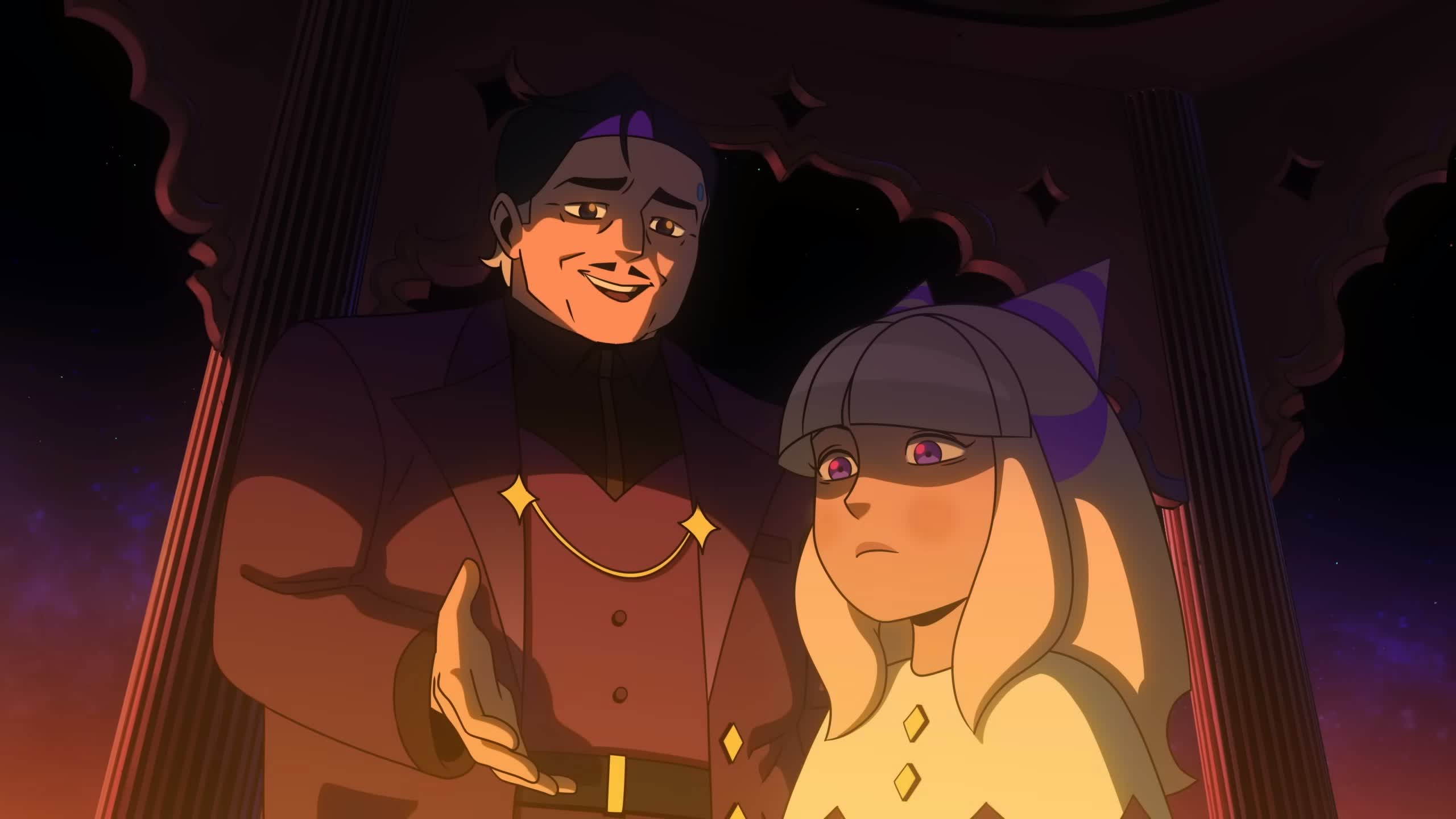
His first on-screen presence arrives in early promotional material, where he cheerfully introduces multiple Guinevere units as if unveiling a modern wonder. The episode debut follows in the pilot episode of Knights of Guinevere, released on , which opens on a fairy-tale prologue and then pivots into Orville’s Park Planet showcase. There, he frames the mega-park as a gift for his young daughter–an engineered kingdom where every guest is greeted by a princess who “remembers everything.” The series is produced by Glitch Productions.
Orville Park – personality and key traits
| Aspect | Description |
|---|---|
| The public showman | With theatrical warmth and impeccable cadence, Orville greets viewers like old friends, unveiling Guinevere variants as if performing stage magic. His language is soothing, the lighting gentle, and the camera placement intimate. He designs experiences–and he designs how those experiences are narrated back to you. |
| Control and corporate morality | Beneath the genial tone sits a strict belief in order. Orville presents Park Planet as a seamless ecosystem–transport, labor, entertainment, and memory–integrated into one guaranteed experience. The promise of care (“you are looked after”) doubles as the assertion of surveillance (“you are always seen”). It’s paternalism as policy: safety through centralized control. |
| Engineer and world-builder | He is as much builder as pitchman. The Guinevere line–many bodies sharing aligned “memory”–reads like a distributed system wrapped in fairytale language. Redundancy, synchronization, and recall are operational necessities dressed in crowns and stars. Orville’s genius lies in turning an infrastructure into a character you want to meet. |
| Family man with blind spots | Orville dotes on Olivia and frames the park as a way to “make up for” something unspoken. His love is sincere; his solutions are engineered at scale. The blind spot: when affection is expressed as ownership and control, the very systems meant to protect can harm the people within them. |
Orville Park – story arcs and development
The birthday gift that became a world
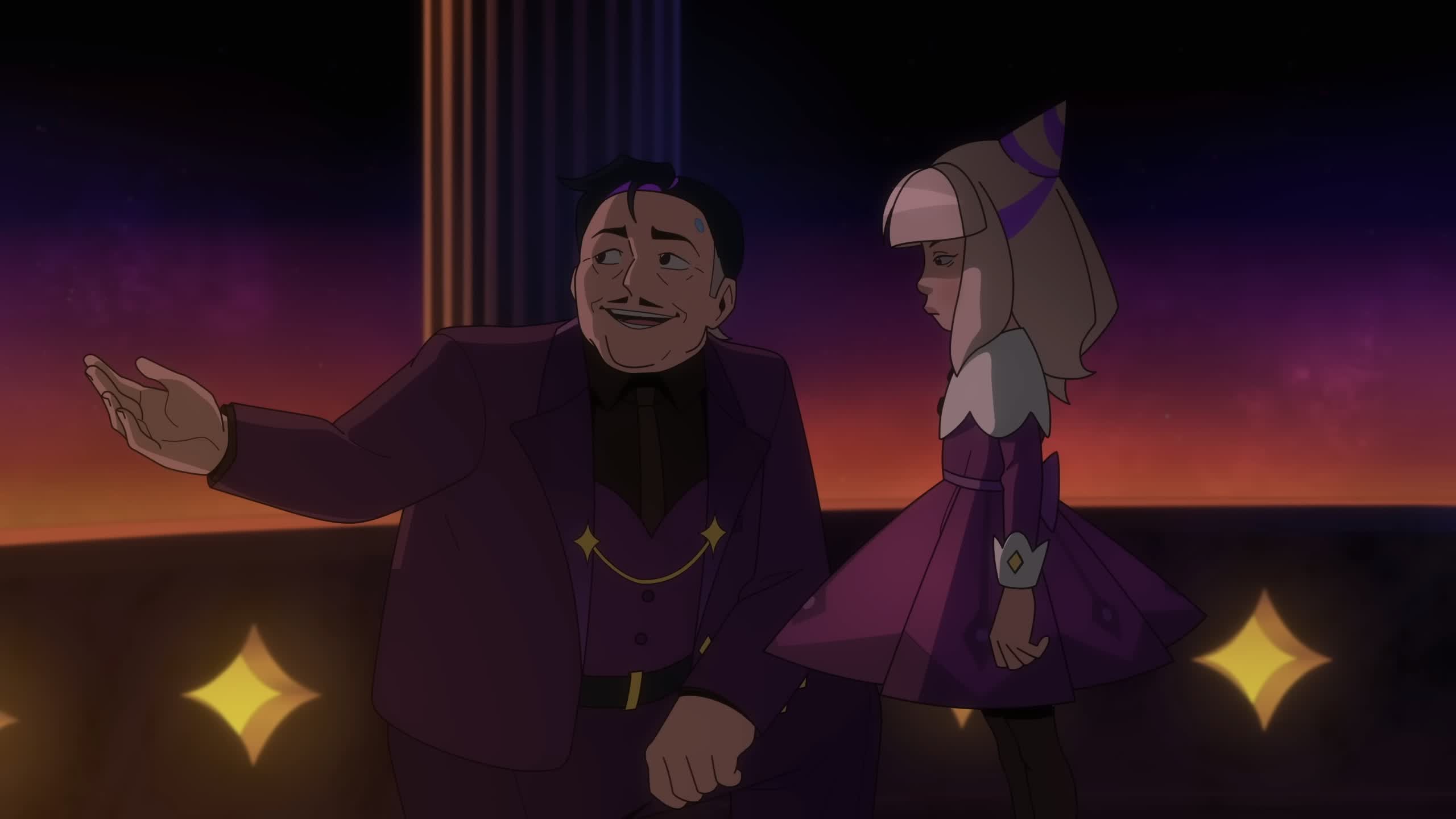
Orville unveils Park Planet to his daughter as a kingdom of joy and safety. The turning point is embedded in the pitch itself: a promise that the park can guarantee happiness by design. The consequence is a world that treats dissent as malfunction. His grand apology becomes everyone else’s daily operating system.
A princess who “remembers everything”
The cheerful line about Guinevere’s shared “magic” implies a technical substrate–data pipelines, synchronization, and fail-safes. Plot beats often hinge on what a particular unit recalls or fails to recall. The strength of Orville’s idea (care through perfect memory) becomes the site of its most painful contradictions.
Legacy in absence
In the contemporary timeline Orville Park is absent, present mainly through videos, protocols, and machines that speak in his voice. Characters are forced to wrestle with a founder’s will encoded into policy. Whether he is dead, retired, or hidden matters less than the fact that his design keeps deciding things.
Myth vs. machine
The park sells a fairy tale; workers live with the machine that makes it run. Encounters with security tech and sealed labs expose the distance between the advertisement and the floor. The show uses that gap–between smiling myth and grinding mechanism–as an engine for suspense and critique.
Orville Park and other characters
Olivia Park
| Character / Entity | Description |
|---|---|
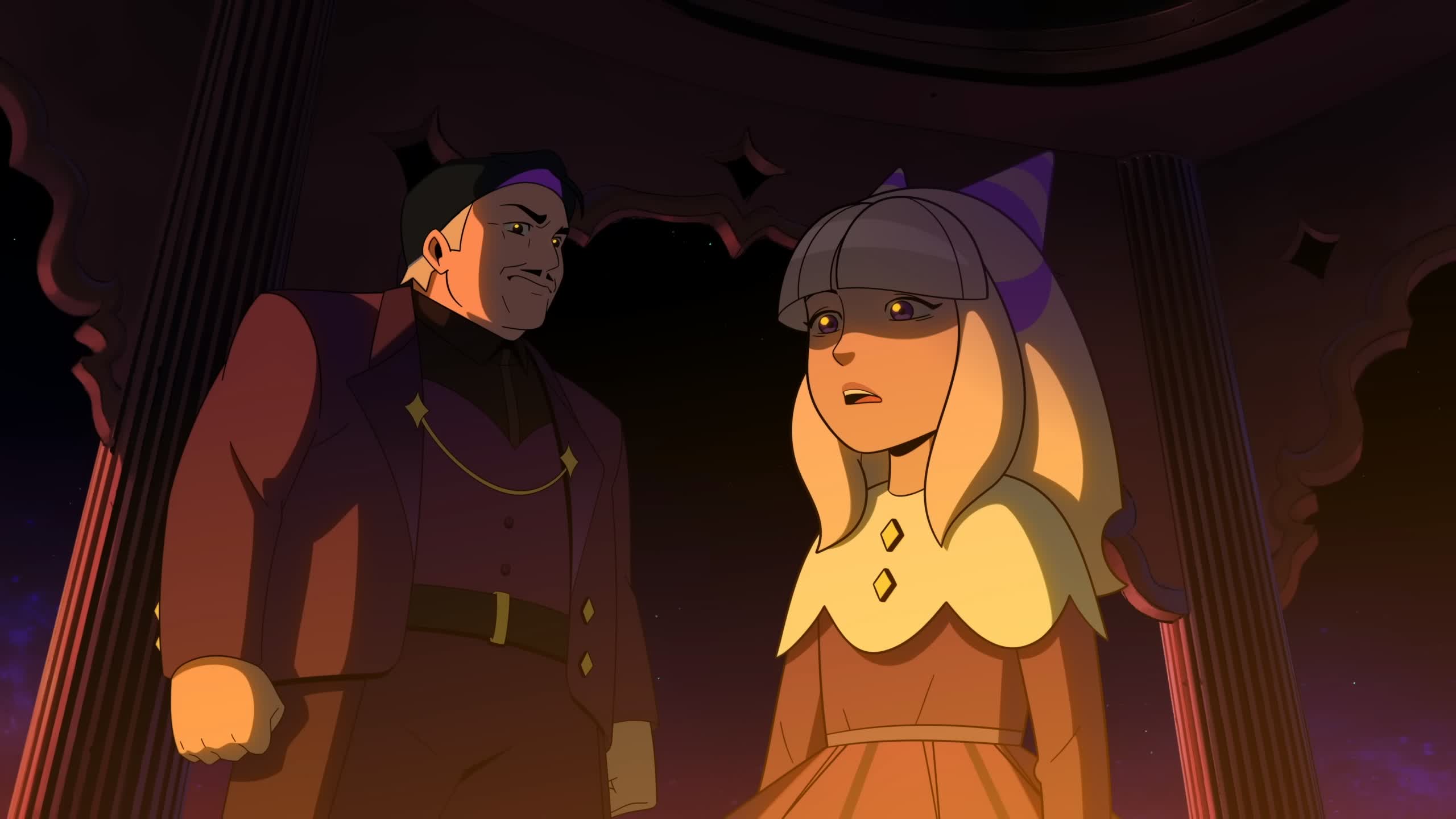
| Olivia Park | His most direct bond is paternal. Orville builds a world to keep Olivia safe and adored, effectively crowning her while making the rules invisible. The tenderness is real; the outcome is fraught. By gifting a kingdom made of procedures, he teaches that love can be administered rather than lived. |
| Guinevere (the android princess) | Guinevere is both creation and thesis. She is friend to guests, guardian for Olivia, and a network node for the park. To Orville, she proves that care can scale. To the narrative, she tests whether scaled care can still see a single person clearly. |
| Andi | Andi is an android surgeon shaped by the park’s technical doctrine. Her talents mirror Orville’s engineering values–precision, repair, control–yet her choices often push against the doctrine that made her. Through Andi, the series critiques the founder’s tools from the inside. |
| Frankie | Frankie experiences the park from below, as a worker and salvager. Orville’s smiling promises mean little next to scarcity and risk. Her determination to mend what’s broken (including one very specific android) stands as a moral counterargument to the idea that systems, not people, deliver care. |
| Sparky | Frankie’s father runs a salvage boat in the park’s shadow economy. The family’s livelihood is tied to the leftovers of Orville’s grand project. Sparky’s pragmatism offers a working-class reading of the founder myth: big promises leave big scrap. |
| Park Planet (as an institution) | The park itself behaves like a character. Orville speaks through it, and it keeps speaking for him. Protocols, signage, and iconography extend his presence, allowing his will to act even when he cannot. |
Orville Park: appearance, symbols, and recurring motifs
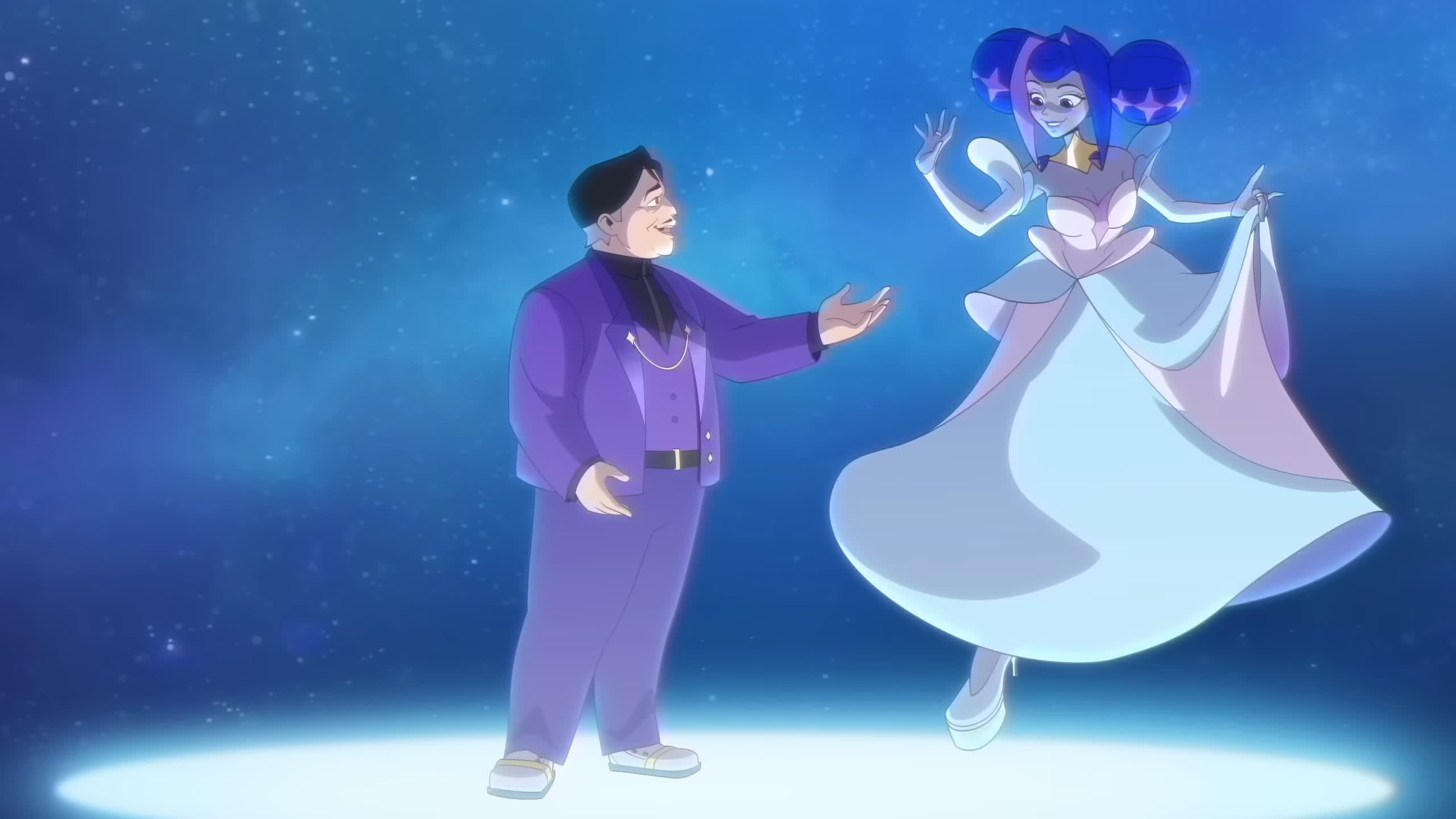
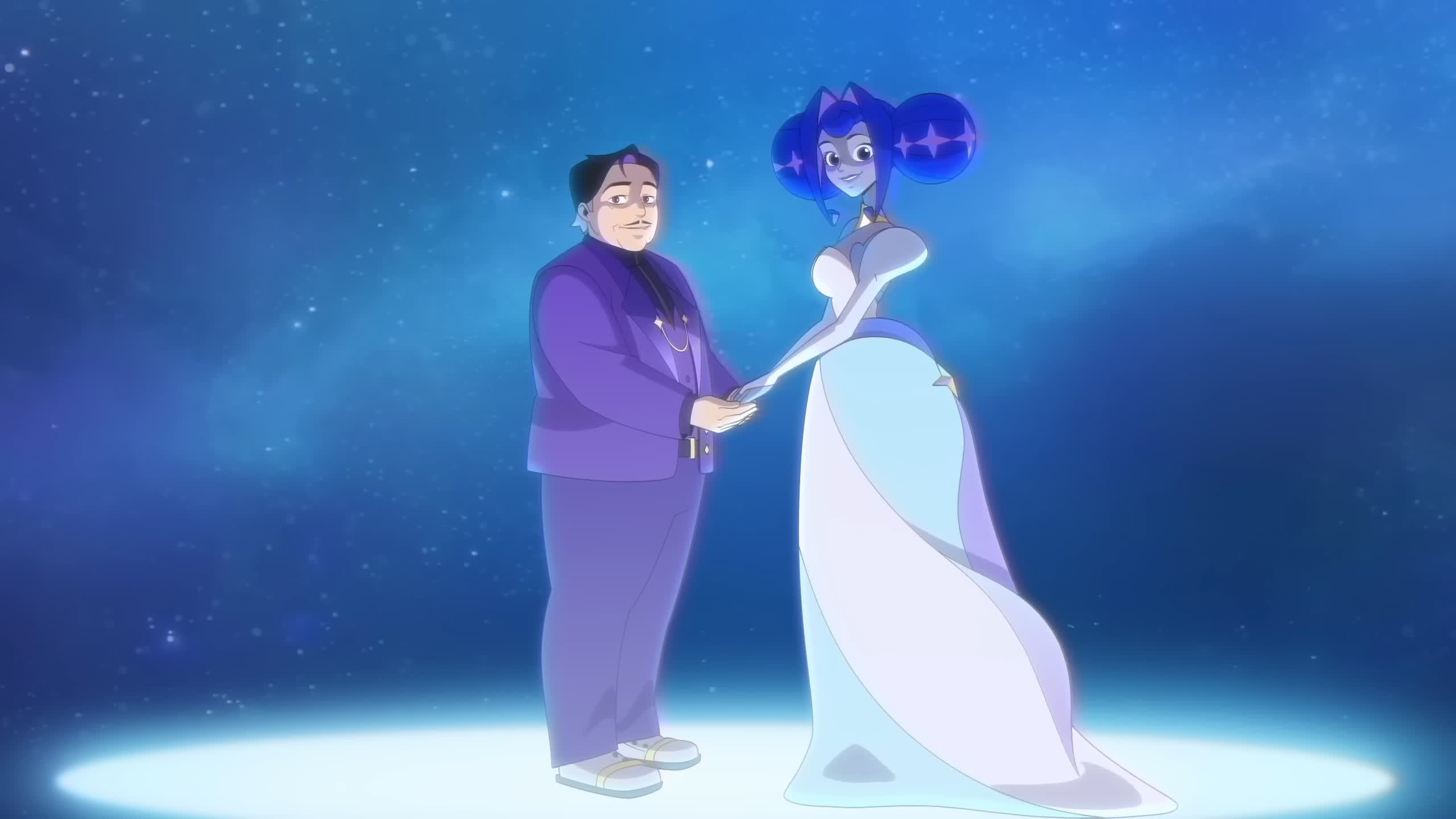
Orville is portrayed as a middle-aged Korean man with neat black hair touched with gray at the temples, a tidy moustache, and a small blue mark near his left temple. His signature look features a deep-purple suit, a chain with a four-pointed star pin, and the relaxed posture of a veteran host. The character design leans into soft lighting and inviting camera angles, making his speeches feel like personal invitations within the broader ensemble of Knights of Guinevere characters.
Motifs orbiting him include crowns and stars (regal branding and aspiration), vintage host aesthetics (trust through nostalgia), and–above all–multiplicity. When he gestures to “Guinevere… and Guinevere… and Guinevere,” he’s turning mass replication into comfort. That motif echoes everywhere: a park that reproduces joy with factory precision, and people asked to live with the seams.
Interesting details and quotes
- Voiced by SungWon Cho, whose smooth, theatrical delivery underscores the tension between welcoming host and totalizing founder.
- Creative leadership pairs Dana Terrace with writers John Bailey Owen and Zach Marcus, keeping character work at the center of genre spectacle.
- Knights of Guinevere marks Glitch Productions’ first full foray into serialized 2D.
- Pilot release date: , following teasers that established Orville’s “friendly host” persona.
- Design note: the purple palette and star pin visually align him with Guinevere’s regal branding while contrasting the park’s colder industrial grays.
- World-building hint: the “shared memory” for Guinevere reads like a distributed data network described in bedtime-story language.
- Popular fan theories debate whether he is truly gone or simply present in more secretive forms; the text leans on the consequences of his absence either way.
- Quote:
Oh, why, hello! Didn’t notice you there. Come closer.
- Quote:
This is Guinevere… and Guinevere… and yes–this is Guinevere as well.
- Quote:
Every Princess you meet will recall the cherished memories of you.