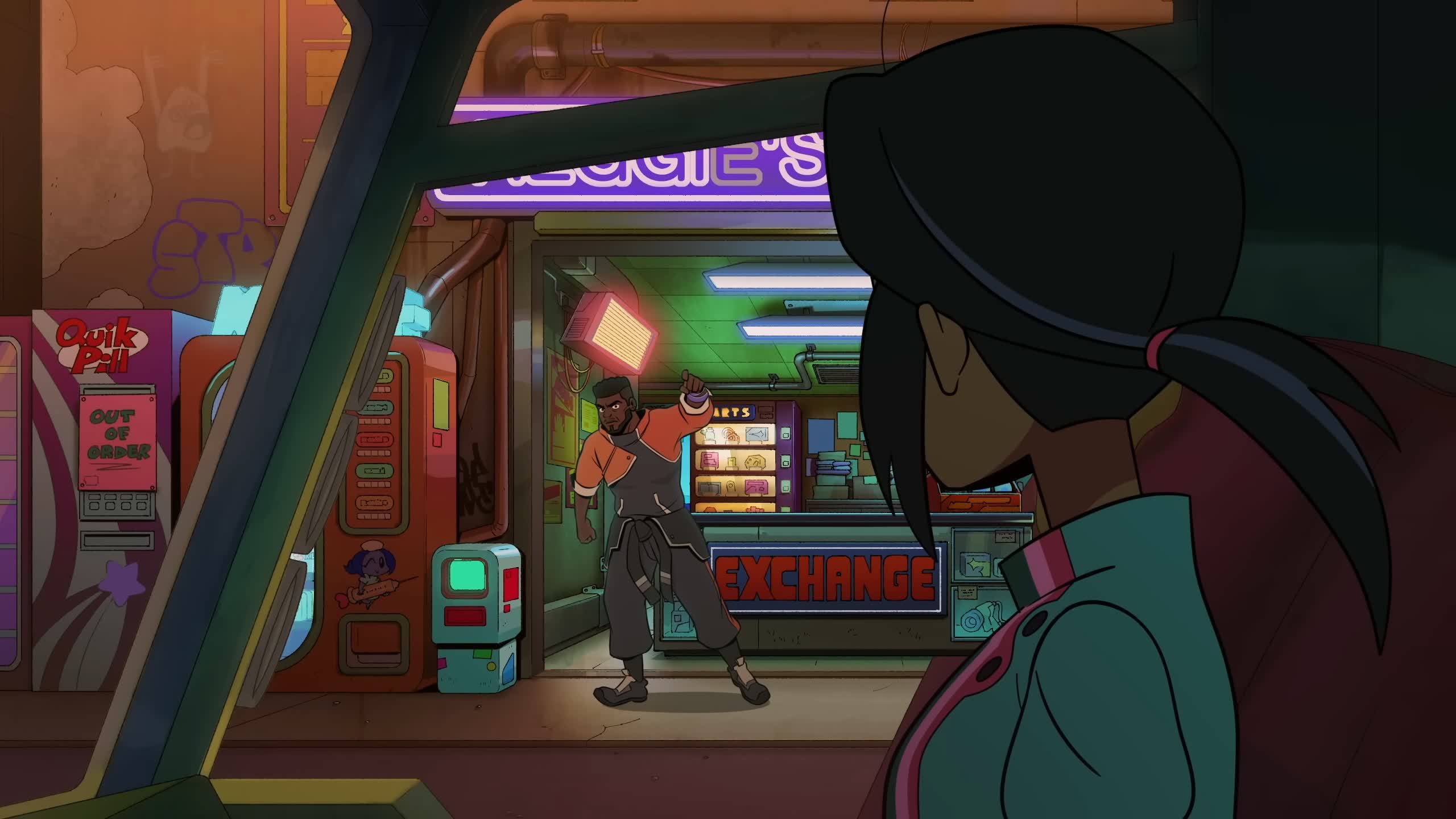
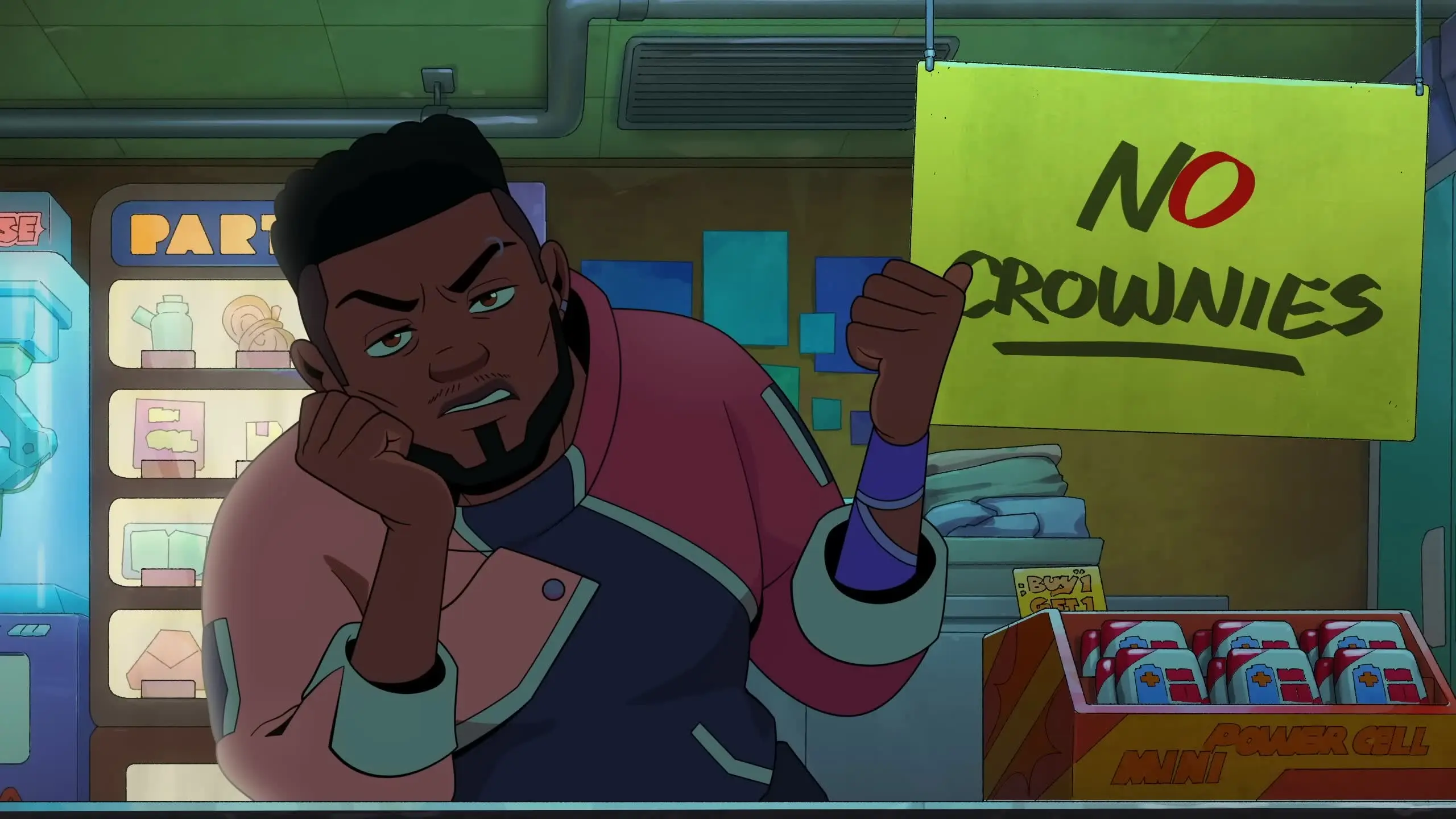
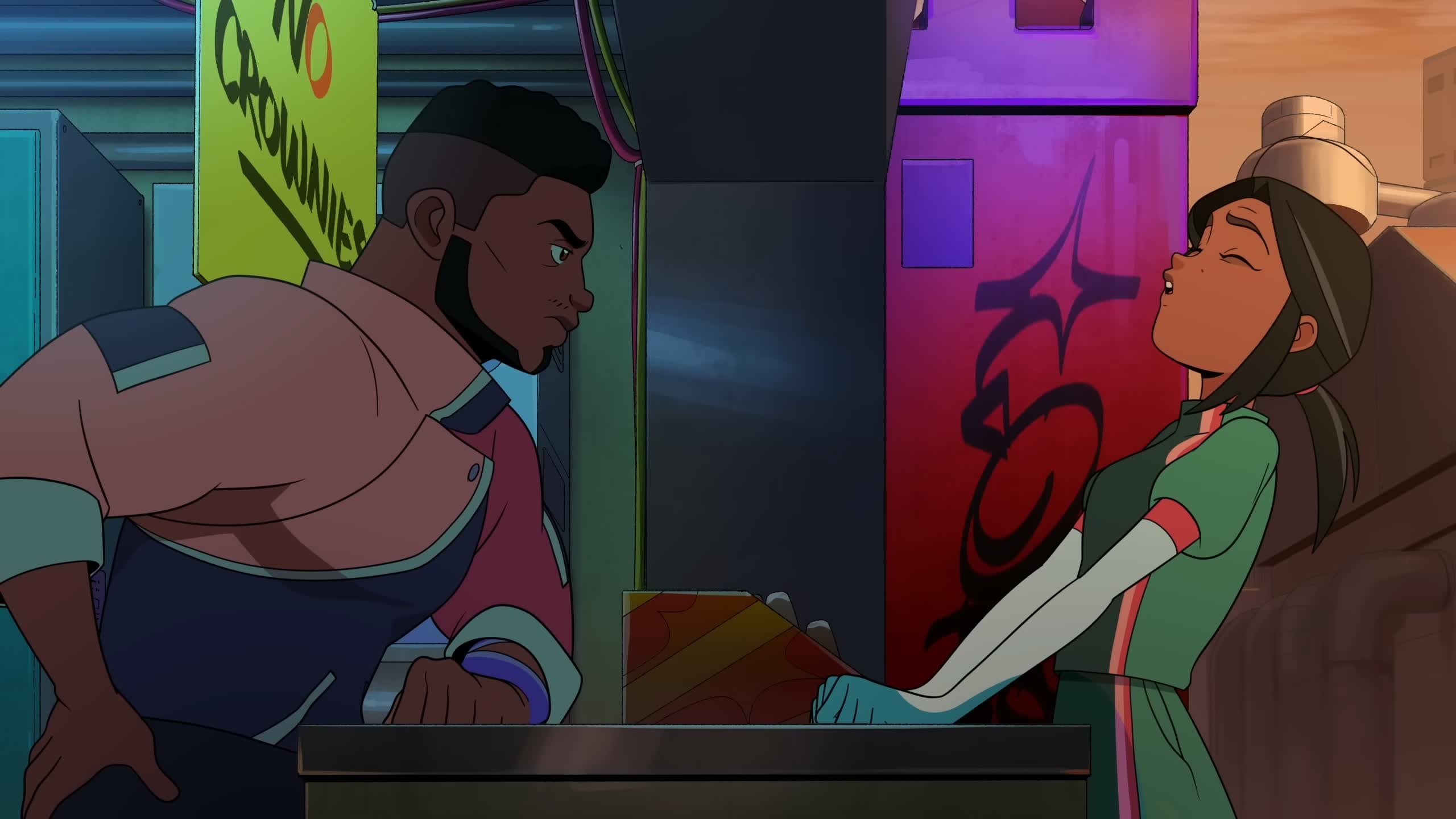
Reggie operates at the edges of Park Planet’s economy, choosing principle over politeness. He dislikes doing favors for park employees and isn’t shy about saying why. His temper flares quickly, but there’s a dry, almost theatrical humor in the way he vents. That combination makes him an effective foil for Andi and Frankie, whose scrappy optimism collides with his hardline cynicism. As a “face in the crowd,” he helps sell the texture of the world: a place where even minor figures carry history, grudges, and community ties. He’s not a true villain–more a neighborhood obstacle whose pride and boundaries define his scenes.
Reggie: origin and first appearance
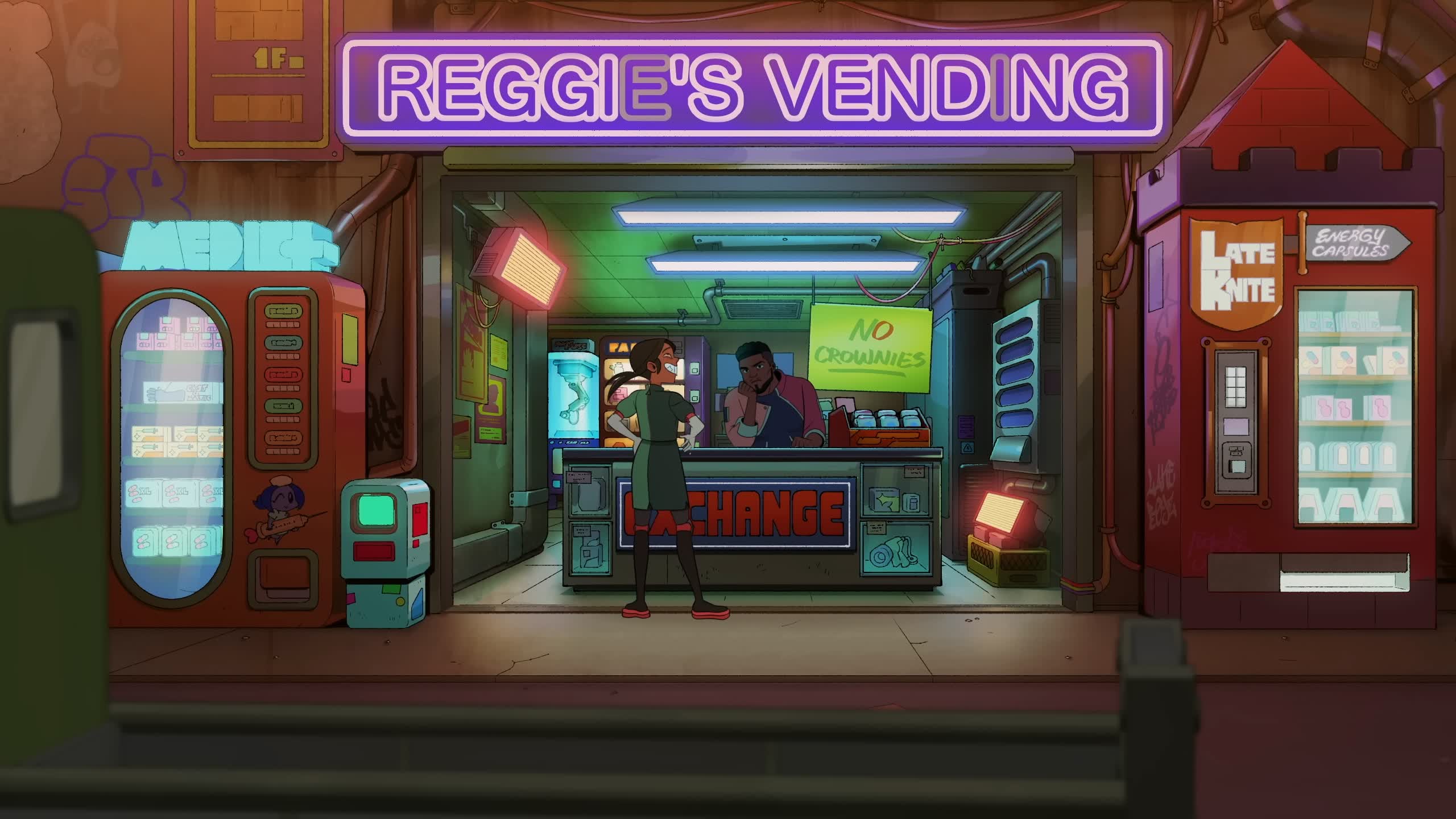
Reggie debuts in the pilot episode of Knights of Guinevere, released on . The series is a fully 2D production from Glitch Productions, co-created by Dana Terrace, John Bailey Owen, and Zach Marcus. In his first scene, the vendor refuses to make change for a park engineer, exposing the simmering resentment between locals and staffers–nicknamed “crownies”–and setting the tone for Park Planet’s street politics.
Reggie’s personality and key traits
| Aspect | Description |
|---|---|
| Street pragmatism and small-business pride | He runs his kiosk with a strict personal code: no freebies, no bending rules, no special treatment for Park Planet workers. When Andi tries to charm him into swapping bills for coins, his answer is an emphatic no. He’d rather lose a sale than look soft, a sign of working-class pride under the shadow of corporate spectacle. |
| Boundary lines and bias | He uses the term “crownies” for park staff, a shorthand that encodes loyalty to the locals. The label can turn a mild disagreement into a cultural clash. His bias narrows his options, but it mirrors the show’s social fault lines and gives voice to the frustrations of people living beneath the park’s glitter. |
| Temper with a comic edge | His agitation rises fast when he feels cheated. Yet his outbursts–braggy, performative, occasionally absurd–carry comedic snap. The bark is loud, public, and oddly entertaining, serving as neighborhood theater while still revealing his insecurity about being taken advantage of. |
| Streetcraft and situational awareness | He watches his machines, parts, and foot traffic closely. Not a tinkerer like the protagonists, he nonetheless understands margins, risk, and the value of stock–knowledge that keeps him vigilant in a marketplace where scavenging and stealing blur. |
| Grudge-holding, not ruthless | He remembers slights–especially those that cost him merchandise–but he isn’t a mastermind. His threats feel more like playground one-upmanship than calculated menace, keeping him firmly in “recurring nuisance” territory rather than outright antagonist. |
Reggie’s story arcs and development
The vending dispute
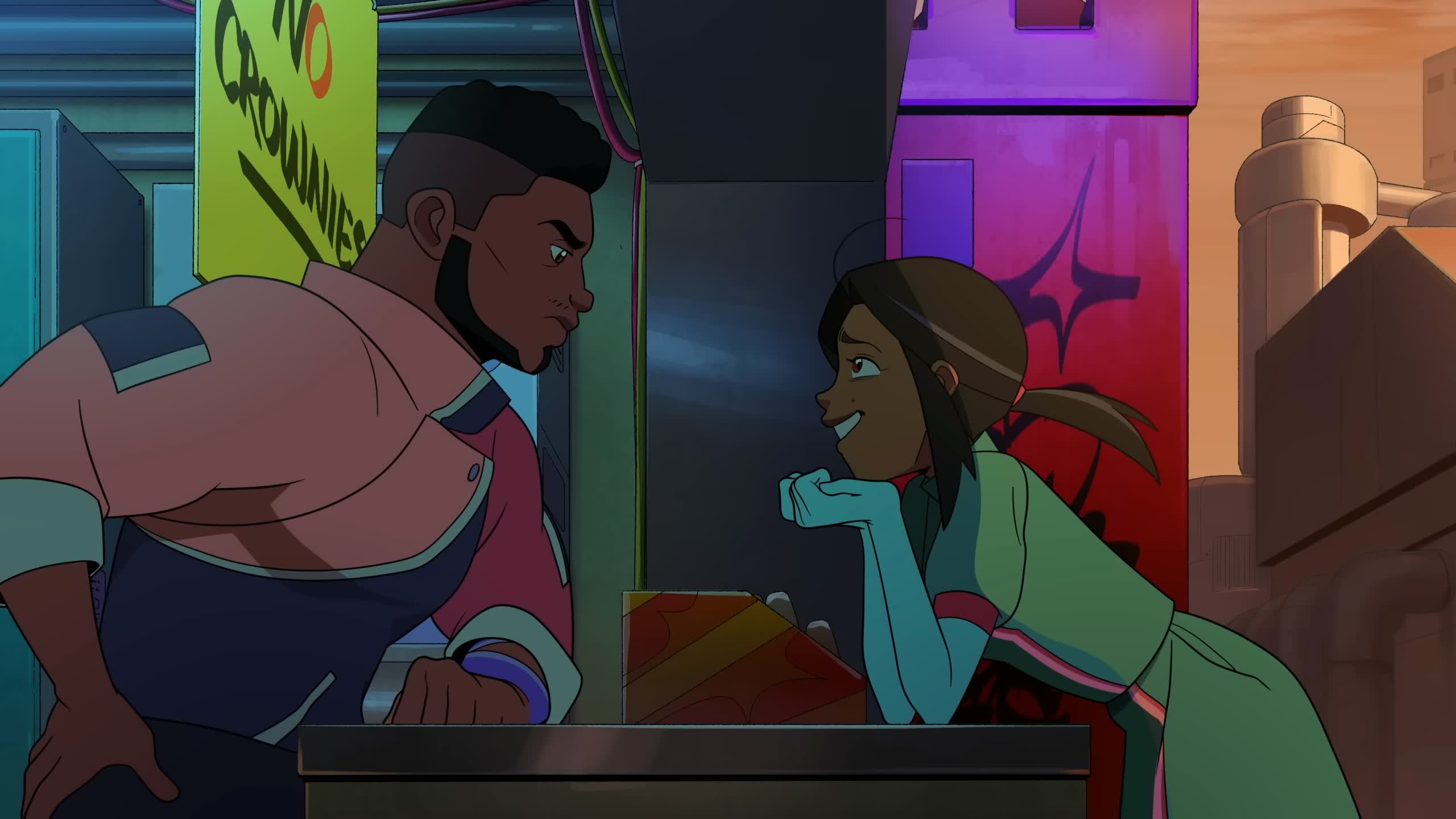
Beginning. A routine errand turns into a standoff when a park engineer asks him to break a bill.
Turn. He refuses on principle once he learns who she works for, escalating a simple cashier moment into a statement about loyalty.
Consequences. While Andi argues, Frankie quietly hacks one of his machines for parts. When he notices, he erupts–furious at the theft and promising payback the next time they cross paths at the game table.
The “crownies” divide
Beginning. His slang brands park staff as privileged outsiders.
Turn. The label turns customer service friction into a cultural scuffle, revealing long-standing resentment.
Consequences. The failed negotiation helps push the protagonists toward bending rules, sparking a brief chase and cementing his role as an everyday antagonist in Park Planet’s economy.
Old classmates, new walls
Beginning. Andi hints they knew each other from school, hoping shared history will smooth the transaction.
Turn. Familiarity irritates him; long-ago ties don’t move the needle.
Consequences. The appeal to the past falls flat–he still refuses service, signaling how far locals and park workers have drifted apart.
Reggie’s relationships with other characters
| Character | Description |
|---|---|
| Andi | A strained familiarity defines their dynamic. She tries charm and shared history (“we went to school together”) to get a simple favor; he digs in. The moment frames Andi’s precarious status and his refusal to blur boundaries with staffers. |
| Frankie | Frankie’s quick hands and problem-solver instincts put her at odds with the vendor. She treats the vending machine like a puzzle; he sees his livelihood under attack. Their brief cat-and-mouse beat is brisk, funny, and telling. |
| Guinevere | There’s no direct interaction, but his kiosk exists in the mascot’s shadow. The culture around the android princess shapes his customer base and signage, making him a proxy for everyday people navigating grand mythology. |
| Sparky | No explicit scene together, yet both move through the same gritty marketplace of salvage, parts, and razor-thin margins. They mirror each other’s transactional worldview, one through the lens of vending, the other through tinkering. |
| Olivia Park | They don’t meet on screen, but his resentment toward the park machine aligns with the broader pushback against Olivia’s power. He embodies the street-level counterpoint to top-down control. |
| Orville Park | As a founding figure in the park’s lore, Orville represents the system Reggie pushes against. The tie is structural, not personal: the vendor’s attitude is shaped by the legacy Orville left behind. |
Reggie’s appearance, symbols, and recurring motifs
He has a dark brown complexion, sturdy build, and a clean fade. A trimmed beard and goatee frame his face; a left-brow piercing and a single earring add flair. His outfit is practical with personality: a two-tone jacket (pink and navy), gray baggy pants, wrist wraps on his right arm, and black-and-white shoes. The overall signal is “hands-on merchant”–functional clothes with just enough style to stand out at a kiosk.
- Vending machines and spare parts. Emblems of everyday economy and the blurred lines between selling, scavenging, and stealing.
- The “crownies” epithet. A verbal motif that compresses class tension into a single tag.
- Mahjong. A throwaway gag turned character beat, hinting at his social circle and where grudges get settled.
- Neighborhood posture. Crossed arms, point-and-shout body language, and public performance of anger.
Interesting details and quotes
“Your ass is going to pay next time at mahjong!”
“I went to school with you, you know me.”
- First appearance: the pilot episode released on .
- Occupation: owner of Reggie’s Vending.
- Home setting: Park Planet–the street tier beneath corporate spectacle.
- Distinctive look: left eyebrow piercing plus a single earring.
- Expressed dislikes: theft from his machines and anyone he calls “crownie.”
- Community tie-in: Andi says they attended the same school, hinting at shared roots.
- Function in narrative: a grounded foil whose petty conflict spotlights class and power dynamics.
- Voice actor: David C. Cherry.
- Running gag: his vow to “settle it at mahjong” became a mini-meme among viewers.