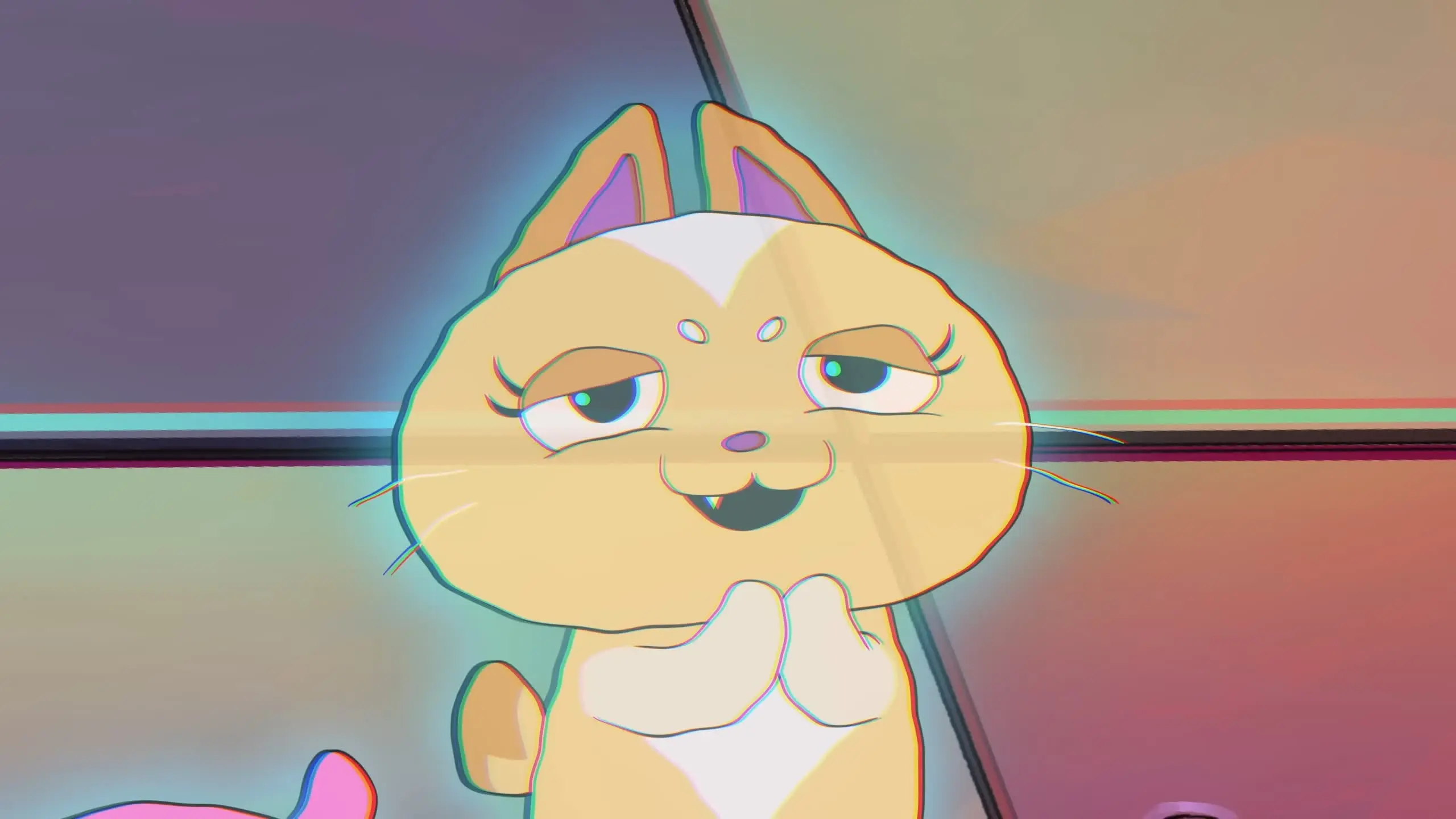
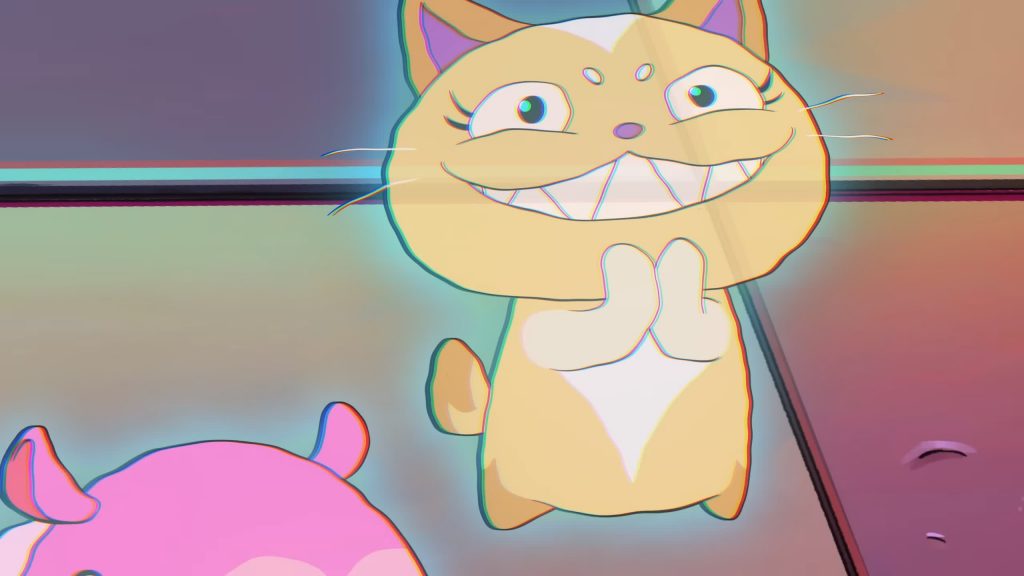
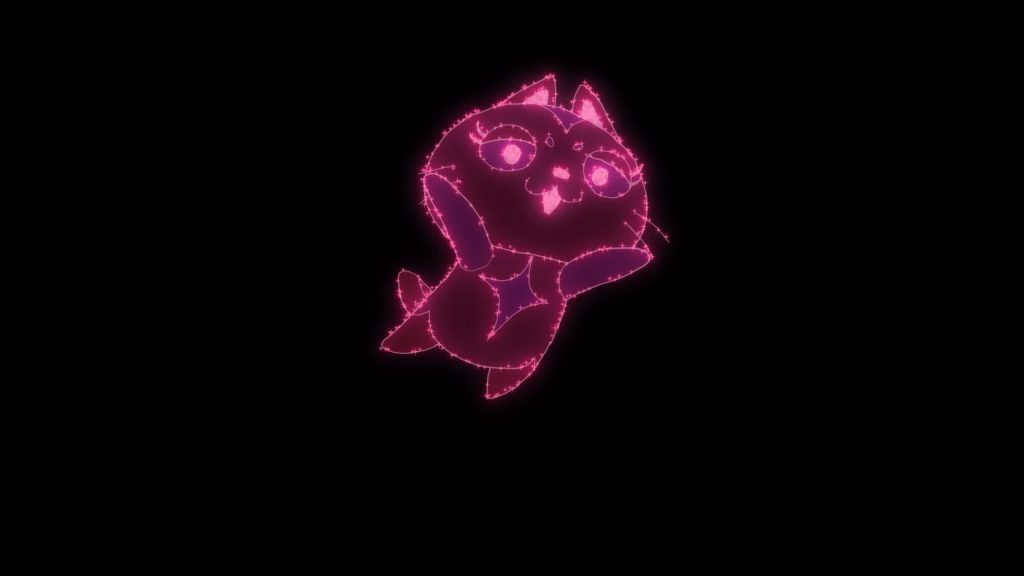
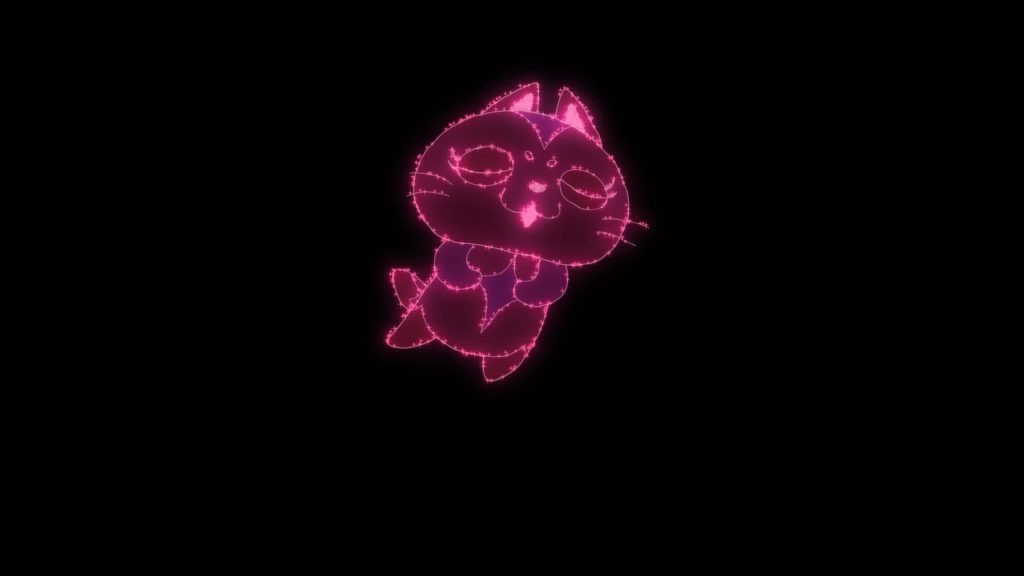
Space Cat is a catlike apparition with half-lidded green eyes and a soft blue shimmer who usually appears to Frankie when she is alone with her thoughts. She speaks in crisp, mischievous bursts that mix moral prodding with gallows humor, so even a brief scene can feel like a full debate happening out loud.
The character’s design subtly echoes the series’ princess mascot, binding the hallucination to the world’s larger mythos. Protective but never passive, Space Cat functions as comic relief, thematic signpost, and pressure valve all at once, reflecting Frankie’s stress and values back at her with a sly half-smile.
Origin and first appearance
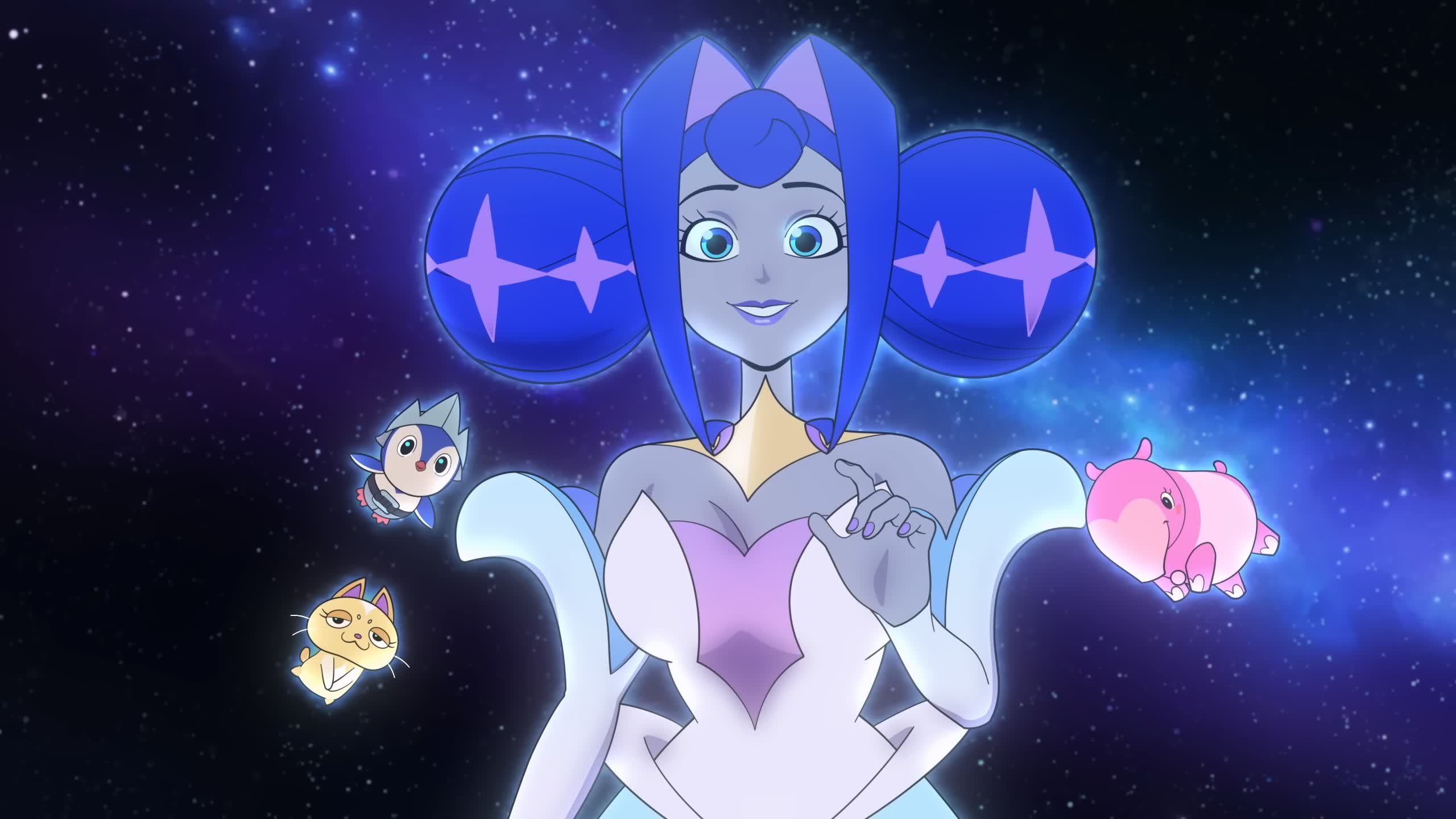
Space Cat makes her on-screen debut in the Pilot, released on September 19, 2025. The 26-minute opener introduces the floating spectacle above, the industrial sprawl below, and the show’s knack for turning inner conflict into something visual, funny, and faintly unnerving.
She surfaces when Frankie’s inner voice needs shape and bite, and her first sounding board in that register is Space Penguin, whose off-kilter enthusiasm helps establish the cosmo-pets as more than a one-line gag.
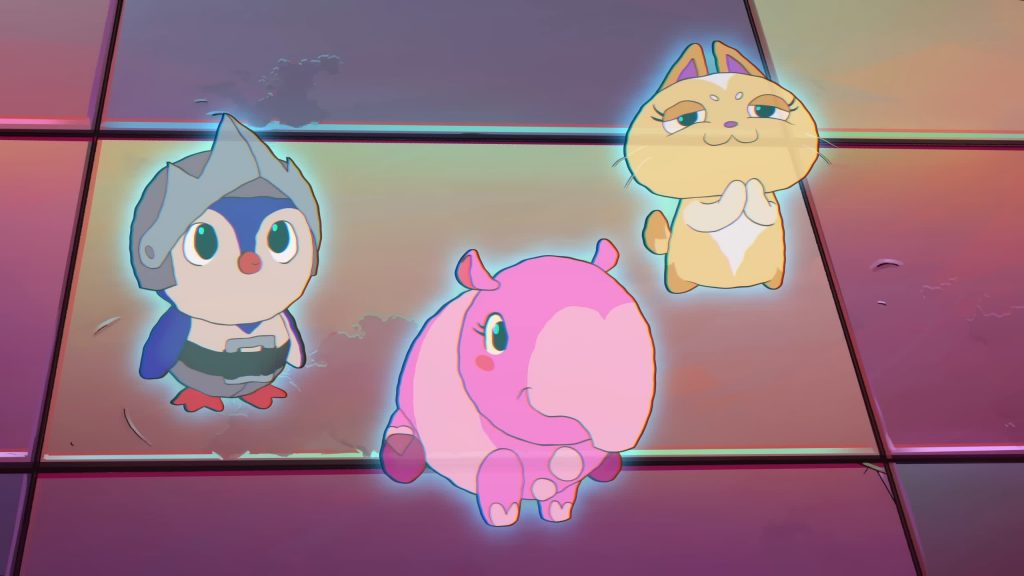
The trio is completed by Space Tapir, giving Frankie’s private debate a full miniature chorus: wit, encouragement, and alarm folded into three distinct silhouettes. That balance is a big part of why Space Cat lands so fast despite limited screen time.
Within the broader structure of Knights of Guinevere–Glitch Productions’ adult sci-fi psychological thriller, co-created by Dana Terrace, John Bailey Owen, and Zach Marcus–the character immediately signals the series’ blend of whimsy, class tension, and dread. Her English voice is provided by Erin Nicole Lundquist, whose dry delivery gives the cat a teasing authority without sanding off the warmth.
Personality and key traits
Set against the wider character roster, Space Cat stands out because she is not just a mascot-side hallucination; she is the most pointedly political of Frankie’s inner companions, forever tugging jokes toward ethics and fantasy toward consequence.
Aspect Description | Emotional barometer | Space Cat materializes when Frankie is isolated or under pressure, acting as a gauge for frustration, hope, and fear. Her half-smile and unhurried delivery frame intense beats with a lightly sardonic edge, helping the audience read how overwhelmed Frankie feels without pausing the plot. | Ethics with claws | Her worldview skewers hereditary power and empty spectacle. She is known for a cutting one-liner about monarchs and often reframes “rules” as choices with real human costs. Rather than preach, she nudges Frankie to ask who benefits from obedience. | Instigator and protector | Space Cat can be pushy–prodding Frankie to take risks–but the drive is protective. She wants the best for her friend and will advocate for bold action when passivity equals harm. The blend of agitation and care reads like the way people talk to themselves while working up the courage to act. | Visual wit and mimicry | Design details connect her to the park’s princess imagery, suggesting Frankie’s psyche collages omnipresent icons into personal guides. The hologram-style aura underlines that she isn’t physically “there,” and when Frankie’s state shifts, the outline can shift too–visualizing psychological intensity without heavy exposition. | Chaotic-good humor | Even when she’s snarky, Space Cat lands on the side of empathy. She presents contrarian takes as jokes, keeping the tone buoyant while deflating the story’s grimmest pretensions. It’s a vital tonal role in a series that dances between fairy-tale nostalgia and industrial horror.
Story arcs and development
1) The cosmo-pets enter: a mind given voices
Frankie’s isolation breeds inner debates that need expression, so Frankie doesn’t simply “hear” a conscience–she externalizes it. Space Cat turns private hesitation into sharp, playable dialogue, which lets the show dramatize thought without flattening it into exposition.
2) The decision engine
Whenever a choice starts splitting along practical and moral lines, the contrast with Andi becomes even clearer. Where Andi tends to anchor the scene in survival, procedure, and immediate risk, Space Cat pokes Frankie toward agency, reframing inaction as its own decision with its own cost.
3) Fairy tale vs. factory floor
Space Cat punctures pageantry in ways that quietly anticipate the worldview embodied by Olivia Park. She keeps reminding Frankie–and the viewer–that symbols are never neutral once they start protecting hierarchy, nostalgia, or institutional cruelty.
That anti-pageant streak also makes the cat a useful counterweight to the legacy machine built by Orville Park. His sales-pitch mythmaking promises comfort through spectacle; Space Cat’s jokes keep dragging that promise back toward labor, power, and the people forced to maintain the fantasy from below.
4) After-images and setup for future episodes
For now, the publicly released episode lineup still leaves Space Cat with a compact but memorable footprint. Even so, that first appearance does a lot of work: it establishes how the series externalizes inner conflict and how Frankie’s stress may keep evolving into more stylized voices as the stakes rise.
That possibility feels especially sharp once the story brushes the colder machinery represented by the Nurses and the lower-lab logic of enforced care. In that context, Space Cat reads less like random whimsy and more like Frankie’s psyche building its own defense language against a world that keeps packaging violence as maintenance.
Relationships with other characters
Character / Entity Description | Frankie | The core relationship. Space Cat is Frankie’s candor filtered through a teasing friend–supportive but unsparing. She coaxes action when paralysis would cost more and validates Frankie’s instinct to care even when the world says not to. | Andi | Space Cat does not address Andi directly, but she influences how Frankie shows up in their friendship. When Andi’s pragmatism collides with Frankie’s impulses, the cat is the inner debater pushing Frankie to articulate what feels right instead of simply going along. | Guinevere | As symbolism, Space Cat acts like a counter-narrator to the princess brand: a warm voice that challenges a fairy-tale ideal from inside the viewer’s head. The star echo in her design visually binds her to the iconography she questions. | Olivia Park | Olivia stands for legacy, corporate stewardship, and brittle control. The cat’s anti-pageant commentary implicitly critiques the system Olivia embodies, urging Frankie to resist narratives that sanctify authority without accountability. | Sparky | Sparky, Frankie’s dockside authority figure and rough mentor, reminds her to survive first and dream later. Space Cat balances that with a reminder that survival without dignity can become another form of loss. | Space Penguin and Space Tapir | The other cosmo-pets amplify or contest the cat’s nudges. Together they operate like a small chorus: Cat as razor wit, Penguin as off-kilter encouragement, Tapir as alarm bell. The trio’s dynamic keeps the inner monologue varied and dramatically useful. | Park Planet (the system) | While not a person, the park-as-institution functions like a character. Space Cat exposes the moral math beneath its sparkle, urging Frankie to weigh human cost over spectacle.
The cat’s pushback lands best when it is set against the dockside realism of Sparky. He treats risk, labor, and salvage value as hard facts of life; Space Cat keeps insisting that the “realistic” option can still be morally evasive.
At the street level, figures like Reggie help clarify why Space Cat’s commentary matters. Even minor conflicts in this world are shaped by scarcity, status, and hustler logic, so the cat’s jokes often do the work of exposing the system inside the banter.
Once the scale jumps from local bosses to armored myth, her lines also become a form of psychic bracing against threats like Sir Arthur. She softens dread without denying it, which is exactly why her brief scenes linger.
Appearance, symbols, and recurring motifs
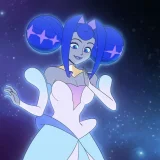
Visually, Space Cat is compact and plush-like, with a head slightly wider than her body, small triangular ears, and half-lidded green eyes that sell her laid-back, knowing vibe. Her fur is yellow with deeper accents on the ears, eyelids, legs, and tail tip, while the light-yellow star markings on her head and belly echo the icon language wrapped around Guinevere and the broader princess myth.
She also fits neatly into the show’s toyetic storybook grammar, which is why viewers often connect her silhouette to adjacent creatures such as the Star Pups. Even when Space Cat is being snide, her rounded build and soft glow keep her tethered to the same commercial-fairytale visual language the series is busy interrogating.
Fandom, merch, and current status
In fan spaces, Space Cat is usually folded into a miniature trio with Space Penguin and Space Tapir, so terms like “cosmo-pets” and “Space Trio” have become natural shorthand for Frankie’s outsourced conscience. The pilot’s breakout response on YouTube only accelerated that reading, helping the cat punch above her screen-time weight.
As of spring 2026, the public watch page still centers the pilot as Space Cat’s only released episode appearance, but that no longer feels like a closed loop. The series has already been greenlit for full production, and official GLITCH merch has folded the character into the “Space Trio” keychain line, which makes her feel less like a throwaway visual gag and more like one of the pilot’s earliest breakout side characters.
Interesting details and quotes
Space Cat’s English voice is Erin Nicole Lundquist, who also voices an older version of Olivia Park in the pilot.
The character’s anti-monarchy line mirrors a famous historical dictum, adding intertextual bite to her critique of pageantry.
Fans commonly group Space Cat with Space Penguin and Space Tapir as the cosmo-pets, often reading them as facets of Frankie’s conscience.
The pilot episode runs 26 minutes, so Space Cat’s clarity of design and dialogue has to work quickly–and it does.
The blue shimmer emphasizes that she is imagined; when Frankie’s mental state spikes, the outline can intensify into a hotter hue.
By early 2026, the cosmo-pets had already crossed into official merch through GLITCH’s Space Trio Plush Keychains.
As of spring 2026, the pilot remains Space Cat’s only released screen appearance, even though the series itself has already secured a full-series greenlight.
“All monarchs are usurpers and descendants of usurpers.”“Rise, lady Frankie!” (delivered by the cosmo-pets chorus in support of decisive action)“Don’t think of it as stealing. Think of it as rescuing!” (heard as a teasing goad during Frankie’s inner debate)