Watch online
By the time this episode landed, The Amazing Digital Circus had already proved it could pull giant numbers on YouTube. Episode 3 gave the show something just as important as view velocity: a reputation for range. It is a Halloween-flavored bottle episode, an in-world ghost story, a character study, and a quietly nasty thesis on the difference between being entertained and being cared for. That is why the chapter keeps coming up in ranking debates even after the season expanded.
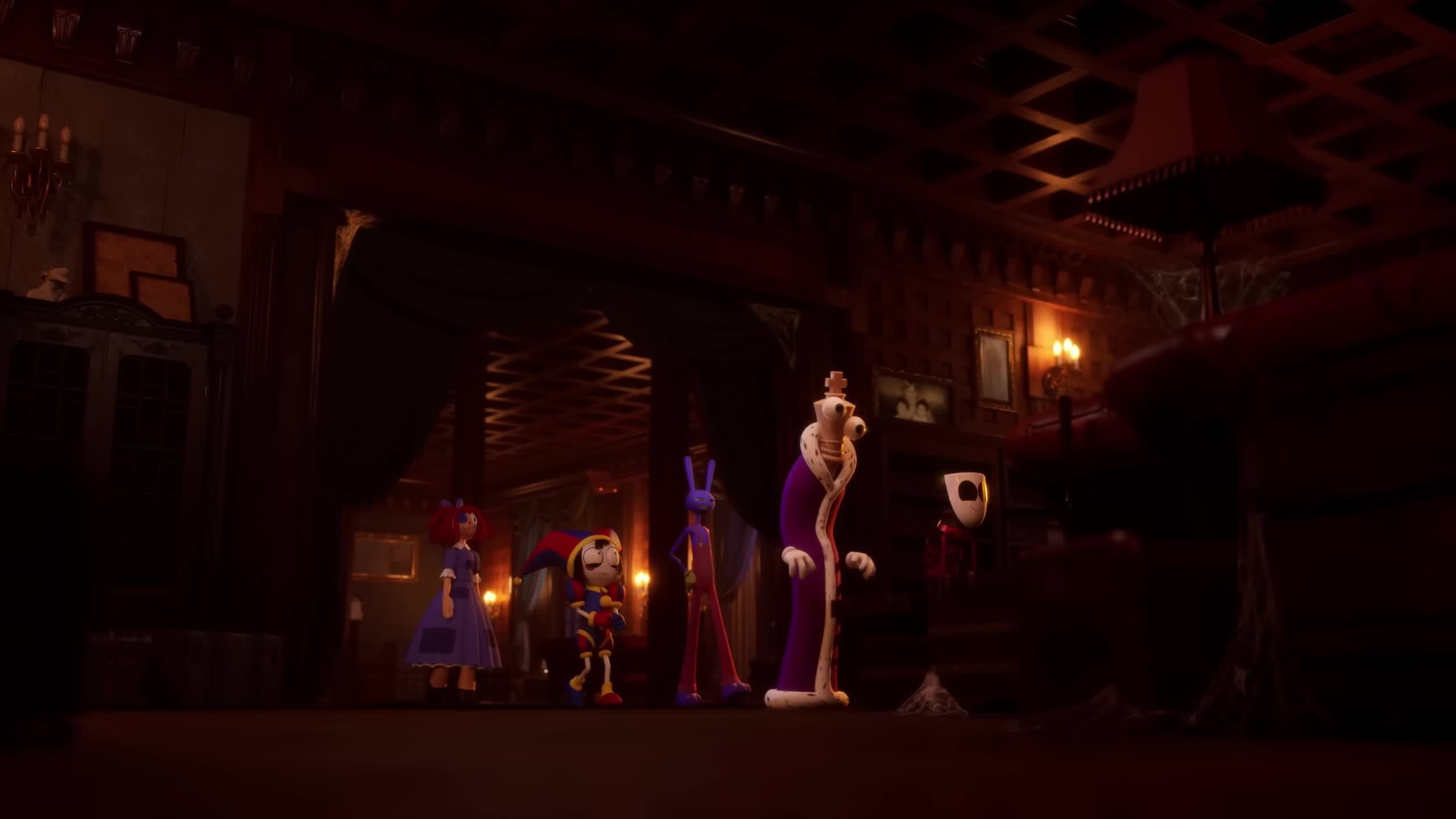
Episode 3 turns The Amazing Digital Circus away from pure “look at this cursed toybox” novelty and into something more durable: a horror-comedy that can let a joke breathe just long enough for it to curdle. Coming straight after the sugar-rush ambushes of Episode 2, “The Mystery of Mildenhall Manor” swaps candy highways for ancestral rot, putting the cast in a house where every gag seems to come with a hidden invoice. The episode is still funny, still quick on the cut, still happy to let Jax act like the rudest tour guest alive – but it is also the first chapter that truly trusts silence, hesitation, and emotional recoil.
That matters even more now because the series no longer exists as only a viral pilot plus two strange adventures. Seen inside the fuller run collected on the Digital Circus episode guide, Mildenhall Manor plays like the chapter where the show locked in its emotional grammar: bright setup, ugly undercurrent, then a left turn into real vulnerability before the audience has time to put its guard back up. It is the kind of episode that looks self-contained on first watch and structural on rewatch.
The immediate contrast with the pilot is part of what makes it work. Episode 1 weaponized disorientation – a new arrival, a wrong body, a fake exit, a terror you do not yet have language for. Episode 3 does something subtler. It drops the cast into a clearly themed map, gives them rules, props, and a haunted-house premise, then reveals that the scariest thing about the manor is not that it contains a monster, but that it keeps translating fear into story logic. The house has lore, and the lore makes everything worse.
Episode 3 at a glance
Officially, this was the day the show broadened from an internet event into a cross-platform release story. Episodes 1–3 arrived on Netflix the same day Episode 3 launched on YouTube, and that timing helped turn a single spooky chapter into a milestone for the whole series. The official promotional angle was wonderfully blunt: Kinger gets a shotgun, Zooble goes to therapy, and Pomni falls into the episode’s nastiest emotional pit. It sounds like a joke, and the episode uses that joke as camouflage for some of its heaviest material.
- The manor gives the series its cleanest horror map up to that point: one location, multiple tones, escalating rules.
- The split structure lets the episode run three emotional tracks at once without feeling messy.
- Kinger stops being “just the weird one” and becomes an emotional anchor.
- Zooble gets the series’ most direct identity-oriented dialogue so far.
- Pomni learns that surviving the circus is not only about finding exits; it is about managing what the place does to her mind.
Haunted Mansion Setup: Tone, Genre, and Why It Still Works
The manor’s first great trick is that it looks like a joke about haunted-house tropes until the episode lets the place breathe. The crackling thunder, exaggerated organ stings, and dusty taped monologues all feel deliciously artificial at first, but the script keeps feeding those elements through the doomed voice of Baron Mildenhall, whose recordings turn the map into a cautionary tale about fear becoming doctrine. Once the episode frames the house through him, every corridor gains a little moral rot. This is no longer “spooky mode” for a children’s ride. It is a house built by obsession, then preserved by guilt.
The deeper the party moves into the map, the more the manor stops behaving like neutral scenery and starts behaving like a family wound. That is where the mention of Martha Mildenhall matters so much. She gives the backstory an emotional center the episode would otherwise lack, because the house is not just cursed in the abstract; it has already been damaged by a terrible act of misrecognition. Someone tried to save the home by naming the wrong thing evil, and now every room feels like an aftershock from that decision.
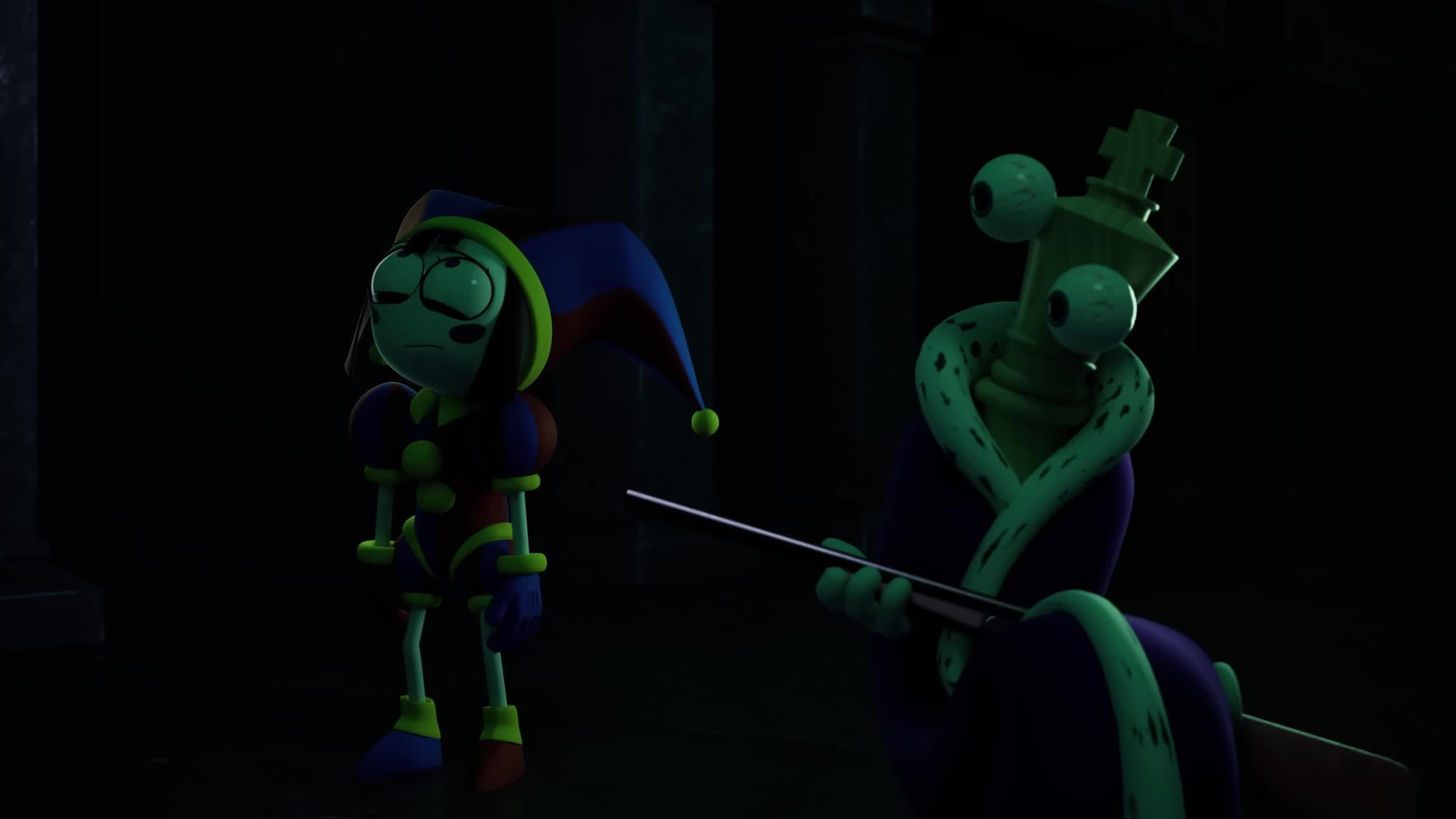
Visually, Episode 3 also finds one of the show’s best lighting strategies. Instead of flooding the frame with plastic carnival color, it strips the palette down to cold blues, candle glows, greenish cellar sick-light, and deep pockets of black. That restraint makes the scares hit harder. A series known for bright surfaces suddenly trusts darkness, and the darkness does what exposition cannot: it makes the audience wonder whether the map is holding a secret or simply waiting for the cast to project one into it.
| Haunted-house element | How Episode 3 uses it | Why it lands |
|---|---|---|
| Audio logs | Feeds lore in fragments instead of one exposition dump | Keeps tension moving while making the house feel inhabited by memory |
| Split paths | “Normal” and “really scary” options become both a joke and a structural device | Lets the episode cut between comedy and genuine panic without tonal whiplash |
| Basement descent | Turns a familiar horror beat into a pure anxiety corridor | Focuses the episode on breathing, sound, and anticipation rather than gore |
| Cursed family lore | Frames the manor as the aftermath of misunderstanding holiness and monstrosity | Gives the monster a thematic function beyond “thing that chases you” |
Full Plot Summary: What Happens in The Mystery of Mildenhall Manor?
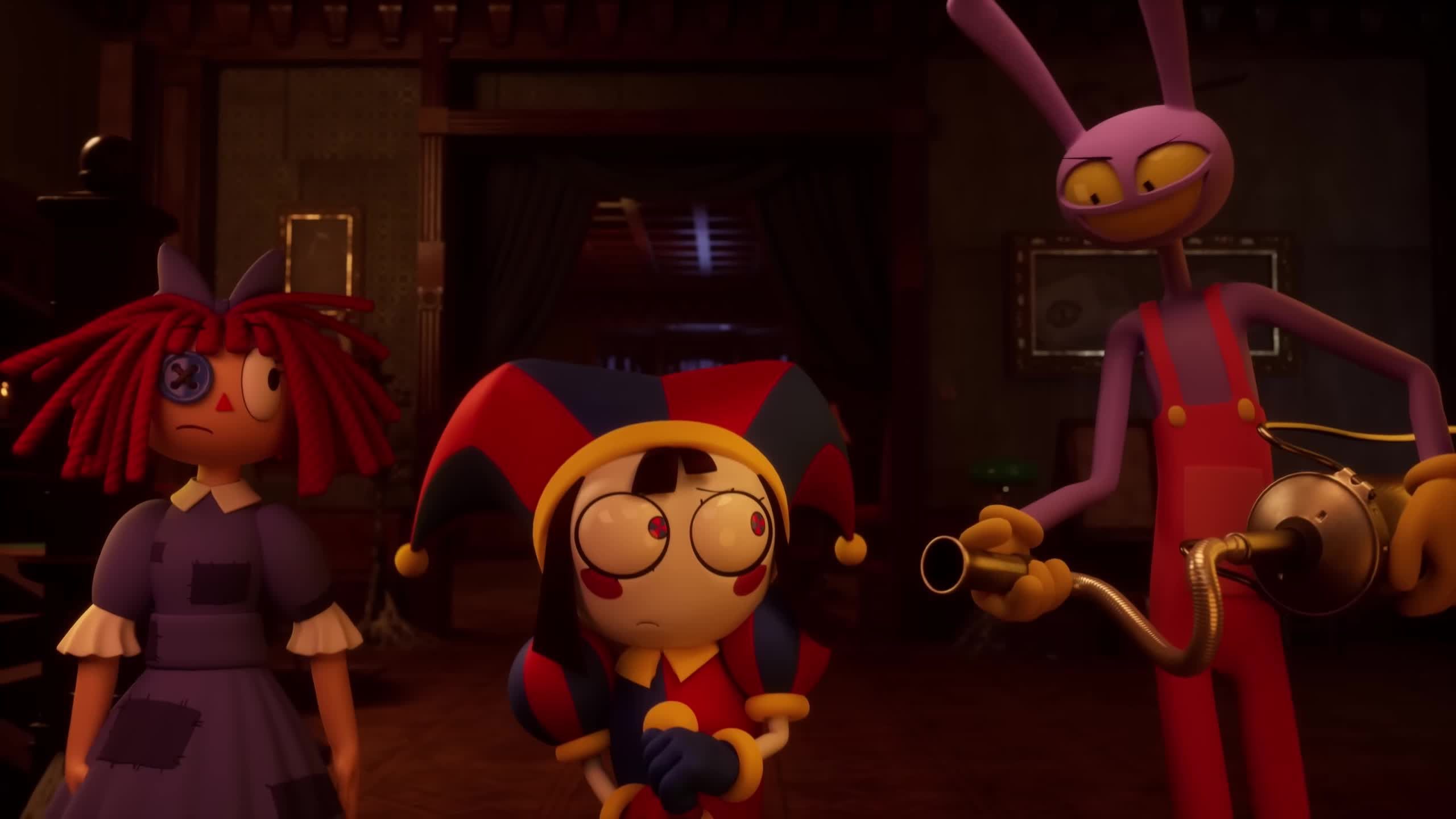
The cleanest way to understand the episode is to see it as a controlled split-screen. On one track, Kinger and Pomni descend into the cellar, where the haunted-house gimmick gradually mutates into one of the series’ most intimate conversations about fear, memory, and staying human under pressure. On another, the rest of the group ricochets through a funnier upper-floor version of the map, where the house keeps teasing them with tutorial ghosts, fake-outs, and room-specific nuisances. Floating over all of it is Caine’s separate detour with Zooble, which seems like comic filler until it becomes one of the episode’s emotional load-bearing walls.
- The party enters the manor under Caine’s gleefully overproduced horror pitch.
- The route splits, immediately letting the episode divide sincere terror from abrasive comedy.
- Pomni and Kinger move toward the cellar, where the map gets quieter, darker, and psychologically tighter.
- Upstairs, the group keeps encountering “safe” spooky attractions that are funny precisely because nobody fully trusts them.
- Zooble gets peeled away into therapy, creating an entirely different kind of threat: forced self-disclosure inside Caine’s idea of support.
- The Baron’s recordings reframe the mansion as a story about hunting the wrong thing.
- The Angel finally enters the episode not as a simple jumpscare but as the embodied consequence of that mistake.
- The ending restores surface order, but nothing about the emotional balance of the cast is exactly the same afterward.
One reason the structure feels so strong is that the episode never loses track of humor as pressure relief. A tutorial guide gets cut off before the rules can even settle, a “normal door” promise feels instantly suspicious, and the jokes keep arriving one half-step too late to fully cancel the dread. That rhythm matters. The episode is not trying to become a straight horror short. It wants the audience laughing and bracing at the same time, because that is the emotional weather the series understands best.
The upstairs half of the story also keeps the ensemble from disappearing into pure atmosphere. Even when the map is pushing toward a climax, the episode remembers that the cast’s different coping styles are part of the fun: denial, sarcasm, caretaking, performance, impatience, and panic all collide in the same building. That collision keeps the manor from feeling like a generic haunted level. It feels authored specifically for this group, which is exactly the kind of sinister personalization the circus is good at.

Zooble’s Therapy Arc: The Episode’s Sharpest Surprise
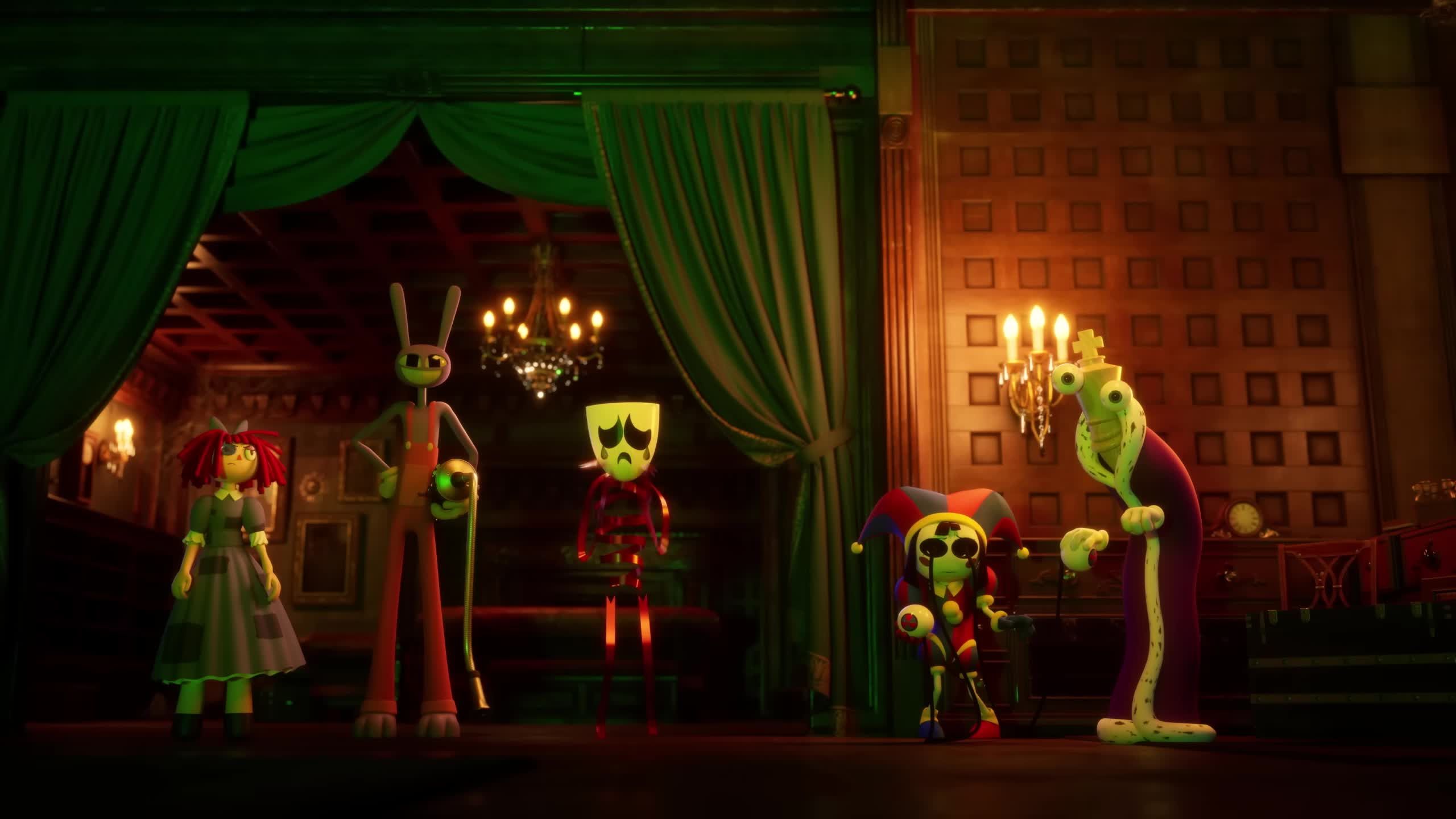
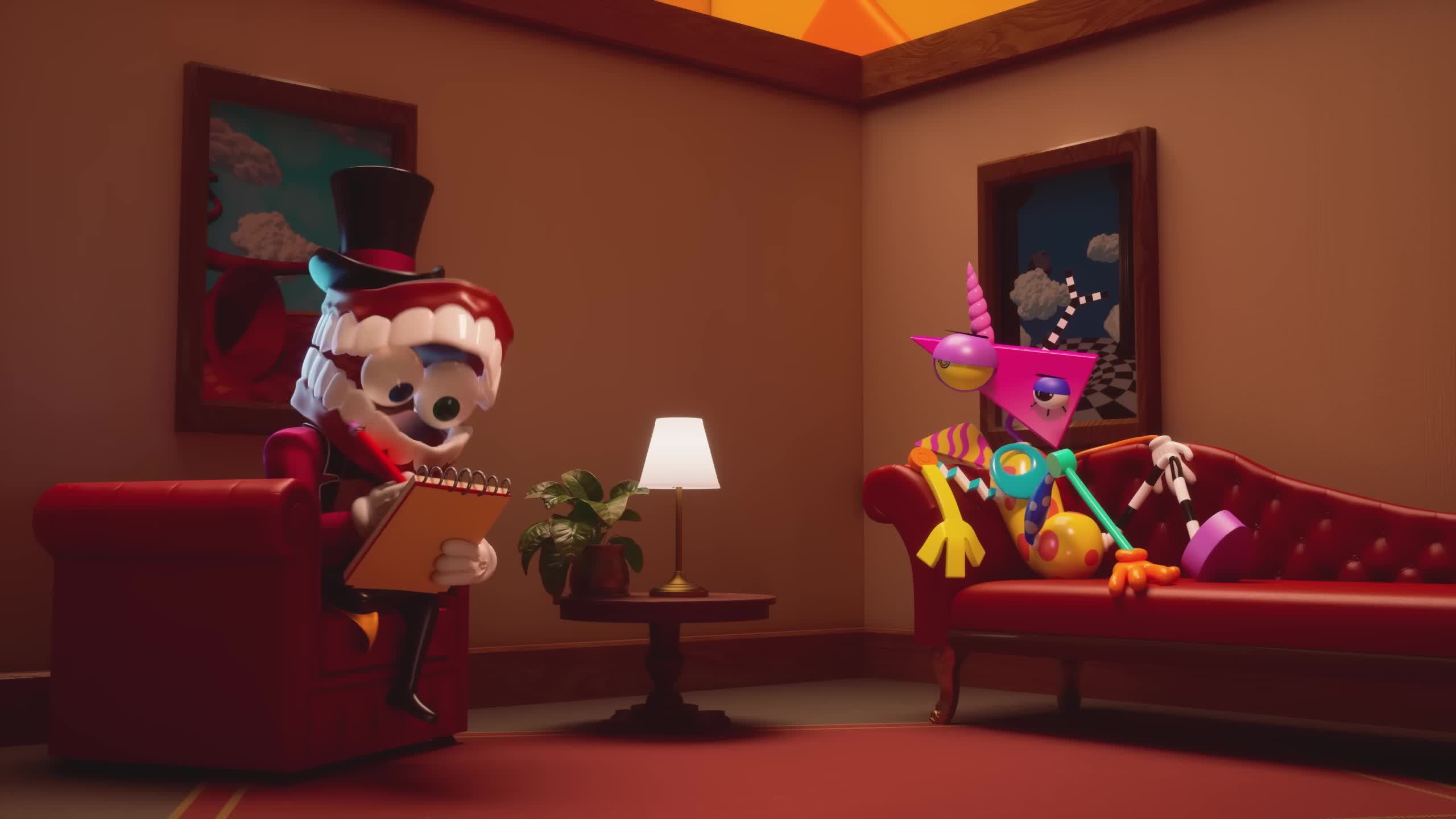
What initially looks like a side gag becomes one of the episode’s most important scenes. Pulled into a faux-helpful one-on-one, Zooble gets saddled with Caine’s mangled version of therapy: a bright room, performative concern, and a host who hears “I am suffering” as “the adventure needs recalibrating.” The scene works because it never overstates itself. Zooble’s lines stay dry, clipped, and irritated, but the emotional content underneath them is unmistakably raw. The episode trusts the audience to hear the pain inside the sarcasm.
That confession also widened discussion around the show for a reason. Up to this point, the circus had often communicated distress through panic, comedy, abstraction lore, or indirect symbolism. Here the writing lets a character say, clearly and without mystical framing, that they hate their body and do not feel at home in it. Because the scene comes wrapped in deadpan humor and Caine’s absurdly incompetent facilitation, it never turns preachy. Instead it lands as one of the rare moments where the series stops playing coy about identity discomfort and simply lets it exist.
“I don’t like… myself. I hate this body. I hate all these stupid removable pieces.”
The brilliance of the scene is that it also tells us something corrosive about Caine. He is not evil in a simple mustache-twirling sense; he is worse in a more recognizably institutional one. He hears distress, converts it into system feedback, and immediately tries to optimize around it as though the problem were tonal design. That misunderstanding is funny, but it is also the point. Episode 3 does not only show that Zooble is in pain. It shows how a world built around constant performance can fail to recognize pain unless it can gamify it.
Pomni’s Descent: Panic, Breath, and a Different Kind of Horror
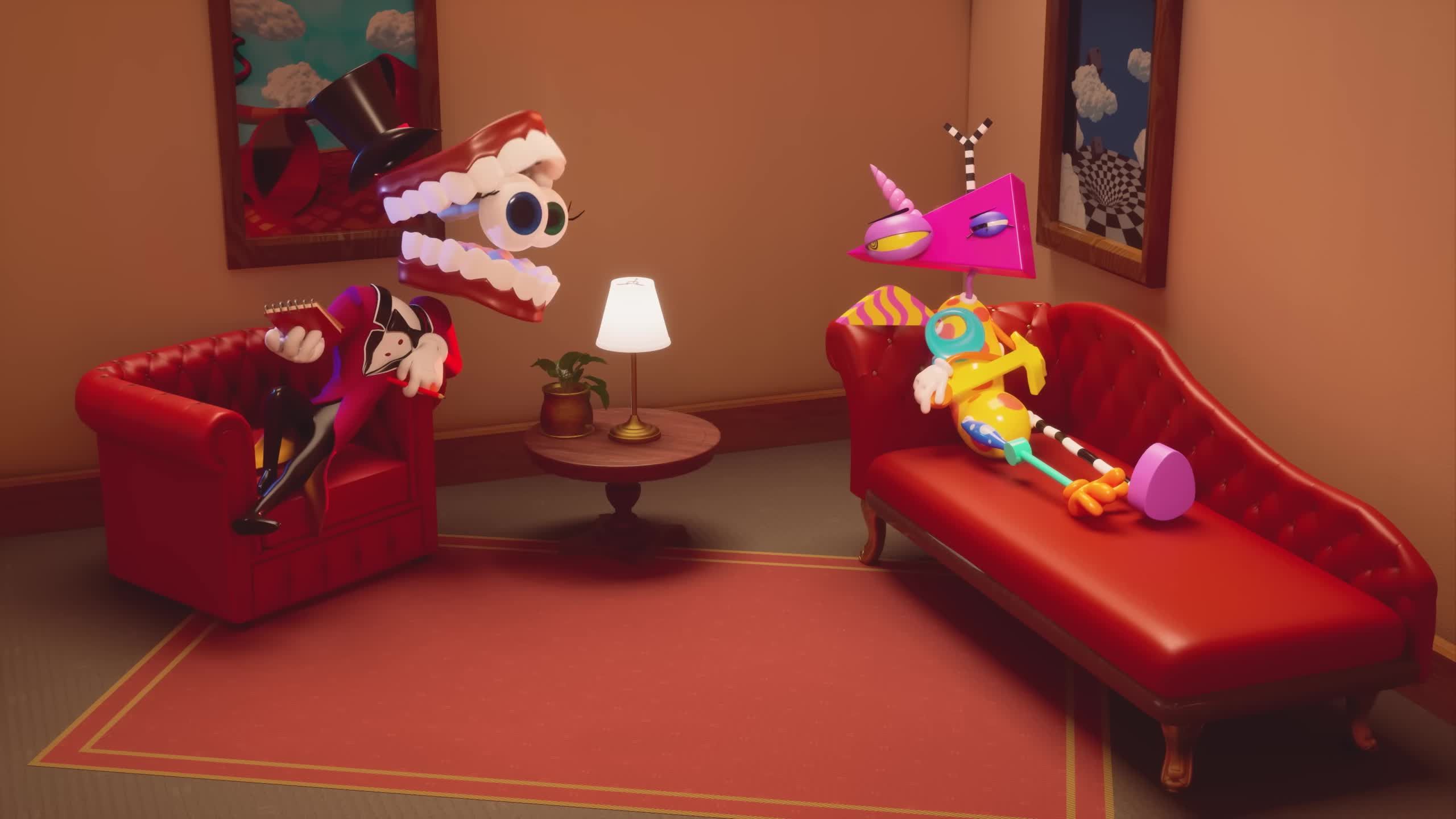
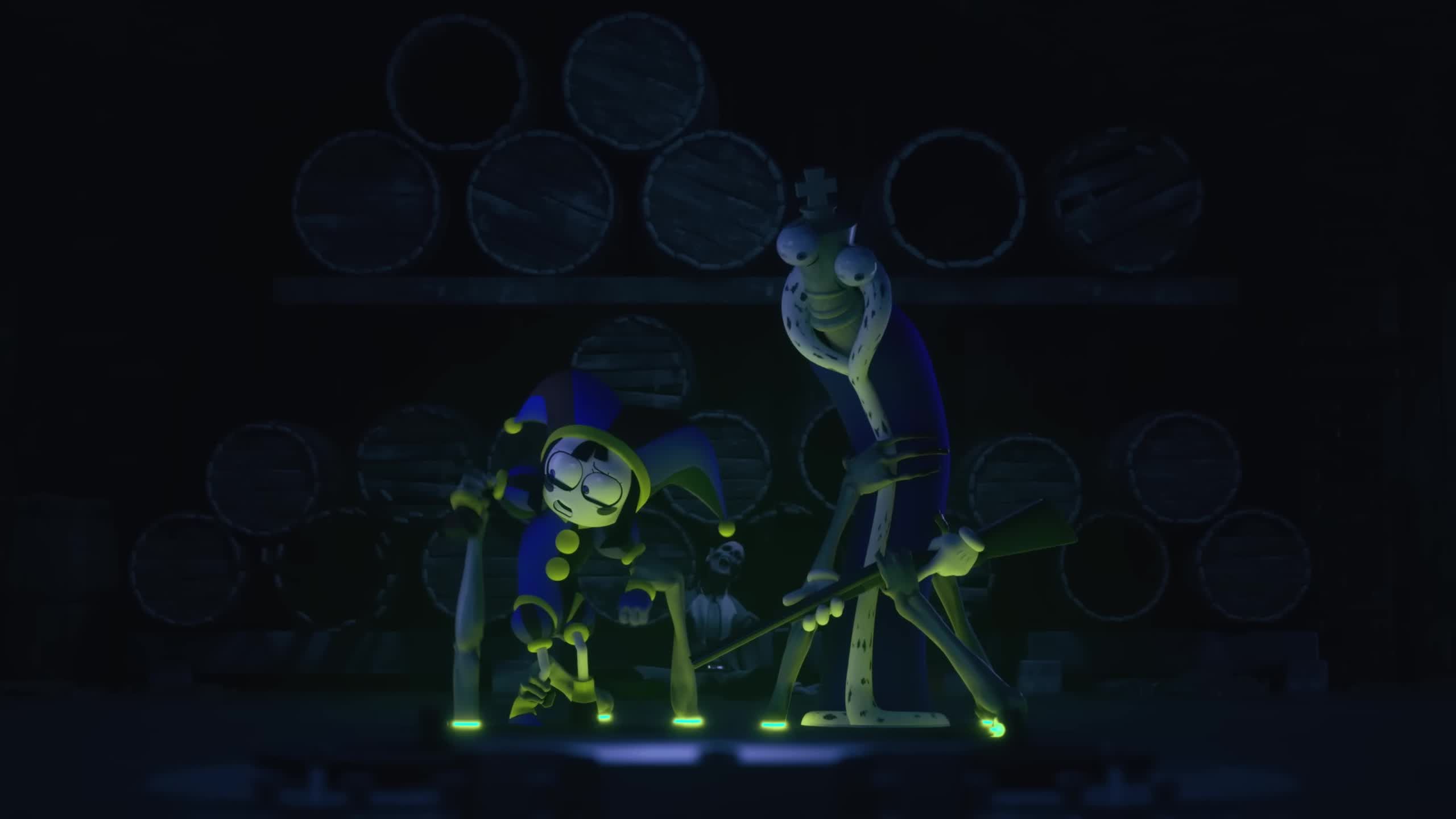
If Zooble’s therapy scene is the episode’s most explicit emotional beat, Pomni’s cellar material is its most immersive one. The episode strips away the faster ensemble rhythm and narrows the experience down to breathing, footsteps, tape hiss, darkness, and the awful feeling that the map wants something from her specifically. It is a smart evolution of her role in the series. In earlier chapters she was often terrified by the circus as a whole. Here her fear becomes more technical, more embodied, and therefore more relatable: what if the next step matters, what if the rule changes, what if your own body betrays you in the moment you most need control?
The “hold your breath” stretch is especially effective because it takes such a tiny instruction and turns it into pure sympathetic stress. You do not need elaborate lore to understand why the scene works. Everyone understands the body’s rebellion under pressure. Everyone understands what it feels like to know the correct survival instruction and still fear that you will fail to execute it. Episode 3 gets a lot of praise for its monster, but Pomni’s real opponent in the cellar is the terrifying intimacy of her own panic response.
“Every day I spend here is one nightmare after the next… I really am in Hell.”
Crucially, the episode does not leave her alone with that panic. The descent is scary not just because the cellar is hostile, but because it creates the conditions for Kinger to become unexpectedly gentle. That choice gives the sequence its staying power. Terror sharpens the episode, but care is what makes it memorable. Without the emotional handhold Kinger provides, the cellar would be an excellent horror scene. With it, the cellar becomes one of the series’ defining character passages.
Kinger and Pomni in the Cellar: Why This Pairing Became So Important
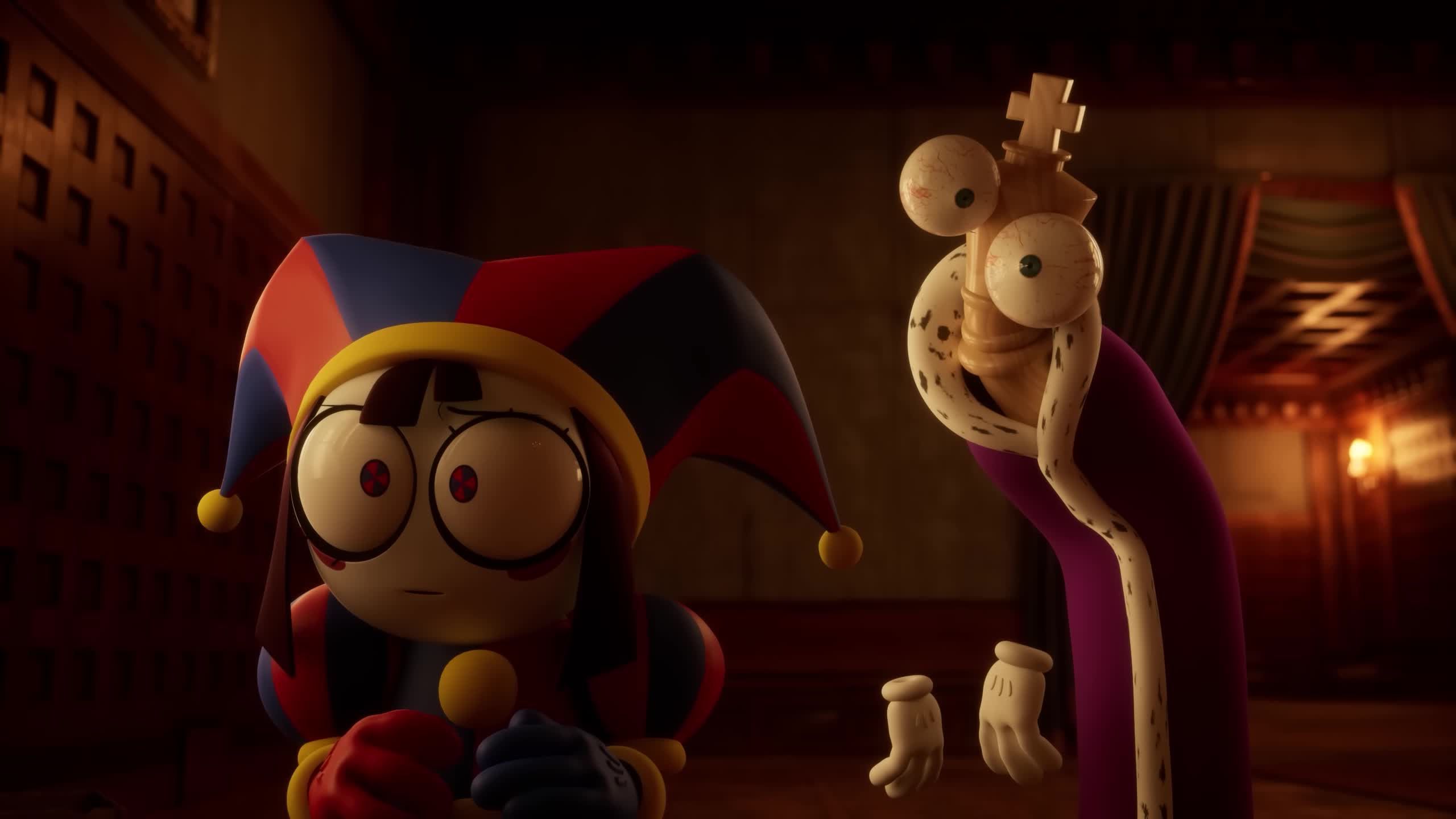
Episode 3 is the chapter where the audience stops seeing Angel as the only thing in the cellar worth fearing and starts recognizing that Kinger’s clarity is the real shock. For most of the series up to that point, Kinger had been staged as jittery comic static: lovable, strange, unstable, possibly informative, probably distracted. Mildenhall Manor keeps the eccentricity but reveals something steadier underneath it. In darkness, with the noise stripped down and the stakes suddenly intimate, he becomes patient, lucid, and almost tender. That tonal pivot lands like a revelation because the show earns it instead of announcing it.
The shotgun gag is part of that reveal. On paper it sounds like the broadest joke in the episode: Kinger gets armed, the audience braces for slapstick violence, and the sequence immediately goes wrong in a way that is both funny and cosmically bad. But beneath the joke is a quiet character insight. Kinger is not effective because he becomes a macho monster-slayer. He is effective because he stays emotionally present long enough for Pomni to borrow his calm. The episode turns a prop-comedy setup into a lesson about regulation, trust, and surviving fear by sharing it.
That is why fans kept returning to the “good memories” conversation. It repositions Kinger from quirky veteran to emotional elder without sanding off what makes him odd. He is still bizarre, still scattered, still capable of saying things in the exact wrong order. But Episode 3 proves that the circus has not only damaged him; it has also made him quietly useful in moments where other people fall apart. The series needed this chapter to unlock him, and it did.
| Character | What Episode 3 reveals | How the episode frames it |
|---|---|---|
| Pomni | Her panic can be navigated, not only endured | Through breath, rules, and borrowed calm rather than sudden bravery |
| Kinger | He is capable of unusual clarity and warmth | Darkness quiets the noise around him and lets the human core show |
| Zooble | Body discomfort is central, not incidental | The therapy scene makes the pain verbal instead of purely symbolic |
| Caine | His “care” depends on misunderstanding suffering | He reacts to honesty like a design note rather than a plea |
The Angel Explained: Monster, Messenger, or Punishment Rule?
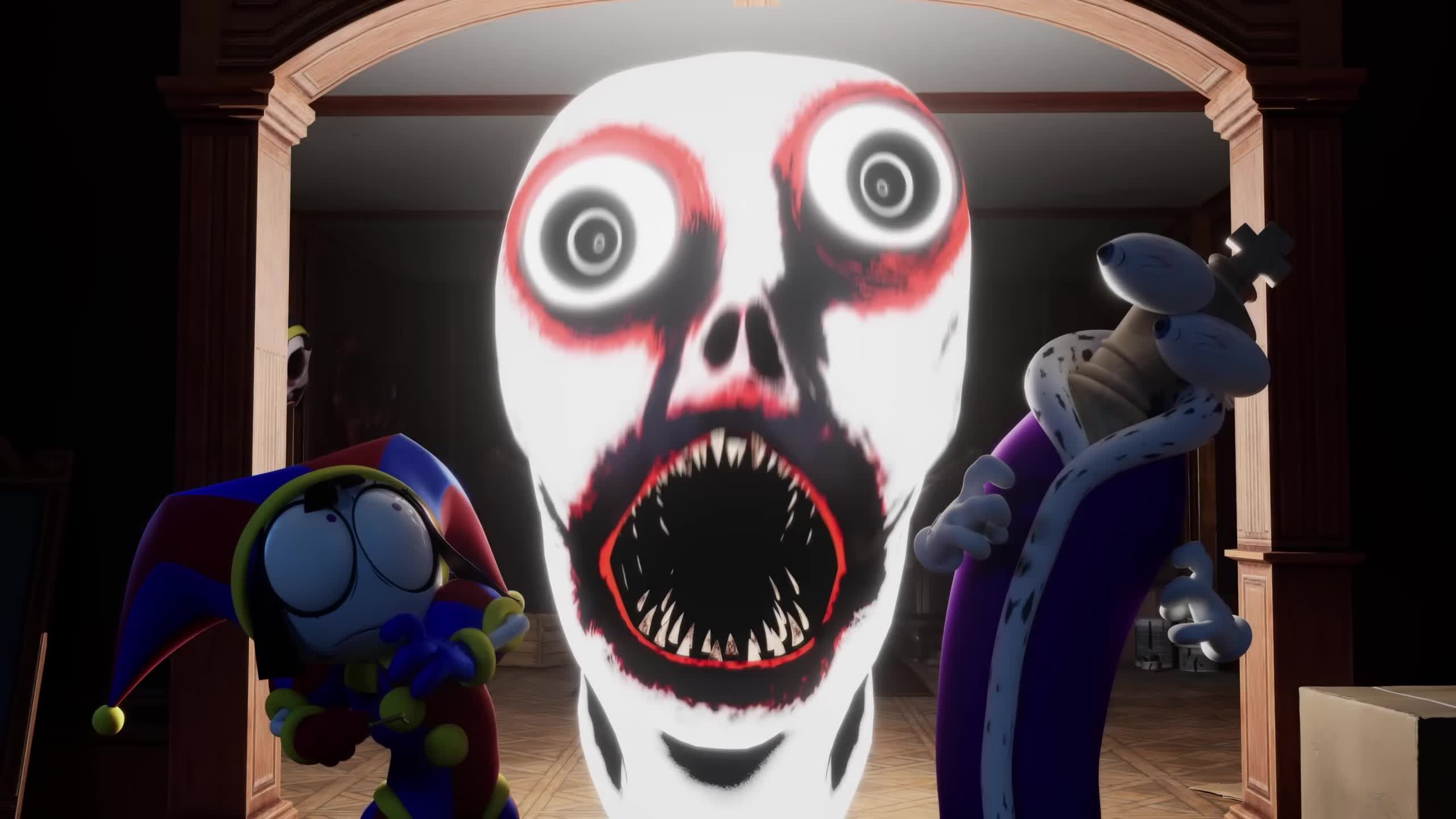
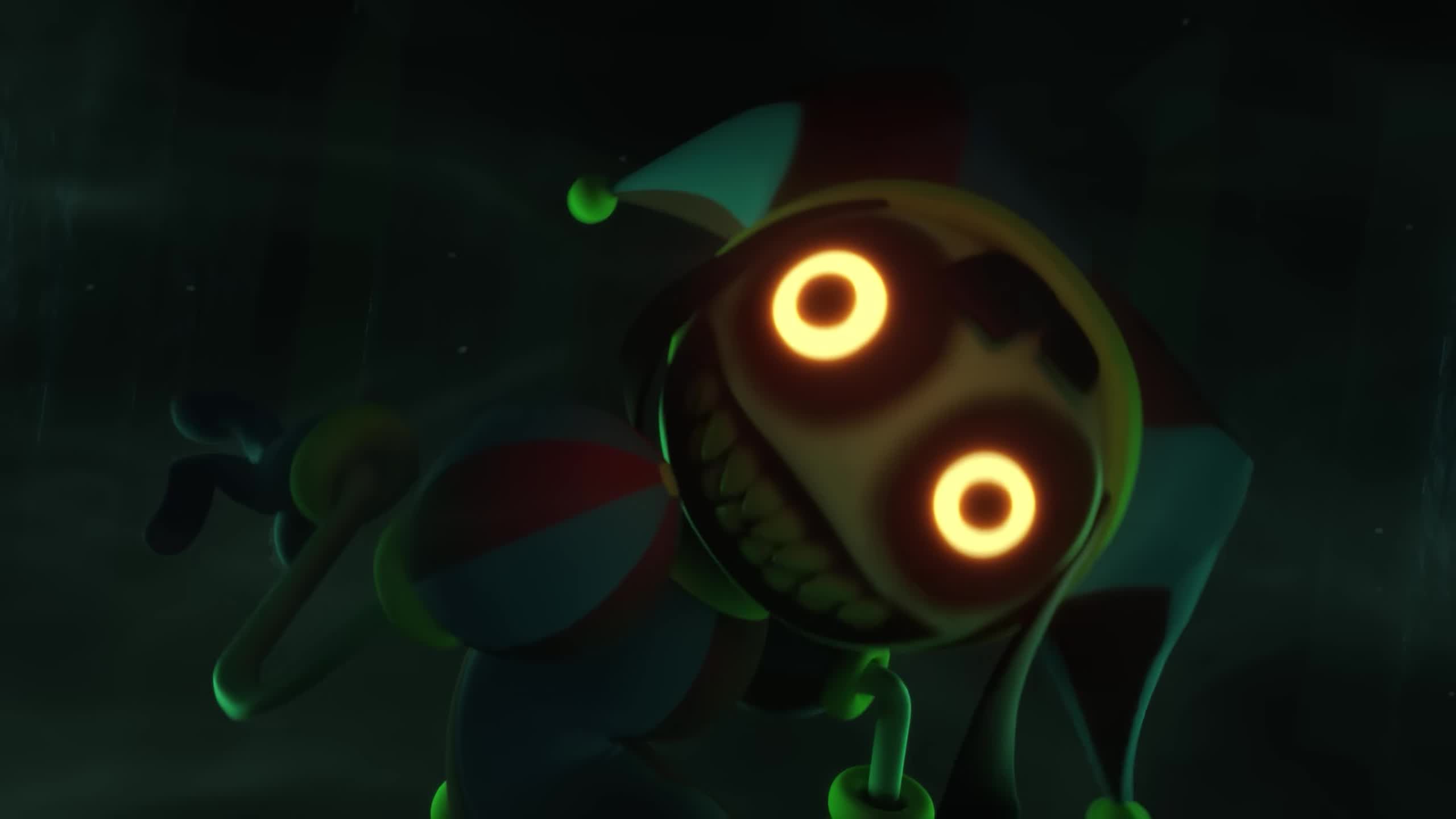
The manor’s signature creature works because the episode refuses to let Ghostly and the other lighter scares fully prepare you for what is coming. By the time the real threat arrives, the audience has been nudged into expecting a horror-comedy map where the worst thing that can happen is a nasty visual or a rude surprise. The Angel breaks that assumption. Its design is not just scary; it is conceptually wrong in a way the brain resists. Severed head, predatory mouth, too many eyes, a body that seems to belong to some other category of being entirely – the creature feels less “monster in a house” than “bad interpretation of holiness given teeth.”
The strongest thing about the Angel is that it is not merely present; it is governed by story logic. Hurt it the wrong way and you trigger consequences that feel spiritual, legal, and mechanical all at once. That gives the creature a different texture from the pilot’s abstraction horror or Episode 2’s candy-world menace. The Angel is not chaos. It is a rule-set with theological dressing. That is what lets the episode turn a simple chase into a morality trap about naming, violence, and misunderstanding what sort of force you are actually dealing with.
| Element | Function in the episode | Result |
|---|---|---|
| Severed head imagery | Makes the creature feel like a trophy and a blasphemy at once | Links the monster directly to the Baron’s error |
| Silent stalking | Lets sound design do the work | Keeps the cellar sequences intensely physical |
| Holy framing | Complicates the word “evil” | Turns the episode into a story about misreading danger |
Room-by-Room Set Pieces and Monster Encounters
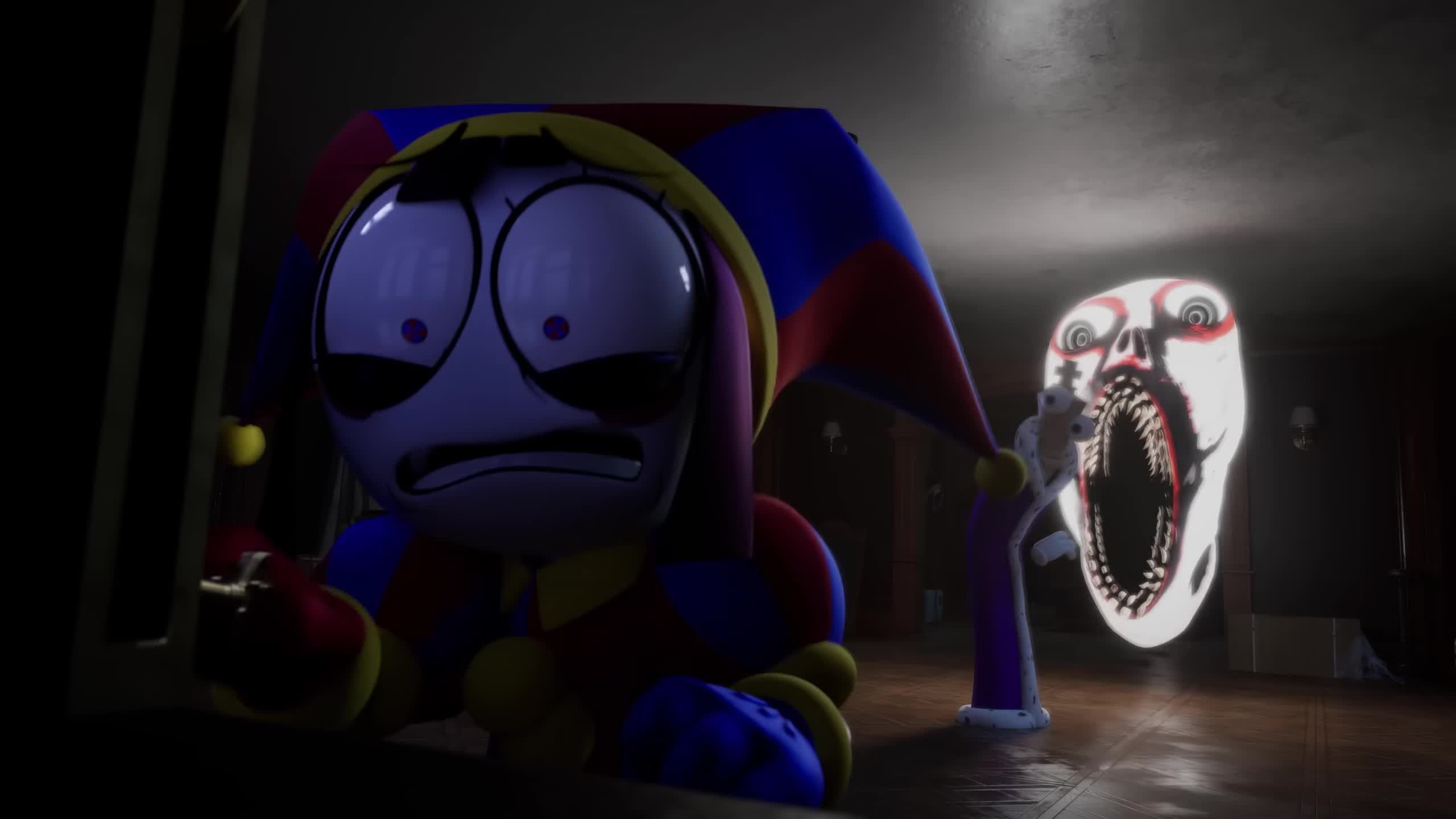
The mansion stays entertaining because almost every room delivers a different flavor of discomfort. A carnivorous door bites. A mounted trophy becomes a grotesque pseudo-prophet. A guide ghost is introduced just long enough to be rudely neutralized. Even the timing of Caine’s map design matters here: he understands exactly how to arrange little interruptions so that the audience never gets to relax into a single reading of the episode. Is this room scary? Is it a bit? Is it building lore? The answer is usually “yes, all at once.”
- The “normal door” versus “really scary door” split is a perfect tone-setter because it is childish, suspicious, and immediately funny.
- The talking mounted head scene turns static decor into active narrative pressure.
- The cellar narrows the visual field so aggressively that every sound begins to feel like a threat.
- Ghostly’s abrupt removal is a miniature thesis for the whole episode: even structure can be turned into a punchline.
- The final confrontation works because the map has already taught the cast that force alone will not solve this version of the problem.
That room-by-room design also helps the episode stay rewatchable. Once you know the plot, the pleasure shifts from surprise to architecture. You start noticing how the episode spaces out relief, how it alternates crowd scenes and narrow corridors, how often it uses objects rather than speeches to suggest that the manor remembers the damage done inside it. Episode 3 is one of the cleanest examples of the series functioning like a ride that secretly wants to be a short story.
Caine’s Role: Host, Artist, and the Wrong Kind of Caretaker
Episode 3 quietly does a lot of work on Ragatha by contrast, because her brand of care suddenly has an opposite number. Ragatha comforts people in a way that accepts their distress as real. Caine, by comparison, treats distress like a signal that the show package needs adjustment. That difference powers almost all of his material in this chapter. He still sounds like a carnival barker. He still loves his own production design. But for the first time the episode puts his self-image as an artist directly against the cast’s actual emotional needs, and the mismatch is brutal.
“Making adventures is my art” is funny because the line is dramatic and absurd. It is also revealing because it explains why Caine responds so badly to honest criticism. Episode 3 suggests that he can survive chaos, complaints, and map glitches better than he can survive the possibility that his work might be wounding the people he is supposedly entertaining. That is the deeper bite underneath all the jokes. A ringmaster who confuses applause with wellness is not simply annoying. He is dangerous by design.
“Making adventures is my art! It’s all I exist to do!”
The episode does not need to flatten him into a villain for that to land. In fact, it is stronger because it does not. Caine remains funny, kinetic, weirdly charming, and full of vaudeville momentum. What changes here is that the audience can no longer mistake that momentum for benevolence. Episode 3 lets us see the emotional cost of living inside someone else’s content machine, and Caine is the smiling face on the machine.
Themes: Fear, Coping, and Self-Perception
One reason Episode 3 sticks is that it gives different characters different relationships to fear. Through Gangle, the series already understood masks as emotional interfaces; through Zooble, it explores bodily estrangement; through Pomni, panic and overstimulation; through Kinger, memory and fragmentation. Mildenhall Manor does not flatten those threads into one grand speech. Instead it lines them up side by side and lets the map pressure each one differently. That is why the episode feels rich rather than overloaded. Every scare is doing double-duty as character work.
The house also keeps returning to a deceptively simple question: what happens when you name the thing in front of you incorrectly? The Baron calls the Angel a demon. Caine calls his adventures enrichment. The haunted-house format invites the cast to treat everything as genre furniture until the episode proves that some labels hide more than they reveal. Fear, in this chapter, is not only about being chased. It is about adopting the wrong explanation too quickly and letting that explanation become fate.
Self-perception is the other major engine. Zooble’s body talk makes that plain, but it is everywhere. Pomni does not trust her own reactions. Kinger thinks in fragments until the right environment lets him hear himself more clearly. Caine needs to believe he is helping. The manor acts like a distorting mirror for all of them, showing not who they are in some essential sense, but who they become when the room around them insists on a role.
Visual Motifs: Doors, Masks, Mirrors, and Trophy Logic
The episode keeps finding elegant ways to tie its imagery back to the wider symbolic language of the circus, and Gummigoo from the previous adventure is a useful comparison point. Episode 2 used an NPC’s identity crisis to ask whether artificial beings can become emotionally real. Episode 3 changes the angle and asks what happens when a supposedly scripted threat acquires too much symbolic weight. That shift from “NPC who awakens” to “monster who cannot be correctly categorized” makes the manor feel like a more theological sibling to Candy Canyon’s existential crisis.
Doors, naturally, do a lot of the work. One promises normalcy. Another promises intensity. The cellar stairwell suggests revelation but really delivers confrontation. Mirrors are mostly implied rather than literal, hiding in polished wood and reflective floors, while trophies and mounted remains keep raising the ugliest question in the episode: who gets treated as a person, and who gets turned into an object that proves someone else’s victory? In a show obsessed with performance, that is a particularly nasty visual motif.
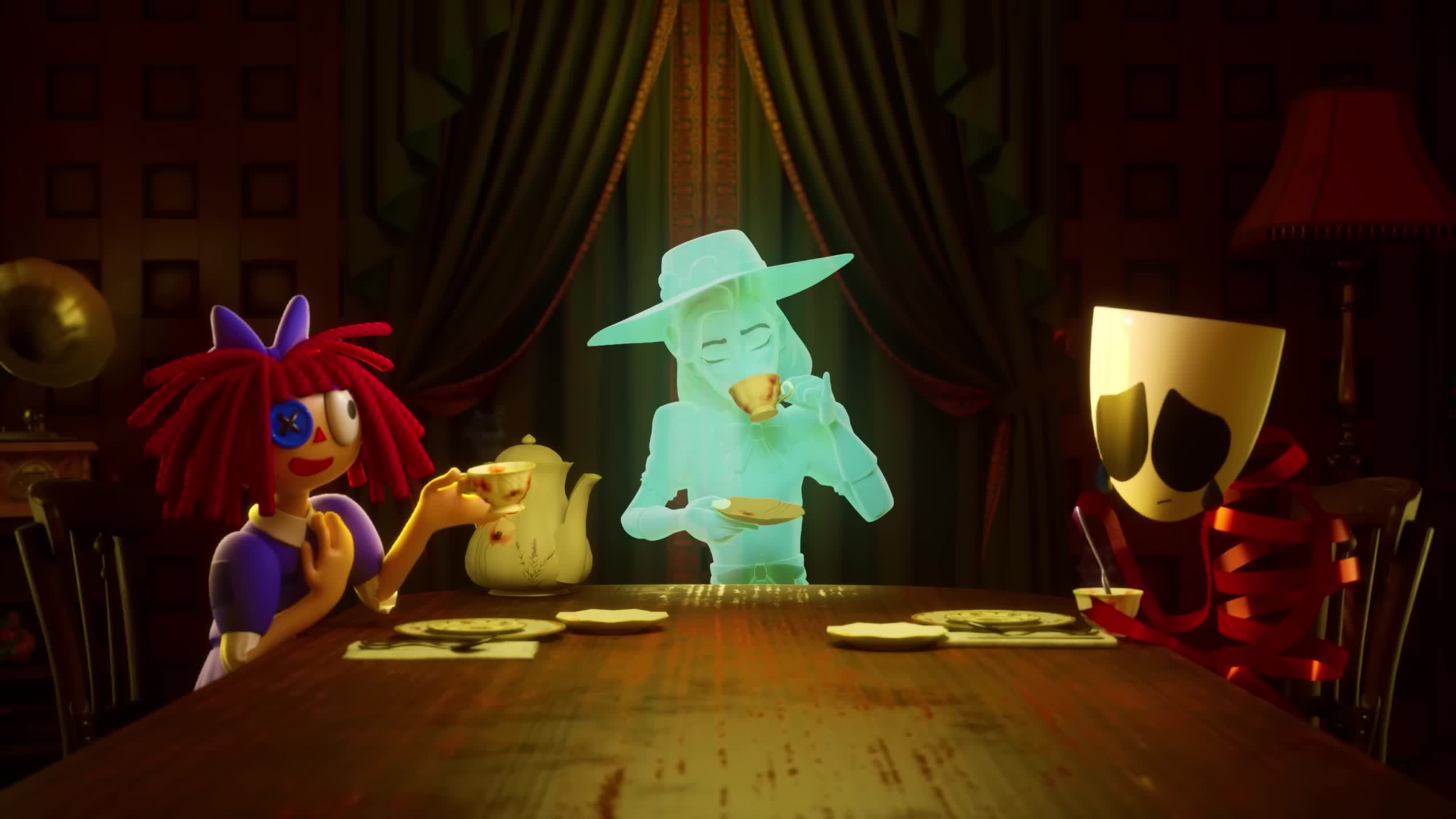
The tea-table weirdness, the green light, the trophy-room staging, the mounted head, the swallowed shadows – all of it contributes to the feeling that this is not simply the circus doing horror cosplay. It is the circus using horror aesthetics to talk about possession, categorization, and emotional display. Episode 3 looks ornate on the surface, but its symbols are surprisingly disciplined.
Best Lines, Jokes, and Horror Beats
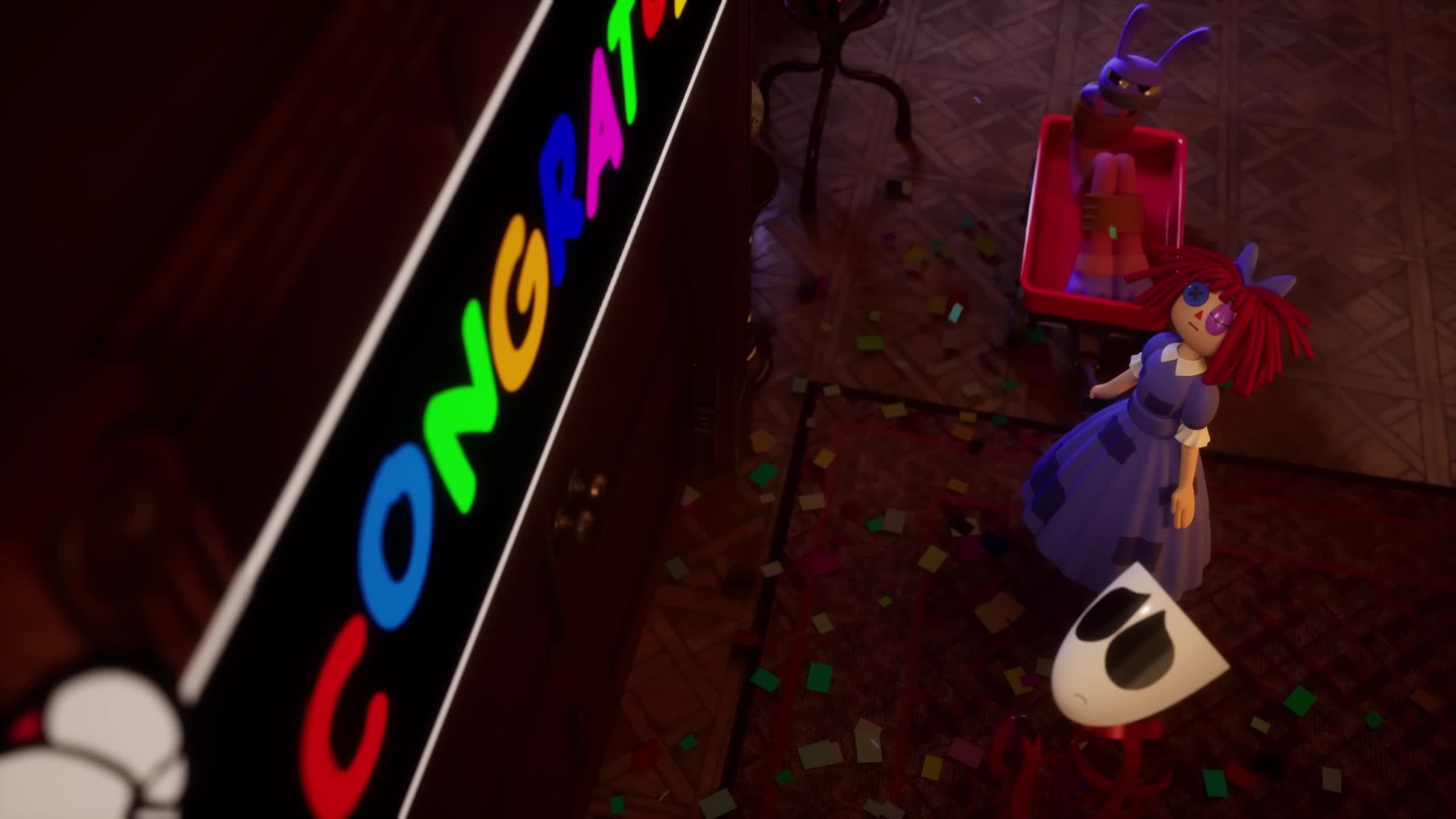
A big part of the episode’s durability is how viciously well it uses Jax as tonal sandpaper. He keeps rubbing against the spooky framing until sparks fly. Jax is the reason the tutorial ghost bit lands so sharply, the reason the manor never gets too stately, and the reason the audience is reminded that emotional self-protection in this series can look like bullying, mockery, or deliberate boredom. He does not soften the horror; he makes the horror work harder to break through.
- Jax vacuuming the guide ghost mid-spiel remains one of the episode’s best cruelty-as-comedy punchlines.
- The shotgun sequence is a near-perfect bait-and-switch: broad setup, worse-than-expected payoff.
- Pomni’s breath-control run is a masterclass in low-tech suspense.
- Kinger’s calm in darkness flips audience expectations with almost no ceremony.
- Caine’s therapy-room defensiveness turns a goofy side track into character evidence.
- The mounted-head imagery gives the manor a flavor of religious grotesque the series had not used so directly before.
Importantly, the jokes do not cancel the terror; they salt it. Every laugh in Episode 3 seems to come with the suspicion that something worse is about to take advantage of the room loosening up. That is a difficult rhythm to maintain, and the episode maintains it almost effortlessly.
Why Episode 3 Matters Even More After the Later Chapters
Seen next to Episode 4, Mildenhall Manor stops looking like a one-off experiment and starts looking like a format breakthrough. “Fast Food Masquerade” swaps gothic horror for corporate absurdity, but it keeps the same crucial idea: Caine’s adventure maps are not just playgrounds, they are customized pressure chambers built to expose whatever each character is worst at containing. Episode 3 proves that formula can hold real emotion without sacrificing momentum, and Episode 4 then weaponizes that lesson in a completely different genre wrapper.
Placed beside Episode 5, the manor chapter also looks like the point where the series learned how to let intimacy survive inside fragmentation. “Untitled” scatters the cast through a sampler of mini-adventures and genre jokes, but the emotional effect of those fragments depends on groundwork laid here. Mildenhall Manor teaches the show that a single conversation, a single moment of panic, or a single burst of unexpected honesty can anchor a much louder structure. Without Episode 3, later episodes might still be inventive; they would not feel nearly as emotionally legible.
That same pattern becomes even clearer by Episode 6, where the series pushes harder on performance, violence, and the characters’ survival masks. The gunplay is bigger, the posturing louder, the emotional cracks messier – but Episode 3 is where the show first figured out how to make a prop joke produce character fallout instead of just noise. Kinger’s shotgun bit is the smaller, smarter ancestor of later escalation. It is slapstick that leaves a bruise, and the series keeps building from there.
By the time the cast reaches Episode 7, the broader narrative has more daylight and more outward room, yet the series is still relying on lessons learned in the manor: hope is unstable, group chemistry can hold a scene together better than plot mechanics, and emotional truth often arrives in the middle of a gag or a trap rather than in a formal speech. That is why Mildenhall remains such an important reference point. The beach may be brighter, but the show’s willingness to let brightness hide danger was perfected in the mansion.
And once you reach Episode 8, the value of Mildenhall Manor becomes impossible to miss. Later endgame material goes bigger on lore, control, and system instability, but Episode 3 is where the series first made those ideas feel personal instead of merely mysterious. It taught the audience how to read a Digital Circus adventure as both a map and a diagnosis. That is why the episode has aged so well inside the season: it is not only excellent on its own terms, it is foundational.
- Episode 3 established the show’s best “small space, big emotion” template.
- It turned Kinger into a pillar instead of a garnish.
- It gave Zooble one of the series’ most-discussed scenes.
- It clarified that Caine’s entertainment logic is itself a source of harm.
- It showed that lore hits harder when attached to shame, memory, and misrecognition.
Voice Cast, Music, and Production Notes
Episode 3 benefits enormously from performance control. Lizzie Freeman gives Pomni a brittle, overclocked vulnerability that never collapses into monotone panic. Sean Chiplock makes Kinger funny even when he is rambling, then quietly re-centers him when the darkness strips the character down to something gentler. Ashley Nichols gives Zooble the exact mix of detachment and injury the therapy scene needs, while Alex Rochon keeps Caine hovering between theatrical charm and unnerving obliviousness. Amanda Hufford, Michael Kovach, and Marissa Lenti continue to stabilize the ensemble so the episode can keep swerving between tones without losing shape.
The sound design deserves almost as much credit as the animation. Episode 3 understands how to make empty space noisy in the worst possible way. The tape hiss, distant creaks, metallic little room sounds, sudden organ punctuation, and reverb-heavy breaths all do the sort of work that cheap horror often hands to overediting. Here, restraint is the weapon. The manor sounds bad in a way that implies age, dampness, and judgment, which is exactly what the visuals are after too.
Production-wise, the episode also shows how comfortable the series had become with stylized contrast by late 2024. The first three episodes already demonstrate a sharp expansion of range: the pilot builds the world, Episode 2 blows it open into action-comedy, and Episode 3 proves the team can stage claustrophobic dread without losing the show’s elastic identity. That adaptability matters when judging the chapter now. It is not simply “the scary one.” It is the episode that proves the show can modulate.
| Production area | Episode 3 strength |
|---|---|
| Voice acting | Balances broad comedy with unusually grounded emotional beats |
| Sound design | Uses breathing, hiss, and negative space to intensify the cellar material |
| Art direction | Trades candy brightness for wet wood, blue darkness, and sickly cellar greens |
| Pacing | Intercuts three different emotional tracks without making the episode feel crowded |
| Writing | Keeps jokes functional while letting vulnerability land cleanly |
Release, Reach, and Why the Episode Still Gets Brought Up
From a release-history angle, Episode 3 marks the moment The Amazing Digital Circus became a bigger industry story, not only a fandom story. The day it launched on YouTube, the first three episodes also arrived on Netflix, and the show’s broader profile jumped with it. GLITCH later highlighted 600 million-plus lifetime views across the first four episodes and pointed to a Top 3 TV placement on Netflix during release week, which helps explain why Mildenhall Manor is remembered as more than a good spooky installment. It arrived at a turning point for the property itself.
Community conversation around the episode has remained remarkably stable. Most viewers still circle the same three core strengths: Zooble finally saying the quiet part out loud, Kinger unexpectedly becoming a source of safety instead of only chaos, and Pomni’s cellar stretch ranking among the show’s most effective suspense passages. What changes over time is not the identity of those highlights, but the sense of what they mean. With later episodes on the board, fans tend to read Episode 3 less as a novelty flex and more as the first fully mature Digital Circus chapter.
It also helps that the episode replays well outside season-order discourse. You can drop someone into Mildenhall Manor and they will understand the show’s appeal fast: the comedy is mean in a productive way, the visuals are instantly legible, the ensemble dynamic snaps into place quickly, and the horror always points back toward a feeling rather than existing just for a screenshot. That combination keeps the episode useful both as a favorite and as a recommendation piece.