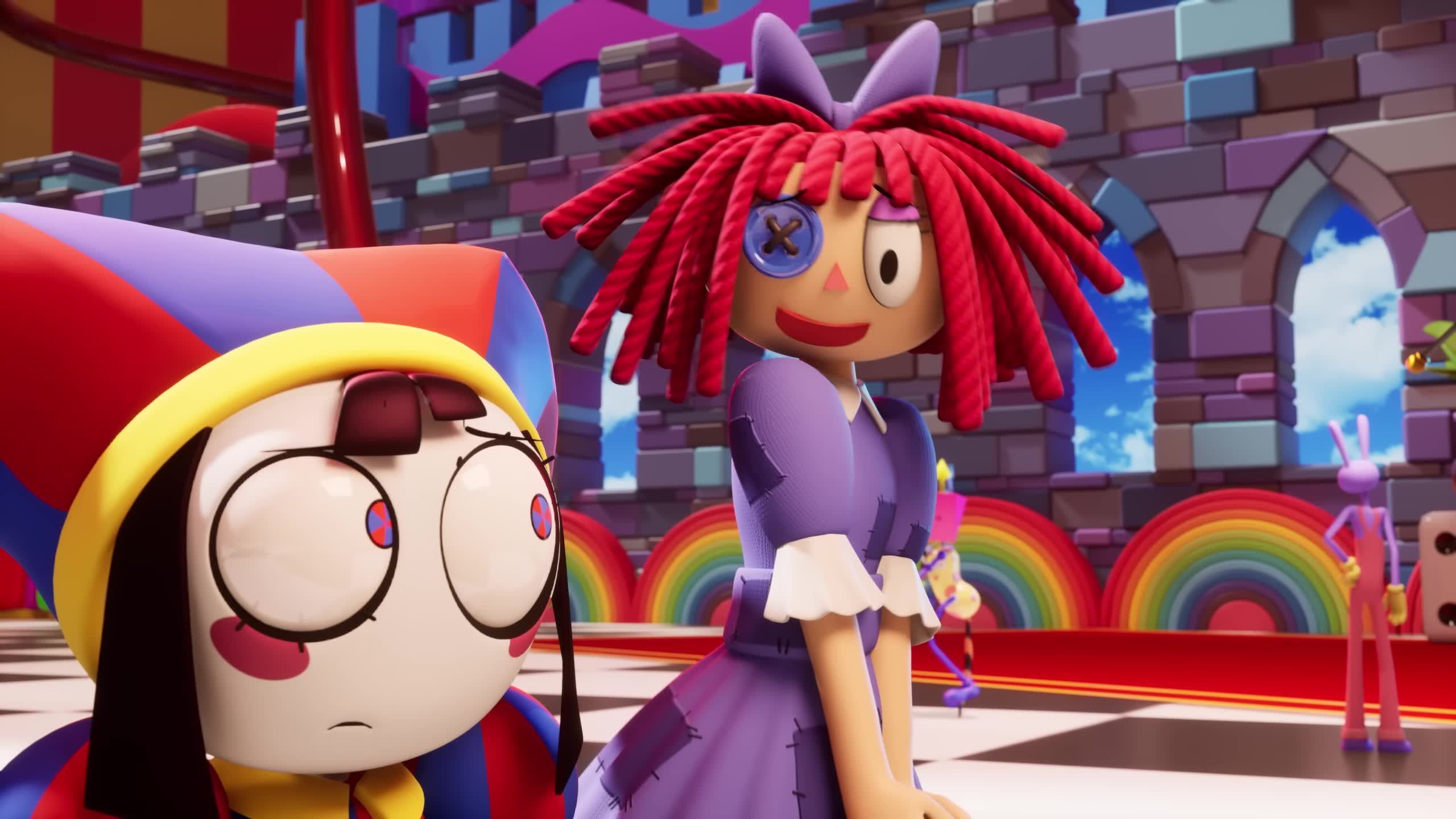
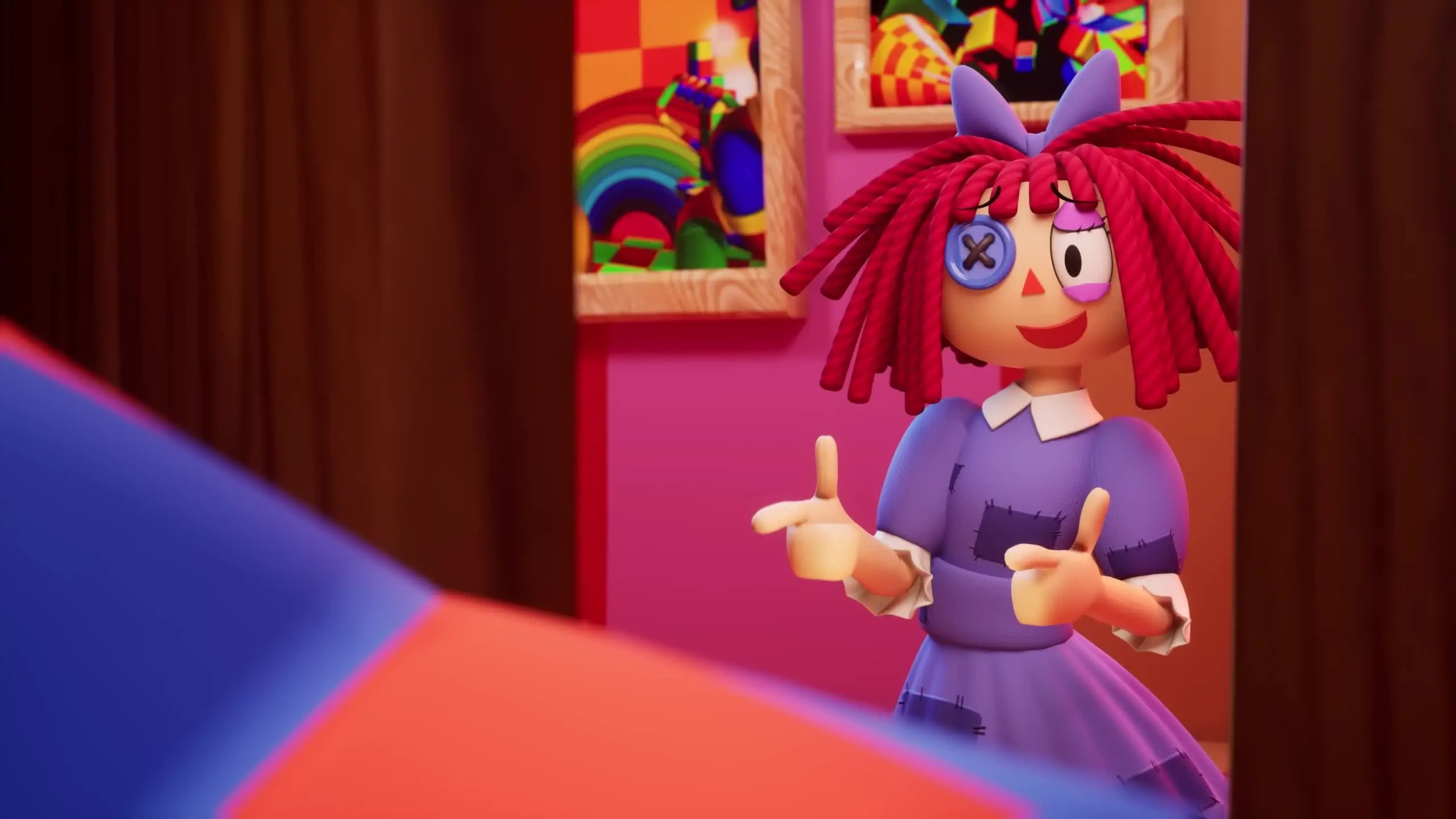
Ragatha from The Amazing Digital Circus is the ragdoll avatar of a trapped human and one of the emotional anchors of The Amazing Digital Circus. Warm, polite, and protective, she tries to make the circus feel survivable for newcomers like Pomni, even when the show keeps revealing how much pressure that kindness puts on her.
This updated Ragatha Digital Circus guide covers her age, design, personality, relationships, episode arc, and the details that make her stand out among the wider Digital Circus characters.
The Amazing Digital Circus Ragatha: Personality and Role
Ragatha is kind, encouraging, and openly protective. She is often the first person to reassure Pomni, explain the rules gently, or step in when the group’s panic starts turning into cruelty.
Her kindness is real, but it is not effortless. Ragatha often treats being useful as a responsibility she cannot put down. When she fails to comfort someone, especially Pomni, she takes it personally and turns the stress inward.
That makes her more complicated than a simple “nice friend” archetype. She wants to be trusted, needed, and liked, but the series gradually shows how exhausting that role has become.
Quick Facts About Ragatha
- Character: Ragatha, a human trapped in the Digital Circus as a ragdoll avatar.
- Voice actor: Amanda Hufford.
- Age: Creator comments place Ragatha at 30.
- Time in the circus: She is generally treated as the second-longest trapped human after Kinger.
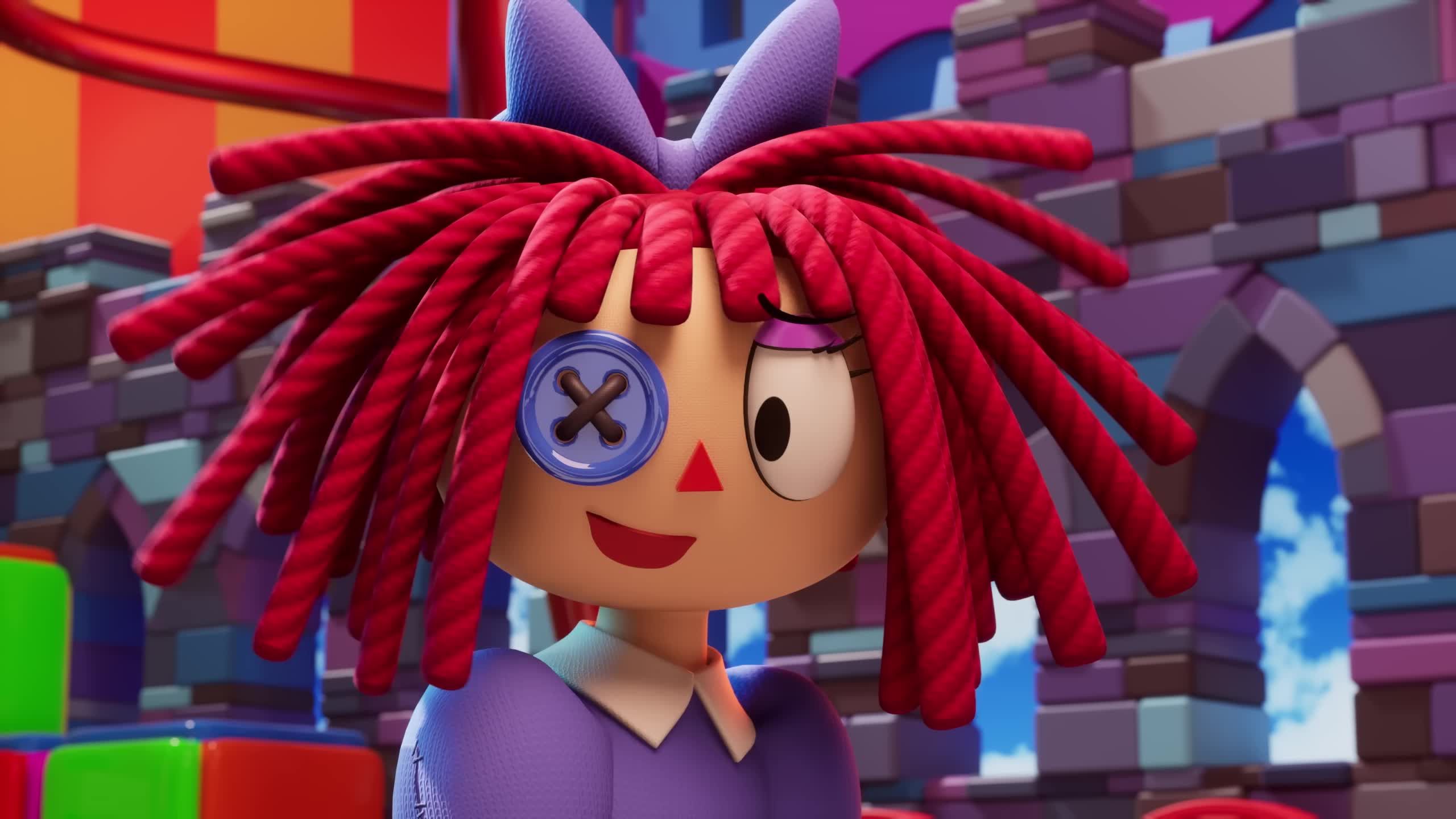
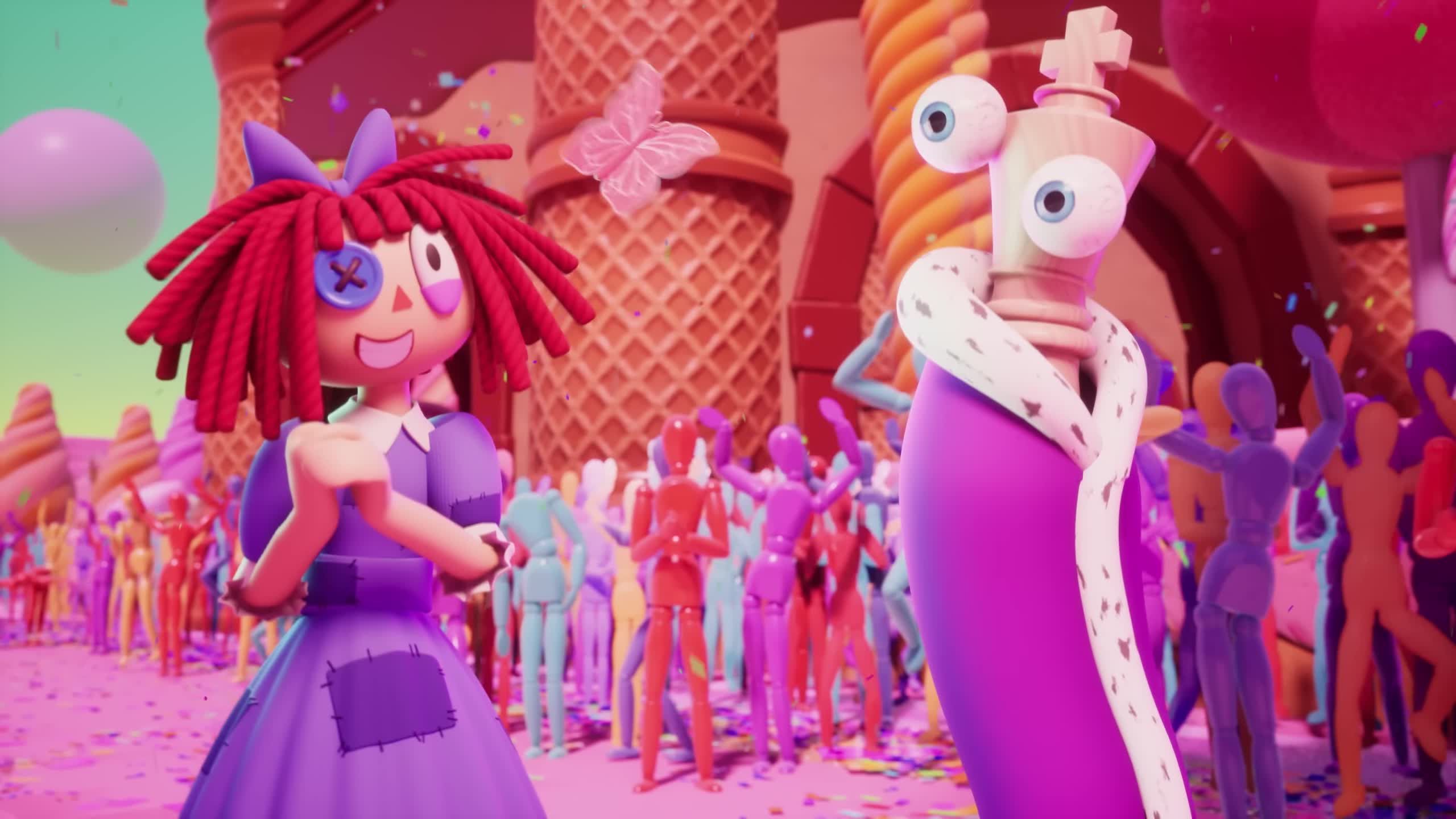
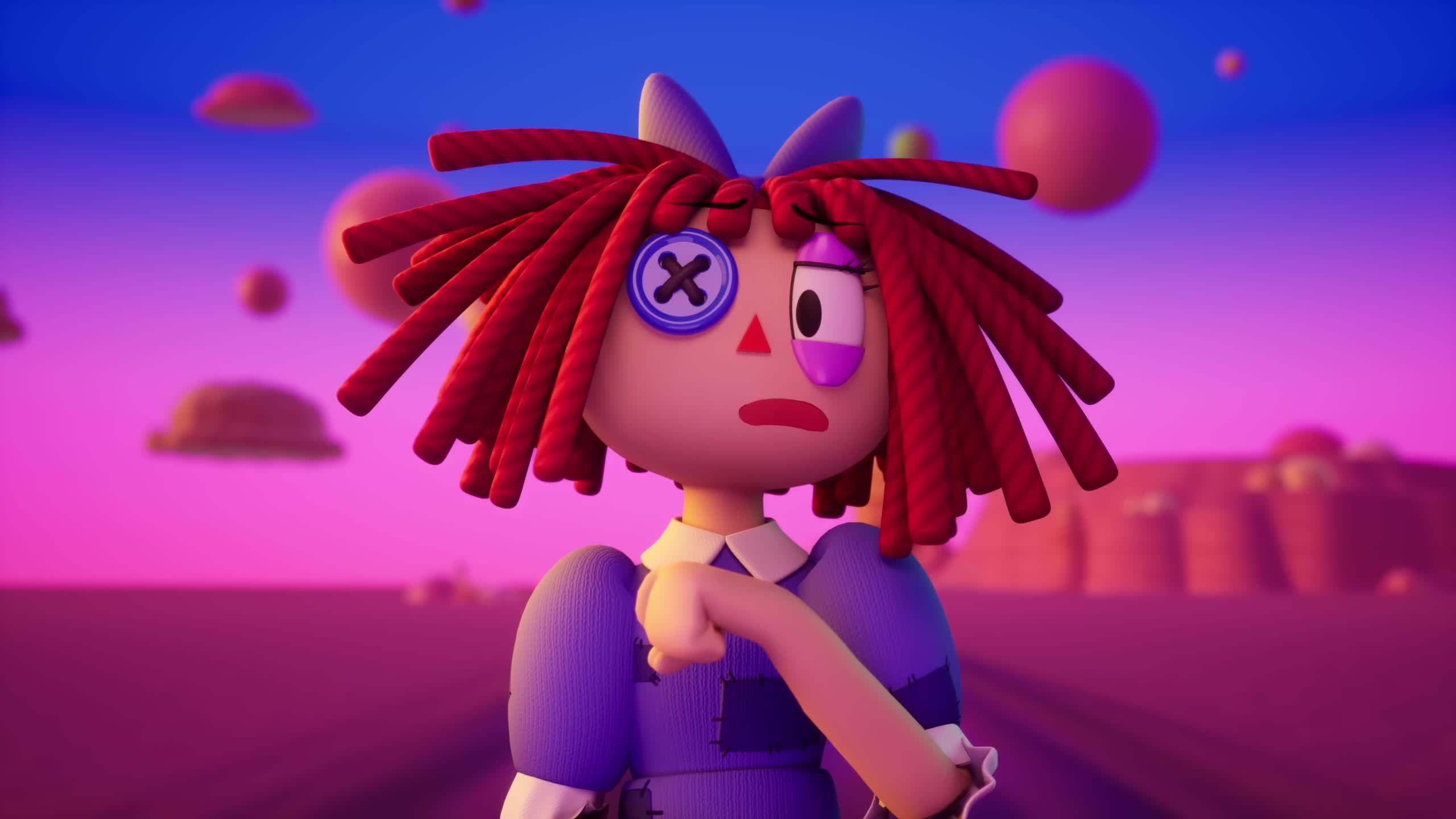
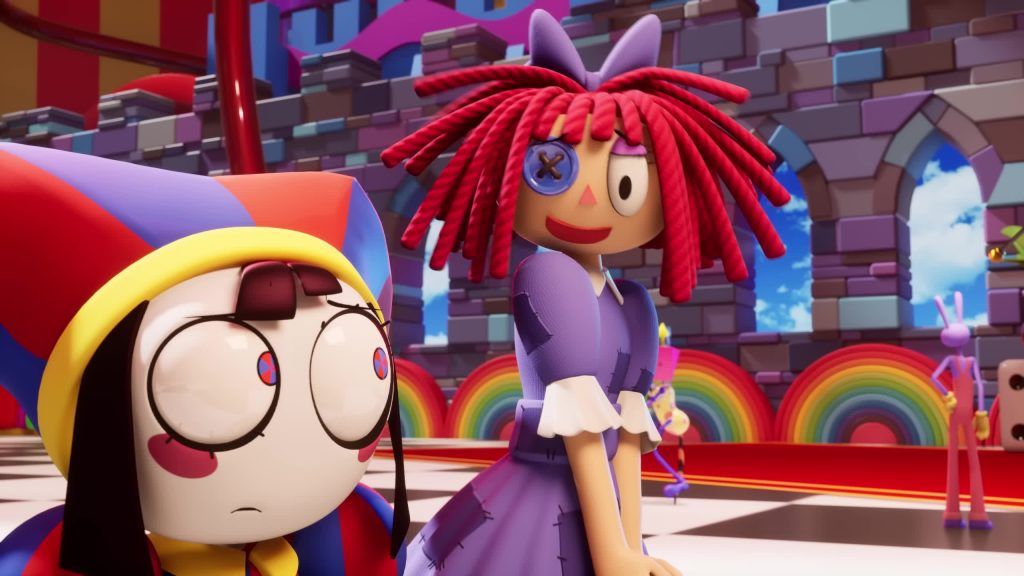
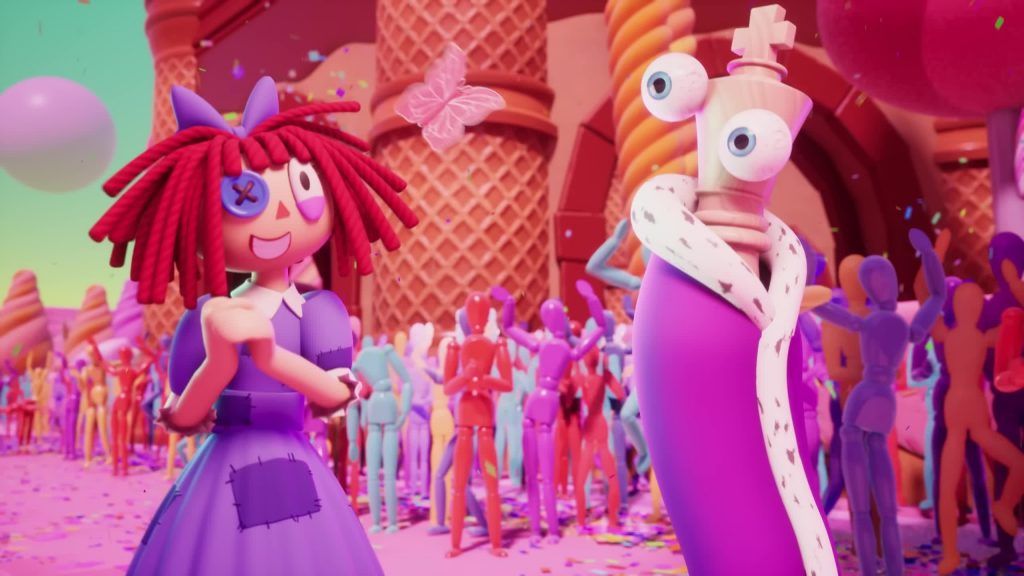
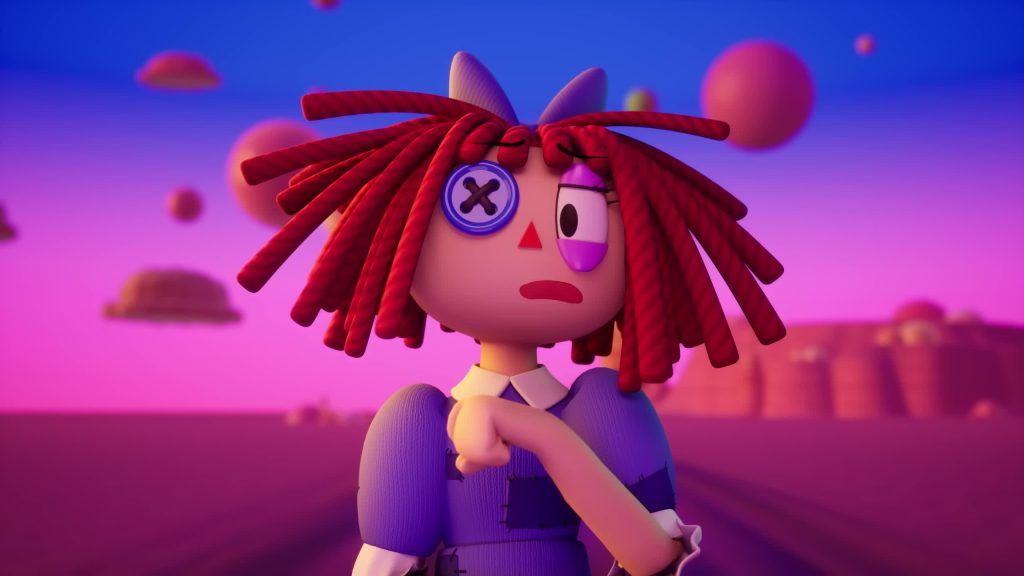
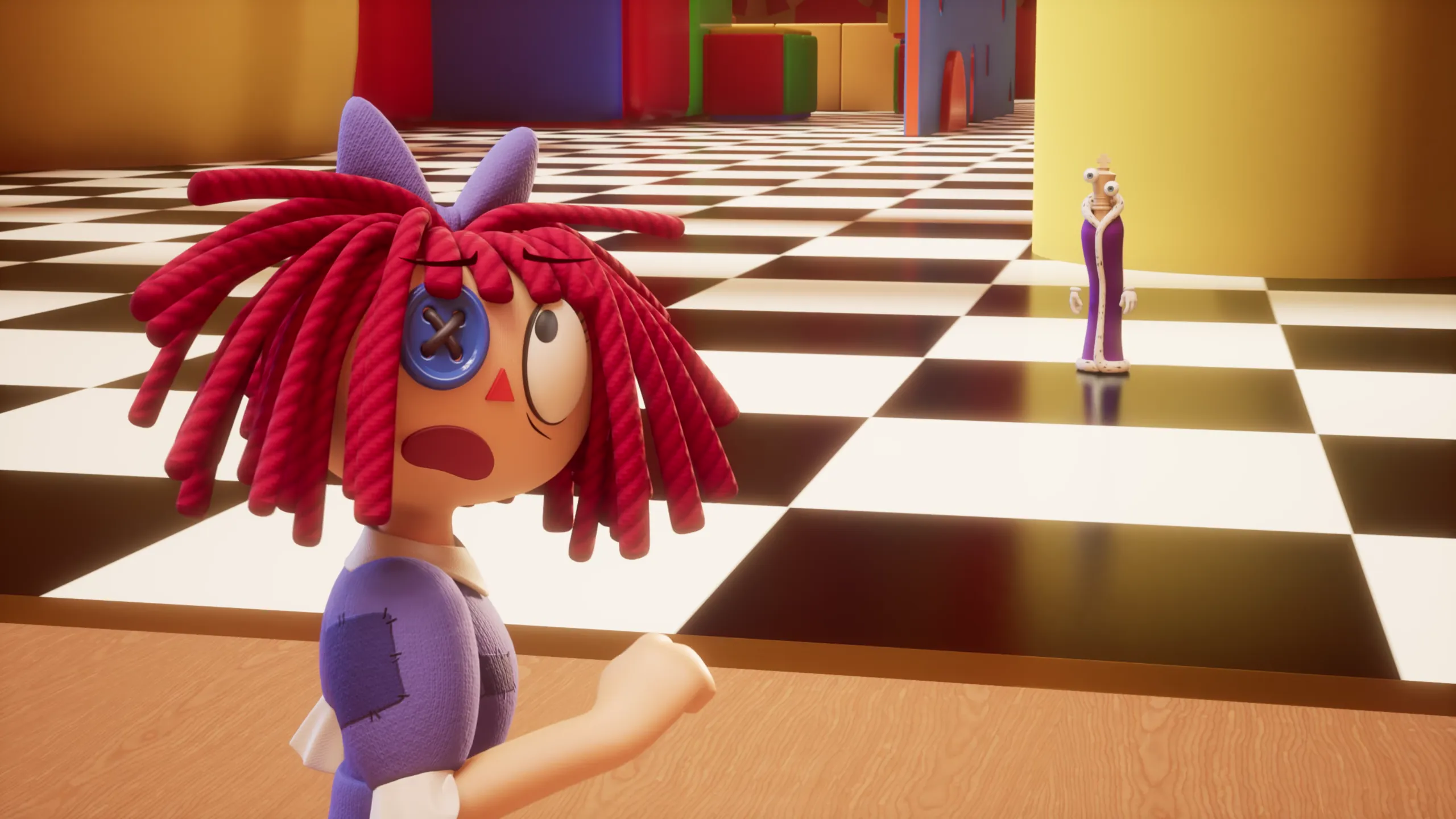
- Design: A humanoid ragdoll with stitched seams, red yarn-like hair, a button eye, and a patchwork dress.
- Notable details: Ragatha likes horses, can play the cello, and can see through her button eye.
Visual Design and Aesthetic
Ragatha’s design does some of the clearest symbolic work in the series. She looks soft, handmade, and repairable: stitched seams, a button eye, a triangular nose, bright yarn hair, and a dress that feels like patchwork rather than costume.
The design becomes more meaningful as the story gets darker. Ragatha’s body can be bent, dragged, damaged, and fixed, while her emotional state is much harder to repair. The show keeps using that contrast: she looks like someone built to be put back together, but she is still wearing down.
In Fast Food Masquerade, the cheerful doll imagery starts feeling less cute and more literal. Ragatha keeps smiling because that is how she holds herself together.
Relationships with Other Characters
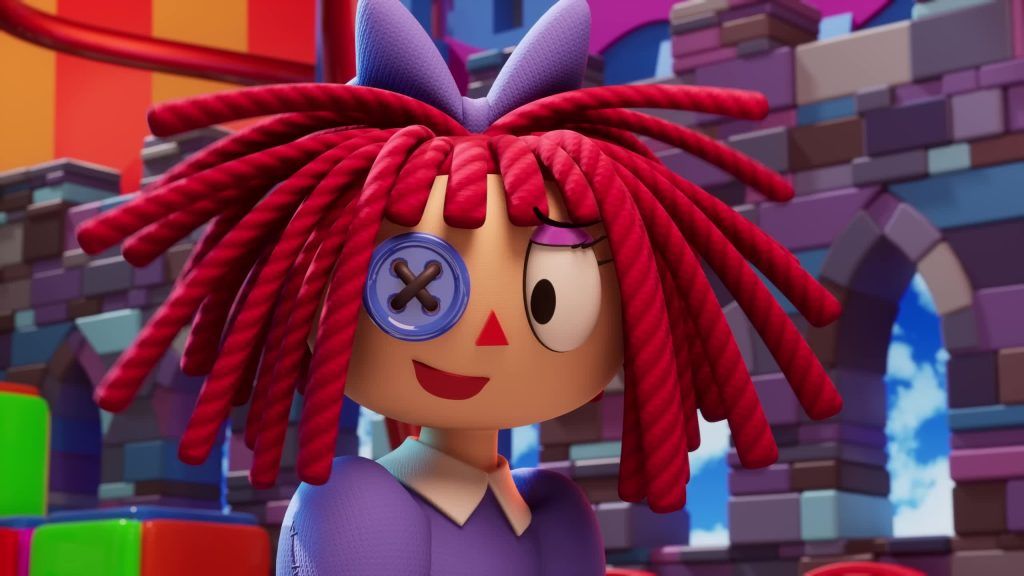
- Pomni: Ragatha becomes Pomni’s first source of comfort inside the circus. Their bond brings out Ragatha’s nurturing side, but it also exposes her fear of failing someone who depends on her.
- Jax: Her tension with Jax is built on distrust. Ragatha sees how often he turns other people’s pain into entertainment.
- Gangle: Ragatha tries to support Gangle, though the series also questions whether constant reassurance is always enough.
- Zooble: Zooble is blunt where Ragatha is diplomatic, which makes their contrast useful in ensemble scenes.
- Kinger: Kinger becomes one of the few people around whom Ragatha can sound openly tired instead of endlessly reassuring.
- Caine and Bubble: Ragatha survives inside a world controlled by Caine and assisted by Bubble, where performance often replaces genuine care.
Ragatha’s Episode Arc
In the pilot, Ragatha immediately reads as the group’s caretaker. She tries to guide Pomni through panic, even while the situation around Kaufmo shows how little control anyone actually has.
Candy Carrier Chaos! lets Ragatha stay close to Pomni while the story shifts toward NPC identity and emotional attachment. The episode’s world, including Princess Loolilalu and Gummigoo, makes Ragatha’s steady presence feel even more important.
The manor storyline places Ragatha in a quieter emotional register. Her scenes around Martha Mildenhall show that she is not only cheerful; she can also respond to grief and tragedy with real tenderness.
Untitled adds stronger clues about Ragatha’s human life, including rural and horse-related details. These hints make her feel less like a pure caretaker archetype and more like someone with a full life before the circus reduced everything to survival.
In They All Get Guns, Ragatha admits that she feels she failed Pomni. That moment is small but important: it shows how closely she links her self-worth to being emotionally reliable.
Beach Episode pushes the group’s trust in Caine toward a breaking point. Ragatha still tries to stay steady, but by then reassurance alone cannot protect anyone from what the circus is becoming.
Episode 8, hjsakldfhl, gives Ragatha some of her heaviest material. Kinger’s memories connect him to her early days in the circus, and the episode ties her fear sequence to home, family pressure, and the pain behind her need to be liked.
Symbolism and Thematic Significance
Ragatha represents forced positivity as survival. She is not optimistic because the Digital Circus is harmless. She is optimistic because despair is dangerous there, and because she has trained herself to be the person who keeps the room from collapsing.
Her ragdoll design reinforces that theme. She can be patched up, but the emotional damage still accumulates. The more the series reveals about her, the more her smile reads as both sincere and defensive.
Fan Theories and Interpretations
Ragatha inspires a lot of discussion because the show gives viewers confirmed details while leaving emotional gaps open. The safest way to read those gaps is as interpretation, not settled canon.
- Hidden despair: Many fans read Ragatha’s smile as a mask that works only while she feels useful.
- Caretaker pressure: She is often seen as the group’s emotional glue, but also as someone damaged by always playing that role.
- Farm-life backstory: Her horse references and later rural details suggest a more grounded life before the circus.
- Family pressure: Episode 8 supports readings that her home life was emotionally difficult, though fans should avoid treating every visual symbol as literal proof.
- Breaking point: Because Ragatha internalizes stress, viewers often wonder how long she can keep performing stability.
Why Ragatha Remains Popular
Ragatha’s appeal comes from contrast. She looks soft, colorful, and repairable, but the story keeps pairing that design with burnout, loneliness, and fear of rejection.
Her best moments are not just scenes where she comforts someone. They are scenes where comfort fails, where her patience cracks, or where she has to admit that kindness does not automatically make everything better.
- Comforting Pomni during her first panic inside the circus.
- Trying to help after Gummigoo’s deletion, even when Pomni cannot be easily reassured.
- Letting frustration slip during the Spudsy’s chaos.
- Confessing to Kinger that she feels she failed Pomni.
- Becoming part of the emotional fallout after Episode 8 changes the status of the circus.
FAQ: Ragatha in The Amazing Digital Circus
How old is Ragatha in Digital Circus?
If you searched “how old is Ragatha Digital Circus,” the creator-listed answer is 30. That makes Ragatha one of the older members of the main trapped cast.
What does “Ragatha Digital Circus” usually mean?
Searches for “ragatha digital circus,” “digital circus ragatha,” “amazing digital circus ragatha,” and “ragatha amazing digital circus” all point to the same character: Ragatha, the ragdoll avatar voiced by Amanda Hufford.
Why do people search “Ragatha The Amazing Digital Circus”?
“Ragatha The Amazing Digital Circus” is usually shorthand for Ragatha from The Amazing Digital Circus, especially when viewers are looking for her age, personality, episode history, or role in Pomni’s arc.
Is Ragatha only the “nice one”?
No. Ragatha is kind, but the show treats that kindness as a coping mechanism under pressure. Her warmth matters because it is difficult, not because it is effortless.
Can Ragatha see through her button eye?
Yes. Creator comments and character references treat the button eye as functional inside the Digital Circus, not just as a decorative design detail.