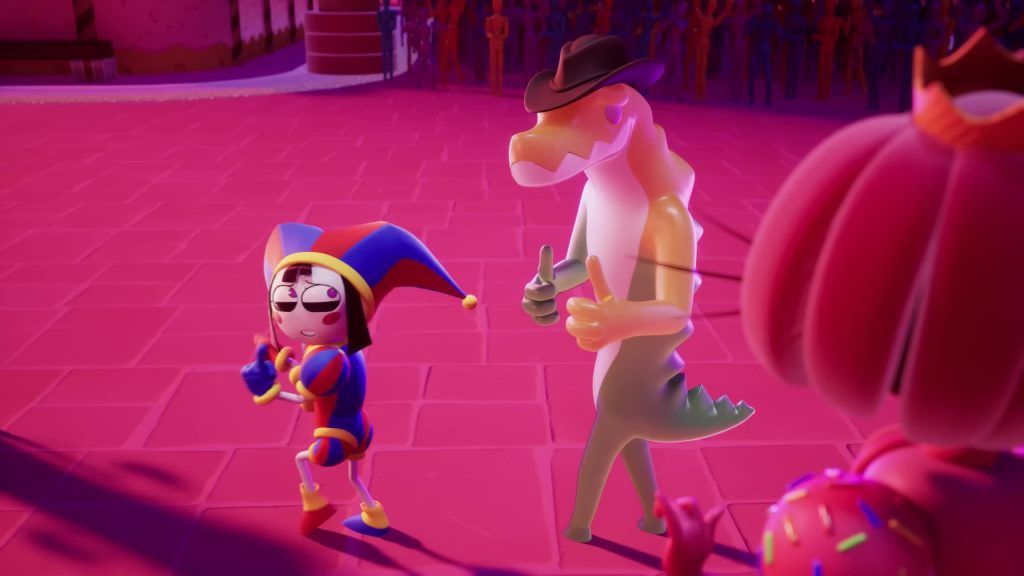
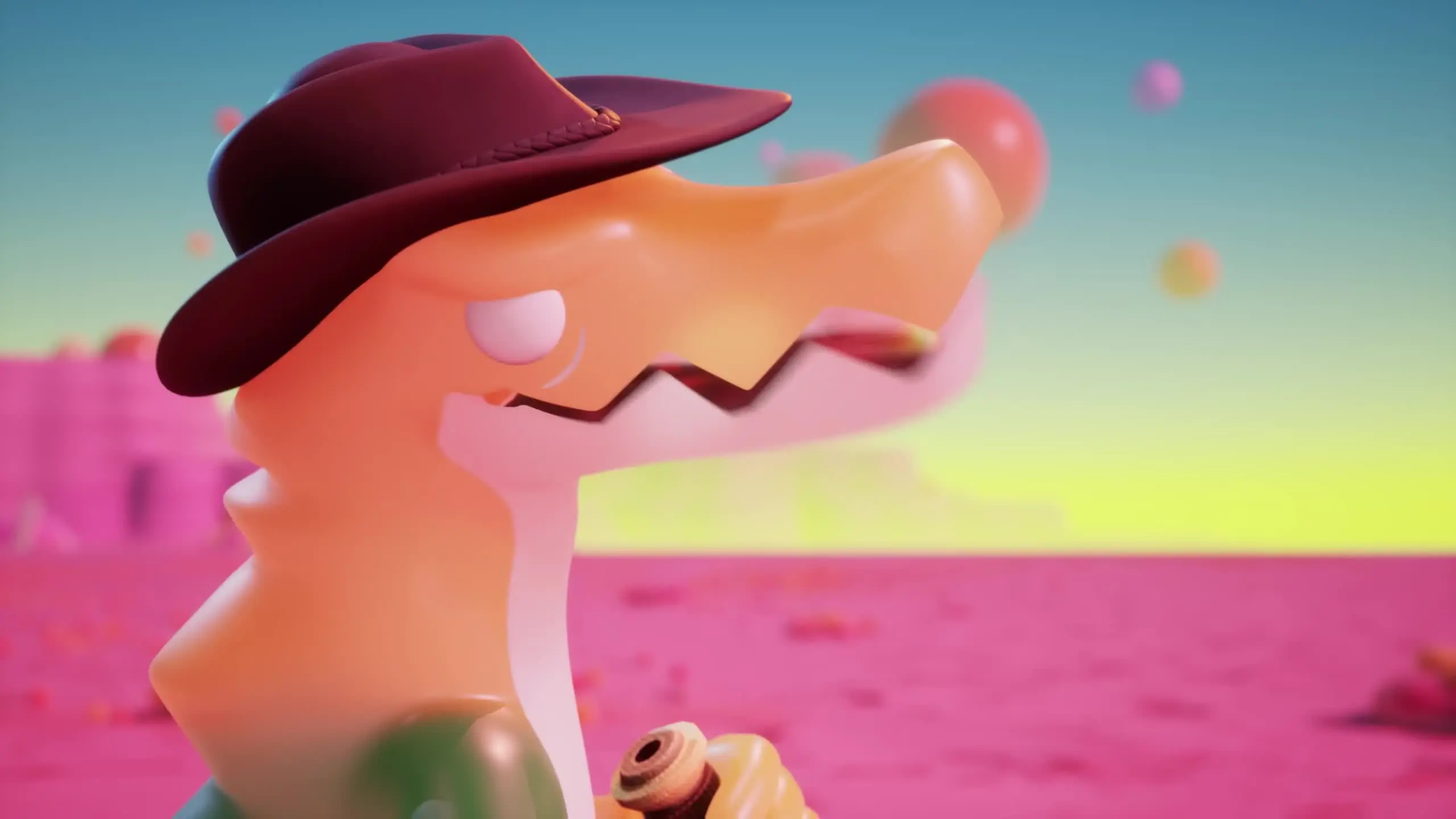
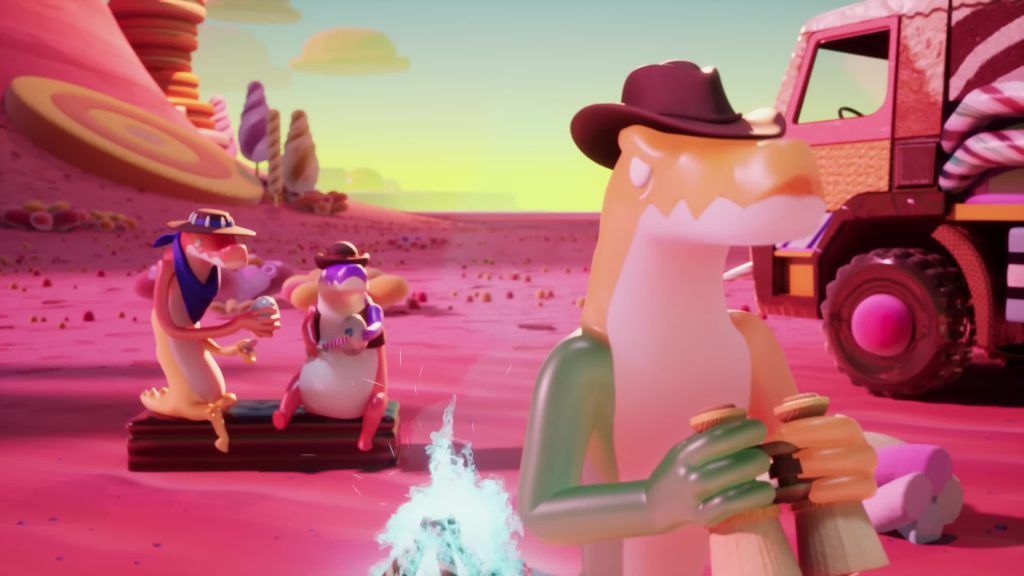
Gummigoo first appears in “Candy Carrier Chaos!”, where Pomni and the others are sent to recover stolen maple syrup from a gang of candy-desert bandits. Introduced as the leader of the crocodile trio, he quickly stops feeling like a disposable quest obstacle. Once he learns that his world may be artificial, his identity crisis turns him into one of the most emotionally striking NPCs in the series.
Physical and Personality Overview: What Makes Gummigoo Unique?
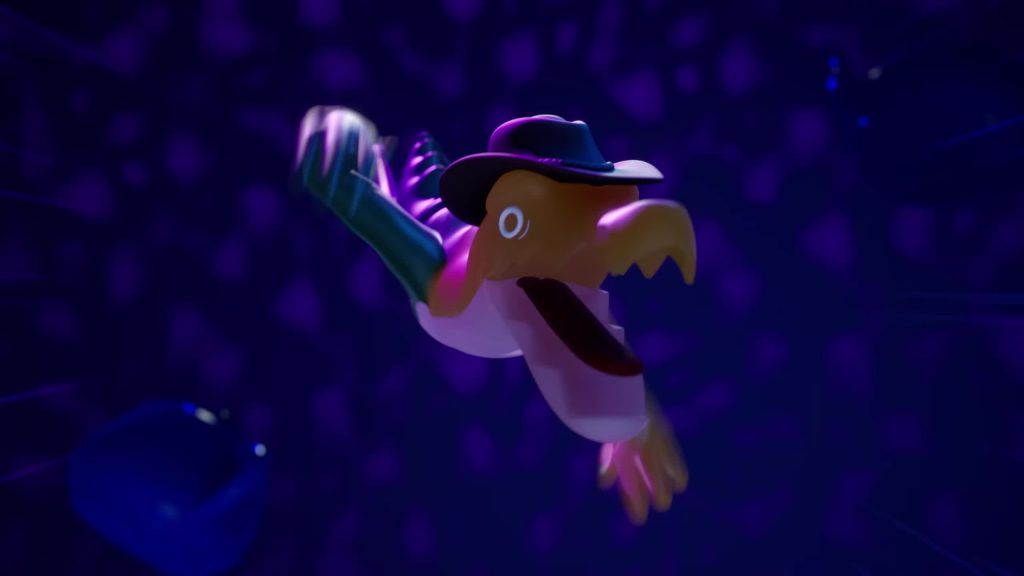
Designed as a gummy crocodile in a cowboy hat, Gummigoo fits the confectionary absurdity of the map ruled by Princess Loolilalu, yet his subdued reactions give him a very different energy from the adventure’s louder joke characters. His soft colors and slightly sticky, candy-like form make him look harmless at first, while his pauses, wary glances, and heavy tone hint that he feels far more than a normal NPC should.
Personality-wise, Gummigoo is thoughtful, defensive, and unexpectedly kind. He starts as a thief, but his motives are tied to helping his village and his mother, which makes him less a straight villain than a desperate local trying to survive inside a scenario someone else wrote for him.
Role in the Story: Gummigoo’s Function in the Digital Circus Universe
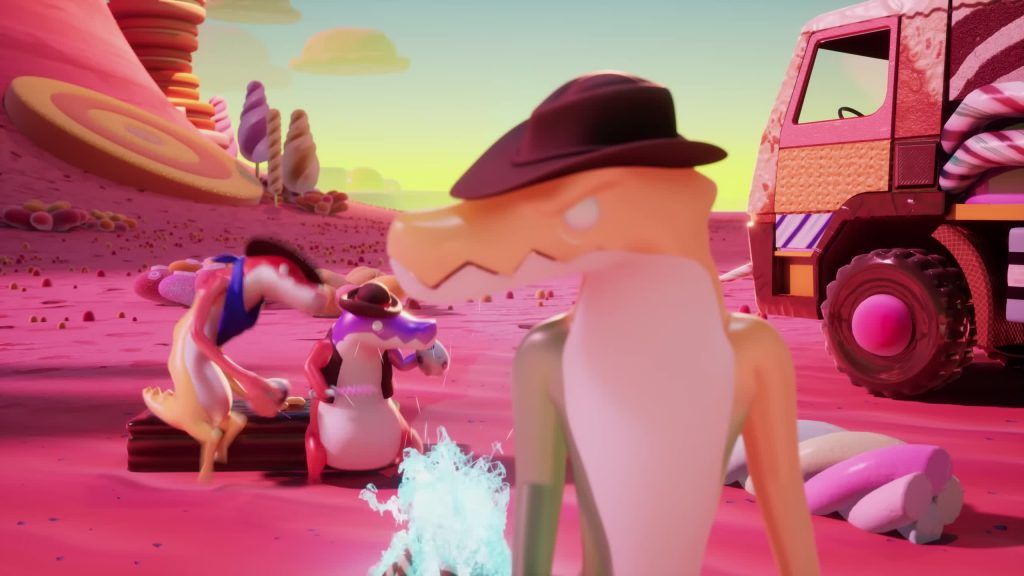
Within The Amazing Digital Circus, Gummigoo is one of the clearest signs that NPCs are not just decorative code. His existential breakdown blurs the line between scripted beings and trapped humans, raising the possibility that awareness in the circus can emerge anywhere, even inside a character who was supposed to be defeated and forgotten.
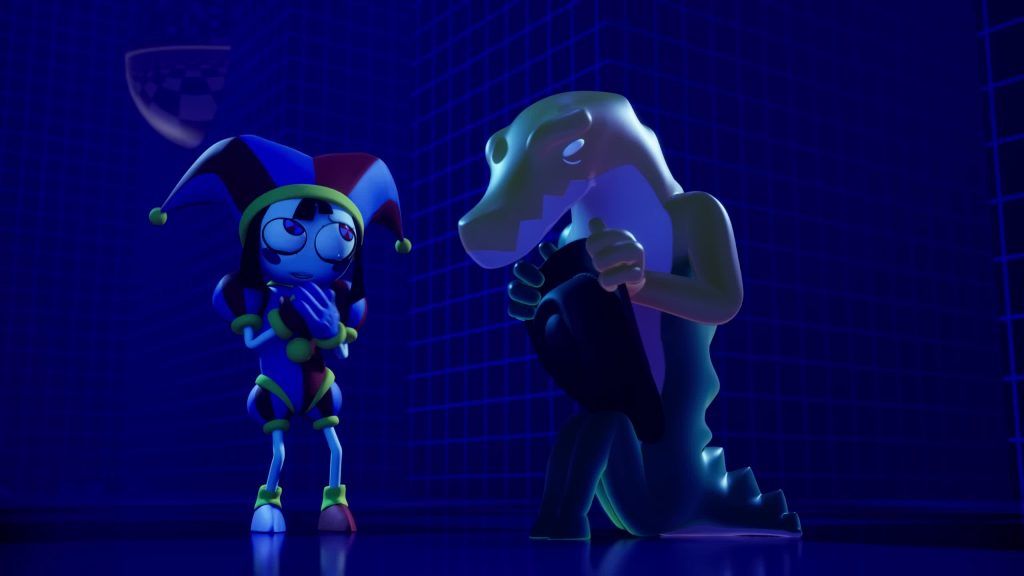
That is why his connection to Pomni matters so much. She does not treat him as background scenery; she recognizes another mind in pain. Their brief bond makes Gummigoo a mirror for her own panic, and his fate becomes one of the first moments when Pomni truly understands how cruel this world can be.
Later Appearances: How Gummigoo’s Meaning Changes Over Time
Later episodes complicate his role rather than simply extending it. In “Fast Food Masquerade”, Gummigoo returns in a new NPC role as an ordinary customer at Spudsy’s. He does not remember Pomni, which gives the scene its sting: the circus can reuse a familiar face while erasing the specific self she tried to save.
A quieter callback follows in Episode 5, “Untitled”, where Gummigoo only appears as branding on an in-world ad board. Even as a cameo, it reinforces the sense that his image keeps circulating through the circus as a reusable asset, somewhere between a character, a mascot, and leftover code.
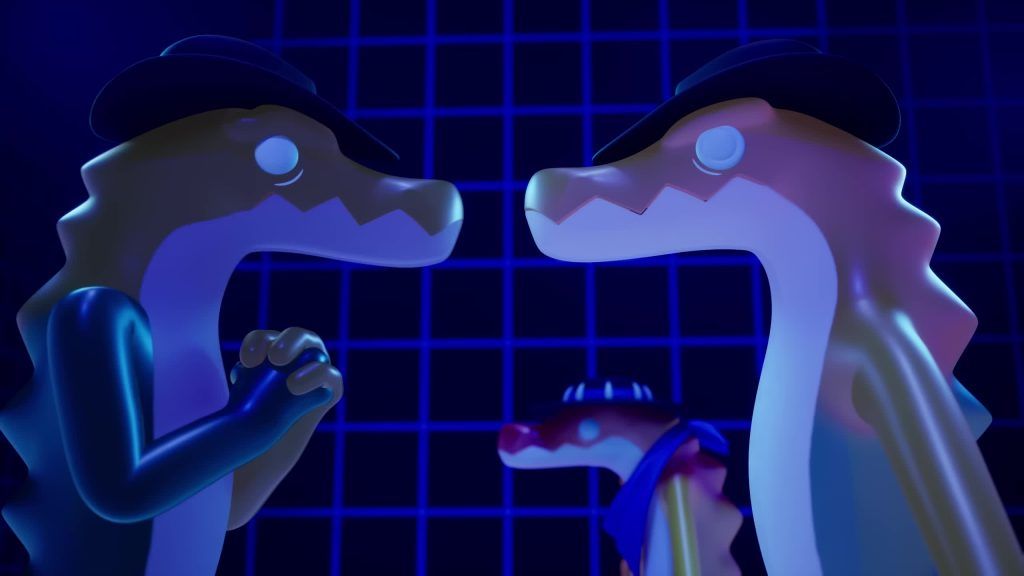
By Episode 8, “hjsakldfhl”, his significance turns darker. He appears inside Pomni’s nightmare as a realistic crocodile attacking her alongside crocodiles resembling his old crew, which recasts him not as a lost friend or hopeful exception, but as part of the trauma Caine can weaponize against the cast.
Relationships and Interactions: Gummigoo with Fellow Characters
Gummigoo’s dynamic with Chad helps ground him. Even when he snaps at his crew, he comes across less like a tyrant and more like the only one trying to keep a ridiculous plan moving. That balance between irritation and responsibility makes the bandit trio feel oddly lived-in for characters who were meant to exist for a single quest.
The same is true of his bond with Max. Their scenes add comic rhythm, but they also show that Gummigoo genuinely cares what happens to the others. When his worldview collapses, part of what hurts him most is the thought that dragging them into the truth could destroy them too.
His most important adversarial relationship remains with Caine, whose rules define the limit of Gummigoo’s freedom. Caine’s decision to erase the original Gummigoo, and the later reuse of his likeness in other contexts, turns him into a symbol of how the circus manages identity: it can generate attachment, delete continuity, and recycle what is left.
Themes and Symbolism: What Does Gummigoo Represent?
Gummigoo embodies the theme of existential panic in artificial worlds, but he also represents something more specific: the fear that personhood can be recognized for a moment and then overwritten. His candy-crocodile design makes him look cute and disposable, while his story keeps insisting that even seemingly minor beings can experience dread, attachment, and grief.
Viewer Impact: Why Gummigoo Resonates with Fans
Viewers respond to Gummigoo because he sits at the crossroads of sweetness and tragedy. He is funny, memeable, and visually charming, yet his story keeps circling back to deletion, reset, and memory. As later episodes continue to reuse his image in different forms, Gummigoo feels less like a one-off NPC and more like one of the clearest warnings about what the circus does to anyone–human or artificial–who starts to become too real.