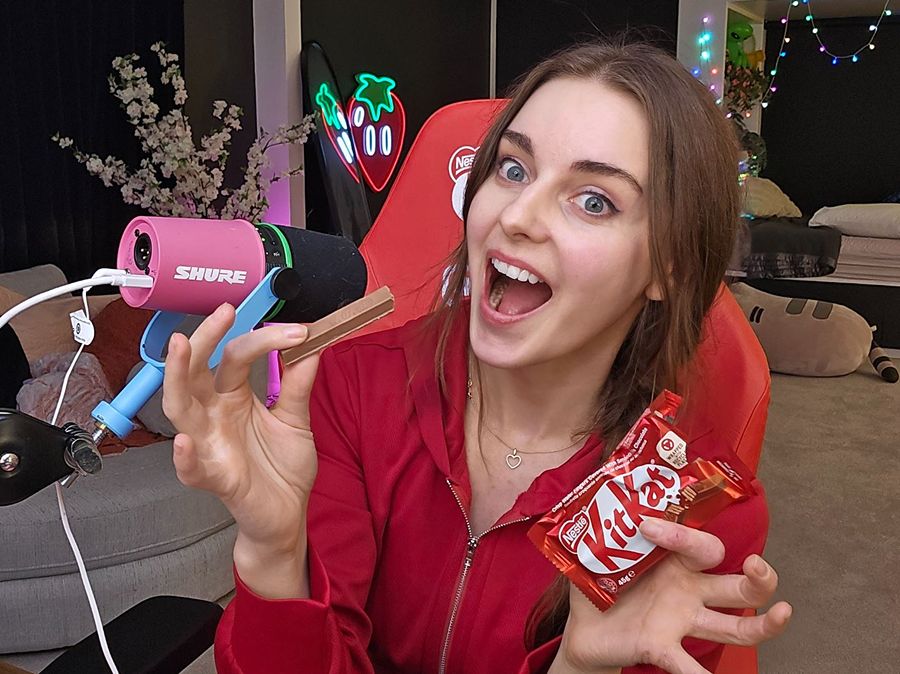
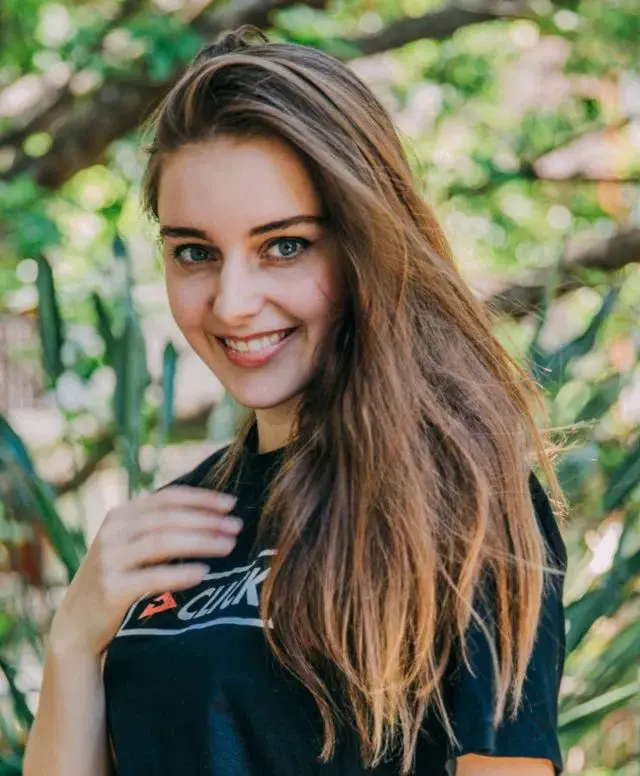
Kathleen Veronica Belsten — known online as Loserfruit or Lufu — is an Australian internet personality whose career now spans live streaming, YouTube, gaming culture, and occasional voice work. She first built momentum through League of Legends videos in 2013, later expanded into Overwatch, and eventually turned Fortnite into the center of a broader creator brand powered by quick humor, strong audience chemistry, and a distinctly online performance style.

That background made her a natural fit for Meta Runner, GLITCH Productions’ cyber-sports animated web series set in a future where elite players use mechanical Meta Runner arms to push competitive gaming beyond human limits. Across three seasons, the show blended anime energy, esports spectacle, and a more emotional story about identity, memory, and ambition in a heavily commercialized digital world.

Within that universe, Kathleen contributed a brief but memorable voice appearance as a female civilian, and her casting makes even more sense when viewed alongside the broader Meta Runner voice cast. The series frequently mixed established voice talent with internet-native personalities, which gave the world a recognizable tone for viewers who already followed gaming creators long before they heard them in scripted animation.

As of 2026, Belsten remains far more than a nostalgic Fortnite-era name. Her main YouTube channel sits above 5.6 million subscribers, her Twitch page is around the 3 million follower mark, and her upload cadence shows that she is still actively moving between live streams, challenge videos, reactions, and gaming-first entertainment. Fortnite has also kept her in its crossover orbit: beyond her original Icon Series cosmetics, 2025 introduced the Champion Loserfruit outfit through FNCS-linked events, reinforcing how firmly her persona is tied to the game’s creator history.

Meta Runner’s guest-casting strategy also placed Kathleen beside creators such as Elliot Watkins, better known online as Muselk. That overlap matters, because both creators came from the same gaming-media ecosystem that helped internet-born entertainment feel fluent inside GLITCH’s storytelling rather than imported from somewhere else.

A similar connective thread runs through the inclusion of Ross O’Donovan, another creator whose animation and gaming background translated naturally into performance work. In a series that constantly balances high-speed action with moments of humor and texture, those recognizably online personalities helped the world feel lived-in rather than purely studio-built.

Even though Kathleen’s screen time is short, her cameo works because Meta Runner’s wider ensemble is so fully developed. Performers such as Amber Lee Connors gave the series emotional scale, especially through Lucinia, helping even small appearances land inside a much bigger narrative framework instead of feeling like throwaway easter eggs.

The emotional center of the series is still closely associated with Celeste Notley-Smith, whose performance as Tari helped define Meta Runner’s tone from the start. When a show has that kind of strong central anchor, smaller voices like Kathleen’s can slip into the world cleanly and still feel consistent with its established atmosphere.

That same layered balance is visible in the work of Jessica Fallico as Belle Fontiere, a character who brings tension, rivalry, and attitude to the show. Kathleen’s brief role sits on the opposite end of the scale, but the contrast is useful: it shows how Meta Runner relies on both headline performances and background voices to make its competitive universe believable.

The show also benefits from characters like Theo, voiced by Robyn Barry-Cotter, whose energy adds warmth and momentum to the larger story. For a creator like Kathleen, stepping into a world populated by such strong, distinct voices made her appearance feel less like stunt casting and more like a natural extension of Meta Runner’s playful relationship with gaming culture.

Internet-born performance is part of the series’ DNA, which is why it makes sense to mention creators such as Brendan Blaber as well. Meta Runner never treated online entertainers as novelty names alone; it folded them into a wider vocal palette where internet timing, comedic instincts, and fandom literacy could genuinely serve the material.

That creator-led sensibility also connects to figures like Luke Lerdwichagul, whose broader GLITCH work helped define the studio’s tone across projects. In that environment, Kathleen’s appearance reads as part of a larger production philosophy: web animation made by people who understand both traditional storytelling beats and the rhythms of creator culture.

The same is true when looking at online entertainment veterans such as Arin Hanson, whose presence in web-based animation helped normalize crossover casting long before it became common marketing language. Kathleen belongs to that same generation of digital personalities who can move between unscripted content and character work without feeling out of place in either space.

Kathleen Belsten voice actor Meta Runner

Beyond Meta Runner: Streaming, Fortnite, and Creator Brand

While her voice acting credits remain selective, Kathleen’s broader creative footprint keeps expanding in ways that make future animated appearances entirely plausible. For audiences already following GLITCH’s wider catalog through series like The Amazing Digital Circus, her Meta Runner cameo still feels like part of a larger meeting point between streaming culture and independent animation.

That crossover is easier to see when you explore the growing roster of Digital Circus voice actors, where web-native performance styles, internet fandom, and polished character acting increasingly overlap. Kathleen may not be a full-time animation performer, but her background fits the same media environment that keeps turning online personalities into recognizable voice talent.

The success of performers such as Alex Rochon in recent indie animation also helps explain why creator crossovers continue to matter. Projects like these reward big, readable vocal personalities, and Kathleen has spent years building exactly that kind of instantly identifiable delivery through streaming, live commentary, and high-energy gaming videos.

There is also a clear market appetite for internet-savvy performers who can bridge fan communities, something visible in the rise of artists like Ashley Nichols. Kathleen brings a different style from traditional animation-first actors, but her value lies in recognizability, timing, and an audience relationship that already translates across platforms.

Outside animation, Kathleen continues to juggle several lanes at once:

  • Live streaming built around Fortnite, variety gaming, and real-time audience interaction.
  • YouTube content spanning gameplay, reaction-driven formats, challenges, and creator collaborations.
  • Brand and game crossovers that keep her name visible beyond a single platform or trend cycle.

That versatility is exactly why her Meta Runner role still matters. It is small, but it documents a moment when a major gaming creator could step into scripted web animation without any friction, then return to her main audience with the same sense of authenticity that made her popular in the first place.

Influence and Future Prospects in Voice Acting

Looking ahead, Kathleen’s prospects in voice work are closely tied to the continuing growth of creator-friendly web animation. The success of series such as Murder Drones shows that audiences remain interested in stylized, internet-native productions where recognizable digital personalities can coexist with seasoned actors and still enrich the final result.

There is also a strong example in multifaceted performers like David J.G. Doyle, whose work across GLITCH-related projects demonstrates how flexible the modern web-animation pipeline has become. Kathleen’s career runs in a different direction, but the same ecosystem leaves plenty of room for creators to pick up selective voice roles without abandoning their core audience or platform identity.

For that reason, her future in animation does not need to depend on a massive shift away from streaming. In the current landscape, a creator can remain active on Twitch and YouTube while still appearing in ambitious web productions, whether in established franchises or newer entries such as The Gaslight District. Kathleen Belsten’s role in Meta Runner may be brief, but it still captures something larger: the moment gaming creators became a natural part of independent animated storytelling rather than guests passing through it.

That is what keeps her inclusion interesting today. Loserfruit is still actively building her brand, still closely associated with Fortnite and creator media, and still a recognizable name to audiences who move easily between streams, YouTube uploads, esports culture, and indie animation. If she takes on more voice work, it will feel less like a reinvention and more like the next logical extension of a career that has always thrived on adaptability.

A quick note
We use cookies to ensure the site works properly, to personalize content and ads, to provide social media features, and to analyze our traffic.