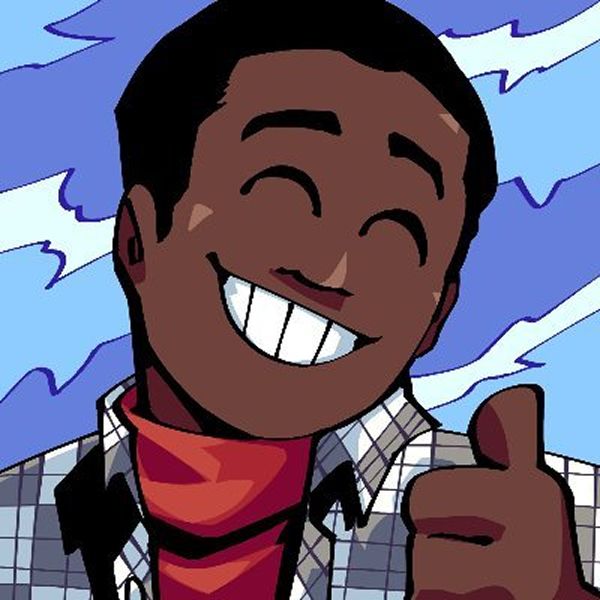
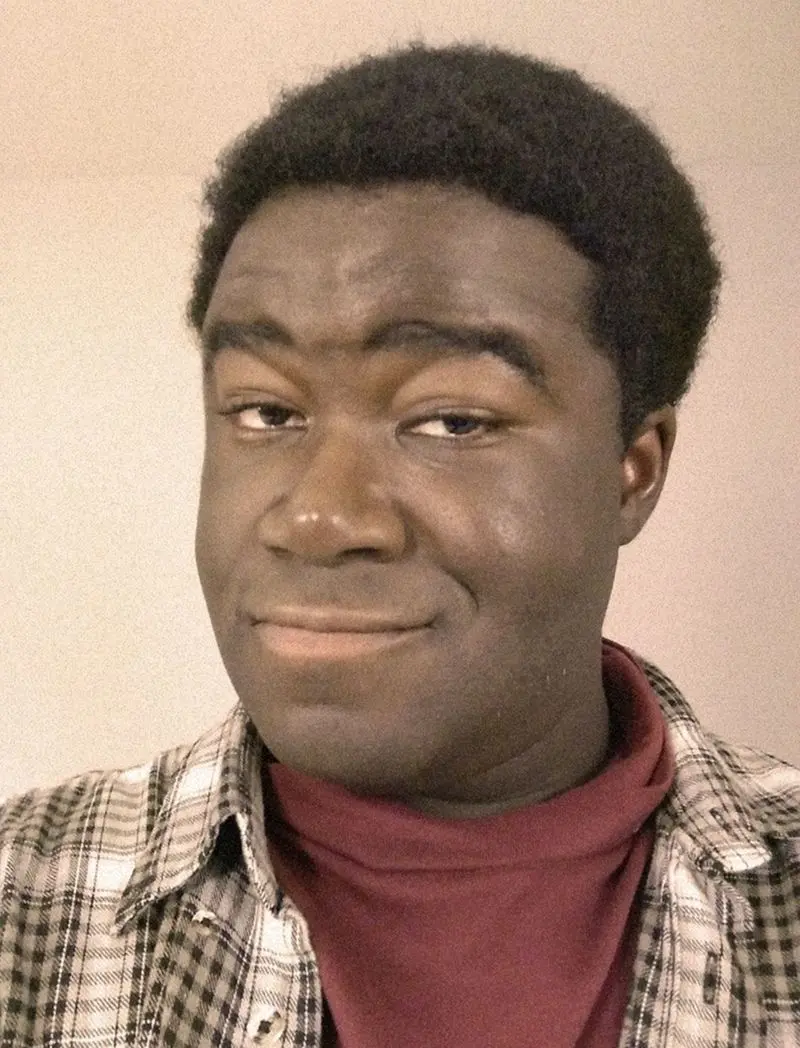
David J. Dixon grew up enamored with movies, games, comics, and all kinds of genre storytelling. His path into performance began in middle school theatre, and his interest in voice acting sparked in 2005 after an early fan-animation attempt with an old microphone. What started as a rough experiment eventually led him toward the creative communities that helped shape a professional career, and today many viewers know him best through Murder Drones.
He soon found a voice-acting community on Newgrounds, where collaboration and feedback turned a hobby into a discipline. That long apprenticeship still shows in how naturally he works inside ensembles rather than treating performance like a one-person showcase, and readers following the wider cast can trace that network through the site’s Murder Drones voice cast.
Online Presence and Personal Branding
Over the years he has gone by David, Dave, ShockDingo, and Shock-Dingo, but Electric Voicebox Media became the name that brought the different sides of his work together. The label fits a creator who moves between performance, editing, design, and media experiments, and it also suits a fandom-heavy space where audiences like to move from actor bios into worldbuilding through the wider Murder Drones character roster.
That multi-hyphenate identity feels especially consistent with the kind of character work Dixon is known for. He does not approach supporting figures as throwaways, which is part of why Khan Doorman lands as more than a nervous dad with a running joke about doors.
Key Web Series Roles and Highlights
Dixon’s most recognized role remains Khan, the father of Uzi Doorman. He plays the character with a mix of comedic panic, stubborn caution, and genuine affection, which gives the family conflict real emotional weight instead of reducing it to background exposition.
That performance gets even stronger in scenes opposite Serial Designation N, because Khan is forced to react not just to danger but to the unsettling fact that the “monster” near his daughter can sometimes sound more emotionally open than the adults around her.
The contrast with J also matters. Her cold, corporate discipline throws Khan’s fear-driven protectiveness into sharper relief, making Dixon’s performance essential to the colony’s early sense of anxiety and dysfunction.
The role first made an impression in the 2021 pilot, where Khan’s fixation on safety, structure, and bunker logic immediately defined both the show’s humor and one of its central emotional fractures.
In Episode 2: “Heartbeat”, the series started pushing harder into horror, corrupted systems, and bodily unease. That tonal shift helped elevate every grounded reaction inside the colony, and Dixon’s delivery benefited from that expanding dramatic range.
As the story widened, the legacy of Nori Doorman became increasingly important to how viewers read Khan. What first looked like cowardice started to read more clearly as grief, avoidance, and a man who never truly learned how to process catastrophe.
That reinterpretation deepens around Episode 5: “Home”, where backstory and emotional context begin reshaping several relationships at once. By then, Khan no longer functions as simple comic relief; he becomes one of the clearest examples of how the series ties humor to damage.
The mythology surrounding Tessa Elliott adds another layer to the franchise’s emotional architecture. Against those wider revelations, Dixon’s work helps preserve the domestic scale of the story, keeping the father-daughter thread readable even as the lore grows denser.
That balance becomes even more valuable once Cyn enters the picture as a deeper source of dread. At that point, the series needs performances that can still sell recognizable fear and hesitation inside increasingly surreal material.
The same is true of the Absolute Solver, which turns the show from sharp sci-fi horror-comedy into something much closer to techno-cosmic nightmare. Khan’s grounded energy gives that escalation an emotional anchor.
By the time the season reaches Episode 8: “Absolute End”, the story has grown far beyond the bunker tensions of the opening chapter. Even so, Dixon’s performance still matters because Khan represents the ordinary fear, ordinary love, and ordinary mistakes that keep the spectacle human.
- Dragon Goes House-Hunting – Edred Wilhelm Ostern Fran Malloy Roy Karlhermann Von Alvin
- Bakugan (2023–2024) – Bruiser
- Dust: An Elysian Tail – Blop
- A PAW Patrol Christmas (2025) – Santa
- Charlie the Wonderdog – Food Vendor, Stinky
Recent Career Updates
Beyond his better-known web credits, Dixon has continued to widen his range. In an early-2026 update on his official site, he wrote that he had recently voiced Santa in A PAW Patrol Christmas and also appeared in the animated feature Charlie the Wonderdog, a sign that his work is now moving fluidly across streaming, children’s animation, and feature projects.
Murder Drones has also continued to grow as a franchise. After the full first season reached Prime Video in 2025, the property expanded further through Oni Press’s official comic adaptation, which kept attention on the series and, by extension, on the cast members who helped define it from the beginning.

Voice Acting Style and Audience Appeal
Dixon’s voice acting style combines energy with emotional shading, which is why his scenes play well inside a fast-moving ensemble. His work sits comfortably alongside performers such as Michael Kovach, whose softer, more openly earnest rhythm helps bring out Khan’s defensive awkwardness.
He is equally effective opposite Elsie Lovelock, because Uzi’s frustration needs a father who can sound both ridiculous and painfully sincere in the same conversation. That friction is a big part of why their shared scenes remain so watchable.
The series also asks him to exist inside tonal swings that include characters like Lizzy, where social comedy, pettiness, and teenage posturing can still feed into the larger tension of the bunker community.
Those swings become darker around Doll, whose presence sharpens the show’s sense of buried trauma and inherited damage. Dixon’s grounded style helps keep those shifts from feeling random; he gives the world a baseline human emotion, even when the characters are machines.
Fans also respond to the broader persona around the performances. Dixon’s online presence mixes humor, retro-game enthusiasm, and a synthwave-leaning visual identity, which makes his brand feel naturally aligned with the internet-native audiences that helped indie animation thrive in the first place.
Collaborations and Professional Networks
Dixon’s early Newgrounds years introduced him to a wide network of indie animators, performers, and game developers, and that background still shows in how collaborative his work feels. In Murder Drones, that instinct is especially visible whenever Khan shares the screen with a sharper, more dangerous force like Serial Designation V, because the contrast only works when every actor commits fully to the same tonal world.
Outside the booth, he has also built a recognizable creative identity through editing, branding, concept pieces, and visual presentation under Electric Voicebox Media. That broader skill set makes him more than a familiar voice from one hit series; it positions him as a media-savvy performer who understands how modern fandom, indie production, and personal branding now intersect.