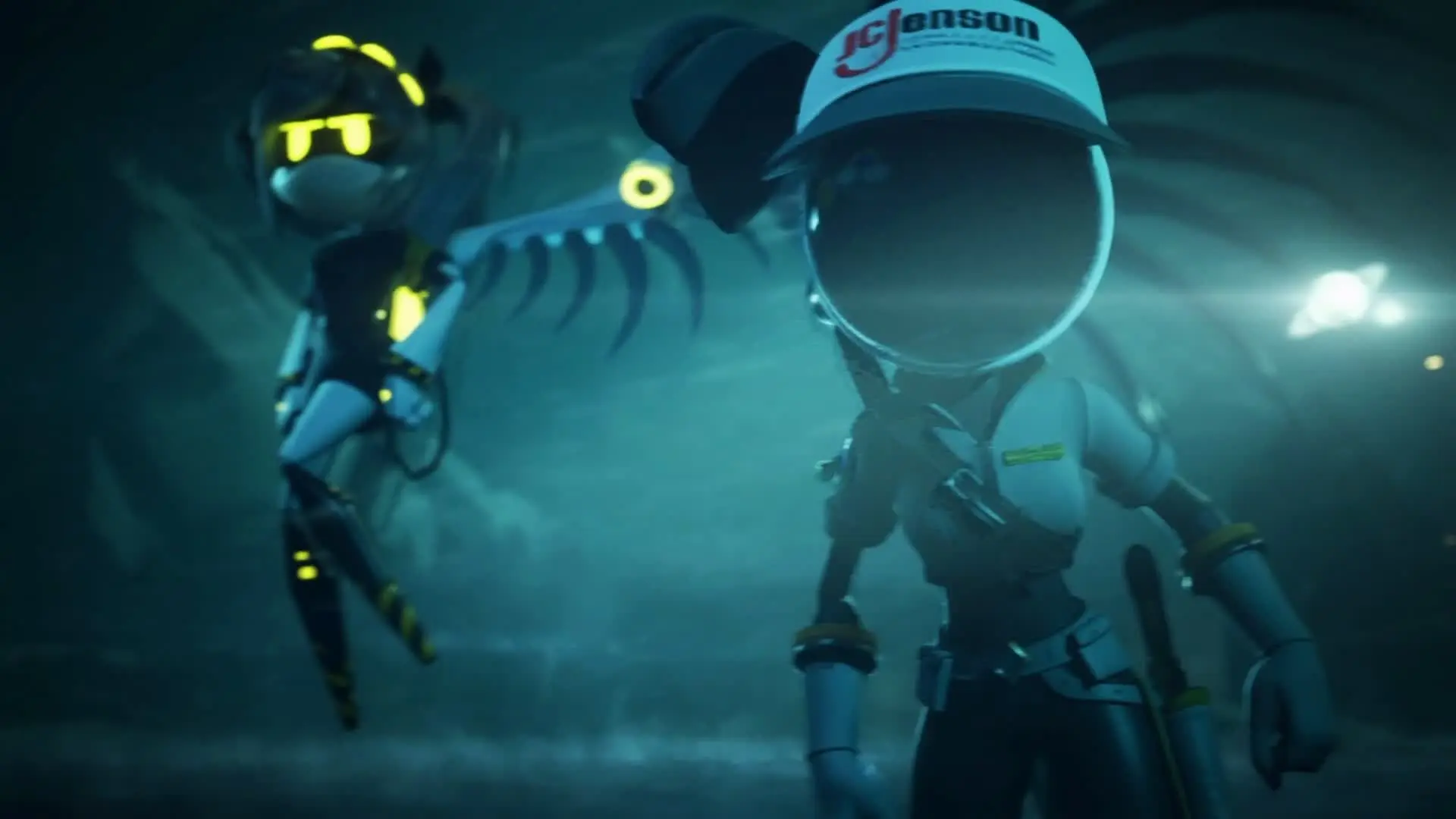
For readers searching murder drones tessa, the key point is simple: Tessa James Elliott is one of the most tragic and important human figures in Murder Drones. She is not the central protagonist, but the story repeatedly returns to her because her kindness, loneliness, family background, and stolen identity connect Elliott Manor to the larger Solver catastrophe.
Tessa first matters as a memory before she matters as a fully explained character. In Heartbeat, N’s fractured recollections turn her into a half-protected image from a past he cannot completely recover. By Home, that image becomes sharper: Tessa is the strange, lonely human child at Elliott Manor who repairs discarded drones, dresses them, hides them, and treats them as companions instead of disposable machines.
That makes her role unusually painful. Tessa’s compassion is genuine, but it grows inside a house defined by wealth, status, emotional coldness, and ownership. The series never presents her world as simple innocence. It shows a child trying to build a private found family in a system already prepared to poison everything she loves.
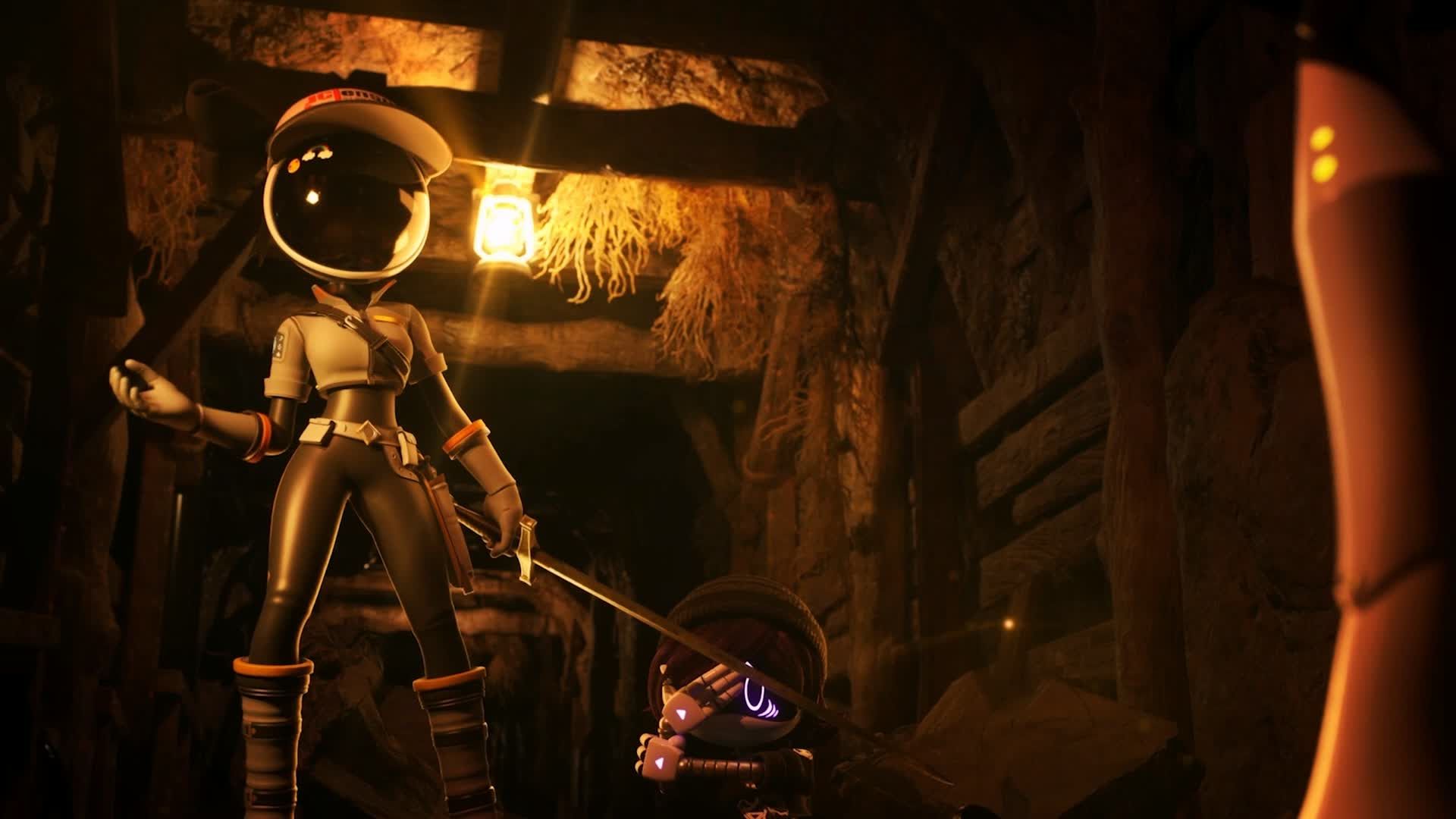
Murder Drones Tessa Elliott: Role in the Series
Tessa’s role is best understood as an emotional bridge. She links the manor flashbacks, the early lives of N, V, J, and Cyn, and the present-day horror on Copper 9. She is also one of the clearest human examples that drones can be seen as people rather than property.
For Serial Designation N, Tessa is the earliest memory of care across the human–drone divide. His softness is not random; it is partly rooted in the fact that someone once rescued, dressed, and valued him. That makes the later abuse of Tessa’s image especially cruel, because the story weaponizes one of N’s safest memories.
For Uzi Doorman, the apparent adult Tessa first looks like a human answer to an inhuman problem. Her arrival suggests authority, context, and rescue. Once that illusion breaks, Uzi has to accept that the threat is not simply a company mission or a drone uprising. It is older, more intimate, and already wearing the past as a mask.
Tessa also gives the wider Murder Drones character roster one of its sharpest horror reversals. A living human technician should mean order. Instead, the show turns that expectation into a disguise built from memory, grief, and body horror.
- She recognizes drone personhood in a house that treats drones as objects.
- She creates a fragile found family around N, V, J, and Cyn.
- She connects Elliott Manor to the Absolute Solver’s larger history.
- Her stolen identity turns memory into a horror device.
- Her absence keeps influencing the story long after her death.
Character profile at a glance
| Category | Details |
|---|---|
| Full name | Tessa James Elliott |
| Species | Human |
| Status | Physically deceased; her body and image are later used in Cyn’s deception |
| Place most associated with her | Elliott Manor |
| Primary role | Human caretaker of discarded drones and emotional hinge between manor lore and Copper 9 |
| First major story impact | N’s memory fragments and the manor flashbacks |
| Core themes | Found family, corrupted innocence, body horror, stolen identity, class cruelty |
| English voice actor | Steph Crothers |
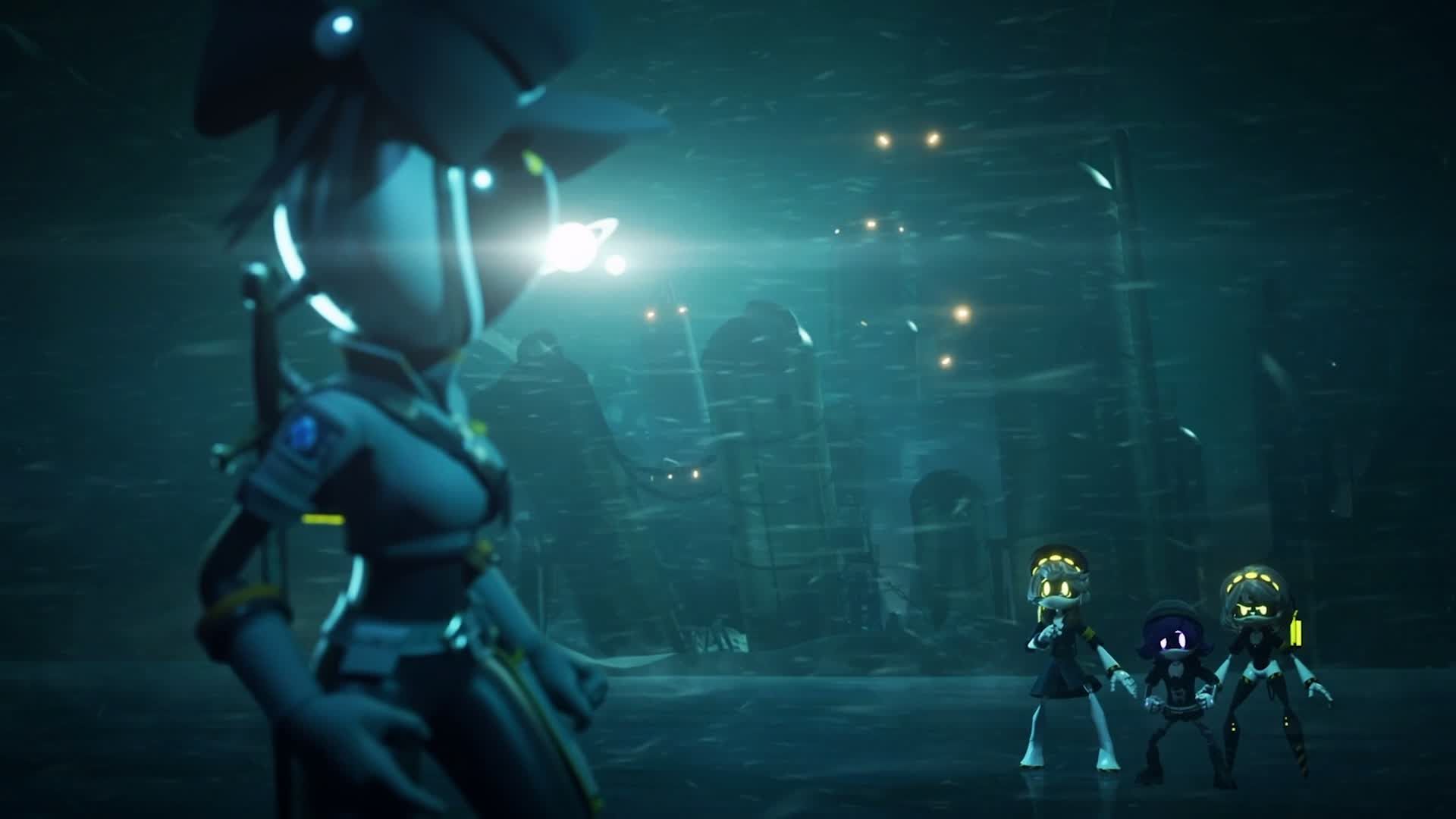
Personality and Motivations
Tessa is affectionate, but she is not written as pure innocence. Her interest in discarded parts, deathly imagery, and unsettling little rituals gives her a macabre edge that fits the show’s horror-comedy language. She is kind, but strange. She is brave, but still shaped by privilege. That mix keeps her from becoming a simple “tragic nice girl.”
Her conflict with James Elliott shows how quietly defiant her kindness is. In Elliott Manor, value is tied to usefulness, class display, and obedience. Tessa breaks that logic whenever she rescues a drone from the dump and treats it as someone worth saving.
Louisa Elliott sharpens the emotional coldness around her. Tessa’s bond with drones feels like a private counter-life: a secret domestic rebellion against a family that prizes posture over empathy. She turns to the beings least respected by the household because they give her the sincerity the manor refuses to offer.
At the same time, the series keeps an important ambiguity. Tessa loves her robot family, but she still loves them from inside a structure of ownership and dependence. She shelters, dresses, and arranges them. Her care is real, but it is not free from power. That tension is part of why her story works: Tessa is compassionate without being ideologically clean, and tragic because she tries to build intimacy inside a poisoned system.
- Protective, but not naïve.
- Lonely enough to adopt what others discard.
- Morbid without being cruel.
- Defiant toward her family’s expectations.
- Emotionally sincere in a performative house.
- Curious in ways that place her near danger.

Relationships with Other Characters
Tessa’s bond with Serial Designation J is built around trust, usefulness, and loyalty. J seems to thrive when she has a role, and Tessa gives her one. Later, J’s obsession with hierarchy and control feels more painful because the manor flashbacks suggest she once belonged to something warmer, however flawed that warmth was.
With Serial Designation V, the emotional texture is quieter. V’s later violence can make her difficult to read, but the flashbacks imply that Tessa was part of a lost world where V did not yet have to turn survival into a permanent mask. Tessa becomes part of the memory of belonging that V later buries under sarcasm and aggression.
The relationship with Cyn is the center of Tessa’s tragedy. Tessa offers care to a discarded, uncanny drone at the moment when care looks both heroic and dangerous. The series does not argue that compassion itself was the mistake. It shows that trust can be exploited as brutally as cruelty can. Cyn’s later use of Tessa’s body and identity becomes horrifying because it weaponizes the care that made Tessa admirable.
Nori Doorman helps place Tessa inside the wider architecture of Murder Drones. Once hosts, patches, labs, and inherited Solver trauma come into focus, Tessa no longer feels like an isolated casualty. She becomes part of the same chain of institutional secrecy and bodily violation that later traps Uzi, Doll, and the other Solver-linked characters.
Tessa also mirrors Doll in a quieter way. Both are shaped by grief, hidden knowledge, and a world where power arrives too late to save them cleanly. Doll weaponizes what she knows. Tessa tries to shelter what she loves. Both strategies collapse under a universe built on exploitation and possession.
Relationship map
| Character | Nature of the bond | Why it matters |
|---|---|---|
| N | Affection, safety, early validation | Explains why the later desecration of Tessa’s identity hurts him so deeply |
| J | Trusted helper and manor confidante | Gives emotional context to J’s later obsession with order and usefulness |
| V | Shared household circle and buried loyalty | Suggests a lost version of V before violence became her default language |
| Cyn | Rescue turned catastrophe | Transforms kindness into the route by which horror invades the manor |
| Uzi | False promise of human guidance | Makes the reveal reframe the present-day conflict |
| James and Louisa | Parental pressure and class coldness | Explains why Tessa seeks attachment outside the family structure |
The important point is that Tessa changes characters even when she is absent. N remembers her as safety. J remembers her as purpose. V carries traces of an older belonging. Uzi encounters her as a false human answer. Cyn turns her into a costume. Few figures in the series exert that much pressure while being physically gone for most of the story.
Timeline and Key Story Arcs
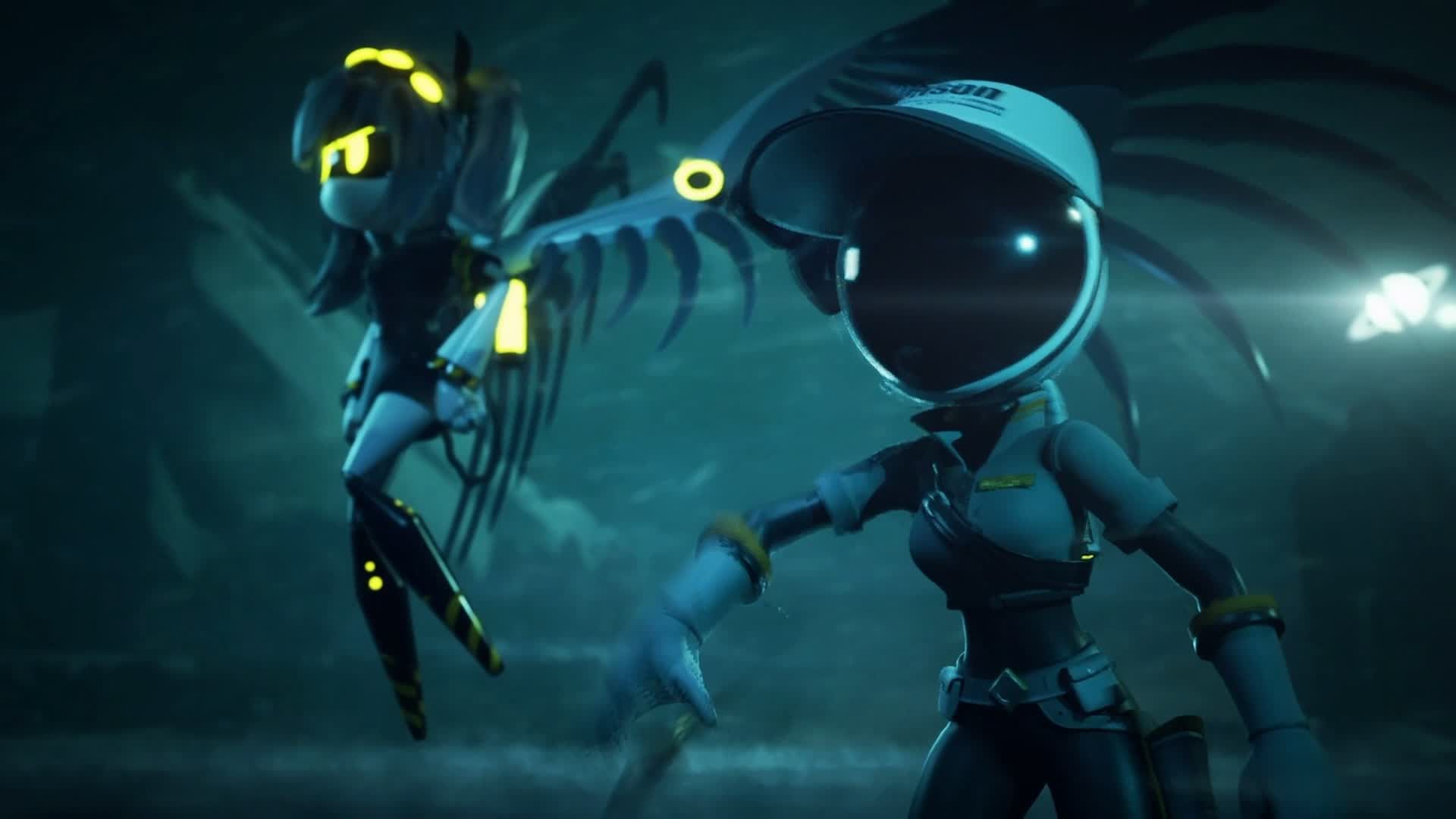
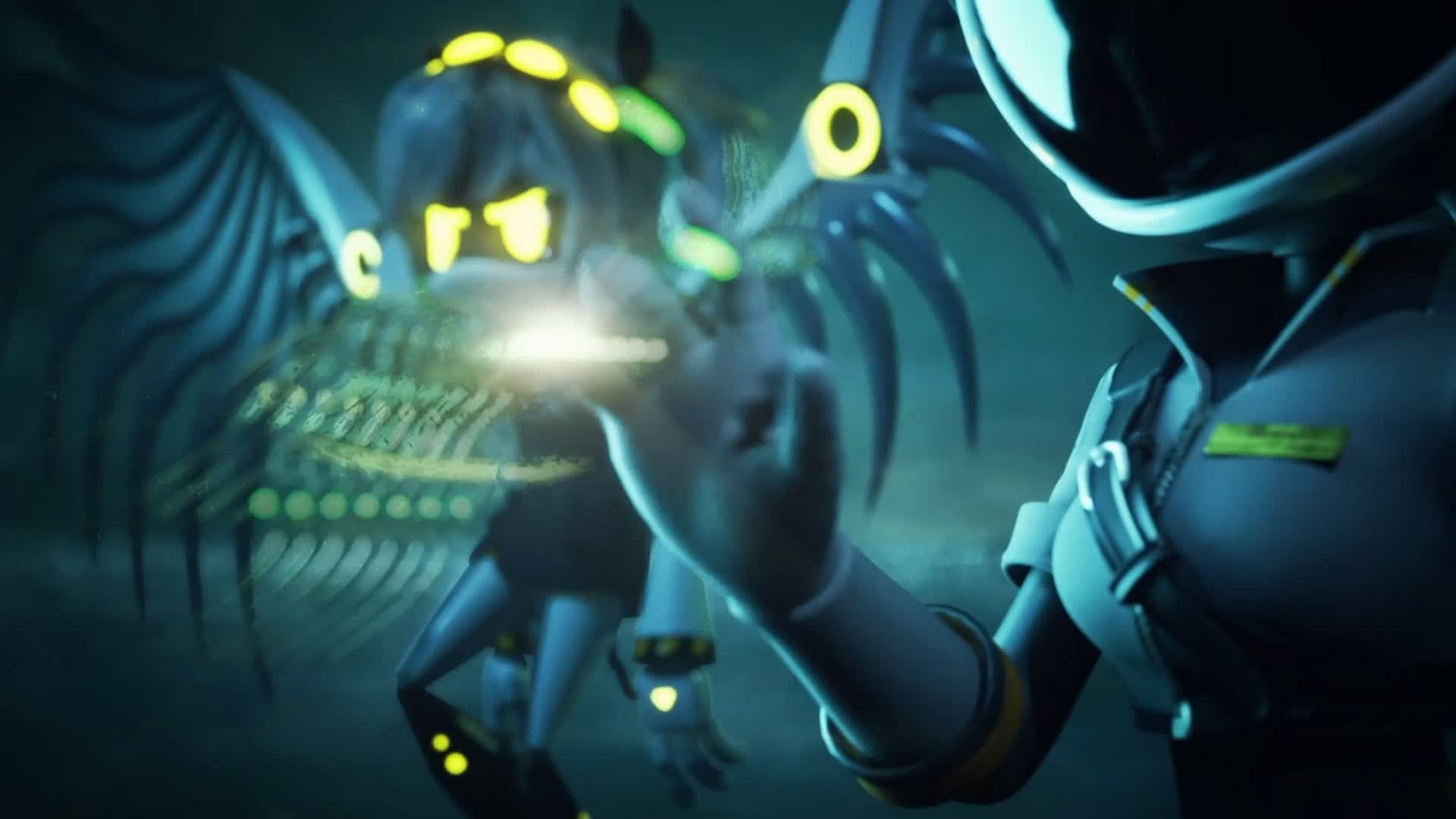
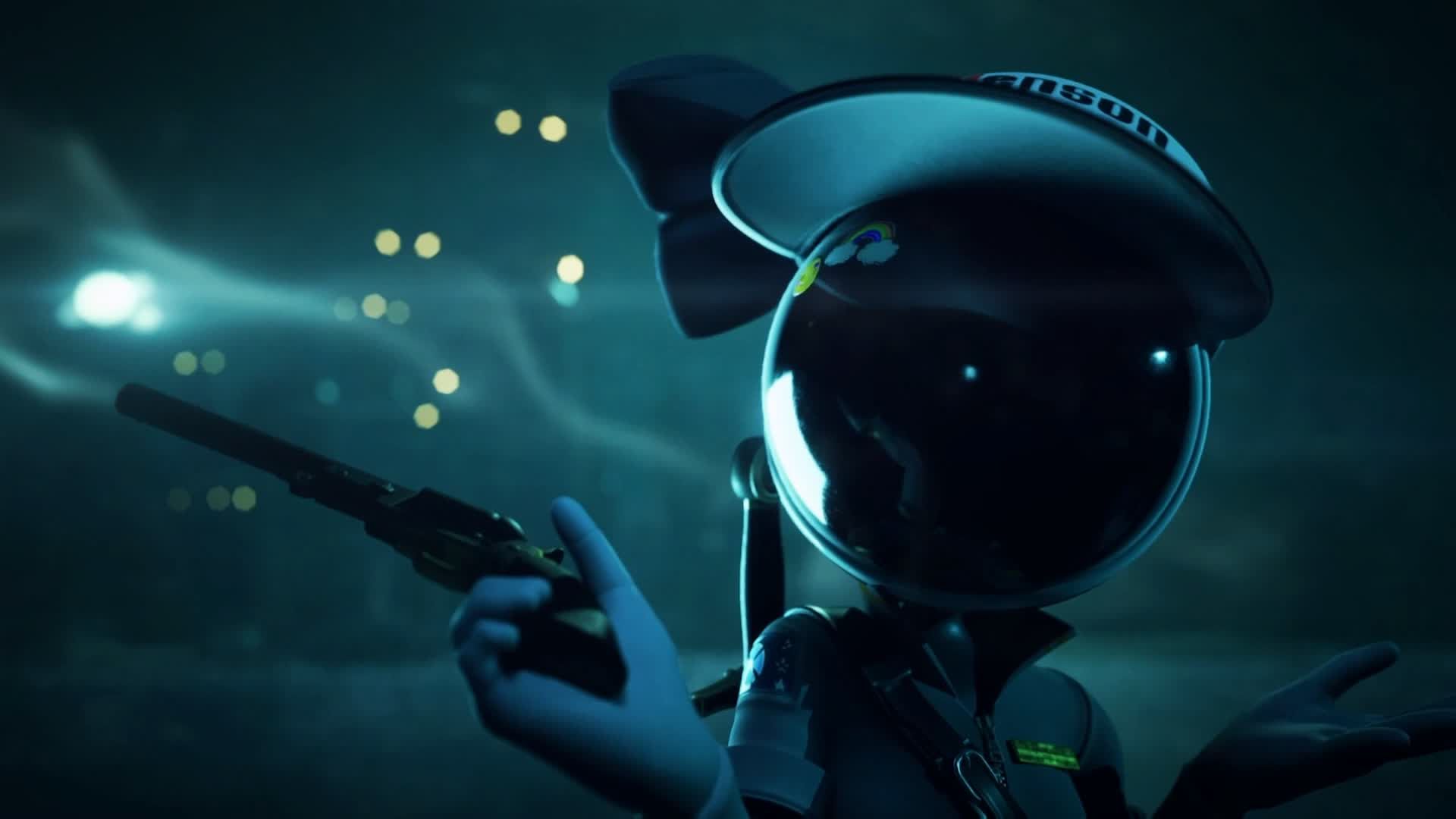
The end of The Promening uses Tessa as a brilliant bait-and-switch. After prom-night chaos, the arrival of an astronaut-like human looks like a genre pivot: finally, someone with authority and answers. Her suit, sword, and dry confidence make her instantly memorable. The trick is that the reassurance is already false.
In Dead End, the apparent adult Tessa starts to feel wrong. She is too comfortable with kill-on-sight logic, too clinical about Solver hosts, and too skilled at turning brutality into necessity. The episode does not fully reveal the truth yet, but it damages the idea that this is simply an older, harder version of the girl from the manor.
The Sentinels and the descent through Cabin Fever Labs intensify that suspicion. Survival horror is the perfect setting for false Tessa because competence can look heroic under pressure. She can command a room, improvise, and survive. Only later does that poise read less like courage and more like predation.
Mass Destruction turns suspicion into dread. The story pushes the apparent Tessa deeper into apocalypse imagery until the question is no longer whether something is wrong. The question becomes how total the violation will be when the mask finally drops.
Absolute End makes the violation explicit. The false Tessa persona is exposed, Cyn’s deception becomes undeniable, and the finale refuses to soften the reveal with an easy resurrection. Tessa does not return as a rescued heroine. She remains beloved, desecrated, unforgettable, and absent.
- Elliott Manor: Tessa rescues discarded drones and builds a private family around them.
- Memory fragments: N remembers her through broken, emotionally charged images.
- Manor catastrophe: Tessa’s fragile world collapses around Cyn and the Solver.
- False return: an apparent adult Tessa arrives on Copper 9 as a supposed human counterforce.
- Lab descent: the persona’s behavior grows colder and more suspicious.
- Unmasking: Cyn is revealed beneath the Tessa disguise.
- Aftermath: Tessa’s memory changes how viewers read the entire series.
Tessa Elliott timeline
| Story phase | What happens | Lasting effect |
|---|---|---|
| Childhood at Elliott Manor | Tessa shelters drones rejected by the household system | Creates the emotional groundwork for N, J, V, and Cyn |
| Memory fragments | N’s damaged recollections show her as warmth inside a threatening house | Makes her feel like a lost emotional center before the audience knows the full truth |
| False astronaut return | An “adult Tessa” arrives on Copper 9 posing as human authority | Introduces false hope into the present plot |
| Cabin Fever Labs | The persona leads the group through increasingly horrific spaces | Shifts audience trust into suspicion |
| Reveal | Cyn is exposed beneath the Tessa identity | Turns memory itself into a horror mechanism |
| Post-finale legacy | Tessa remains absent but central to interpretation | Her tragedy becomes one of the franchise’s most discussed elements |
Symbolism and Themes Around Tessa
Tessa represents innocence contaminated by systems that classify both children and machines as extensions of status, ownership, or utility. She tries to make space for tenderness inside a structure designed around use-value. The story does not mock that tenderness. It shows how vulnerable tenderness becomes when it is forced to survive inside a predatory institution.
She is also one of the show’s strongest images of stolen identity. Many characters lose bodily autonomy in Murder Drones, but Tessa’s case is uniquely horrifying because she is converted into a social tool. Her face, voice, authority, and remembered kindness are redeployed against the people who trusted her.
That is why Tessa haunts the series without becoming a ghost in the ordinary sense. She haunts it through recollection, costume, emotional residue, and the question of what safety was supposed to look like before everything went wrong. Even when she is absent, characters keep reacting to the possibility of her: comfort, guilt, explanation, betrayal, or all of those at once.
- Corrupted innocence in a house built on status and neglect.
- Found family assembled from things other people threw away.
- Love entangled with ownership and hierarchy.
- Memory turned into a mechanism of dread.
- Body horror expressed as theft of personhood.
- Human guilt crossing directly into drone suffering.
| Theme | How Tessa represents it | Why it matters |
|---|---|---|
| Found family | She creates emotional bonds with discarded drones | Shows that care can emerge where society sees waste |
| Class cruelty | Her kindness exists inside a manor ruled by rank and appearance | Turns private affection into quiet rebellion |
| Corruption | Her world is invaded by the very being she tried to care for | Makes horror feel intimate rather than abstract |
| Stolen identity | Her body and image become a disguise | Raises the emotional stakes above ordinary death |
| Memory | She is known through recollection and false reappearance | Keeps the audience rereading the past after each reveal |
Was Tessa Ever Really Back?
The strict canon answer is no. The real Tessa does not survive into the Copper 9 present as the confident astronaut figure the audience meets later. That persona is a deception, not a rescued heroine returning off-screen. The tragedy works because the series refuses to dilute what happened with an easy comeback.
The reason viewers still debate the question is that the false Tessa performance is emotionally unstable in interesting ways. Some moments look like pure manipulation. Others feel like mimicry, residue, or the horrible afterimage of someone Cyn learned too well. The show does not confirm a hopeful survival reading, so the safest interpretation is that Tessa is gone, while what she meant to others has been copied and abused.
That ambiguity keeps her central to the fandom. Viewers are not only grieving Tessa; they are reading pauses, tones, costume details, and symbolic echoes to understand whether the show is presenting total annihilation or something even worse: a stolen self that can still be felt but cannot be recovered.
Post-Finale Updates and Why Tessa Still Matters
Tessa’s relevance did not end with the finale. The full eight-episode season later reached a wider streaming audience through Prime Video, while GLITCH and Oni Press expanded Murder Drones into comics. That matters for Tessa because the print adaptation returns readers to the manor, the Solver, N’s buried memories, and the relationships that make her reveal so devastating.
The official graphic-novel project adapts the eight animated episodes, with Wyatt Kennedy writing and Jo Mi-Gyeong illustrating the main adaptation. Oni Press also announced MURDER DRONES: HOME SPECIAL #1, a double-sized one-shot focused on the origin episode Home. Since Home is the episode that most directly explores Elliott Manor, N’s memories, the Solver’s early shadow, and Tessa’s old “human family,” that special is especially relevant for readers returning to her story.
| Post-finale update | Why it matters for Tessa |
|---|---|
| Prime Video Season 1 listing | Introduces Tessa’s twist to viewers beyond the original YouTube run |
| Oni Press / GLITCH comics adaptation | Reframes the eight-episode story in a new format |
| Record-setting Kickstarter campaign | Shows that audience interest in the world and its characters remained strong after the finale |
| MURDER DRONES: HOME SPECIAL #1 | Directly spotlights the manor-origin material most connected to Tessa, N, Cyn, and the Solver |
| Six-issue comics rollout | Keeps older story debates active instead of leaving them behind as finale-era nostalgia |
Frequently Asked Questions About Tessa Elliott
What does “tessa murder drones” usually refer to?
The phrase usually refers to Tessa James Elliott, the human girl from Elliott Manor whose memories, relationships, and later stolen identity become central to the horror of Murder Drones. Fans often search it when trying to understand whether the adult astronaut figure is really Tessa, what happened to her, and why Cyn’s disguise is so disturbing.
Is Tessa alive during the main present-day storyline?
No. The present-day “adult Tessa” is not the real Tessa returning as a survivor. The reveal works because the audience is not simply discovering a liar; it is discovering that one of the story’s most emotionally important human figures has been turned into a mask after death.
Was Tessa a villain?
Not in any simple sense. Tessa is one of the few humans who treats drones with real affection and personhood. Still, she grows up inside a hierarchy of ownership, secrecy, and privilege, so the writing does not make her saintly. Her kindness is genuine, but it exists inside a compromised system.
Why did Tessa care so much about drones?
The drones gave Tessa something Elliott Manor did not: reciprocity, sincerity, and a place where her strangeness could exist without constant punishment. Her attachment is moral instinct, emotional survival, and rebellion at the same time. She does not only rescue the drones; she builds much of her inner life around them.
Why does the Tessa reveal hit harder than an ordinary death reveal?
Because the show goes beyond loss. Tessa’s image is not simply mourned. It is reused to mislead the audience and manipulate characters who once trusted her. That makes the twist a violation of recognition, affection, and hope all at once.
Could future material bring Tessa back?
There is no confirmed resurrection path in the story. The safest canon wording is that Tessa is physically dead and remains important through memory, flashback, adaptation, and interpretation. New official comics material can revisit her past, especially through Home-related story material, but that is different from confirming a literal present-day return.
Impact on the Plot and Audience
Tessa spends relatively little time as an autonomous on-screen presence, but she becomes one of the show’s most powerful engines of retrospect. Once the viewer understands the truth, earlier scenes reorganize themselves around loss. Humor turns acidic. Authority becomes suspicious. The comforting idea of a human ally becomes inseparable from body horror.
“Everyone stand back! This is a citizen’s murder!”
That line is memorable because it works in two directions. On first watch, it sounds like swagger from a capable, strange, and darkly funny human ally. After the reveal, it becomes grotesque because the joke is delivered through a stolen identity. Murder Drones excels at that kind of tonal sabotage, and Tessa is one of its cleanest examples.
Performance also plays a major role in her staying power. Steph Crothers gives Tessa a voice that can sound clipped, dry, strange, and self-possessed while still leaving room for fragility. That balance helps memory-Tessa, manor-Tessa, and false adult Tessa coexist in the viewer’s mind without flattening into one note.
In the end, Tessa Elliott matters because the series refuses to treat her as disposable tragedy. She is a lost child, a failed rescue, a symbol of care warped by ownership, and a human memory made more painful by every new piece of lore. Uzi, N, V, J, Cyn, and the Absolute Solver may drive the main conflict, but Tessa is the wound that keeps the story from ever feeling clean.