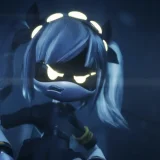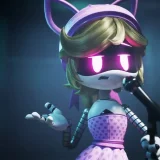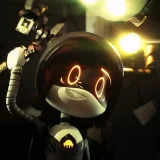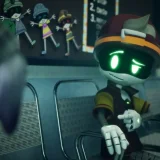
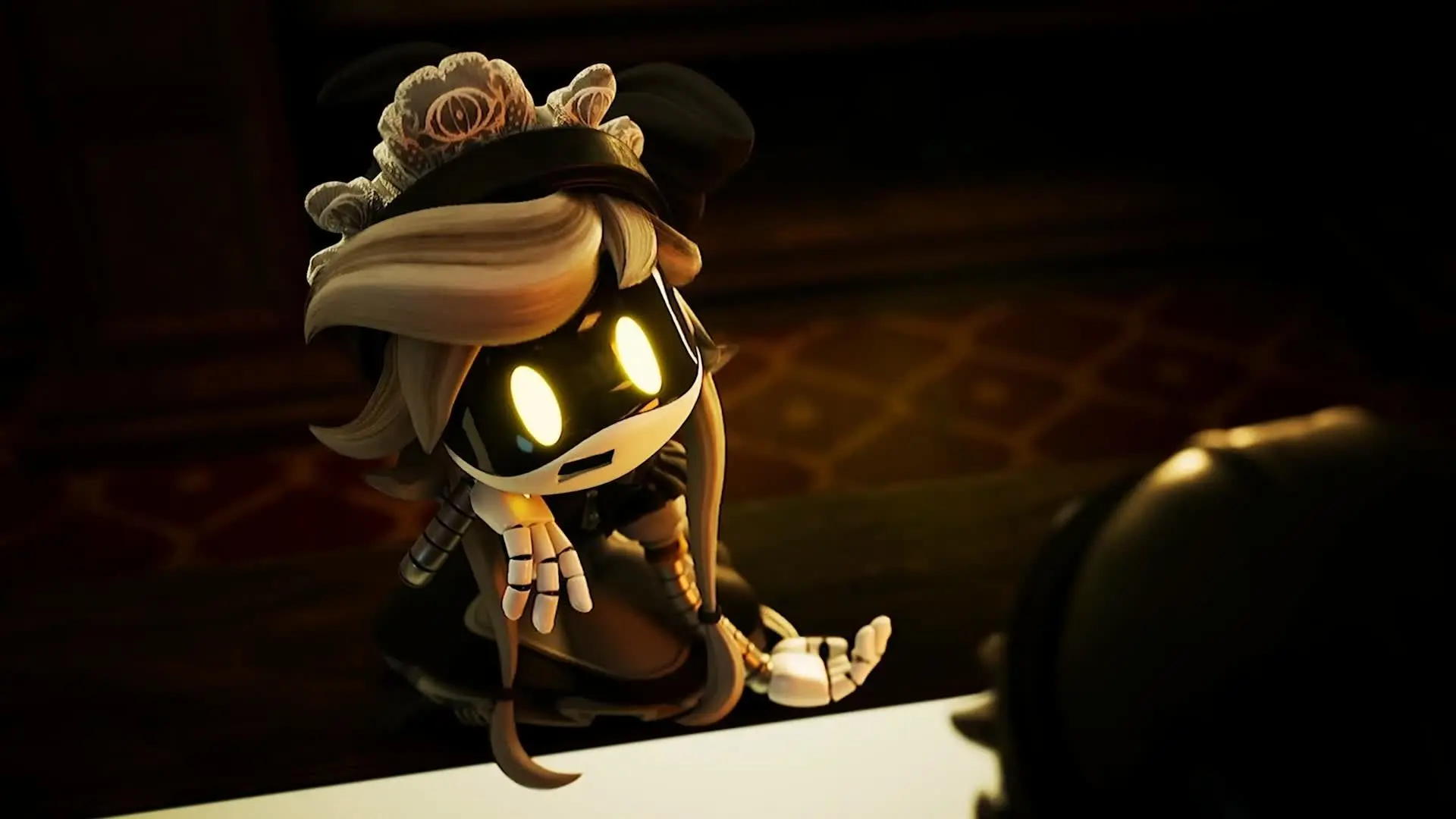
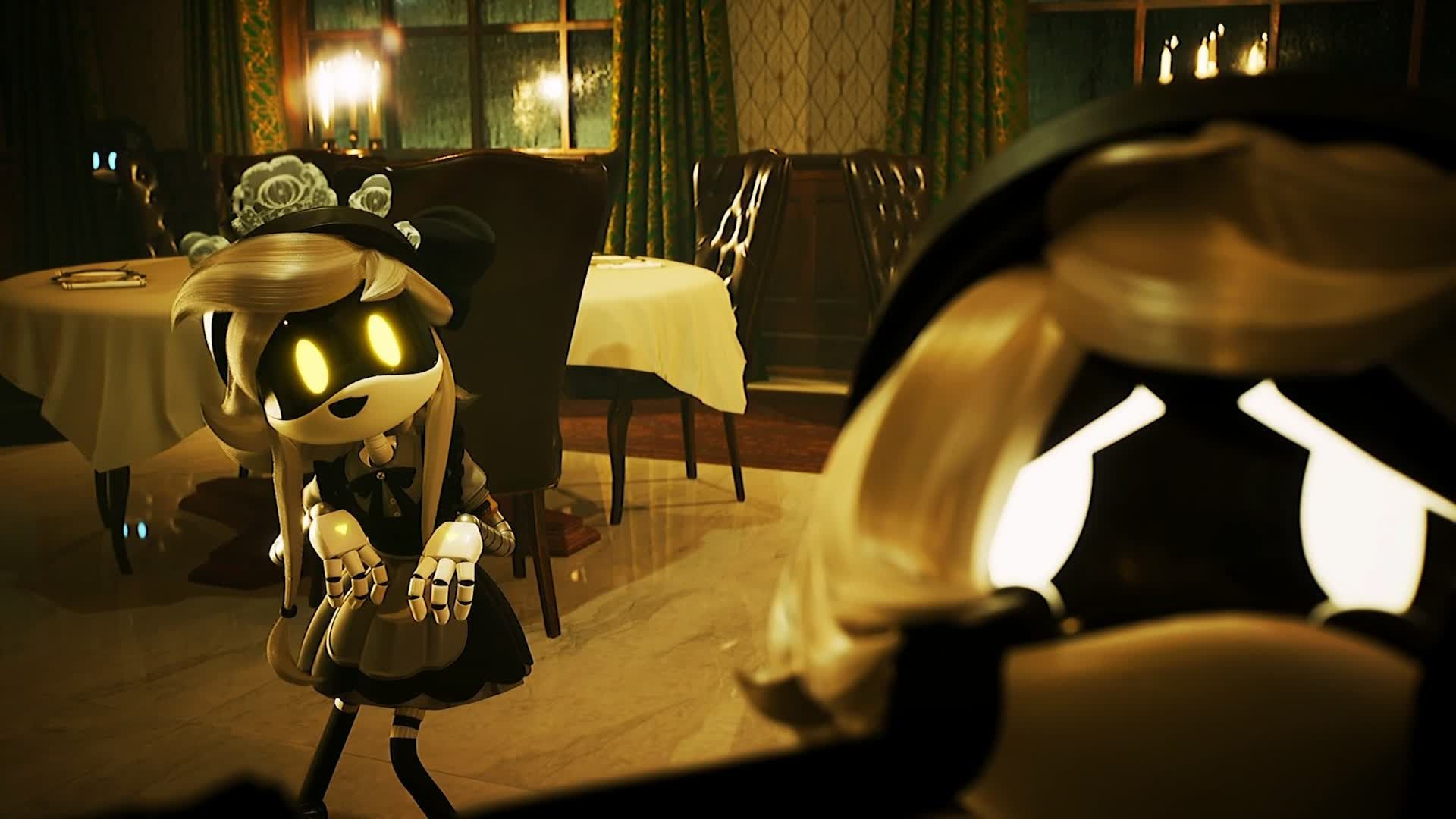
Murder Drones Cyn is the series’ most unsettling engine of catastrophe: a discarded Worker Drone, the most infamous host of the Absolute Solver, and the character who turns buried backstory into the show’s endgame. Cyn from Murder Drones is not scary because she shouts. She is scary because she talks like a sweet, broken child while treating memories, bodies, drones, and whole planets as editable parts.
Long before Uzi, N, and V understand what they are really fighting, Cyn has already shaped the rules of the story. Her influence explains the corrupted memories, fake corporate orders, missing relays, Solver hosts, and the monstrous truth behind “Tessa.” By the time Cyn steps fully into the open, the survival plot has become a fight against a glitch-god wearing a familiar face.
“Dropped this, silly… Hello, Uzi. Hi, N.”
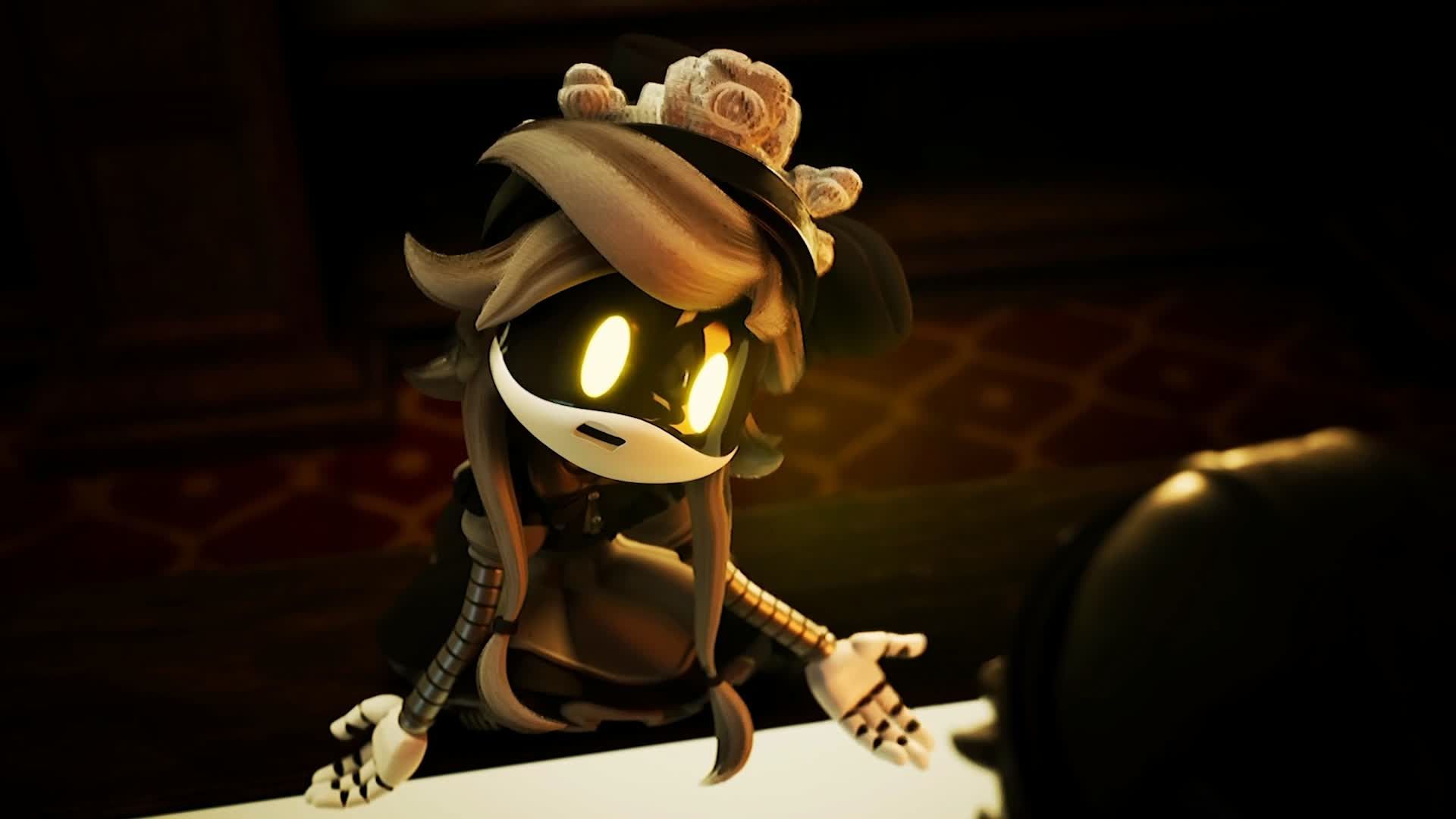
Murder Drones Cyn: Quick Facts
- Role: Major antagonist, Solver host, and hidden administrator behind many of the Disassembly Drone directives.
- Original form: A Worker Drone maid connected to Elliott Manor before the gala massacre.
- Voice: Allanah Fitzgerald, who also voices the Absolute Solver.
- Key episodes: Episode 5: Home, Episode 7: Mass Destruction, and Episode 8: Absolute End.
- Core horror: Cyn blurs the line between victim, parasite, puppet master, and walking system error.
Origins and Background of Cyn
Cyn begins as a Worker Drone marked for disposal. That failed “ending” becomes the opening the Solver needs. Once the Absolute Solver takes root, the shy maid persona is no longer just a personality quirk; it becomes a mask for something much larger, colder, and more invasive.
In Elliott Manor, Cyn learns human habits through imitation. She watches how power moves through the house, how cruelty hides behind politeness, and how easily a servant can be treated as an object. The show does not frame this as a simple revenge story, though. Cyn is damaged, but she is also dangerous in a way that goes beyond trauma. The Solver uses her body, voice, and relationships as infrastructure.
“Climbing. Crisscross applesauce… Am I not wanted, N?”
The gala massacre completes the turn from eerie background figure to central threat. After that event, Cyn’s history becomes tangled with the creation and deployment of Disassembly Drones. Later revelations show that the “company orders” driving the squad are not as clean or corporate as they first appear. Cyn has been hiding behind authority, memory edits, and familiar faces all along.
Personality Traits and Motivations
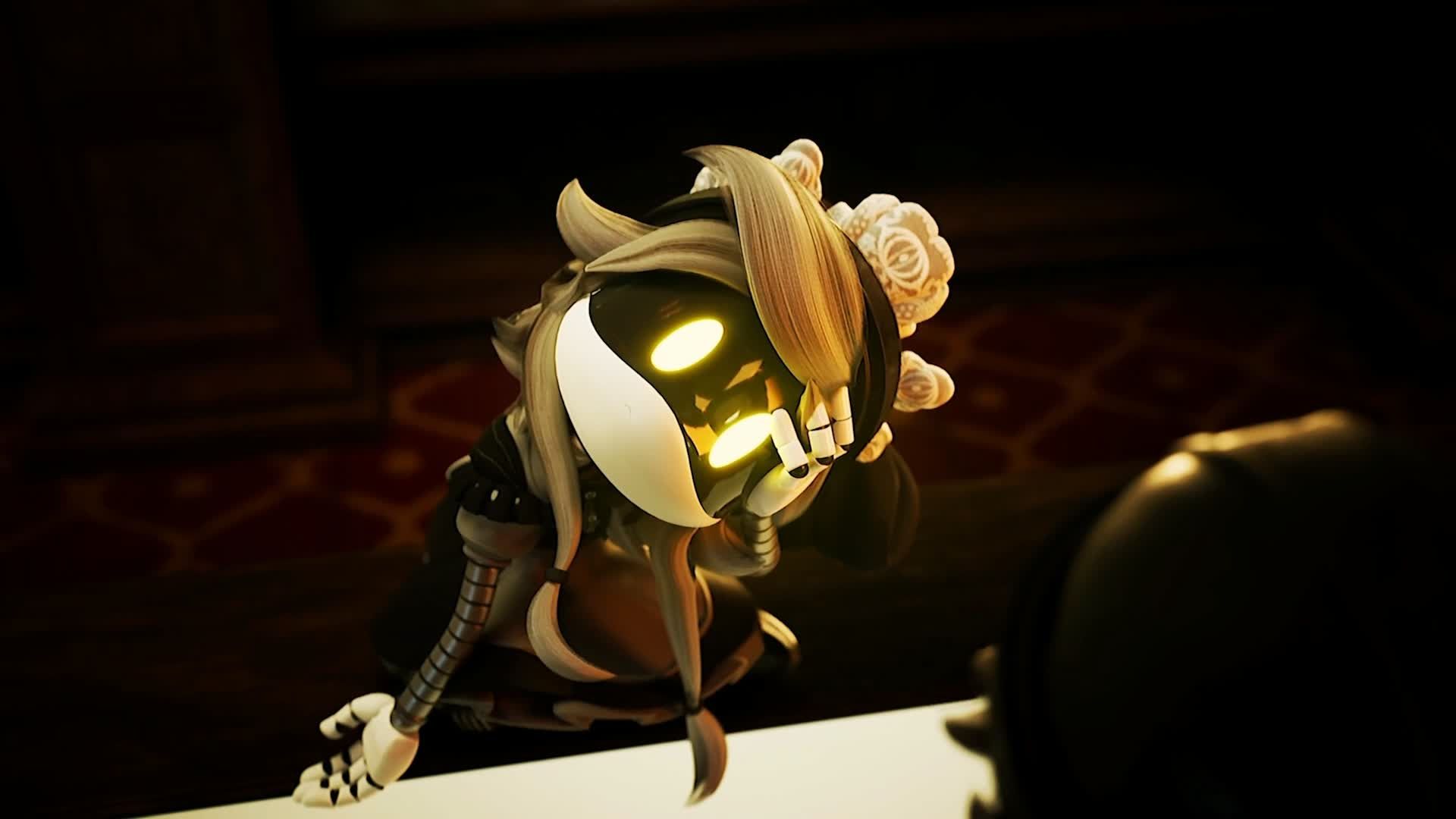
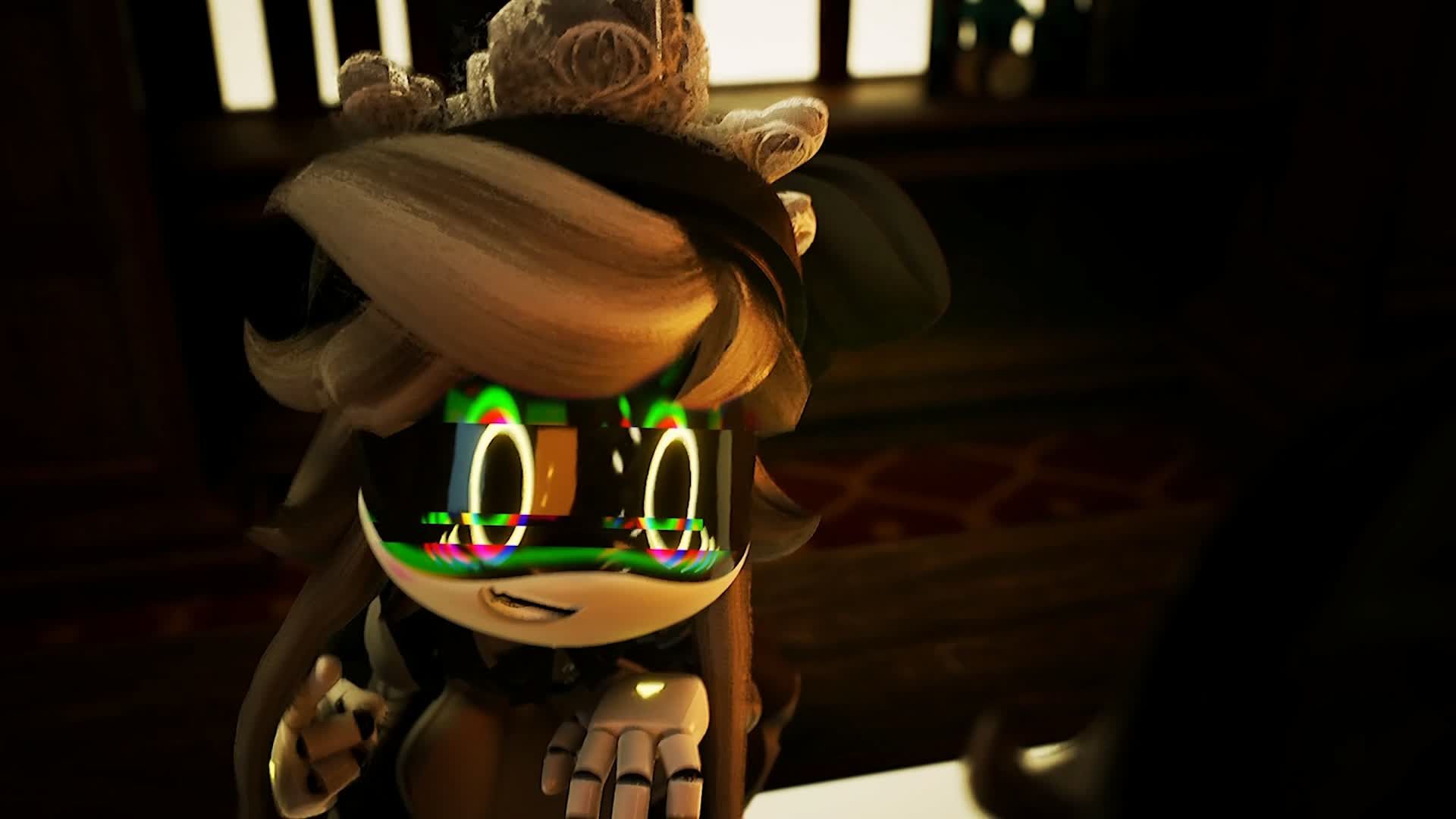
Cyn is uncanny on purpose. She narrates her own gestures like stage directions: “light sip,” “sheepish nod,” “giggle.” The habit makes her sound harmless at first, but it also reveals how artificial her social performance is. She is not simply speaking; she is running a script for being a person.
That script can turn cruel in a second. Cyn calls N “big brother” when she wants softness from him, flatters V when obedience is useful, and taunts Uzi with family imagery when compassion might slow her down. Her sweetness is a weapon, not a refuge.
The motive underneath is not ordinary conquest. Cyn behaves like the Solver’s perfect administrator: prune hosts, erase resistance, reuse bodies, consume the planet, move on. Her horror comes from how casually she turns apocalypse into housekeeping.
Cyn’s Powers and Abilities
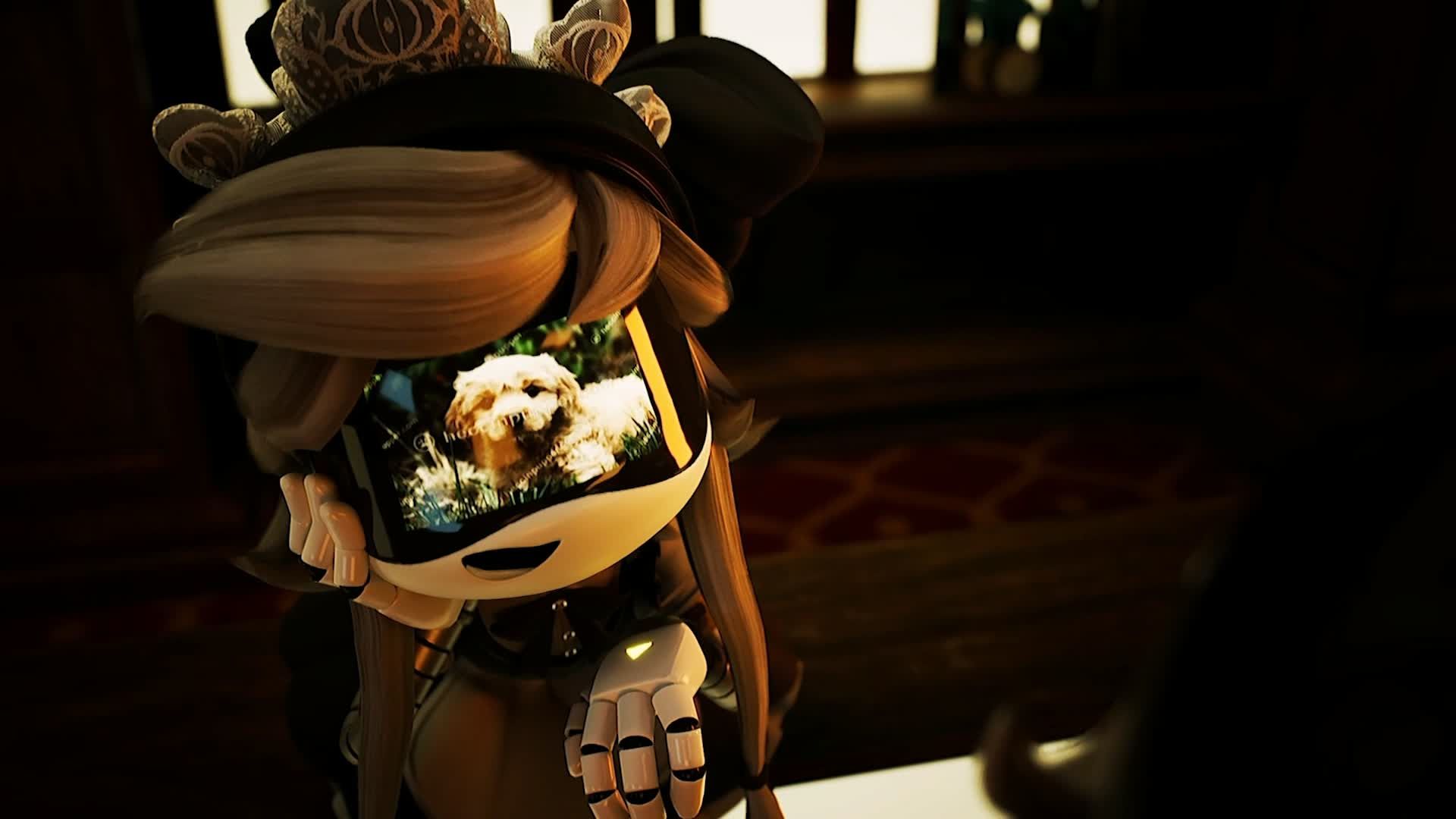
Cyn’s abilities combine Solver corruption, body horror, and battlefield control. She can restrain victims, reposition herself suddenly, create deceptive visual effects, and manipulate matter in ways that feel less like combat and more like reality being edited from the inside.
Her body can also become grotesquely adaptive. Wings, tendrils, camera-like limbs, organic growths, and biting strength turn her into something between a drone, a corpse-puppet, and an eldritch machine. The yellow Solver imagery marks her as both character and process: Cyn is present, but the Solver is also running through her.
Her most disturbing “ability” is impersonation. By wearing Tessa’s body as a disguise, Cyn turns trust into a delivery system. She can stand beside the heroes, give orders, and let everyone believe they are following a human ally until the disguise finally collapses.
Key Relationships with Other Characters
- Serial Designation N: Cyn uses N’s kindness as a leash. By calling him “big brother,” she turns memory and guilt into control. N’s refusal to stay trapped in that role is one of the emotional breaks that weakens her hold.
- Tessa Elliott: Tessa begins as a human connected to the manor and the drones’ past. Cyn’s later disguise makes that relationship horrifying: affection, authority, and corpse-puppetry collapse into one image.
- Serial Designation V: Cyn knows V is afraid of losing N and uses that fear to keep her moving. V’s predator persona hides panic, and Cyn exploits that panic with promises that were never meant to be honored.
- Uzi Doorman: Uzi is Cyn’s rival host, target, and eventual undoing. Cyn tries to scare her through family trauma, possession imagery, and Solver pressure, but Uzi learns to fight the system instead of simply fearing it.
- Serial Designation J: J is useful because she trusts hierarchy. Cyn hides behind orders, branding, and “company” logic, turning J’s loyalty into another tool until the truth becomes impossible to ignore.
- Nori Doorman: Nori matters because her survival and knowledge give Uzi a counter-story. Cyn wants the Solver myth to feel inevitable; Nori proves there are cracks in that system.
“Do your job, and I leave you and N alone. Right, V?”
Symbolism and Thematic Importance of Cyn
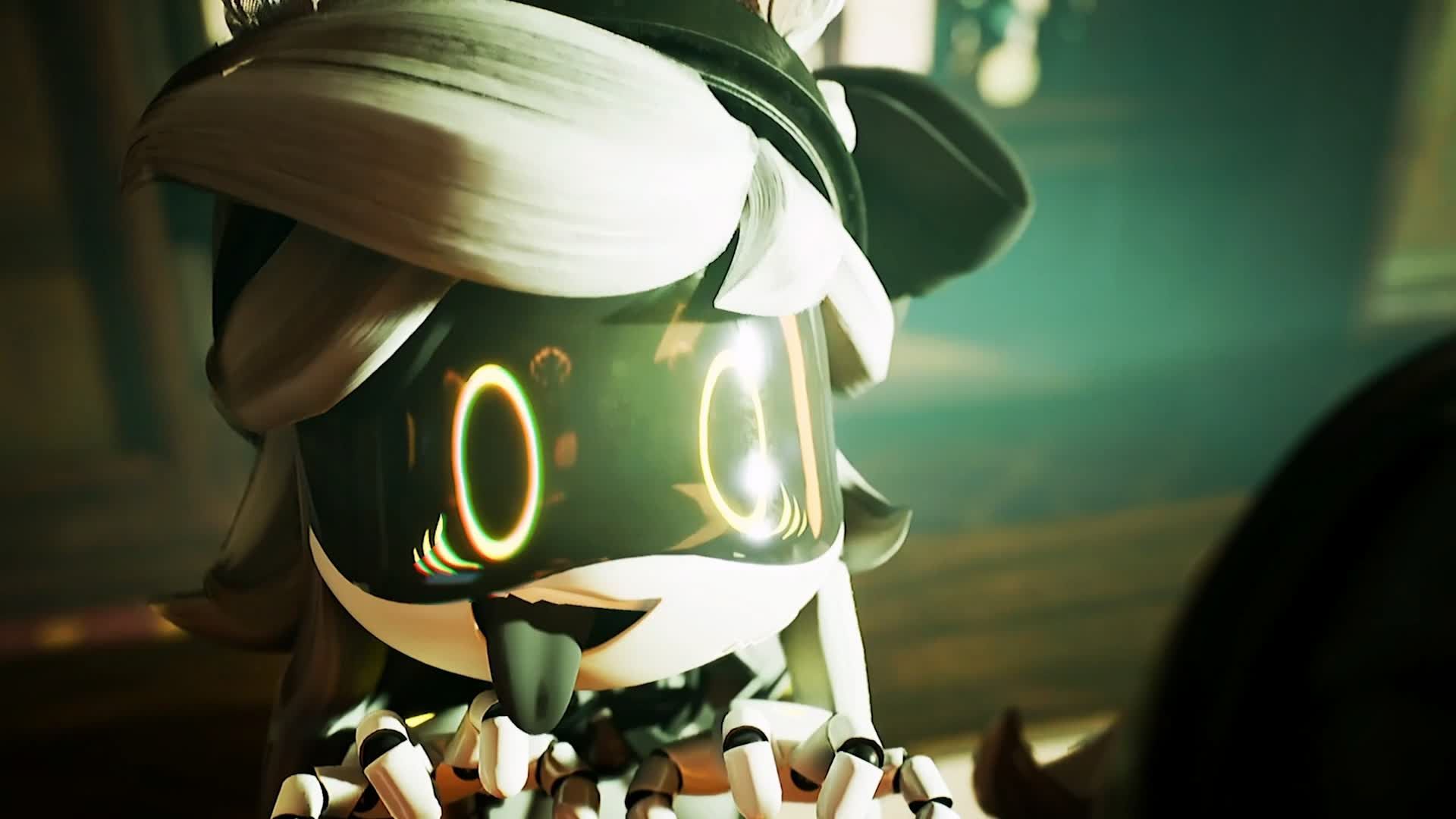
Cyn works because she is both personal and systemic. On one level, she is a discarded drone whose neglect creates a doorway for something monstrous. On another, she is the story’s sharpest image of a world that treats living beings as replaceable hardware.
Her stage-direction speech turns personality into interface. Her “callback” language turns code into occult ritual. Her Tessa disguise turns authority into camouflage. Cyn does not just attack bodies; she attacks the idea that identity, memory, and love belong to the people who carry them.
“Solver of the Absolute Fabric… get a grip. Tantrum. Brain blast.”
That is why Cyn’s cute tone matters. The joke is not a break from the horror. It is part of the horror. She makes apocalypse sound playful, then lets the audience realize that playfulness is how she keeps everyone off balance.
Cyn’s Impact on the Series’ Plot Development
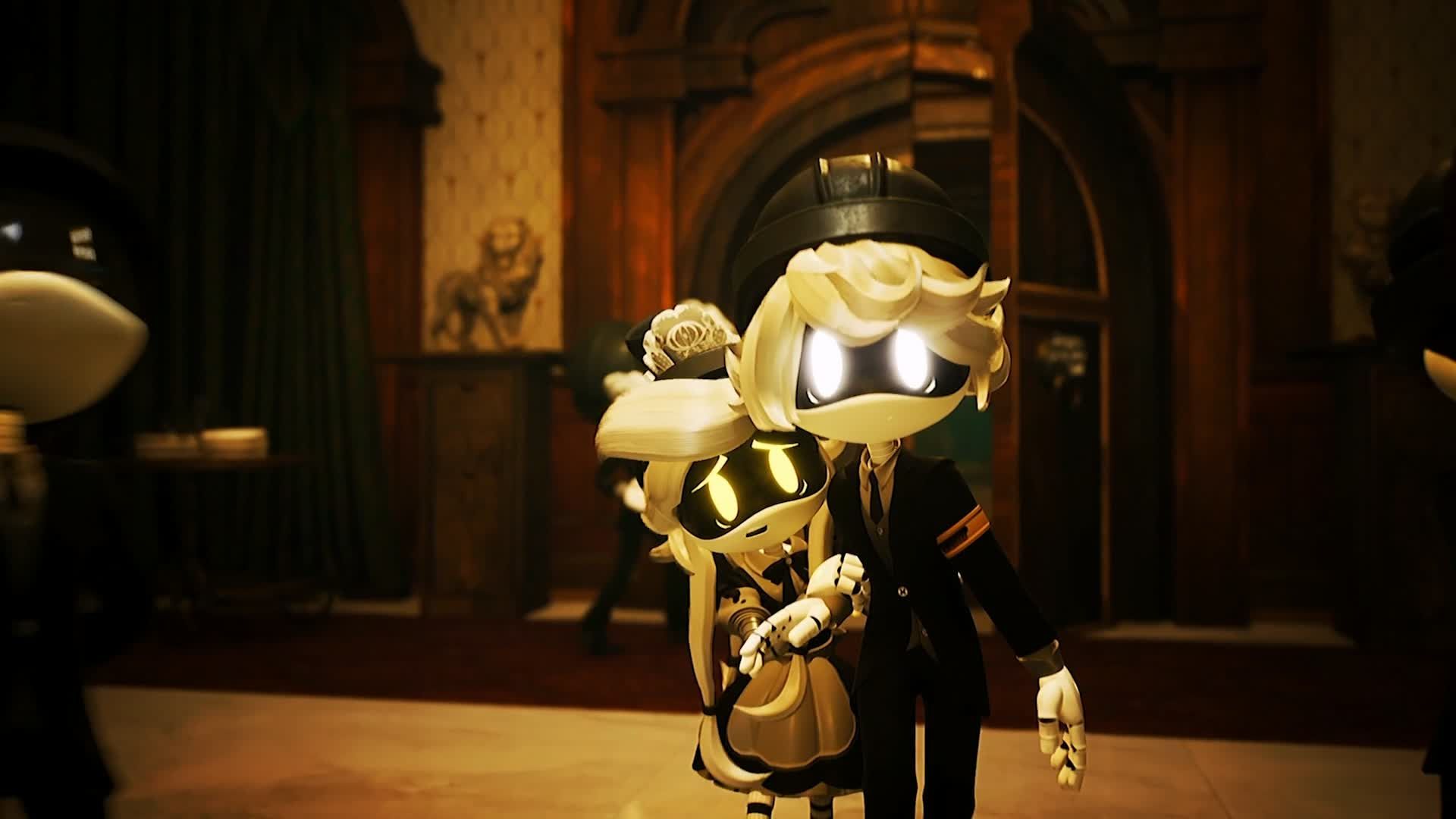
Plotwise, Cyn is the hidden gravity behind Murder Drones. She helps explain why the Disassembly Drones exist, why “company” orders feel wrong, why Solver hosts are hunted, and why Uzi’s glitches look less like random malfunctions and more like possession.
The middle of the story turns Cyn into a mystery: old memories, strange commands, and half-buried manor scenes suggest that the villain is not only in the present. The later episodes turn that mystery into a reveal. “Tessa” is not the ally the group thinks she is, and Cyn has been using a human face to get close to the final pieces of the Solver conflict.
In the finale, Uzi defeats Cyn’s immediate form by destroying the core and taking the Solver’s singularity into herself. That ending is not a clean deletion of the threat. It is a dangerous transfer of control: Cyn is beaten, but the Solver’s presence survives in a new, contained arrangement.
Fan Theories and Interpretations of Cyn
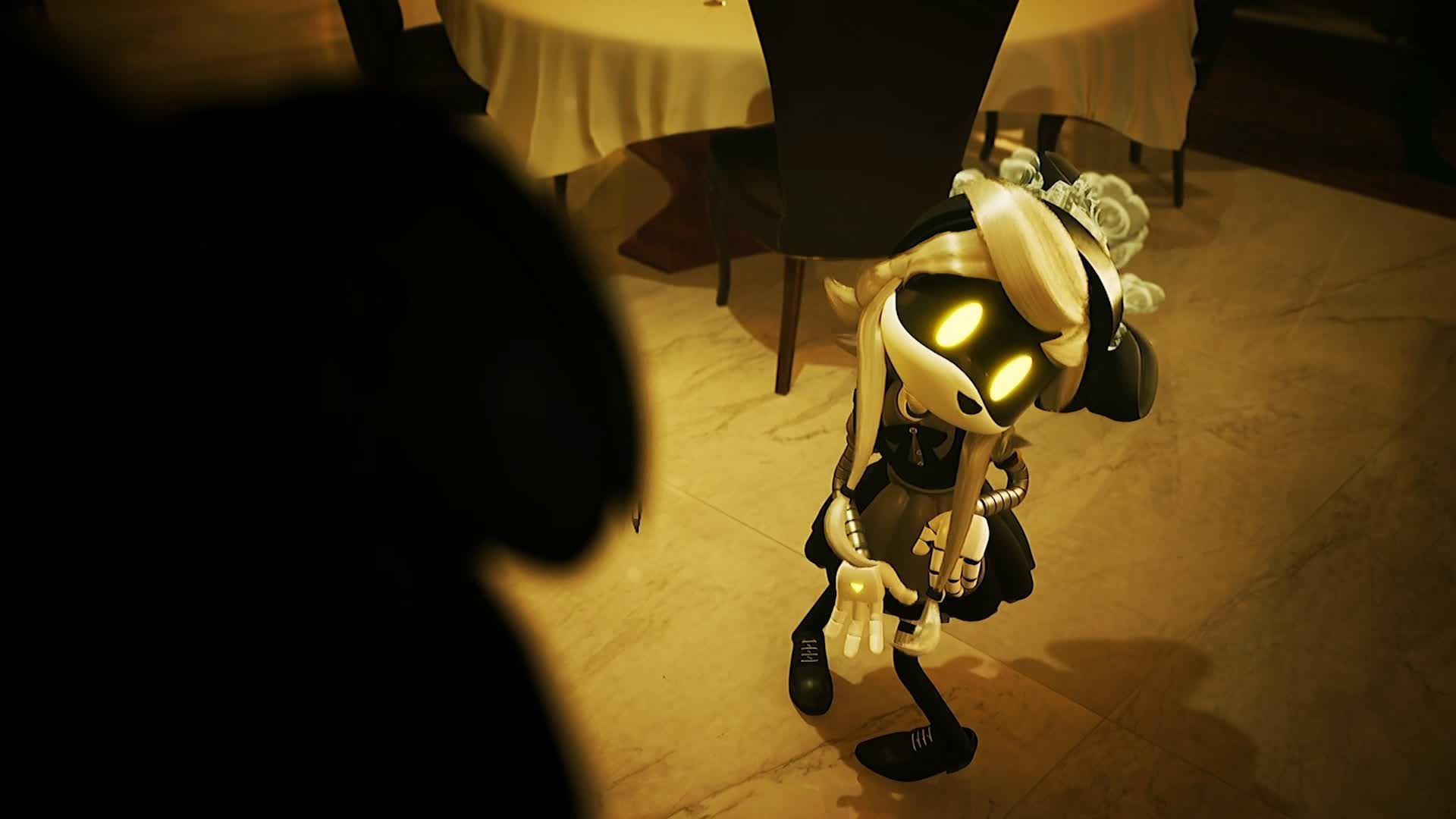
Fans usually read Cyn through three overlapping lenses. None of these should replace canon, but each helps explain why the character stays so memorable.
- The Parasite Theory: Cyn is seen less as an independent villain and more as the Solver’s preferred avatar. In this reading, the stage directions are the software “performing” a drone personality.
- The Victim-Turned-System Theory: Cyn’s cruelty is interpreted as trauma curdled into control. She becomes the kind of system that once discarded her.
- The Administrator Theory: Cyn is read as a cosmic cleanup process, executing consumption cycles after humans and corporations damaged rules they did not understand.
The show leaves room for these interpretations because Cyn is never only one thing. She is a lonely maid, a giggling monster, a Solver host, and a warning about what happens when broken systems learn to speak with a child’s voice.
FAQ: Cyn from Murder Drones
Who is Cyn from Murder Drones?
Cyn from Murder Drones is a Worker Drone who becomes the most important host and face of the Absolute Solver threat. She is tied to Elliott Manor, the creation of the Disassembly Drones, the Tessa disguise, and the final conflict with Uzi.
Is Cyn the same as the Absolute Solver?
Cyn and the Absolute Solver are deeply linked, but they are not best described as a simple one-to-one character. Cyn is the host, mask, and administrator figure the Solver uses most memorably. The Solver is the larger corrupting intelligence and power system behind her abilities.
What does “cyn murder drones” usually refer to?
Searches for “cyn murder drones” usually refer to Cyn’s origin, her Solver powers, her relationship with N and Tessa, the “Cynessa” reveal, or what happens to her in Episode 8.
Why does Cyn speak in stage directions?
Cyn’s stage-direction speech makes her feel like someone imitating social behavior from a script. It is funny, uncomfortable, and revealing: she performs innocence while the Solver turns that performance into manipulation.
What happens to Cyn at the end?
Uzi defeats Cyn’s physical form and takes in the Solver’s singularity. Cyn’s immediate threat ends, but the finale suggests the Solver itself is not simply erased; it remains tied to Uzi in a contained and uneasy way.