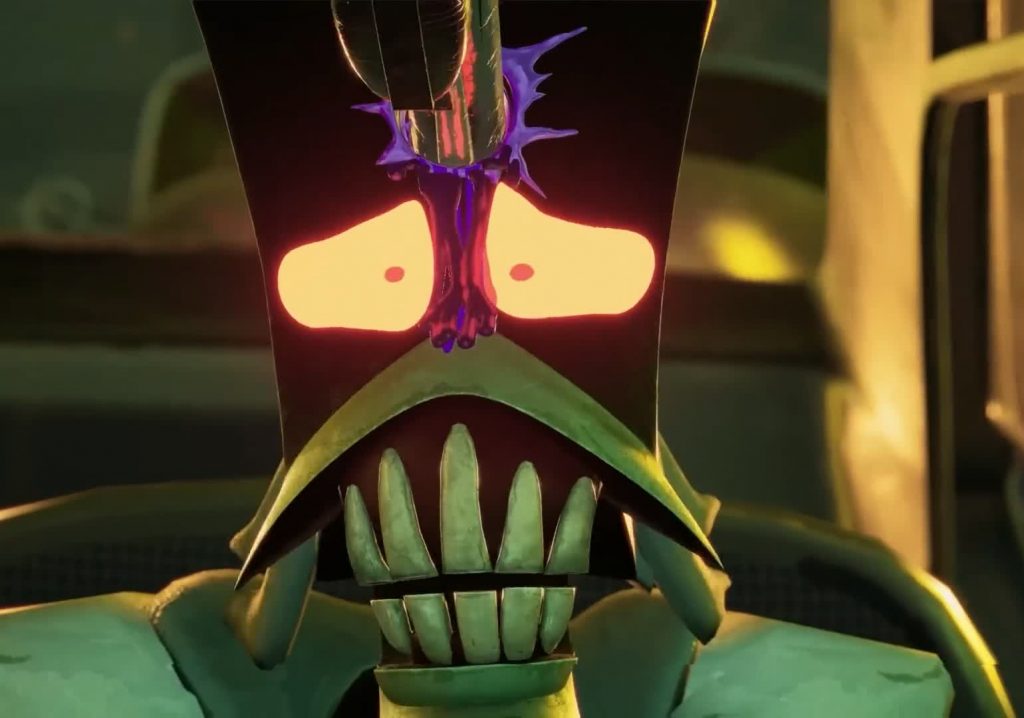
Jack the Rat is a supporting antagonist in The Gaslight District. However, the character’s menace doesn’t come from brute strength so much as from the one thing he refuses to do—keep quiet. Therefore, Jack functions as a spark plug for the pilot’s central crisis: a low-ranking dishwasher who stumbles onto Melancholy Hill’s secret, panics, and tries to blow the whistle, forcing the Smiling Dead to act like a mob family instead of a sitcom.
In addition, his design sets him apart from background Rotlings—pupiled, bright-orange eyes and a fussy wig over a square, tooth-bared face—so you always read him as specific, not generic, even in fast cuts. As a result, every beat with Jack the Rat pushes theme and plot at once: fear curdles into betrayal; loyalty becomes a liability; and a throwaway worker becomes the kind of problem that a gangster patriarch solves with cement and a chain. Finally, the voice casting matters—John Whinfield also voices Mud—so the episode lets one performer stage both the chase and the cleanup.
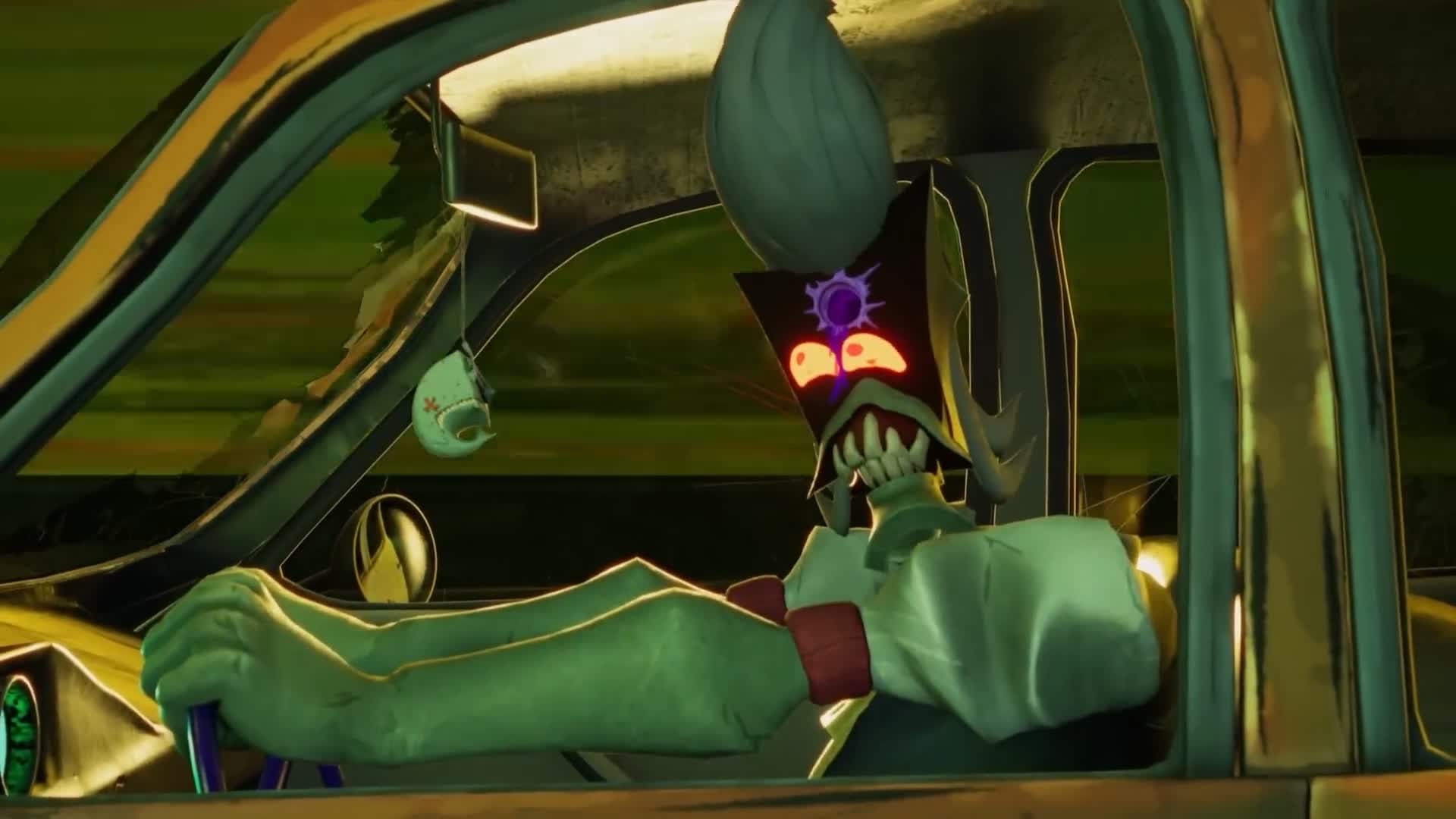 Open image: Mud — grim driver in a battered car grips the wheel, neon
Chase setup that will expose Jack the Rat as a talkative liability.
Origin and first appearance of Jack the Rat
However much the series leans into lore about angels and Virtues, viewers meet Jack the Rat in street-level action. Start: the Smiling Dead bear down on a nervous driver who knows too much. Then: the camera names him—Jack—just as Mud puts a bullet through his skull, a nasty, close-quarters punctuation mark that would end most arguments. Next, the pilot pulls a feint: Jack slumps, the car veers, and for a moment it looks like the crew has solved their “witness” problem. As a result, the episode buys itself a second confrontation. Jack revives, clawing back control of the vehicle, and the pursuit resumes with Mel climbing onto his hood and demanding answers about her blood.
Consequently, his real “first impression” lands not as a corpse but as a talker—he shouts “YOU CAN’T SILENCE ME, BLACK BLOOD!” and pivots from victim to informant, the one Rotling willing to say the quiet part out loud. Finally, the scene ends the only way it can in this world: with a crash that spills blood and proof, and with Ken the Butcher choosing a punishment that stops short of murder without being any less permanent.
Personality and key traits of Jack the Rat
| Trait | What it looks like |
|---|---|
| Cowardly bravado | Jack blusters when he’s cornered and wilts when he’s outgunned. He waves pistols, shouts, and tries to bargain with information, but none of it masks his fear. |
| Compulsive truth-telling | He treats Mel’s secret as a fuse that must be stamped out by telling everyone. That “honesty” isn’t moral; it’s survival—expose her before her existence gets him killed. |
| Rank resentment | As a former dishwasher, he hates living under Ken’s rules. The moment he has leverage, he uses it, less to do good than to stop being powerless. |
| Fixation on Mel | He reduces the world to one fact—“black blood”—and hammers it. In arguments he repeats the threat, trying to force Rotlings to see what he saw. |
| Opportunistic violence | When talk fails, he fires. However, the shots don’t change the outcome; the Smiling Dead can take the hit and keep laughing, which only deepens his panic. |
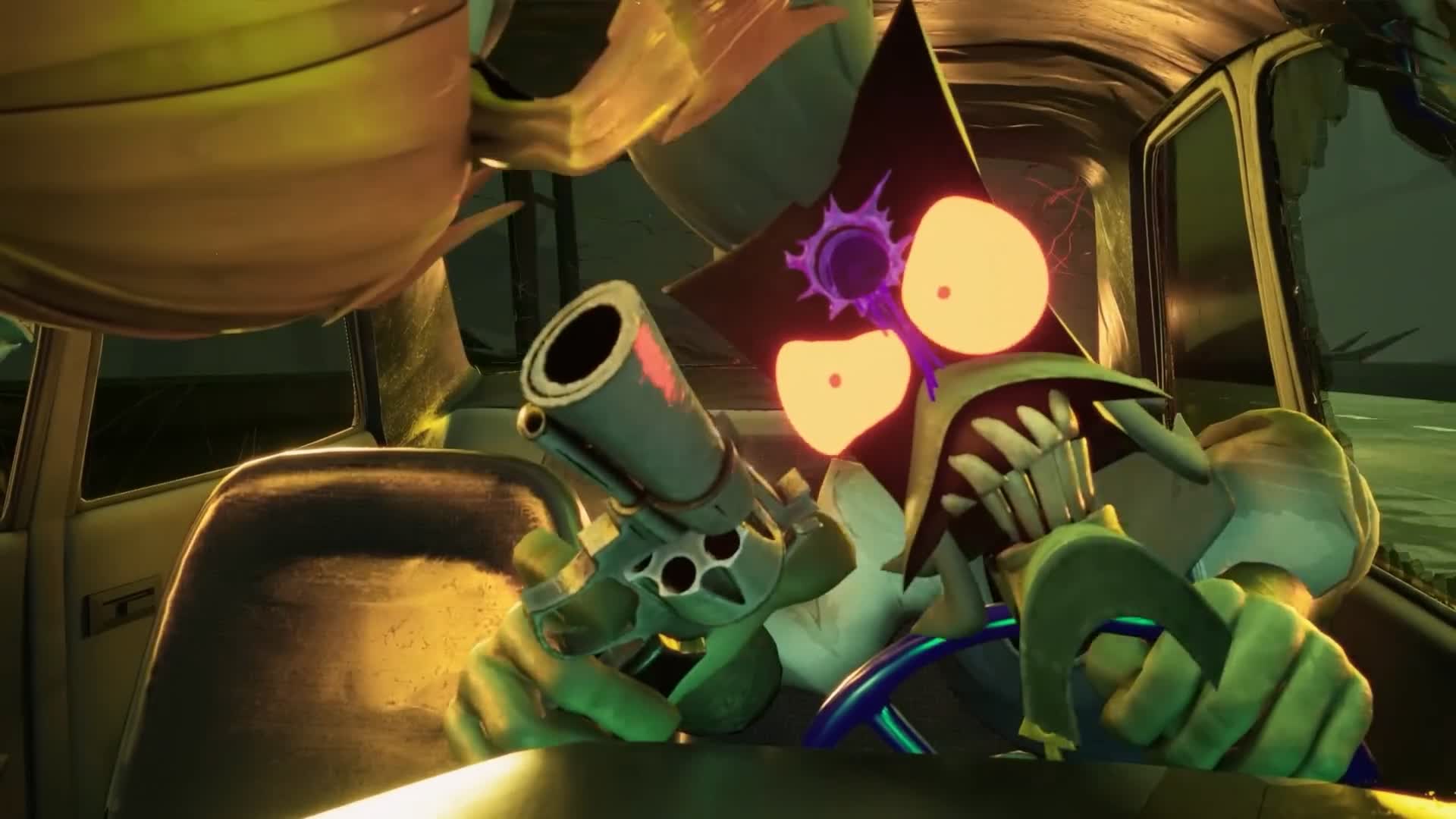 Open image: Mud — crazed driver brandishes a revolver inside a wrecked car, bulging
Moment before the crash that confirms what Jack the Rat knows.
Story arcs and development
Dishwasher to liability (Pilot)
Start: Jack keeps his head down at the Whale Belly Butcher Shop—low-rank labor in the family’s home base. Then: he witnesses the wrong thing at the wrong time: Mel bleeding black, the tell that she isn’t a Rotling at all. As a result: the hierarchy shifts. A dishwasher becomes a ticking bomb in Ken’s house, and the family’s problem stops being angels and starts being a man with a mouth. Consequently, Jack flees with his secret, the Smiling Dead give chase, and the pilot translates a lore reveal into a combustible street pursuit that any gangster picture would recognize.
Road confrontation and crash (Pilot)
Start: Jack, weapon in hand, tries to fight his way to safety while shouting what he knows. Then: Mel meets him on the move—on his hood, through his windshield, face to face—and the episode reduces prophecy and bloodlines to a two-person argument at highway speed. As a result: talk becomes impact. Jack loses control, the car slams out, and both bleed, confirming the visual code the show has spent a half hour establishing: Mel’s blood runs black. Consequently, Jack pivots to a new tactic—he tries to turn Mud and Breadhead against their father with the truth—only to learn that facts won’t save him when a family has already decided what it must protect.
Cementing and disposal (Pilot)
Start: Jack lies broken but still loud, a liability that won’t stop being a liability. Then: Ken the Butcher makes the call that defines him—no messy public corpse, just the old-world fix. Breadhead and Mud “cement” Jack the Rat, a mob euphemism that the episode stages literally: chains, weight, and the sea. As a result: the series ties a noir-mob punishment to its undead logic: in a place where death retains you as a citizen, the ocean becomes a prison with no door. Consequently, Jack’s exit underlines the pilot’s ground-truth—this is a story where violence is practical, not performative, and mercy is just efficiency by another name.
Epilogue hook and possible return (Pilot)
Start: Credits roll; the audience exhale; the family drives on. Then: the image cuts back to the water and drops a chained hook into the dark. As a result: what looked like closure becomes a question mark—has someone hired a diver, or will the district itself cough up what Ken tried to bury? (Spoiler: the pilot doesn’t answer; it only promises that “cemented” isn’t always “gone.”) Consequently, Jack the Rat graduates from one-episode propellant to a potential recurring problem, a witness whose story may not be finished.
Relationships with other characters
| Character — role vs. Jack the Rat | Dynamics |
|---|---|
| Melancholy Hill — target of exposure | He sees her black blood and decides to expose it. Their car-to-car confrontation turns into a shouting match about identity, with Jack trying to weaponize the truth before it buries him. |
| Ken the Butcher — former boss and executioner | Ken won’t risk a witness inside his house. He orders the cementing and treats Jack as a maintenance task: resolve the liability, keep the family intact. |
| Mud — pursuer and shooter | Mud puts a round through Jack’s skull during the chase and later helps carry out the cementing order. Ironically, the same actor voices both men, binding pursuer and quarry. |
| Breadhead — enforcer in the cleanup | Breadhead joins Mud in hauling and sinking him. Jack tries to sway him with the truth; Breadhead answers with obedience, not debate. |
| The Smiling Dead — former employers | The relationship curdles from “staff” to “threat” in a single scene. Once he talks, he ceases to be a person in their orbit and becomes a problem to dispose of. |
| Jack’s mother (unnamed) — offscreen tie | The wallet detail that he has a mother—and signed up as a body donor—adds a human sting to a character the story otherwise uses as fuel for the machine. |
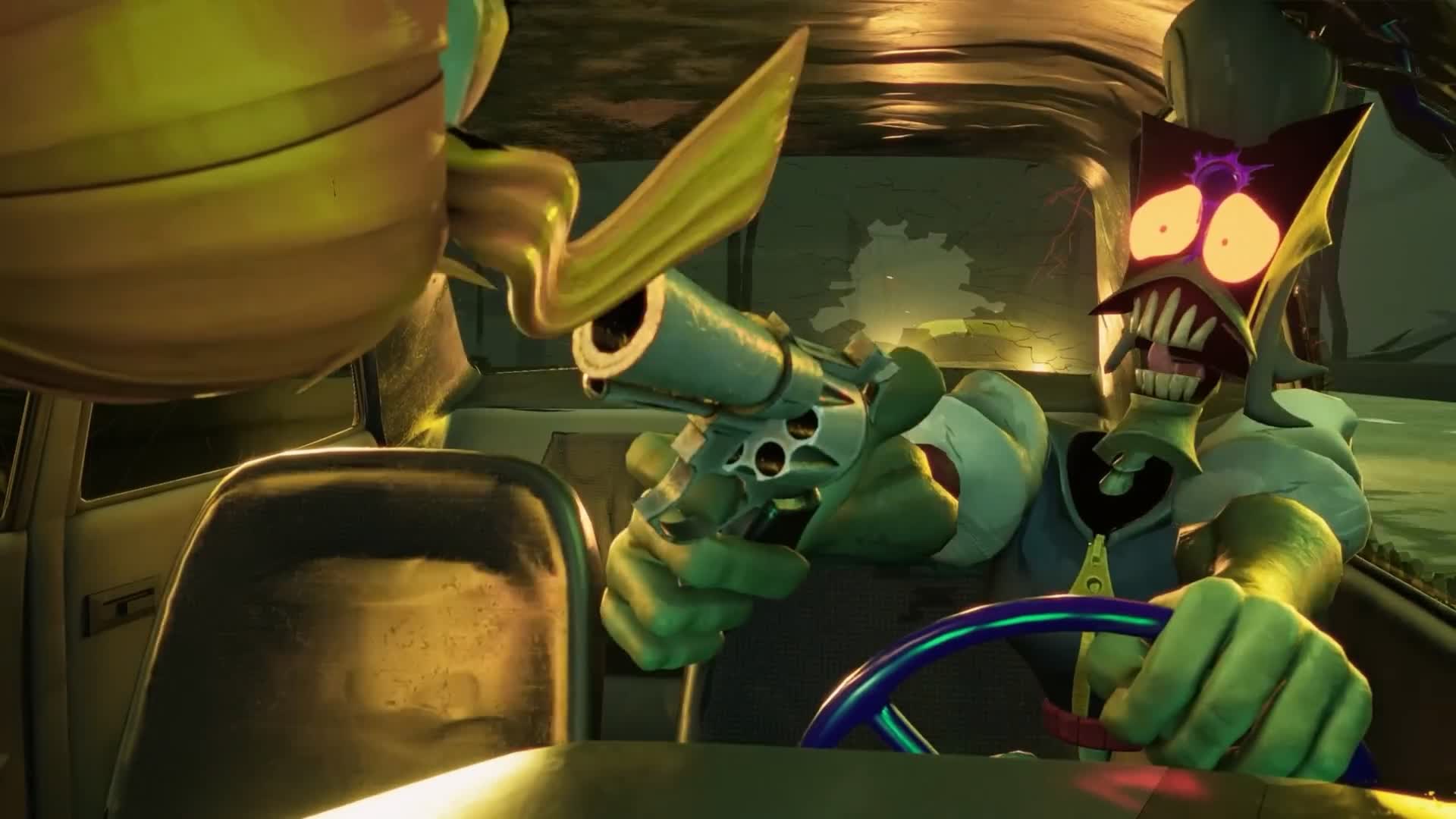 Open image: Mud — aiming a heavy revolver from the driver seat toward a
Aftermath of the pursuit tied to Jack the Rat and his failed escape.
Appearance, symbols, and recurring motifs
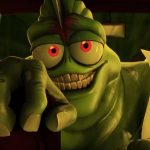
Visually, Jack the Rat announces himself as an individual in a crowd of Rotlings. Design cues include a square face that seems separated from a jaw lined with oversized teeth, a puffy white wig that reads like a foppish flourish, and a blue jacket with large white sleeves and a yellow zipper that pops against the series’ muted steely palette. However, the feature that most clearly sets him apart is ocular: bright-orange eyes with visible pupils, a rarity among Rotlings that makes his stare feel personal and accusatory whenever he presses Mel. Next, when the episode gears up for violence, he carries pistols instead of knives or tools, telegraphing that his approach to danger is noise and speed rather than craft. As a result, the character’s silhouette and prop choices support his function in the plot—a man who doesn’t blend, can’t stop talking, and will grab whatever leverage is handy. Finally, the last image attached to him—chains, concrete, and dark water—turns “cementing” from a gangster cliché into a recurring symbol of enforced silence.
Fandom and alternative names
- Jack the Rat — full name used in credits and wikis.
- Jack — common shorthand in discussions and transcripts.
- Jack (Rotling) — label used in character lists to distinguish species.
- Dishwasher (Whale Belly) — descriptive tag used when summarizing his role before the chase.
- Крысёныш Джек (RU) — Russian-language localization on community pages.
Interesting details and quotes
- Voice and casting: Jack the Rat is voiced by John Whinfield, who also voices Mud, making the chase and its resolution a showcase for one performer in two roles.
- First appearance: the Pilot (April 18, 2025), where he functions as the episode’s human-scale antagonist before angels and Virtues take the stage.
- Occupation: formerly a dishwasher at the Whale Belly Butcher Shop, the Smiling Dead’s base of operations.
- Status: cemented and dumped in the ocean by order of Ken the Butcher; a post-credits hook suggests a possible retrieval.
- Design note: he is the first Rotling shown with pupils, a small choice that helps the audience read his emotions and fixations in close-ups.
- Wallet gag: a brief insert shows he’s signed up for a body donor program, a darkly comic beat in a world where bodies are tools.
- Function in plot: by trying to expose Mel’s black blood, he forces the Smiling Dead to choose between family myth and survival protocol, pushing them toward mob logic.
- Quote (taunt):
YOU CAN’T SILENCE ME, BLACK BLOOD!
- Quote (threat calculus):
What happens to Mud and Breadhead when they learn you’re the human? Will ‘Papa’ be able to protect you when the whole island pieces together what you are?!