Melancholy Hill is the driving protagonist of The Gaslight District—a showwoman, conspirator, and daughter of Ken the Butcher whose choices ignite the pilot’s biggest reversals. From her first scenes, she undercuts the easy “mob princess” reading: she doesn’t inherit safety so much as manufacture it, staging illusions, stealing evidence, and persuading a frightened city with confidence she does not always feel.
For now, her on-screen arc remains concentrated inside the currently released pilot material, which makes every early decision feel larger than a single episode. She is not simply the lead of a caper; she is the pressure point where prophecy, family debt, policing, and public theater all meet at once.
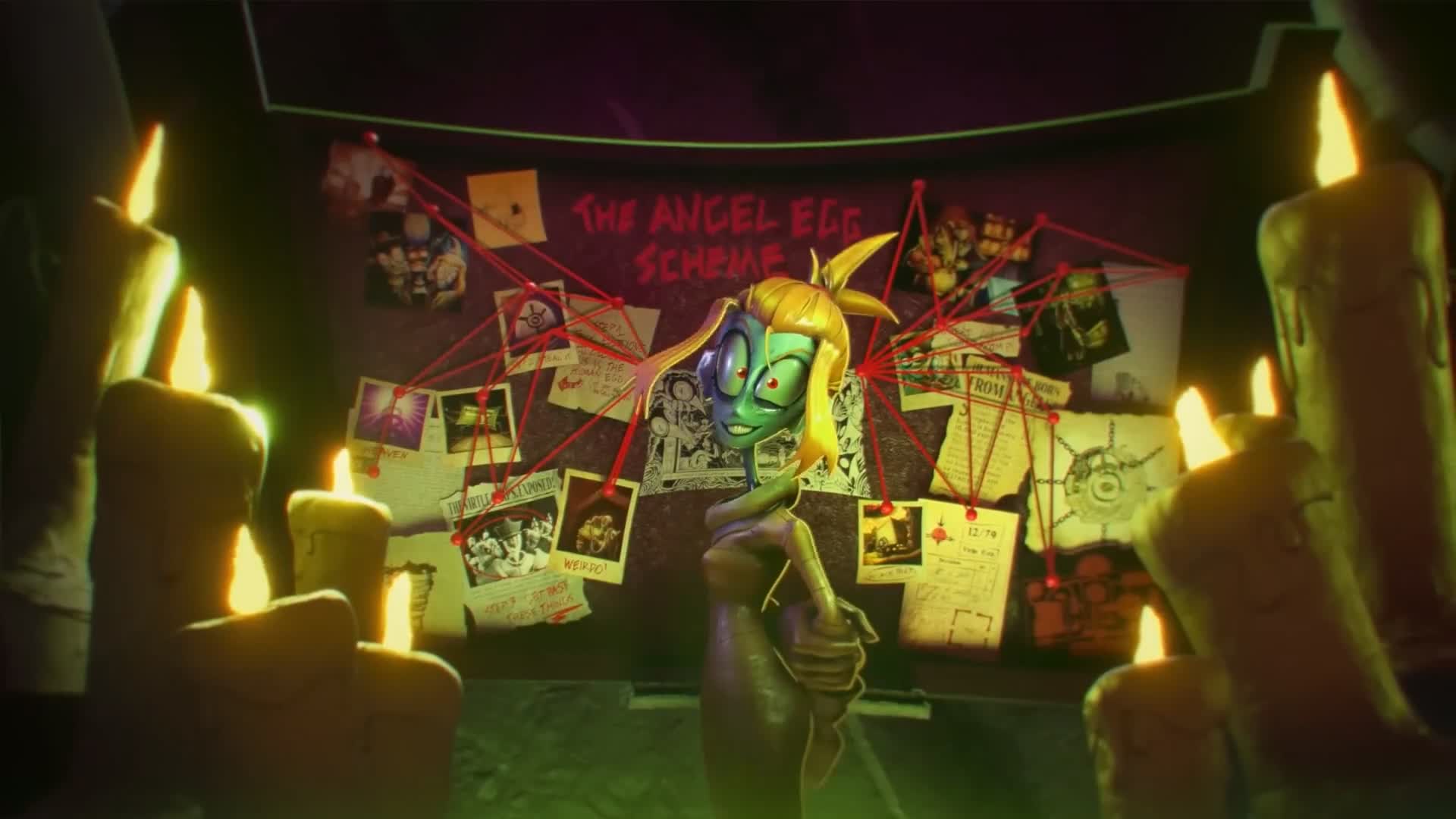 Open image: Melancholy Hill studies a conspiracy board with red string and candles —
Planning on the wall: Mel maps the island’s panic into a workable con against symbols that increasingly feel tied to the Black Hand as much as to rumor.
Origin and first appearance of Melancholy Hill
However many side characters crack jokes in the opening, viewers first feel Melancholy Hill’s gravity in the Whale Belly Butcher Shop, where she works the floor while Ken the Butcher schmoozes and Breadhead plays the piano. She moves through the lunch rush like a practiced host, eyes already on the night’s bigger gamble, and the domestic rhythm matters because it shows how much of her criminal intelligence begins as hospitality.
Then the plan surfaces. To smother citywide panic about a human egg, the Smiling Dead will infiltrate Paradise Lost, lift an angel’s egg as a prop, and destroy it on stage during the Human Death Ceremony—proof, they hope, that prophecy is only rumor. The first crack arrives offstage when Jack the Rat sees Mel’s black blood and bolts, turning secrecy into a chase, a crash, and a cleanup that stains the job before it properly begins.
By the time Mel reaches Heaven’s threshold, the viewer already understands her range—front-of-house charisma, criminal competence, and a secret she can neither confess nor fully control. The stairway encounter with the Angel Mother reframes everything in a single beat: a heist becomes a custody fight, and the thief becomes a daughter claimed by the sky.
The Paradise Lost thread is not colliding with empty corridors but with a full working system of guards, medical staff, and old loyalties, including the security-room detour with Joshua, which helps explain why Mel’s timetable starts slipping away from her.
Personality and key traits of Melancholy Hill
What separates Mel from the rest of the island is not brute force but tempo. Against institutional pressure from figures like Diligence, she survives by changing the speed of every room she enters—talking faster than fear can settle, improvising before anyone else can define the situation, and treating performance as a weapon instead of decoration.
| Trait | What it looks like |
|---|---|
| Performance courage | She sells confidence to crowds and to her own family, using showmanship, pacing, and timing to steer emotions. The nerves are real, but the act is effective until the world refuses the script. |
| Ends-first pragmatism | She picks tactics that move numbers: steal the egg, redirect guards, smash the “evidence.” Moral calculus narrows when the city feels like it’s burning. |
| Protective loyalty | She trusts Ken, leans on Breadhead, and depends on Mud’s improvisation; in return, she risks herself first when plans wobble, especially once the crowd turns. |
| Secret-bearing defiance | Her black blood marks her as different. She tries to bury that difference under stunts, but when cornered she will cut, run, or stab a god to keep her autonomy. |
| Quick moral pivot | She can shift from hoax to caretaking in a breath—most clearly when a stolen egg hatches in her hands and the stage becomes a nursery instead of a podium. |
 Open image: Melancholy Hill leans through a car window aiming a revolver — The
When talk fails, Mel can still write the next beat with a single decisive move, but even that sharpness works best inside a crew structure that depends on Mud to turn panic into motion.
Story arcs and development
Shop-floor daughter to public strategist (Pilot setup)
Melancholy Hill runs plates and runs mouth with the ease of someone who knows every regular in the Whale Belly Butcher Shop. Then she pitches a plan big enough to calm an island: steal a standard angel egg, pass it off as the human egg, and destroy it on stage to prove the prophecy false. The family fights over risk; Ken hesitates; Breadhead backs her play; and the pilot locks her in as the spark who can turn small competence into city-scale theater.
 Open image: Ken the Butcher grips Melancholy Hill by the shoulders while shouting —
Tactical love: Ken argues risk; Mel argues timing and optics; and the shadow of Temperance makes that argument feel even less abstract once the job reaches Paradise Lost.
Infiltration and the stairway claim (Paradise Lost sequence)
The Smiling Dead split roles: Mud heads for the control room, Breadhead triggers the garden diversion, and Mel moves with Ken toward the laboratory and the gate. The sequence deepens because the wider supporting ensemble keeps pressing in around her, turning a simple stealth thread into a collision with multiple institutions at once—family, Heaven, security, medicine, and prophecy.
 Open image: Melancholy Hill gestures nervously beside Ken the Butcher in a freezer room
Between schemes: a quiet beat of doubt before the storm resumes, with Mel already realizing that enforcers like Diligence can turn procedure into violence faster than any mob family can turn back.
Truck gauntlet and family calculus (Escape run)
The angel storm concentrates; the road narrows to one survivable line; and the family operates like a single organism while the sky tries to peel them open. The sequence cements Mel as protagonist not because she punches hardest but because she keeps the group pointed forward when the world goes to noise—a quality that the broader series repeatedly treats as leadership rather than luck.
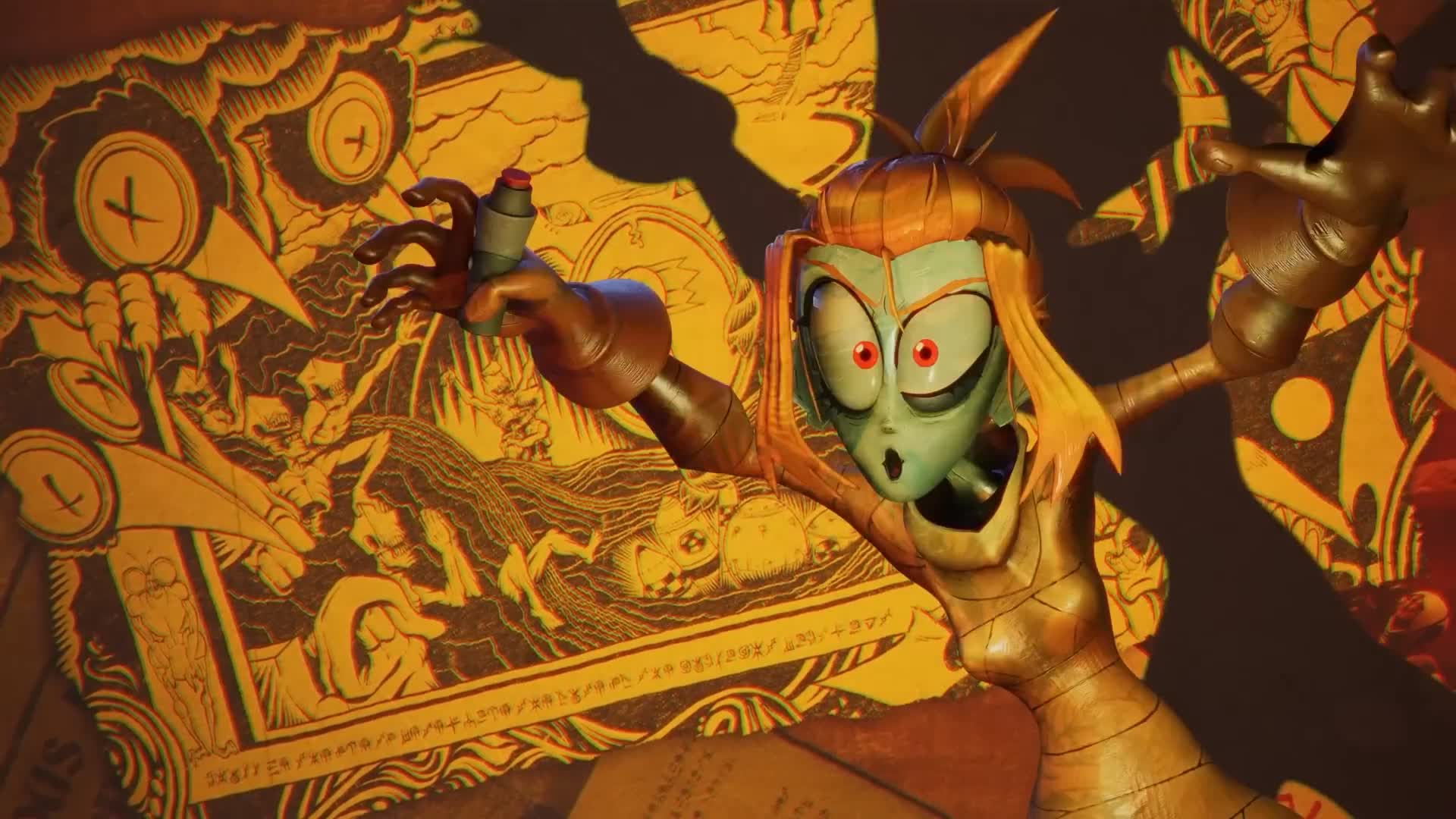 Open image: Melancholy Hill sprays over glowing ancient murals — The Gaslight District
Optics as tool: Mel knows when a wall needs a message more than a lock, because public fear in this city spreads through iconography before it spreads through facts.
Human Death Ceremony and the hatch (Public reversal)
Mel steps on stage to sell relief, egg raised over a spike, ready to prove that fear is theater. Then the shell glows and cracks; a chick now referred to in series material as Ramiel emerges; and the lie disintegrates in her arms. The crowd flips, the story stops being about optics and starts being about custody, and Mel’s instinct changes from debunking to protection without asking permission from the plan.
That reversal lands even harder because the released episode guide still centers the character’s arc on the pilot, leaving the hatch not as a solved twist but as the defining hinge of her story so far.
Relationships with other characters — Melancholy Hill
Mel’s relationship map works because everyone around her wants a different use for the same person. Family wants survival, Heaven wants possession, institutions want control, and the wider district cast keeps revealing new reasons her body and choices matter more than she would like.
| Character — role vs. Melancholy Hill | Dynamics |
|---|---|
| Ken the Butcher — father and partner-in-crime | He protects her fiercely but argues hard about risk. She pushes for bold plays; he covers exits and pays the bills her ideas create. Their fights are tactical, not existential—until Heaven makes them personal. |
| Breadhead — brother and shield | He backs her plan, triggers the garden diversion, and quite literally makes space when the sky closes. She treats him like a rhythm section she can cue with a look. |
| Mud — co-conspirator and uncle figure | He loves her bravado and cleans the messes it causes. Their chemistry fuels momentum; their blind spots, especially about collateral damage, fuel trouble. |
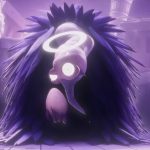
| Angel Mother — claimant and antagonist | The matriarch declares spiritual and biological ownership on the stair and again in the sky. Mel’s “no” to that claim defines the chase and the season’s premise. |
| Diligence — institutional hunter | The Virtues’ leader does not target her alone, yet every order it barks—“Contain the storm!”—narrowly encircles the path she is trying to carve. |
| Temperance — keeper of the past | Ken’s confrontation in the lab implies an old arrangement around her origin. Mel’s life sits at the intersection of medical secrecy and divine custody. |
| Jack the Rat — would-be whistleblower | He sees her black blood and runs. The pursuit, crash, and cementing that follow trace the human cost of protecting her secret with mob logistics. |
| Ramiel — living proof and unwanted charge | The hatch transforms Mel from debunker to caretaker. The newborn angel collapses her public performance into private responsibility, and every choice after the ceremony has to pass through that pivot. |
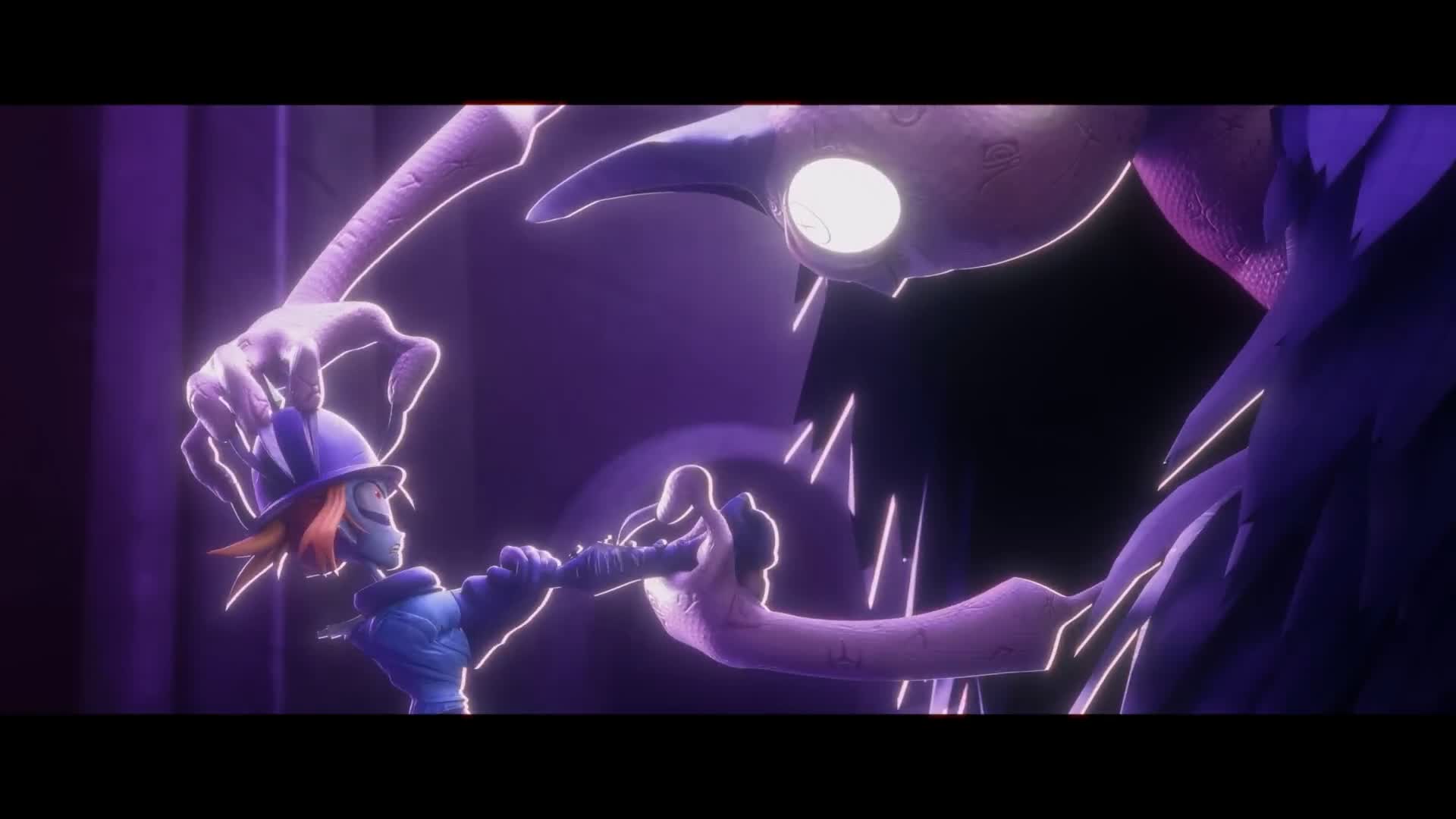 Open image: Melancholy Hill faces a towering shadowy creature in purple light — The
When Heaven speaks in shadows, Mel answers with motion, not prayer, and that is exactly why her standoff with Angel Mother feels like a season premise instead of a one-scene scare.
Appearance, symbols, and recurring motifs of Melancholy Hill
Visually, Melancholy Hill presents as a poised front-of-house lead who can switch to ringmaster without changing clothes: controlled posture, steady eye contact, and stage instincts that find the camera and the crowd at once. The show uses props and framing more than ornament to express her arc, so the butcher-shop apron, microphone, and stolen egg read like tools she keeps repurposing under pressure.
Just as important are the civic symbols around her. Banners, placards, runes, and the open-palm imagery associated with the Black Hand make the district feel like a place where fear has already been branded, printed, and ritualized before Mel ever steps onstage to challenge it.
Proof becomes problem: the egg that should calm a city remakes its faith instead, and the image lingers because the pilot turns revelation into a public event before it ever has time to become private grief.
Melancholy Hill in the current story
The official GLITCH materials describe The Gaslight District as a supernatural crime comedy created by Nick Szopko, and the pilot premiered on April 18, 2025. On the character level, that means Mel enters canon not as a placeholder heroine but as the face of the show’s first completed crisis, with the currently available series listing still anchoring her story to that debut.
On the performance side, Mel benefits from a vocal approach that can pivot from patter to panic in a heartbeat, which is why her scenes sit naturally beside the rest of The Gaslight District voice cast without losing their specific rhythm.
That balance is one reason Allanah Fitzgerald plays as more than attitude or sarcasm in the role. The performance makes even Mel’s bluffing sound like a survival reflex learned young.
Fandom and alternative names
- Melancholy Hill — full name in dialogue and credits.
- Mel — common shorthand used by family and fans.
- Butcher’s Daughter — descriptive label in recaps.
- Human (rumored) — tag tied to the prophecy and her black blood.
- Меланхолия Хилл (RU) — Russian-language transcription in community pages.
- Mel la Melancolía (ES) — informal Spanish paraphrase mirroring the tone of the name.
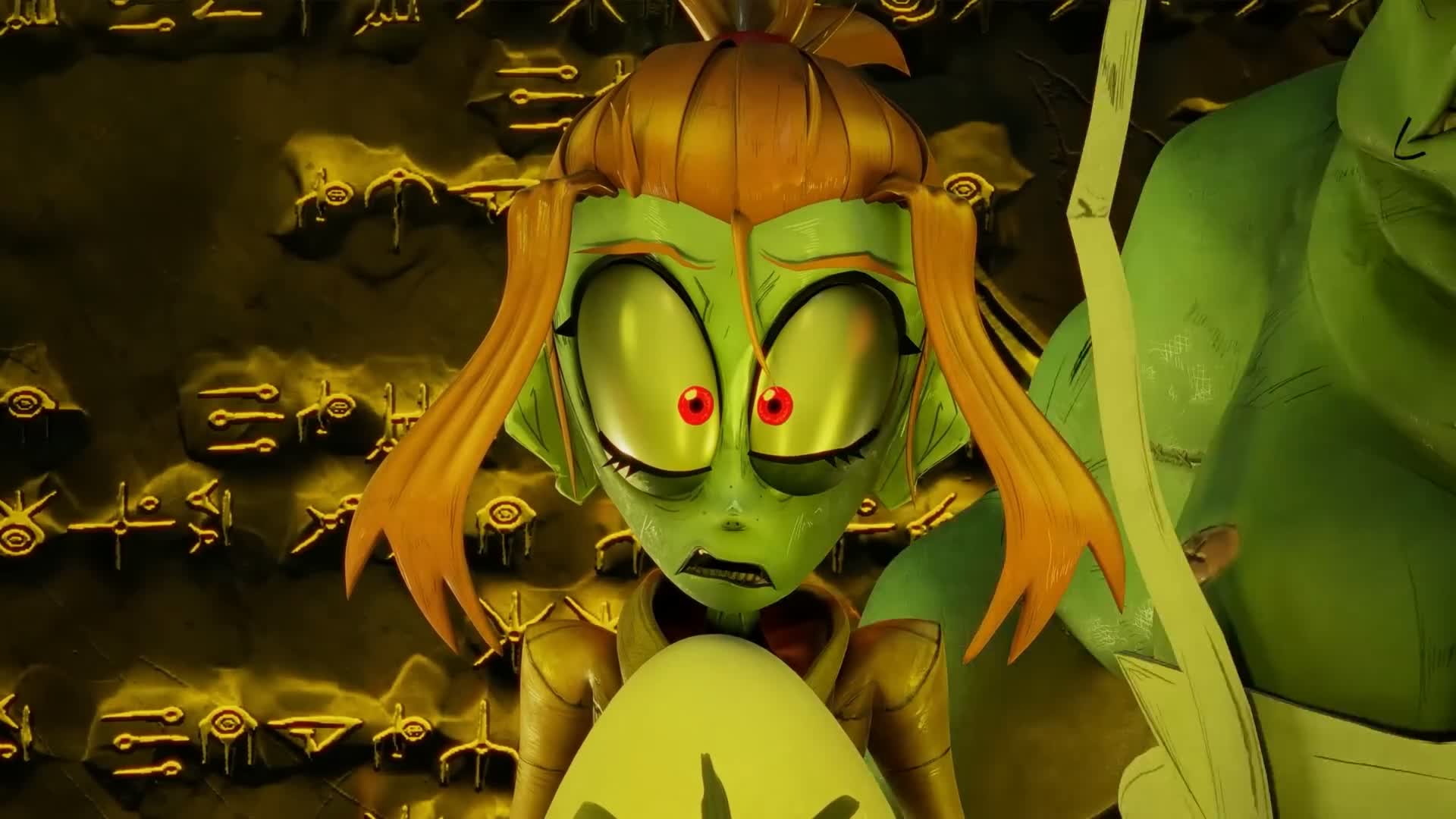 Open image: Melancholy Hill gazes at a glowing angel egg amid golden symbols —
Interesting details and quotes
- Voice and casting: voiced by Allanah Fitzgerald, whose lead performance keeps Mel sharp, brittle, funny, and frightened at the same time.
- Release context: the pilot premiered on April 18, 2025, so all of Mel’s current canon weight is loaded into that debut chapter.
- Current status: the story released so far still centers on the pilot, which is why the hatch scene remains the character’s biggest turning point.
- Stagecraft first: her initial plan is not to fight angels but to control optics—steal an egg and destroy it publicly to calm the city.
- Heist lanes: she assigns roles cleanly—Breadhead to provoke the garden diversion, Mud to seize the PA and cameras, Ken to handle extraction.
- Black-blood reveal: Jack the Rat’s discovery of her blood color converts gossip into danger and kickstarts the bridge pursuit.
- Stairway defiance: she stabs the Angel Mother’s head to break a claim, turning a reverent set into an exit route.
- Public reversal: the egg hatches during the Human Death Ceremony, transforming a debunking stunt into a custody crisis she did not plan for.
- Ramiel update: companion material now gives the hatchling a name, which sharpens discussion of Mel’s sudden caretaker role.
- Family calculus: even when the con fails, her instinct is to hold the newborn chick rather than finish the pageant—an unplanned but revealing pivot.
- City mechanics: her choices expose how the island runs—signage as policy, ceremonies as crowd control, and storms as policing.
- Quote (Angel Mother):
You… belong… TO THE ANGELS!
- Quote (Diligence):
Contain the storm! I’ll take care of the intruders.
- Quote (stage signage):
HUMAN DEATH CEREMONY