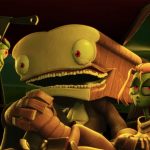
Temperance is the Virtues’ chief doctor and head of science in The Gaslight District. However, the character upends any expectation of a benevolent healer: it treats bodies like inventory, speaks in careful, measured tones, and maintains secrets that keep the system running, even when those secrets harm people. Therefore, Temperance becomes a crucial hinge between Heaven’s bureaucracy and street-level crime—the “physician” who keeps Paradise Lost functional while enabling choices that haunt the Smiling Dead. In addition, casting Belsheber Rusape Jr. gives the role a cool, precise timbre that reads as professional on the surface and unsettling underneath. Consequently, the pilot uses Temperance to define how this world moralizes control: a lab coat softens a prison; a diagnosis justifies violence; and “care” means containment, not compassion. Finally, the dramatic turn—Ken the Butcher caving in the doctor’s skull and eating its brain—reframes the healer as a victim of the very power games it once abetted.
 Open image: Ken the Butcher, Diligence — red-lit chamber with Ken viewed from below
Red-lit control room that frames the medical authority surrounding Temperance at Paradise Lost.
Origin and first appearance of Temperance
However the pilot dazzles with lore and spectacle, the series introduces Temperance in a place that communicates function more than personality: the laboratory inside Paradise Lost. Start with early images that prime the theme—mechanical hands working around an exposed brain, instruments arranged with ritual neatness—so viewers understand that Heaven’s order is partly medical theater. Then the proper introduction arrives during the Smiling Dead’s incursion. Ken the Butcher pushes through the citadel and finds the doctor alone, a figure in a lab coat with a windowed cranium and a beaked mask. As a result, the scene plays like an audit of history: Temperance recognizes Ken, he says it kept their shared secret, and the doctor replies with wary politeness that does nothing to cool his anger.
Next, the exchange breaks the professional facade. Ken smashes the skull open and devours the brain, an act that both disables the Virtue and implies how these porcelain bodies work—brains and ritual technology, not miracles, keep them moving. Consequently, Temperance’s first appearance collapses Heaven’s healers into fallible machines and ties the Smiling Dead’s family drama directly to Paradise Lost’s medical regime. Finally, a small visual—a photo of newborn Melancholy Hill cradled in the doctor’s arms—suggests their past connection and turns the lab from neutral ground into a contested nursery of secrets. (Spoiler: the pilot leaves Temperance inactive, its ultimate fate unresolved.)
Personality and key traits of Temperance
| Trait | What it looks like |
|---|---|
| Clinical restraint | Temperance measures words, apologizes when necessary, and keeps its voice level in crises. The performance reads like bedside manner stripped of empathy—procedure first, outcomes later. |
| Keeper of secrets | It honors arrangements that protect the system, including promises made to Ken about Mel’s origins. That discretion signals loyalty to process, not to people. |
| Instrumental ethics | The doctor frames decisions in utility terms: preserve order, minimize noise, maintain assets. Individuals become cases, and cases become parts in Paradise Lost’s machinery. |
| Professional courage | When Ken confronts it in the lab, Temperance does not run or beg; it stands its ground and tries to reason. Even so, that composure cannot stop brute force. |
| Ambiguous compassion | Images imply it once cared for Mel as a hatchling, yet it still handed the child to Ken. The character balances genuine caretaking with choices that sustain a coercive order. |
 Open image: Diligence — masked figure in white coat raises a cleaver over a
Lab context where Temperance maintains bodies and protocols for the Virtues.
Story arcs and development
Lab encounter and removal from play (Pilot)
Start: The Smiling Dead breach Paradise Lost, and Ken peels away from the fight to confront an old problem. Then: he finds Temperance in the laboratory. The doctor greets him with professional calm, and their exchange confirms a shared secret about Mel’s origin—kept by the Virtue, enforced by the butcher. As a result: the conversation detonates. Ken fractures the porcelain skull and eats the exposed brain, rendering the scientist inactive and, by implication, depriving Paradise Lost of its medical authority in the moment it most needs it. The beat answers two questions at once—how a Virtue can be “killed,” and why Ken’s rage runs deeper than a simple raid.
The caretaker implication (Backstory revealed in the Pilot)
Start: A photograph shows Temperance holding a newly hatched Mel, linking the doctor to the prophecy before the Smiling Dead ever touched it. Then: Ken references a promise—silence in exchange for custody—which frames Temperance as both a protector and an accomplice. As a result: the series plants a morally complicated foundation for Mel’s childhood: Heaven’s medical wing handed a human infant to a gangster and called it stability. The image also justifies Ken’s fury; he interprets the doctor’s discretion as a debt, not a favor, and collects payment in the ugliest way possible.
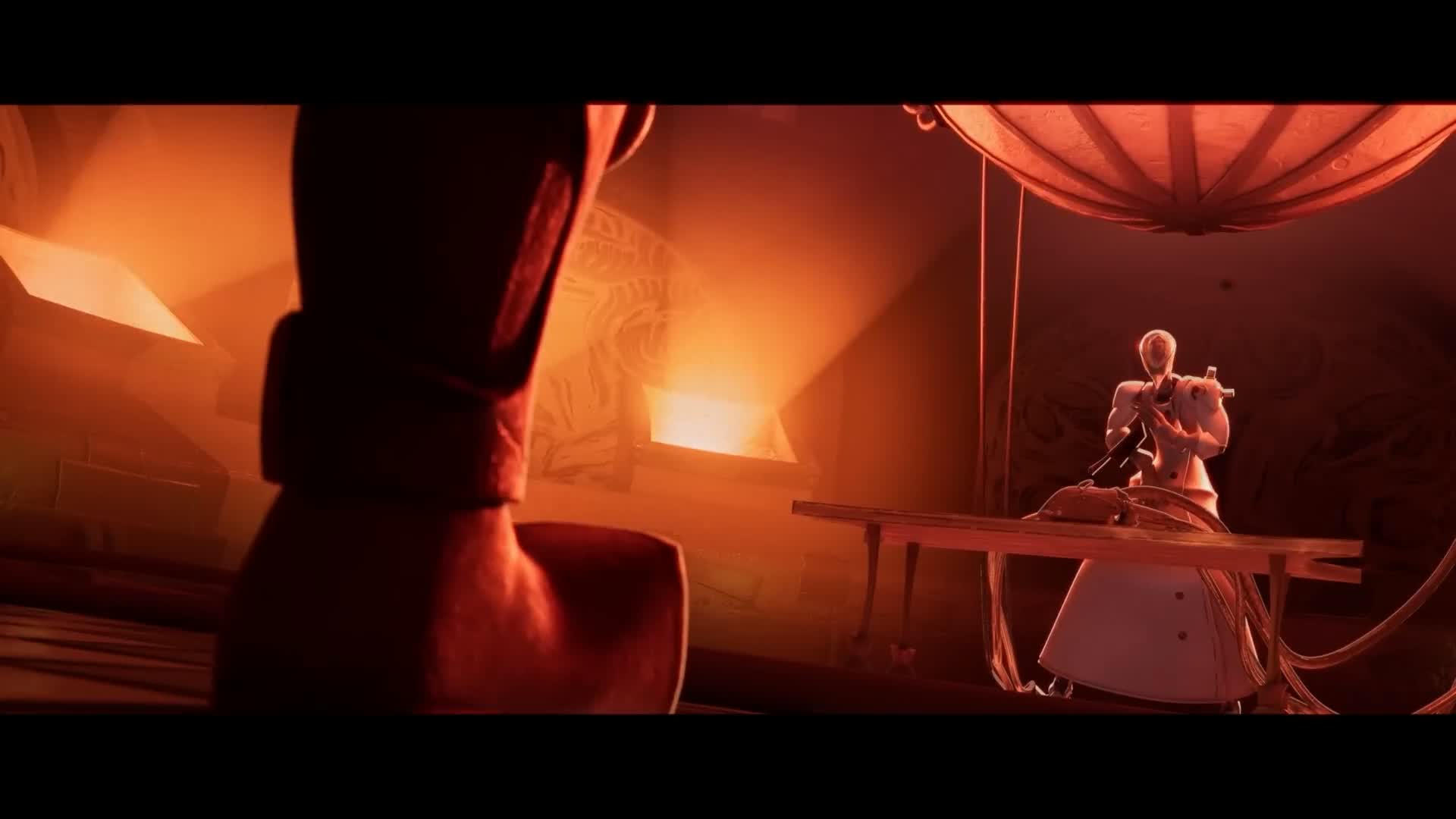 Open image: Ken the Butcher, Diligence — Ken’s boots in foreground as Diligence stands
Paradise Lost under strain once Temperance is removed from the board.
Virtue systems and the “porcelain prison” (Worldbuilding thread)
Start: The pilot outlines how Virtues are made and maintained—capture an angel, devour, and install the brain within a ceramic shell under oath. Then: Temperance’s tools, lab coat, and exposed cranium window visualize that oath as ongoing maintenance: science props up sanctity. As a result: the doctor embodies the show’s thesis that righteousness is engineered. Heaven’s rules rely on bodies that can be repaired—or disabled—by those who understand the parts. The instant Ken removes the brain, the façade of divinity collapses into meat, wiring, and silence.
Aftermath and narrative potential (Coda and beyond)
Start: Diligence survives the Angel storm and rises again, but Temperance does not return by episode’s end. Then: the absence becomes thematic: the citadel has lost its physician, and its moral language of “care” has a hole where the caregiver stood. As a result: the series sets a hook for later episodes. If brains and shells can be reinstalled, a recovery arc remains possible; if not, Ken’s act has permanently maimed the Virtues’ infrastructure. Either path keeps Temperance central to questions the show cares about—what is mercy when a hospital serves a prison, and who deserves custody of a child born from an angel’s egg?
Relationships with other characters
| Character — role vs. Temperance | Dynamics |
|---|---|
| Ken the Butcher — adversary with a pact | They share a buried arrangement about Mel’s origin. Temperance kept quiet; Ken repaid that silence with violence, caving the skull and eating the brain to settle a private ledger. |
| Melancholy Hill — former charge | A lab photo shows the doctor cradling baby Mel, implying early care. The decision to hand her to Ken defines Mel’s life and frames Temperance as both guardian and gatekeeper. |
| Diligence — colleague and foil | Diligence enforces; Temperance repairs. One commands guards, the other maintains bodies and protocols. Together they picture Paradise Lost as cop plus clinic, order plus upkeep. |
| The Virtue Corp. Guards — institutional clients | They depend on the lab’s upkeep and triage. Temperance’s removal leaves the corps exposed during crises and hints at fraying control inside the citadel. |
| The Smiling Dead — invading force | Temperance treats them as pathogens; they treat the Virtues as jailers. The doctor’s past deal with Ken complicates that binary and fuels the lab confrontation. |
| Paradise Lost — operating theater | As the citadel’s head of science, the doctor turns the fortress into a hospital-prison hybrid. Its lab tools and oath language translate faith into fixtures and procedures. |
Appearance, symbols, and recurring motifs
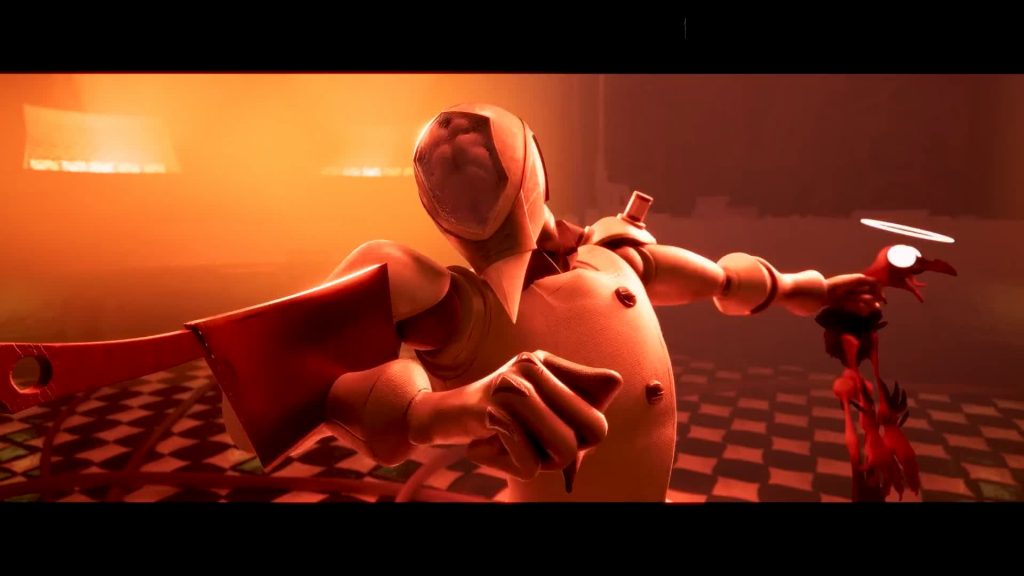
Visually, Temperance reads as a lanky, porcelain-shelled humanoid in a long lab coat, with a front window that exposes the brain it maintains. Design cues include a beaked, plague-doctor-like mask; long, needle-straight fingers capped with sharp nails; and a high, deliberate posture that never slouches, even under threat. However, the costume is not simply aesthetic. The coat and mask encode role—physician, examiner, custodian—while the brain window literalizes the series’ fixation on bodies as containers.
Next, the palette leans pale and clinical, an intentional contrast to Paradise Lost’s gilded halls and Diligence’s militarized hardware. As a result, every frame with Temperance communicates a thesis: in this world, medicine is an instrument of authority. Finally, when Ken breaches the mask and skull, red and green flashes turn instruments into evidence, and the doctor’s silhouette collapses from elegant precision into scattered parts, a stark reminder that sanctity here is manufactured and breakable.
 Open image: Diligence — masked figure in orange light kneels on checkered floor clutching
Aftermath inside the citadel that underscores what Temperance meant to its systems.
Fandom and alternative names
- Temperance — official English name.
- Virtue Doctor — common descriptor for the role.
- Head of Science — in‑universe title used for Paradise Lost’s lab lead.
- Doctor Temperance — shorthand in recaps and fan threads.
- Добродетель Умеренности (RU) — Russian‑language naming.
- El Doctor de la Virtud (ES) — Spanish‑language paraphrase used in community posts.
 Open image: Diligence — close-up on masked head with dark visor reflecting light over
Interesting details and quotes
- Voice and casting: Temperance is voiced by Belsheber Rusape Jr., whose controlled delivery underscores the character’s measured, clinical affect.
- Function in the Virtues: the doctor oversees science and medicine at Paradise Lost, handling bodies and upgrades while Diligence handles security.
- Pilot date and status: debut in the Pilot (April 18, 2025); left inactive after Ken removes and consumes its brain.
- Caretaker link: a lab photo shows baby Mel in Temperance’s arms, implying early involvement in her custody before Ken raised her.
- Design specifics: long lab coat with a cranial viewing window; slender limbs; beaked mask; elongated hands with surgical, talonlike fingers.
- Pronouns: in materials and discussion, the Virtues—including Temperance—are often referred to as “it,” emphasizing construct status over gender.
- Virtue oath motif: worldbuilding lines describe manufacture and maintenance of Virtues as a ritualized process—“After devourment, brain shall be placed within porcelain prison.”
- Thematic role: the character converts “care” into control, turning a hospital’s vocabulary into a bureaucratic weapon.
- Quote:
After devourment, brain shall be placed within porcelain prison.
— a line that encapsulates the show’s clinical theology.
Close‑up that echoes the medical surveillance network sustained by Temperance.