Ramiel is the hatchling angel in The Gaslight District whose emergence detonates the Pilot’s climactic stunt. However, the character’s impact arrives not through dialogue or combat but through contrast: a palm‑sized, downy chick appears where a prophesied human execution was supposed to happen. Therefore, Ramiel turns a crowd‑pleasing fraud into a public crisis, forces Melancholy Hill to face the consequences of her con, and reframes the island’s theology in one cut.
In addition, the baby’s on‑screen innocence complicates the series’ moral ledger; the Smiling Dead treat it as evidence to hide, while the Angel Mother treats it as family to reclaim. Consequently, the chick becomes both payload and symbol—proof that Heaven’s eggs still hatch and a reminder that every faction is willing to weaponize “purity” when it suits their aims. Finally, merchandise and community materials later attach the name Ramiel to the angel chick, which helps fans talk about a figure the episode itself leaves unnamed.
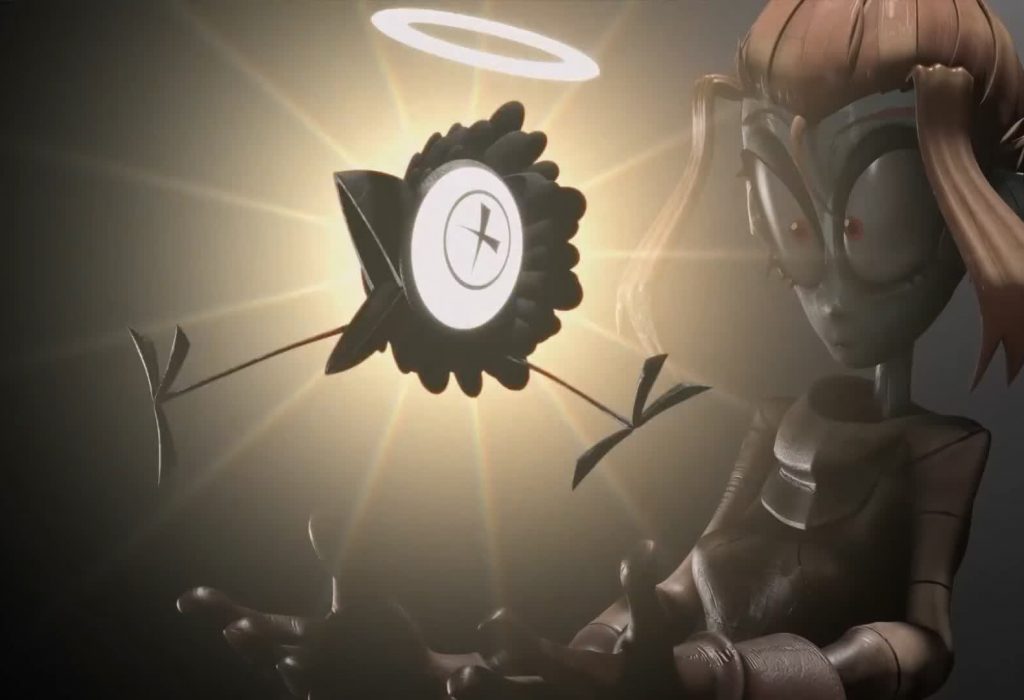
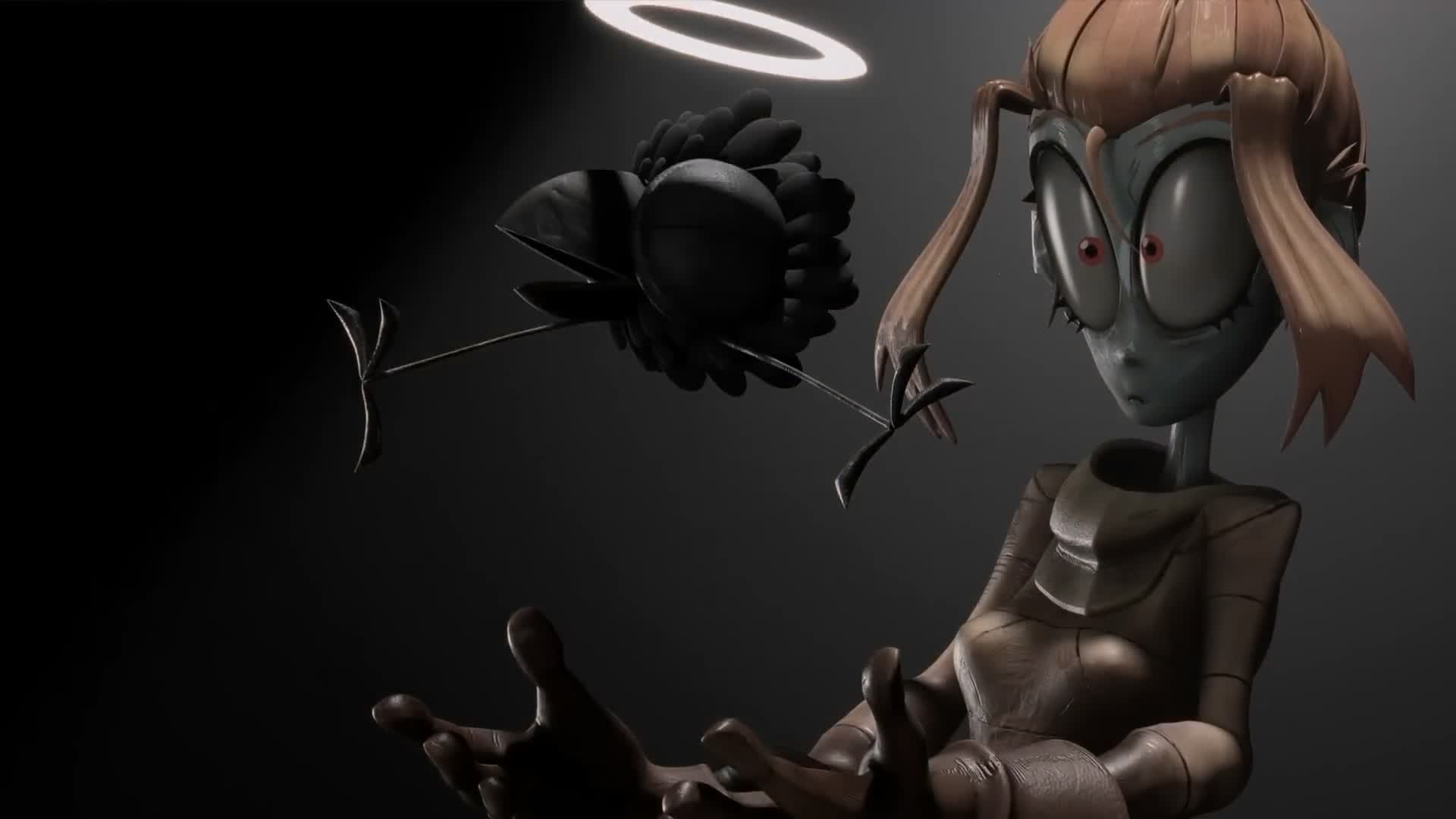 Open image: Melancholy Hill holds a small black bird with glowing halo and red
Onstage reveal that turns Mel’s stunt into a crisis centered on Ramiel.
Origin and first appearance of Ramiel
However many legends the Pilot invokes, viewers first meet Ramiel at street level—on a stage, under spotlights, during the Human Death Ceremony. Start with Mel’s plan to end the island’s panic: steal an ordinary angel’s egg from Paradise Lost, sell it as the prophesied “human egg,” and smash it in public to prove that nothing divine threatens the Rotlings. Then execution collides with the show’s own rules. As Mel raises the egg above a spike, the shell glows and cracks; a tiny feathered angel pushes free and blinks into the noise.
As a result, the crowd’s belief flips in a heartbeat. What was supposed to be theater becomes revelation, and the Smiling Dead’s carefully choreographed lie exposes them instead. Next, the Pilot uses the hatch to braid its timelines: the earlier heist through Paradise Lost, the Angel Mother’s fury, and Diligence’s containment orders resolve into a single problem cradled in Mel’s hands. Consequently, Ramiel’s first appearance is a structural hinge as much as a character introduction—it rewrites the ceremony, confirms Heaven’s ongoing fertility, and exposes just how fragile Ken the Butcher’s control over the city’s story really is.
Personality and key traits of Ramiel
| Trait | What it looks like |
|---|---|
| Instinct over intent | The chick behaves like a newborn animal—blinking, chirping, seeking warmth—not a speaking agent. Reactions read as reflex rather than choice, which makes other characters’ choices loom larger. |
| Visual innocence | Downy plumage, a compact body, and soft movements invite care. The design sets up a thematic trap: calling for cruelty against something this harmless exposes the speaker. |
| Catalyst presence | Even without lines, Ramiel redirects scenes. The hatch turns a crowd against Mel and Ken, and the mere act of being alive forces factions to reveal their priorities. |
| Symbolic gravity | The chick embodies Heaven’s claim on the island and the prophecy’s clock. Whether anyone keeps or discards it is less about parenting and more about who gets to define “order.” |
| Ambiguous bonding | Brief staging—how Mel holds the chick as the sequence winds down—hints at a protective impulse. The Pilot stops short of naming a guardian, leaving room for later decisions. |
Story arcs and development
The egg in Heaven (setup across the Pilot)
Start: Paradise Lost functions as a checkpoint to Heaven, and the Angel Mother presides over eggs that can summon storms of taloned angels. Then: Mel, desperate to defuse the Human Egg Prophecy, infiltrates with the Smiling Dead and steals an angel’s egg as a prop for her public deception. As a result: the Pilot plants Ramiel’s origin in plain sight: this is not a relic or a bomb; it is a life‑form under an angry matriarch’s watch. The theft makes the chick a contested object long before it hatches, justifying the Angel Mother’s pursuit and Diligence’s “contain the storm” orders that chew up the middle act.
The hatch at the Human Death Ceremony (inciting reveal)
Start: Mel sells confidence to the crowd—stab your own hand, spill “human” blood, and prove the prophecy false—and lifts the egg to kill it for effect. Then: shell fissures run like lightning; a small head breaks through; a haloed chick wriggles free into microphone feedback and gasps. As a result: the ceremony backfires. Rotlings who came for catharsis see proof of sacrilege instead, and the Smiling Dead’s lie exposes a living angel on their stage. The show uses that beat to flip audience allegiance and to relocate risk: a gag built on sleight of hand becomes a moral dilemma with feathers.
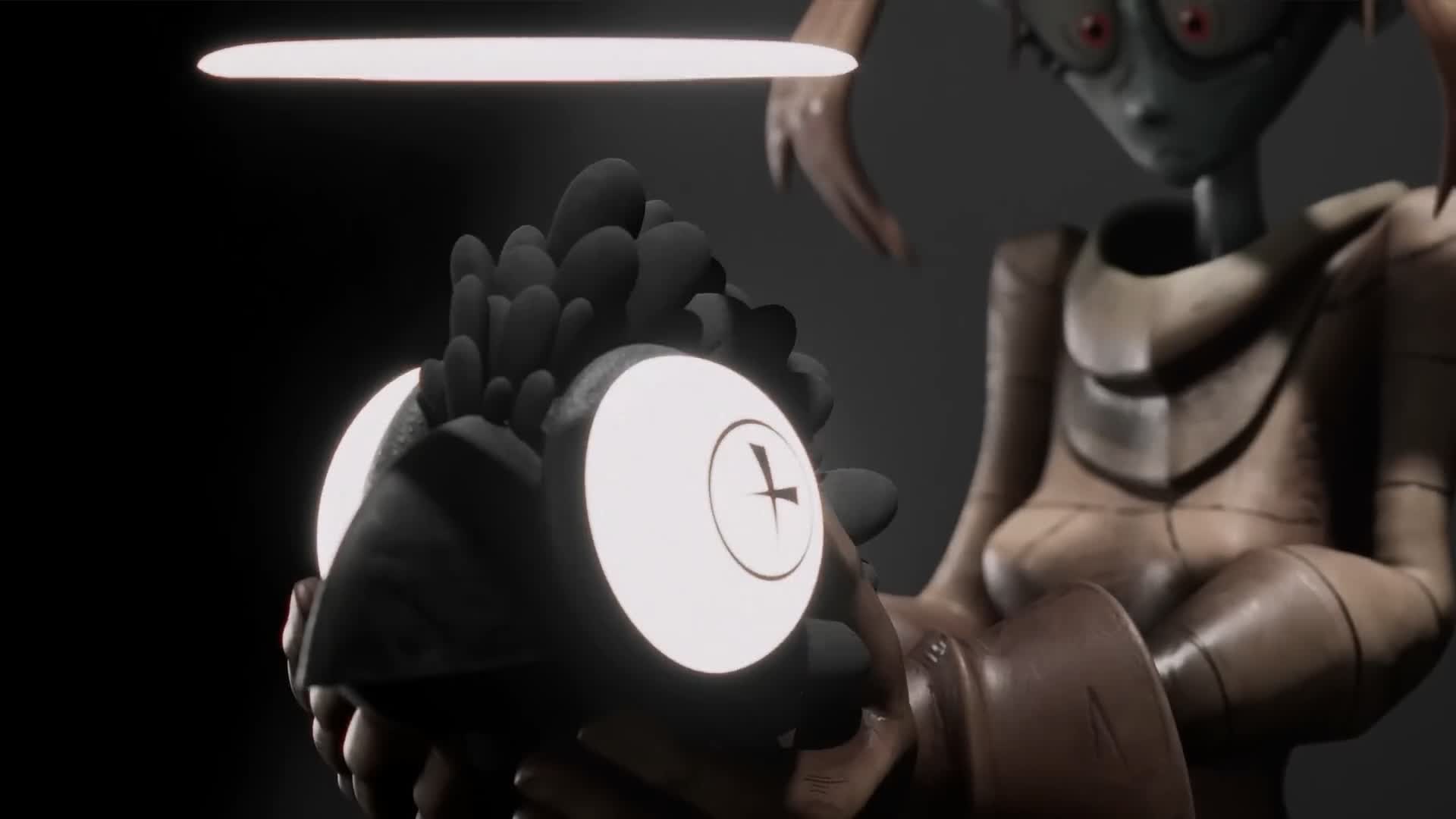 Open image: Melancholy Hill cradles a glowing-eyed black bird with a halo floating above
The moment Ramiel hatches and flips the Human Death Ceremony.
Immediate fallout (crowd turn and scramble)
Start: The crowd processes what it sees: not a human egg destroyed, but an angel newborn revealed. Then: faces harden; voices rise; the stage closes around Mel and Ken as accusations stack. Ramiel does nothing but exist, yet existence is enough to indict the conspirators. As a result: the Pilot underlines its thesis that symbols drive violence. Decisions are made around the chick rather than by it, and every faction’s talk about virtue or mercy is suddenly measurable against a creature that cannot defend itself.
Afterimage and future pressure (coda and expectations)
Start: The episode resolves its bigger fights elsewhere—Temperance falls in the lab, Diligence reassembles after the Angel storm, and the Smiling Dead escape with their lives. Then: closing shots and fan breakdowns highlight a quick image of Mel cradling the chick, a visual that suggests a temporary claim without declaring a long‑term fate. As a result: Ramiel exits the Pilot as a live problem rather than a closed case. Whether the Smiling Dead keep, ransom, or return the angel will shape how the island reads them—not just as liars or survivors, but as caretakers or kidnappers.
Relationships with other characters
| Character — role vs. Ramiel | Dynamics |
|---|---|
| Melancholy Hill — abductor and accidental guardian | She steals the egg as a prop and ends up holding a living chick. Her body language shifts from showmanship to protectiveness the moment Ramiel hatches, creating a conflict between plan and conscience. |
| Angel Mother — biological parent | The matriarch treats the egg as sacred family and mobilizes swarms to retrieve it. Ramiel’s existence strengthens Heaven’s claim and fuels the Mother’s fury toward Mel. |
| Ken the Butcher — pragmatic handler | He enables the hoax to keep his daughter safe. Once the chick appears, he pivots from spectacle manager to damage control, weighing optics, safety, and the cost of returning the “evidence.” |
| Diligence — containment authority | The Virtues’ leader doesn’t interact with the chick directly in the ceremony, yet its orders to “contain the storm” are the reason the egg—and later Ramiel—reach the stage at all. |
| Temperance — medical custodian (indirect) | The lab’s role in maintaining Heaven’s bodies frames the chick’s biology as a knowable system, not a miracle. Temperance’s fall removes the one “doctor” who might have argued for custody on clinical grounds. |
| The Smiling Dead — political owners | As a group, they turn Ramiel into liability or leverage depending on the minute. Their choices around the chick will signal whether they are merely grifters or a family with lines they won’t cross. |
Appearance, symbols, and recurring motifs of Ramiel
Visually, Ramiel reads as a fully feathered chick: round silhouette, short beak, bright, outward‑facing eyes, and a small, almost weightless presence in an adult’s hands. However, the design links clearly to the show’s older angels—halo, avian profile, and a “too‑soft” gait that contrasts with the vulture‑like bodies we see in storms. Next, the staging emphasizes scale. The chick occupies the center of a stage built for blood spectacle; microphones and banners dwarf it, and every tilt of Mel’s arms becomes choreography for how the island treats innocence. As a result, the baby angel turns recurring motifs—eggs, halos, ledgers—into a single image that tests the cast. The Smiling Dead speak about family; the Virtues speak about order; the Angel Mother speaks about prophecy; Ramiel makes each claim visible and immediate. Finally, the color language does quiet work: pale feathers against neon signage and greasepaint echo the series’ habit of putting tenderness inside industrial frames and asking who gets to keep it.
Fandom and alternative names for Ramiel
- Ramiel — name attached to the angel chick via official merchandise and community materials.
- Angel Chick — generic shorthand used in recaps and posts.
- Baby Angel — the most common casual label across fan discussions.
- Bobbert — early fandom nickname before the Ramiel label circulated.
- Mascot — tongue‑in‑cheek tag for the chick’s cuteness and plot portability.
- Rammy — affectionate diminutive seen in threads and captions.
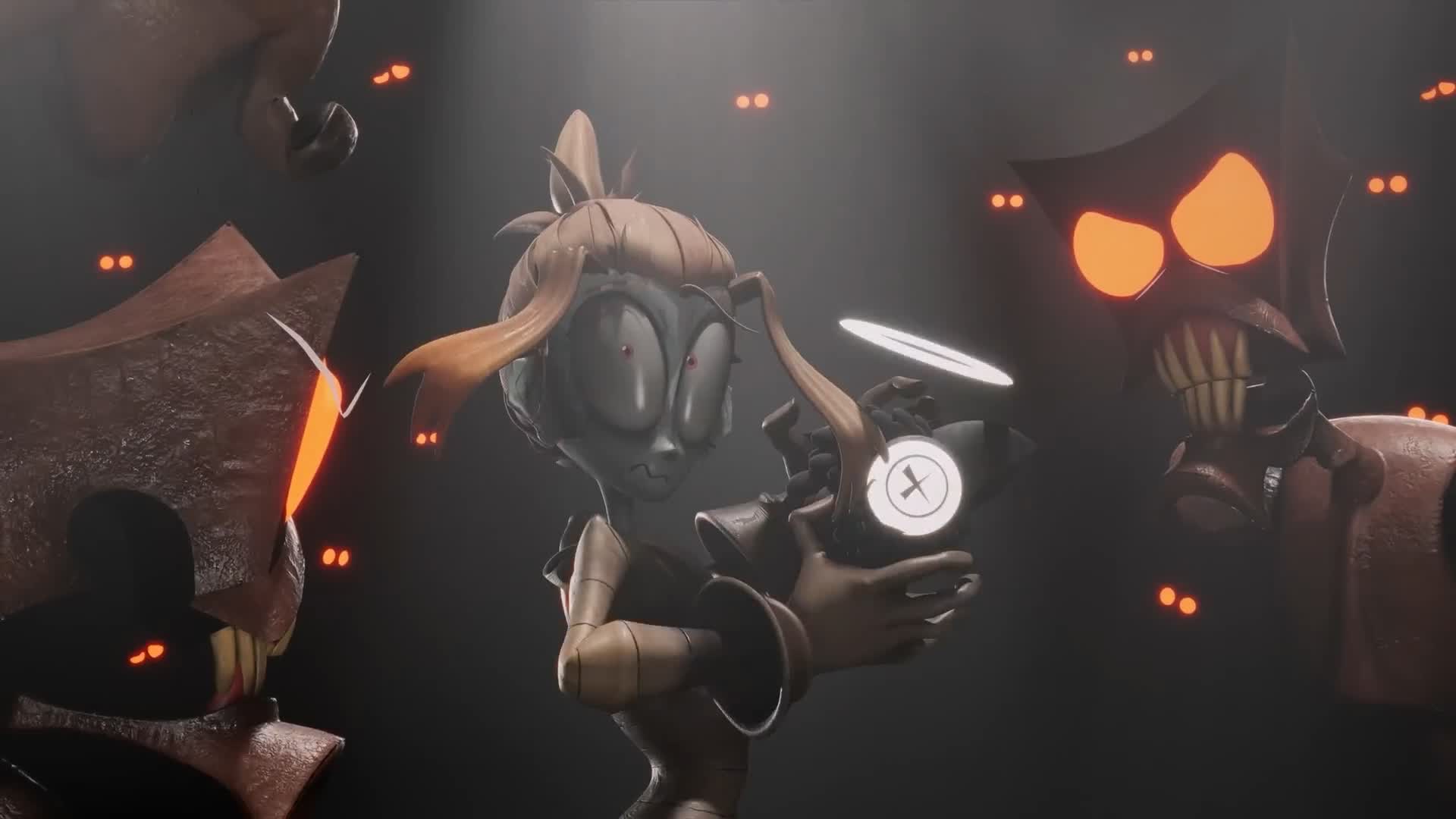 Open image: Melancholy Hill protects the glowing bird while surrounded by grinning demons with
Interesting details and quotes about Ramiel
- Name trail: the chick’s name surfaced through an official keychain description before being shortened in storefront copy; the original product labeling referenced “Mel and Ramiel.”
- On‑screen status: first seen hatching during the Human Death Ceremony in the Pilot (April 18, 2025).
- Design lineage: angels hatch as fully feathered chicks; as they mature, their bodies skew lanky and vulture‑like, with halos and stark, white eyes.
- Story function: the hatch converts Mel’s anti‑prophecy pageant into a confession, flipping a cheering crowd into a mob and putting the family’s ethics on camera.
- End‑sequence glance: close watchers point out a fleeting shot of Mel cradling the chick as the Pilot winds down, a visual tease for custody questions to come.
- Name meaning: in religious tradition, “Ramiel” is often glossed as “Thunder of God,” which fits the show’s habit of repurposing angelic names for thematic charge.
- No credited voice: the character communicates through chirps and quiet movement; no distinct performer is listed for vocalizations in the Pilot.
- Quote (Angel Mother):
You… belong to THE ANGELS!
— a line that frames the chick not as a prop but as kin to be reclaimed. - Quote (command atmosphere):
Contain the storm!
— the language that indirectly shepherds the egg to a stage where it will hatch in public.
Crowd pressure rises as factions decide what to do with Ramiel.