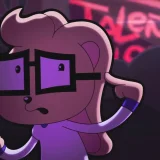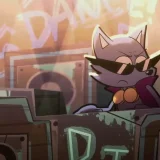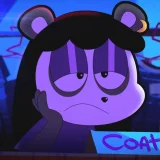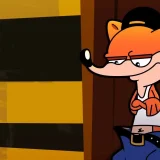
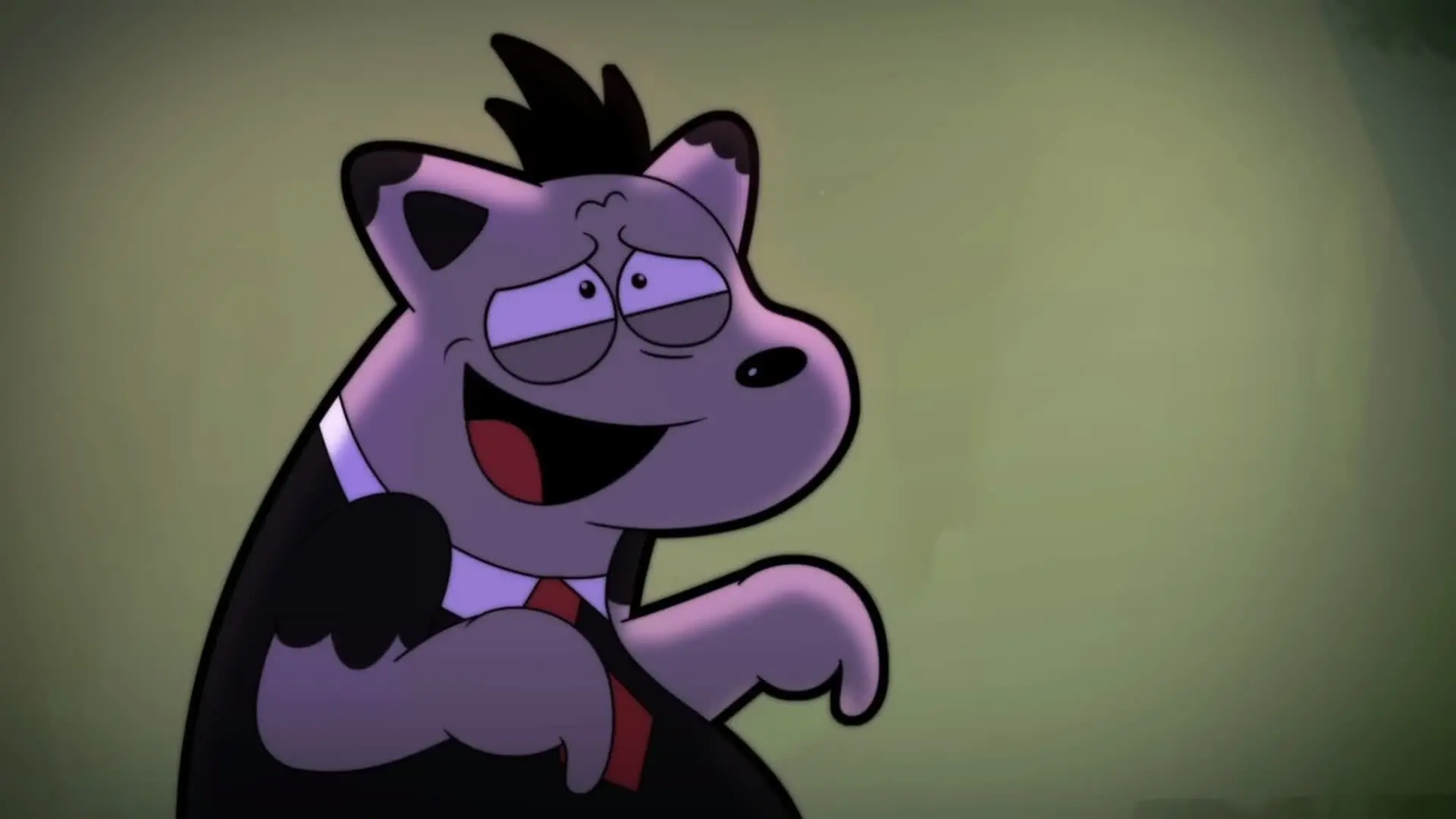
Dead Ferret is a dark-comic casualty in Catching Up. However, despite appearing for only a few seconds, the character instantly calibrates the pilot’s tone by showing how ruthlessly the venue enforces its rules. Therefore, the moment at the club entrance–where a bouncer strangles him after a footwear violation–functions as a thesis statement for the night: small infractions can trigger outsized consequences, and everyone inside understands that. Next, the shock lands before our leads even reach the dance floor, which turns every later stare, joke, and silence into something a little tenser. As a result, the cameo does double duty: it establishes the Bouncers as credible threats and primes the audience to read Rob and Clay’s nerves as reasonable, not merely neurotic. Finally, because the role is credited (voiced by Jim Caddick), the series elevates a background gag into a named presence–proof that even one beat can leave a footprint in this show’s worldbuilding.
Origin and first appearance
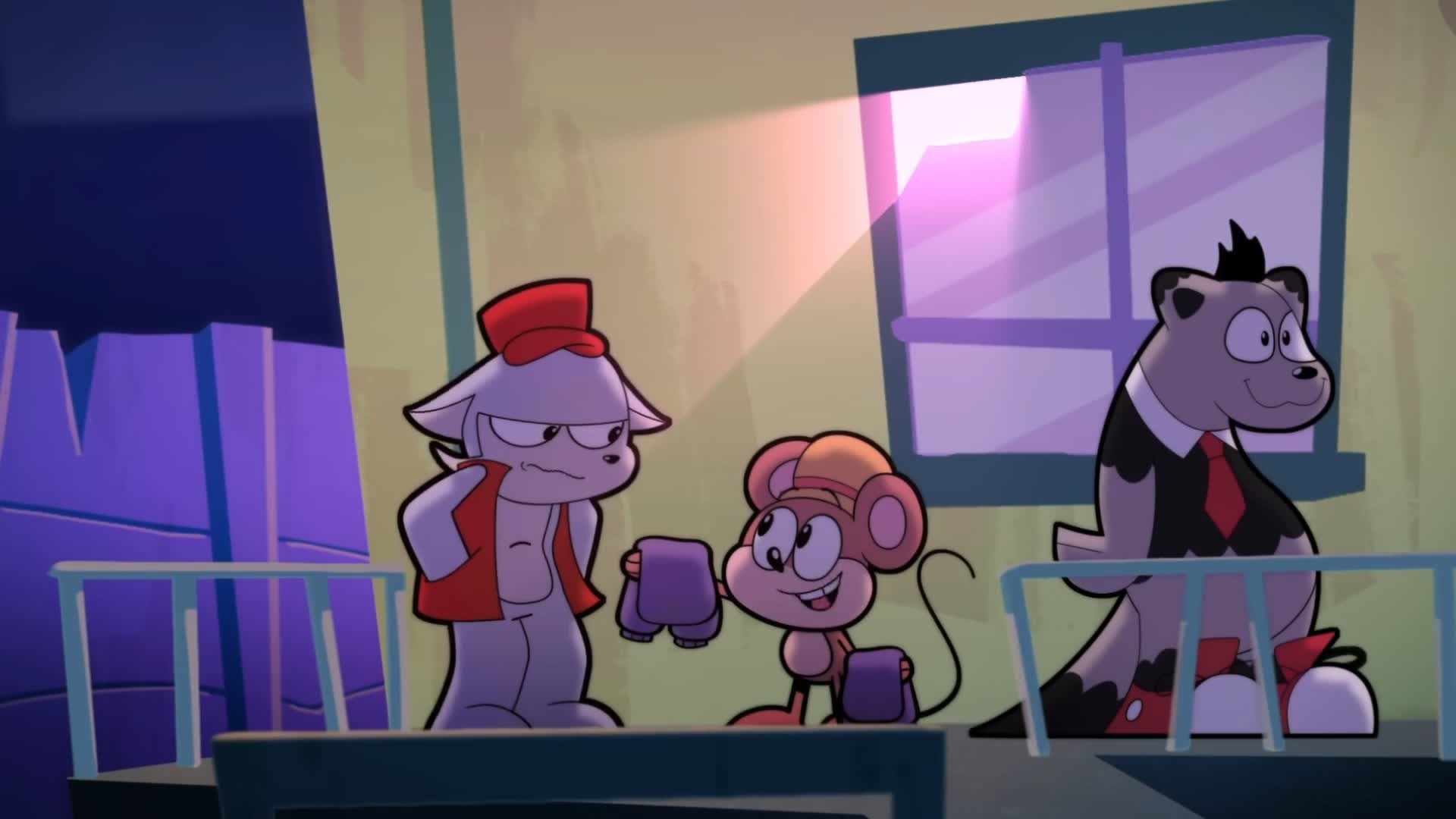
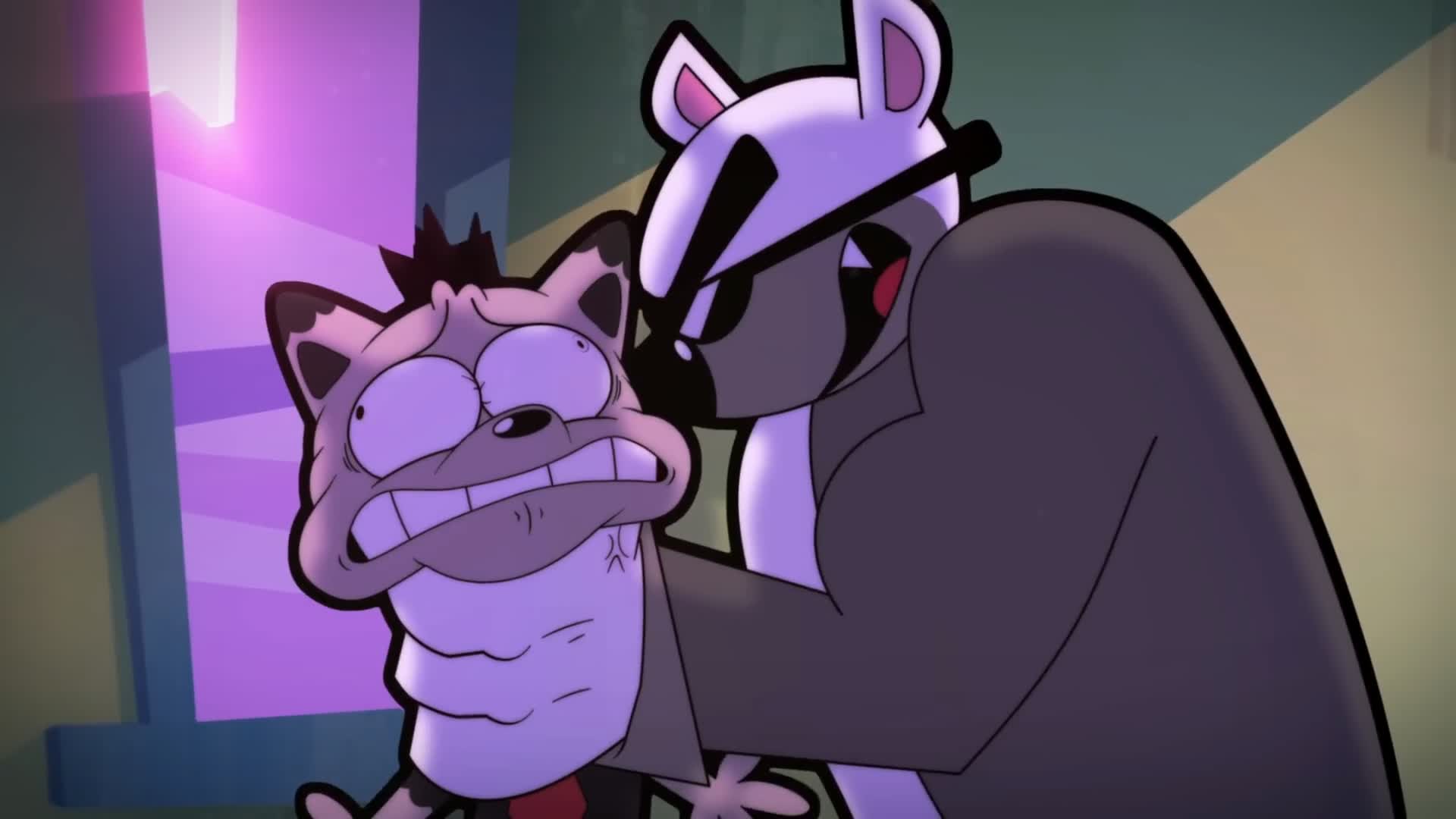
However you frame the pilot, Dead Ferret enters at the very threshold of “Clubbing,” the community-center event that pretends to be a nightclub. Then, as the line inches forward, posted rules and an Outside Bouncer turn entrance policy into spectacle: trainers (sneakers) aren’t allowed because they scuff the floor. The ferret arrives wearing the wrong shoes and tries to plead his case–he says they’re new–but the exchange ends abruptly when the bouncer clamps a hand around his neck and strangles him on the spot. Consequently, the queue learns what “no exceptions” really means. Next, the camera moves on without lingering, which keeps the beat quick and cold; the horror is blunt, the message unmistakable, and the night continues as if this is normal. Meanwhile, Rob and Clay approach the door with fresh dread, a reaction the show later echoes in a gallery caption that notes they’re “terrified of the bouncer that killed Dead Ferret.” Finally, when credits and cast lists name the role explicitly, the cameo graduates from anonymous gag to a small but codified part of the pilot’s mythology, cementing how the entrance scene frames everything that follows.
Personality and key traits
| Trait | Description |
|---|---|
| One-beat victim | The character exists to embody consequences at the door. The pilot gives him no arc or lines beyond a brief protest about his shoes. |
| Tonal barometer | His death tells viewers the club is not a harmless school dance. The outside world may be joking; inside, enforcement is literal. |
| Ground-level realism | Nothing supernatural or slapstick softens the violence. The matter-of-fact staging is what makes the joke land as jet-black humor. |
| Worldbuilding pivot | By putting the shock at the threshold, the story establishes the venue’s stakes before any flirtations or mix-ups begin. |
| Credited cameo | He’s listed by role and voiced by Jim Caddick, which turns a fleeting image into a proper entry in the show’s character index. |
Story arcs and development
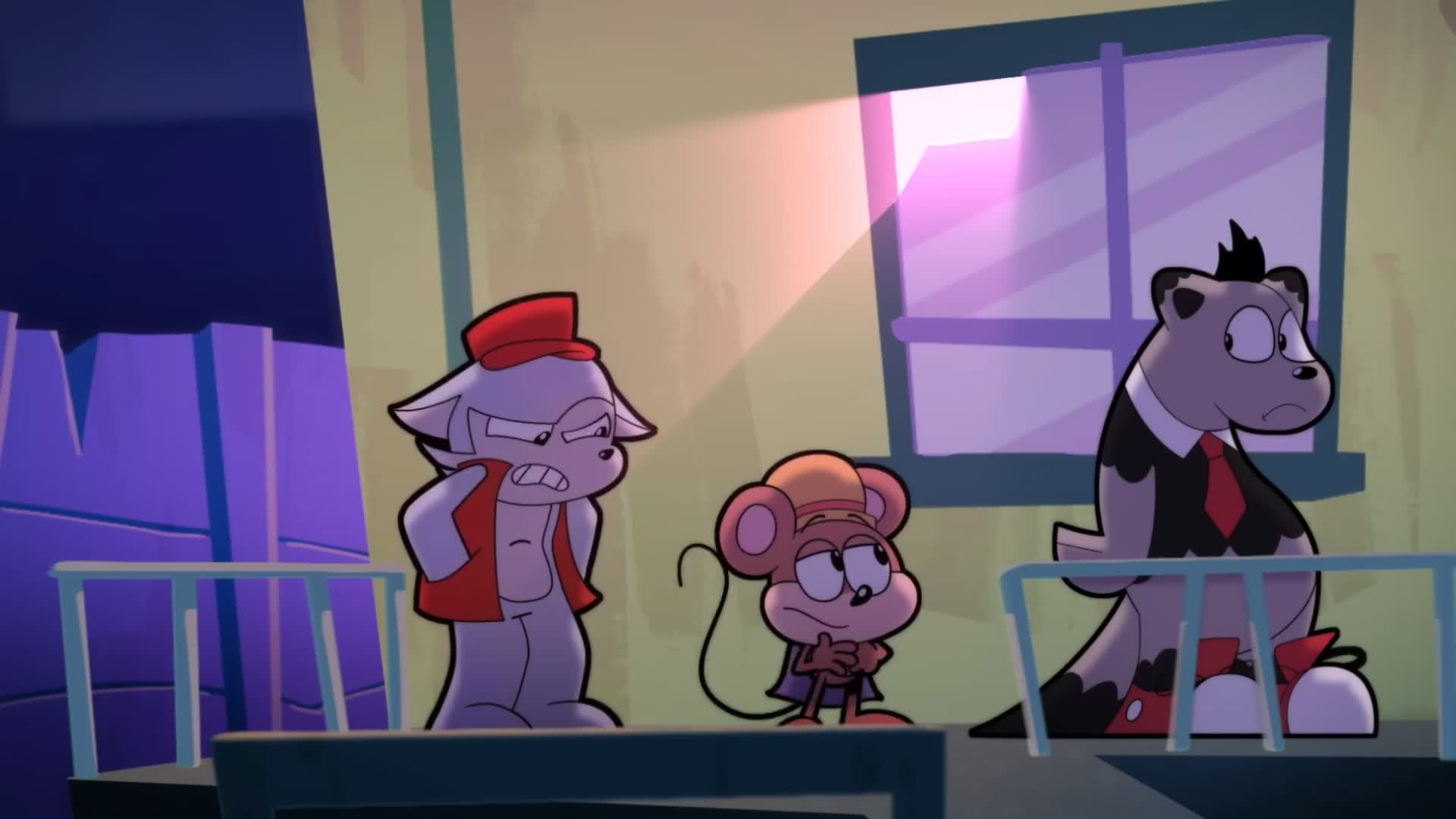
Arc 1 – The footwear rule and the chokehold. Start: The crowd shuffles toward the LUUB entrance, where an Outside Bouncer recites and enforces house rules about trainers scraping the floor. Then: Dead Ferret arrives in sneakers, claims they’re new, and gets denied. The argument ends when the bouncer lifts him by the neck and strangles him, a cut-and-dry act that resets the line’s energy from chatty to silent. As a result: The show plants its flag: comedy will live next door to genuine threat. The door scene foreshadows how quickly later interactions will flip from playful to punitive.
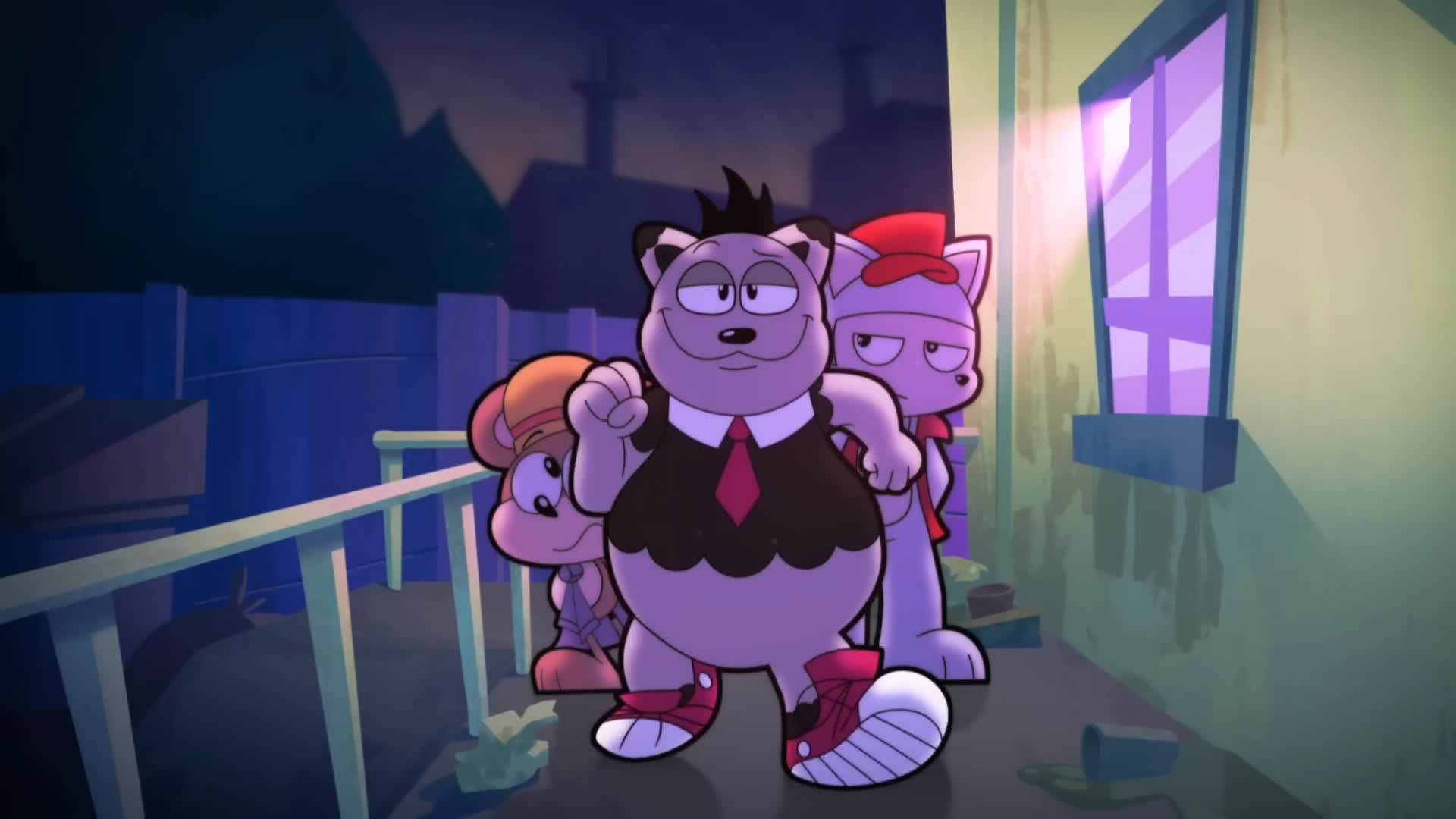
Arc 2 – Fear ripple through the leads. Start: With the entrance “lesson” delivered, Rob and Clay step into the frame of that same bouncer’s gaze. Then: They swallow hard, and the club’s fun façade becomes a test of nerve; every misstep could now be public and costly. The pilot later underlines this by showing the pair rattled around security, and by memorializing their fear in image galleries that tie their anxiety back to the death. As a result: The cameo’s impact expands well beyond its seconds of screen time, giving psychological context to Clay’s caution and Rob’s try-hard politeness once they’re inside.
Arc 3 – From gag to credited lore. Start: On first pass, the ferret reads like an anonymous extra sacrificed to a one-off punchline. Then: Credits and databases list “Dead Ferret,” and the actor credit clarifies that the team treated the bit seriously enough to cast and label it. As a result: A throwaway shock becomes part of the show’s codified world. Fans trade screenshots, and the name serves as shorthand for the entire entrance sequence’s tone–rule-obsessed, deadpan, and mean in a way that dares you to laugh.
Arc 4 – Echoes inside the venue. Start: Once the boys clear security, inside bouncers and a strict vibe continue the theme. Then: A later hard stop of the music by DJ Mcnulty during Clay’s outburst mirrors the door’s suddenness: authority here cuts sound or breath without ceremony. As a result: The pilot’s structure feels cohesive. The first violence at the threshold and the later silence on the dance floor are two versions of the same rule–step out of line, and the room removes you from the rhythm.
Relationships with other characters
| Name | Role vs. Dead Ferret | Dynamics |
|---|---|---|
| Bouncers (Outside) | Killer / enforcer | He denies entry for trainers and strangles the ferret, establishing the venue’s zero-tolerance approach as more than bluster. |
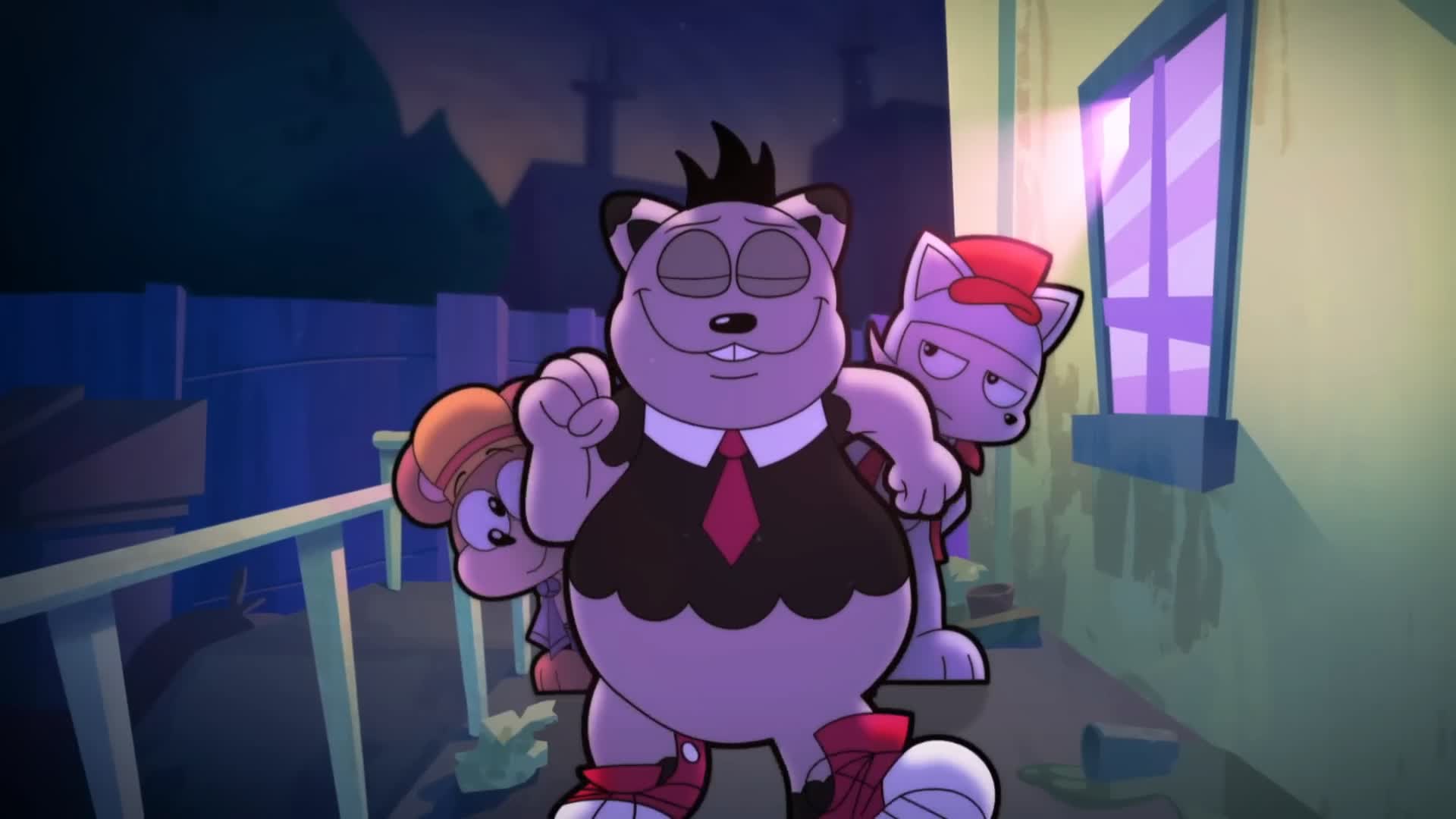
| Rob | Shaken observer (aftermath) | Whether he sees the act directly or hears about it, his apprehension at the door and inside reads in light of the entrance shock. |
| Clay | Shaken observer (aftermath) | Clay’s guarded body language near security, later noted in galleries, tracks with knowing what happened to the ferret outside. |
| DJ Mcnulty | Parallel authority | He never interacts with the ferret, yet his on-booth power to halt a scene inside mirrors the bouncer’s hard enforcement at the door. |
| Club crowd | Bystanders | Brief silence and tighter postures after the strangling communicate how the line internalizes the rule: compliance over argument. |
| Raccoon & Ferret (Clare) | Contrast / not the same character | The antagonistic duo inside includes a ferret, but that character is distinct from Dead Ferret. The name overlap fuels occasional confusion. |
| Bouncers (Inside) | Institutional muscle | They continue the policy that killed him, turning the club into a place where authority shapes behavior moment by moment. |
Appearance, symbols, and recurring motifs
Visually, Dead Ferret reads in profile more than portrait: a slim mustelid silhouette, narrow snout, and a smaller frame that makes the bouncer’s hands look enormous by comparison. Then, the only wardrobe detail that matters is footwear–trainers, the literal symbol of his mistake. Therefore, the scene hinges on contrast: a posted rule about preserving the floor versus a kid who insists his sneakers are “new,” an authority figure whose body fills the doorway versus a victim whose shoes define him. Next, the strangling is staged flatly, without gore or slow motion, which turns the moment into gallows humor; the cut away treats the death as policy, not drama. As a result, the image lingers as a motif whenever the episode invokes enforcement. You don’t need to see him again to feel his absence; the rules have a body count now, and every character inside behaves as if they remember it.
Fandom and alternative names
- Dead Ferret
- Entrance Ferret
- Sneaker Ferret
- Trainer Ferret
- Outside-Door Ferret
- Bouncer’s Victim (ferret)
- No-Trainers Ferret
Interesting details and quotes
- The role is credited as “Dead Ferret” and voiced by Jim Caddick.
- The death occurs at the LUUB entrance under the “no trainers” policy that prioritizes the gym floor over individual pleas.
- An Outside Bouncer is described as disliking trainers; the biography notes he kills the ferret after denying entry.
- Image galleries later caption Rob and Clay as “terrified of the bouncer that killed Dead Ferret,” tying the fear to this moment.
- The pilot “Clubbing” premiered on September 8, 2024, and cements the show’s mix of slice-of-life awkwardness with hard edges.
- The character is distinct from the “Raccoon & Ferret” duo featured inside the venue; the overlap in species causes fandom mix-ups.
- The scene’s blunt staging–no speechifying, just enforcement–foreshadows later authority moves, including music cuts that freeze the room.
Trainers aren’t allowed.
– the gist of the bouncer’s reasoning at the door.Spoiler: They’re new trainers.
– the ferret’s brief plea before the chokehold, a line that makes the outcome feel even harsher.- As a result, “Dead Ferret” functions as a tiny but potent warning label for the episode: read the signs, or the signs will read you.