Makarov is a minor yet memorable worker-drone character from the sci-fi horror web series Murder Drones, created and directed by Liam Vickers and produced by Glitch Productions. The show follows worker drones and predatory “murder drones” after humanity abandons their icy exoplanet colony.
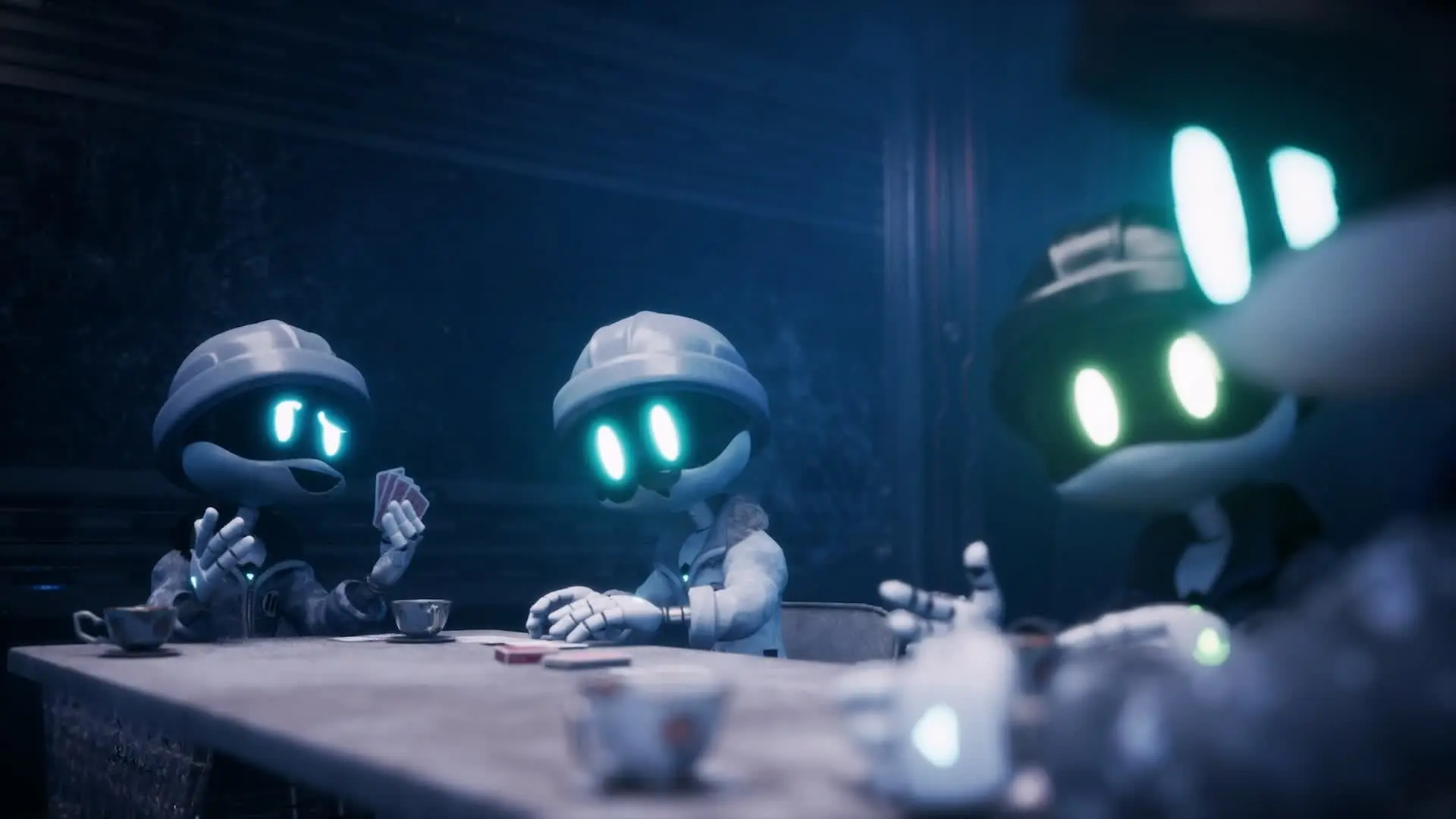
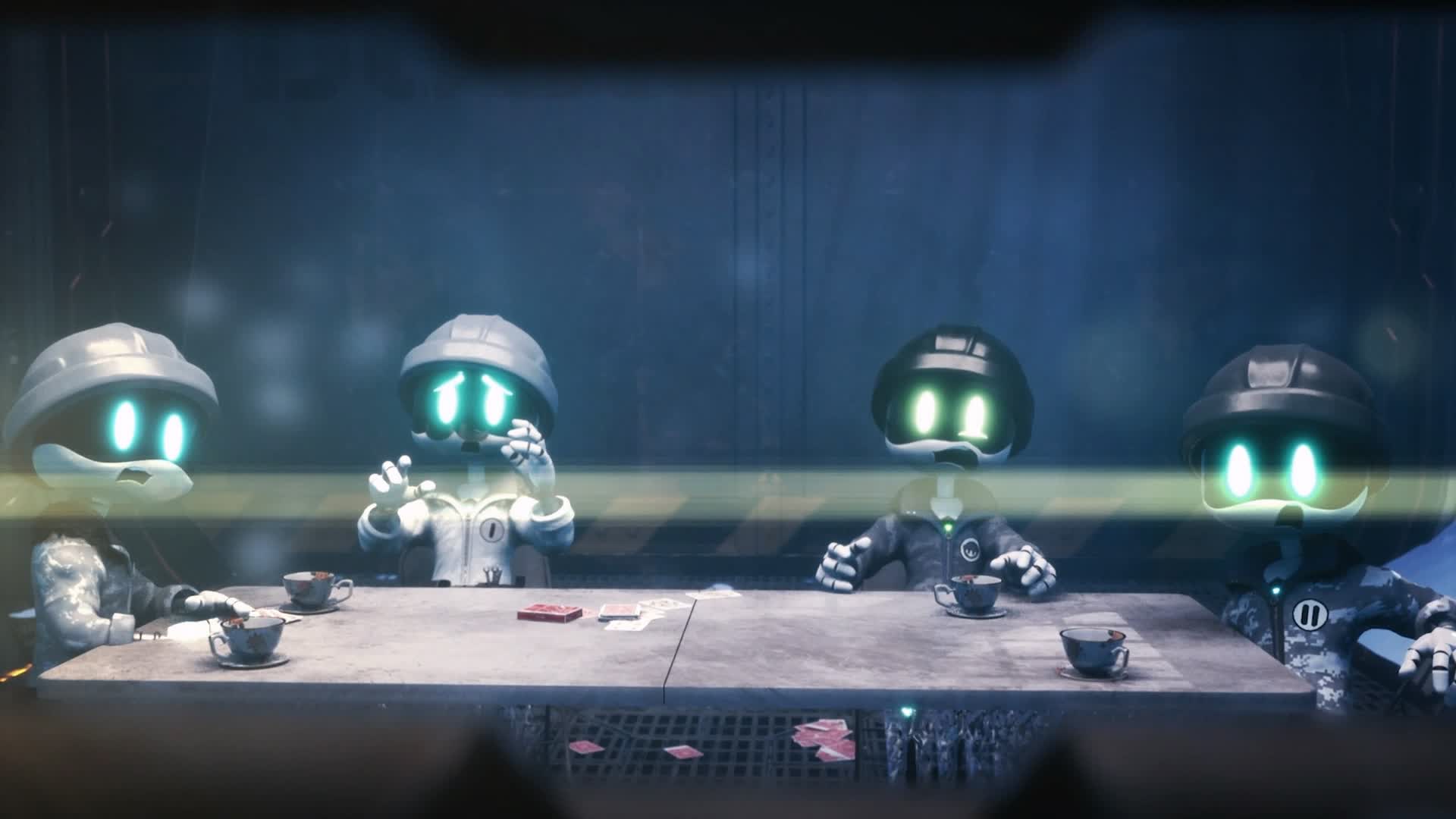
Despite having only one on-screen appearance, this guard from the colony’s Worker Defense Force has become a small fan favorite. His worn-out deck of cards, fake mustache, and easygoing banter with Uzi and Khan capture the everyday life of the colony just before disaster strikes.
Quick overview of Makarov
Makarov is a male worker drone who serves as a guard at the entrance of the worker colony on Copper-9. He’s affiliated with the Worker Defense Force, the group tasked with keeping disassembly drones–known in-universe as “murder drones”–out of the settlement.
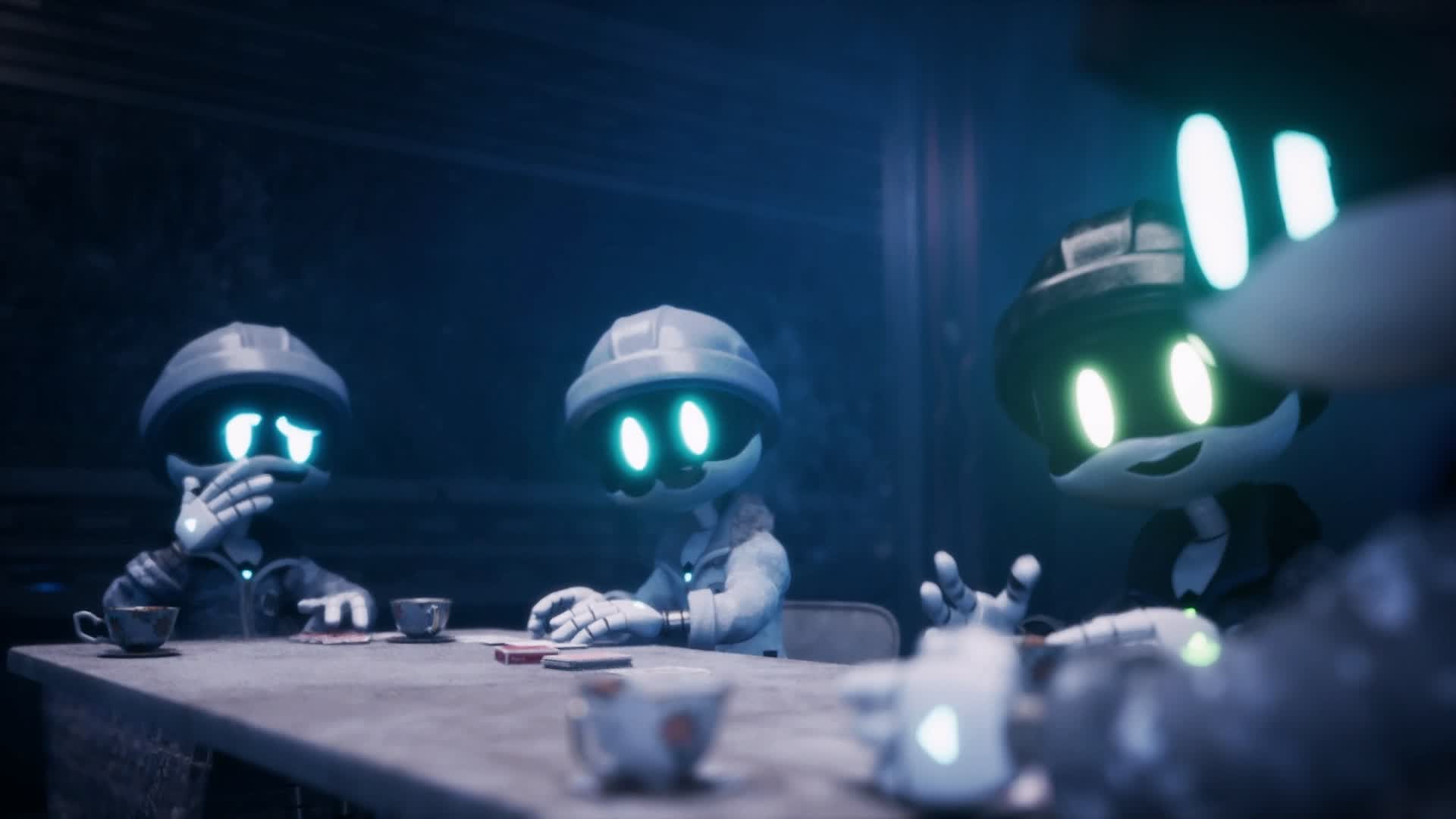
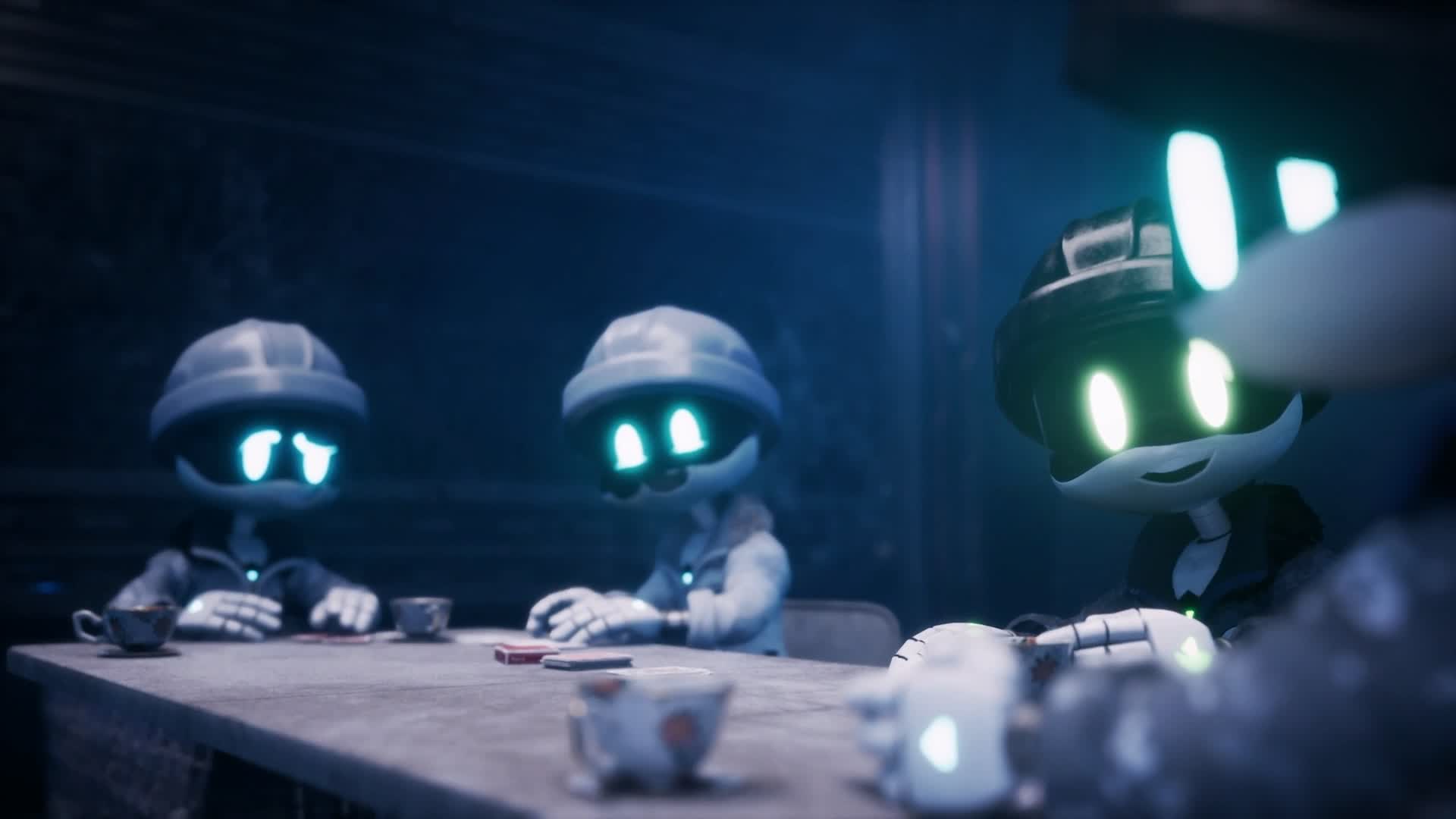
When viewers first meet him in the pilot episode, he’s off-duty in spirit, playing cards with his fellow guards and joking about how worn out the deck has become. That relaxed, almost slice-of-life moment helps ground the series in mundane worries before the horror kicks in.
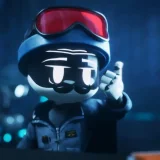
He has neon cyan eyes, a snow camouflage coat, a construction helmet, sturdy boots, and a fake black mustache that matches Khan Doorman’s–visually tying him to the colony’s older working generation.
Although his time on screen is brief and his fate is grim, Makarov illustrates how vulnerable ordinary worker drones are in a universe dominated by megacorporations, nanite monsters, and overpowered killer robots.
Origin and first appearance
Makarov debuts in the pilot episode of Murder Drones, originally released online on 29 October 2021 as the opening chapter of the series’ single eight-episode season.
The episode introduces Copper-9, a frozen exoplanet where worker drones keep the mining operation running even after their human masters are long gone. The company that built them responds by sending disassembly drones–sleek, winged robots programmed to wipe out the surviving workers.
Within this setup, Makarov appears at the entrance of the worker colony, stationed at “Door 1” alongside his colleagues Todd, Braxton, and another unnamed guard. He works under Khan Doorman, who designed the colony’s heavy blast doors and leads the local defense force.
We see Makarov in a moment of downtime. As Uzi and Khan argue about whether hiding behind doors is cowardly, he chimes in from the card table, asking for a new pack because the current one is literally worn blank. His casual greeting to Uzi frames him as a familiar adult presence in her life–someone who knows her well enough to greet her mid-complaint.
That lighthearted beat is intentional: it underscores how the Worker Defense Force treats the killer drones as a distant but manageable threat. The sudden move from friendly banter to chaos during the breach turns Makarov’s scene into a snapshot of “normal life” just before everything goes wrong.
Personality and key traits
Emotional outlook: relaxed until danger hits
Emotionally, Makarov comes across as laid-back and comfortable in his role. Playing cards on duty and joking about the deck being worn out shows a guard who’s used to long, uneventful shifts.
His tone with Uzi is friendly and familiar, suggesting he doesn’t see the kids of the colony as a burden or distraction. Even when alarms sound and doors slam, he’s more startled than panicked, reacting like someone who didn’t really expect the worst-case scenario to arrive on his watch.
That contrast–easygoing calm, then sudden fear–mirrors the broader emotional rhythm of Murder Drones itself, which alternates between comedy and horror without much warning.
Morals and values: loyalty to the colony
Morally, Makarov is portrayed as loyal and community-oriented. He’s part of the Worker Defense Force, which is essentially the colony’s volunteer militia. These drones are not elite soldiers; they’re workers who decided to stand between their neighbors and the disassembly drones.
His camaraderie with Todd, Braxton, and the other guard signals a tight-knit adult circle that’s accepted the job of watching the doors so younger drones like Uzi can go to school and dream of doing something more heroic. The way he casually involves Khan (“Can you grab a fresh pack?”) reads like someone comfortable relying on his colleagues, reinforcing that sense of shared responsibility.
Even when the breach happens, Makarov’s instinct is to run deeper into the colony, drawing attention away from the entrance. That’s not heroic in a flashy way, but it fits a guard whose first priority is keeping the community alive.
Skills and role-specific talents
Makarov’s skills are grounded, practical, and consistent with his job as a worker-drone guard. He’s trusted with monitoring one of the main blast doors, which implies familiarity with the colony’s security systems and the Door Master Key device Uzi uses.
His winterized coat and helmet show he’s acclimated to working near the unheated surface, where the icy winds of Copper-9 constantly blow in when the doors open. The boots and layered clothing emphasize mobility and readiness rather than heavy armor or advanced weapons.
We also see that Makarov and his fellow guards are comfortable handling rifles and coordinating around the entrance corridor, even if their training can’t match the speed and ferocity of a disassembly drone like N. Their shortcomings highlight just how overwhelming the attack is, rather than any personal incompetence.
Story arcs and development
Guard duty at Door 1
Makarov’s short arc begins with his quiet shift at Door 1. He’s playing cards, swapping jokes, and keeping an eye on the blast doors along with Todd, Braxton, and the unnamed guard.
Spoiler: Once Uzi temporarily opens the door with the master key, N manages to force it the rest of the way. What started as an ordinary guard shift instantly becomes a life-and-death situation, and Makarov’s relaxed banter is replaced by a desperate scramble for survival.
The Disassembly Drone breach
As the breach unfolds, Makarov and his fellow guards retreat down the entrance hallway while N pursues them. Their rifles and doors, designed to deter threats, turn out to be almost meaningless against a flying killer robot armed with nanite-acid claws and weaponized wings.
Spoiler: Canonical summaries describe N attacking and killing the entire guard team, including Makarov, after following Uzi back into the colony. Interestingly, trivia notes that his exact destruction occurs off-screen because of an animation oversight: one shot has him present, and the next shows another guard in his place with no body in between. That technical blip has become a tiny lore oddity fans enjoy pointing out.
Aftermath and narrative impact
Makarov doesn’t return after the pilot, but his absence helps sell how high the stakes are for Copper-9’s workers. A familiar adult figure is simply gone, replaced by blood-stained snow, shattered helmets, and a creeping sense that no one at the colony is truly safe.
Spoiler: His death is part of the emotional pressure that pushes Khan to cling even harder to his “hide behind doors” strategy, and it foreshadows the many casualties Uzi’s choices will cause later in the season. In that sense, Makarov’s arc is less about his own growth and more about how the show uses him to deepen the tragedy of the colony’s situation.
Relationships with other characters
Uzi Doorman
Makarov’s brief interaction with Uzi paints him as one of the adults she’s grown up around. He’s comfortable enough to greet her casually mid-sentence and doesn’t treat her disdain for the Worker Defense Force as a real threat. That dynamic suggests a neighborly relationship–he’s “the guard at the door” rather than a strict authority figure.
Khan Doorman
Khan and Makarov share both a fake mustache design and a workplace. They’re colleagues within the Worker Defense Force, with Khan functioning as engineer-turned-leader and Makarov as one of the rank-and-file guards who actually stand watch at the doors.
Their card-game banter shows easy familiarity–Makarov feels free to ask Khan for a new deck, and Khan responds with the gently defensive humor of a boss who’d rather talk about anything than the colony’s real odds of survival.
Todd and Braxton
Todd and Braxton are the other named guards at Door 1, forming a three-person card squad with Makarov. Together, they embody the “blue-collar side” of Copper-9: everyday drones who clock in, share hobbies, and happen to be the first ones on the chopping block when a disassembly drone slips through.
Their shared fate underscores how equalizing the threat is–whether you’re more serious like Todd or more comedic like Braxton and Makarov, the difference doesn’t matter much against N.
The Worker Defense Force and other guards
Beyond specific names, Makarov’s strongest “relationship” is with the Worker Defense Force itself. As a guard, he represents the part of the colony that still believes in physical barriers, guns, and routine patrols as a solution to the disassembly drones.
His interactions with the unnamed guard at Door 1 show that the WDF is more like a workplace friend group than a regimented army. That informality makes their eventual defeat feel sadder and more human–these aren’t faceless NPCs but coworkers with quirks and card games.
Serial Designation N
N is the one character whose path directly intersects with Makarov in a lethal way. The pilot frames N as an awkward, emotionally conflicted killer, but from the guards’ perspective he’s simply a nightmare predator crashing their quiet hallway.
Makarov never gets a meaningful dialogue with N; their “relationship” is purely that of prey and hunter. That absence of personal connection reinforces the horror: some characters–like Uzi–get the chance to talk to N and change him. Others, like this guard, never get that luxury.
Appearance, symbols, and recurring motifs
Visually, Makarov follows the standard worker-drone body plan: white chassis, segmented mechanical limbs, and a flat, dark faceplate displaying expressive neon eyes. His eyes are cyan, a color associated throughout the series with worker-drones’ interface and life-status.
On top of this base, he wears a snow camouflage coat, work boots, and a white construction helmet–gear that makes sense for a guard who has to stand near exterior doors in a blizzard-blasted environment. The snow pattern and heavy coat anchor him firmly in the icy setting of Copper-9.
His most distinctive feature is the fake black mustache, which mirrors Khan’s and hints at a shared generational aesthetic among older worker drones. It reads as an attempt to copy human masculine fashion, turning a simple gag into a tiny visual reminder that these robots are mimicking a species that has already abandoned them.
The card deck is another key motif. In a show full of nanites and eldritch glitches, Makarov fussing about worn-out playing cards is completely mundane–and that’s the point. The cards stand for routine, boredom, and the illusion that life can go on as usual. When the colony is breached, those cards become one of many background details reminding viewers of everything that’s been lost.
Interesting details and quotes
- Makarov appears only in the pilot, but production notes still list a full roster of international voice actors for him–from Cameron Gavinski in English to Benjamin Létard (French), Alexander Müller (German), Márk Rozsnyói (Hungarian), Roberto Leite (Brazilian Portuguese), Vladislav Lyubimov (Russian), Carlos Berenguer (Latin American Spanish), Anatoliy Gerasimenko (Ukrainian), and Paweł Pawlikowski (Polish).
- His name likely references the Makarov pistol, mirroring how Uzi’s name references the Uzi submachine gun–part of a broader pattern where several characters carry gun-themed names.
- Because of an animation quirk, his exact moment of destruction isn’t clearly shown on screen: one frame he’s there, the next his position is occupied by another guard. Fans often point this out as an example of how tight the production schedule must have been.
- His card-game line is one of the most quoted bits from the pilot:
“Khan, can you grab a fresh pack? We play cards so much the numbers have faded.”
- That same scene gives him another charmingly ordinary moment when he notices the protagonist:
“Oh, hey, Uzi!”
- Makarov’s fake mustache is not just a gag; it visually links him to Khan and to certain human fashion cues, strengthening the series’ theme of worker drones imitating the culture of the species that discarded them.
- Some fan interpretations label him a “scapegoat victim” archetype–someone who does nothing wrong but still pays the price for larger cosmic and corporate forces, reinforcing the show’s critique of expendable workers.
- Even though he’s a background character, his presence enriches the pilot’s atmosphere. By showing who’s standing guard at the doors and what their lives look like off-duty, the series makes the later chaos feel less abstract and more personal.