
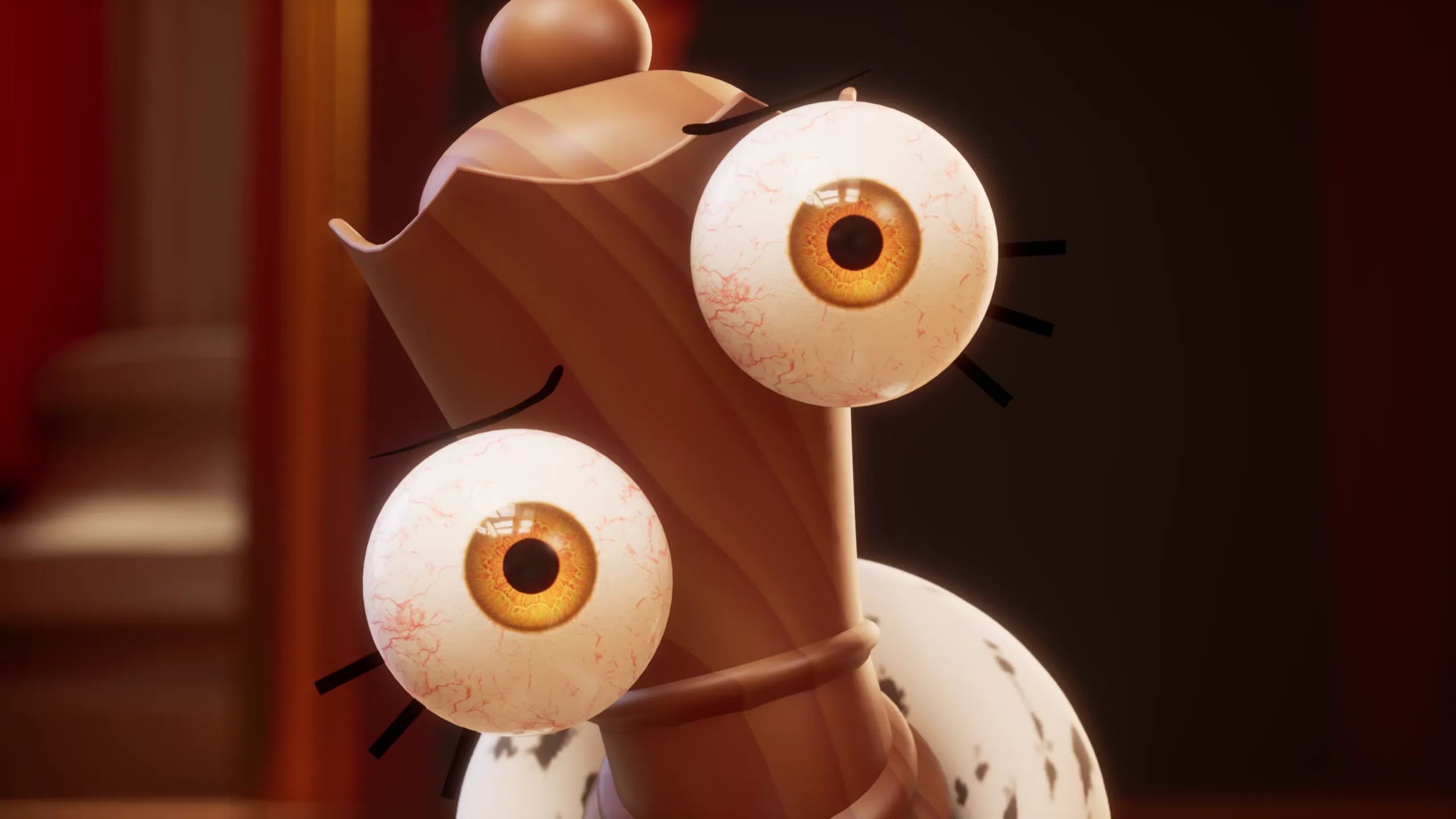
Queenie in The Amazing Digital Circus: The Story of Kinger’s Wife
Queenie is a former member of the Digital Circus, Kinger’s wife, and the digital copy of a woman named Destiny Best. She was part of the first group of people whose digital versions entered the Circus, but long before Pomni arrived, Queenie lost her stability and abstracted. In the original English version, Queenie is voiced by Cassie Ewulu.
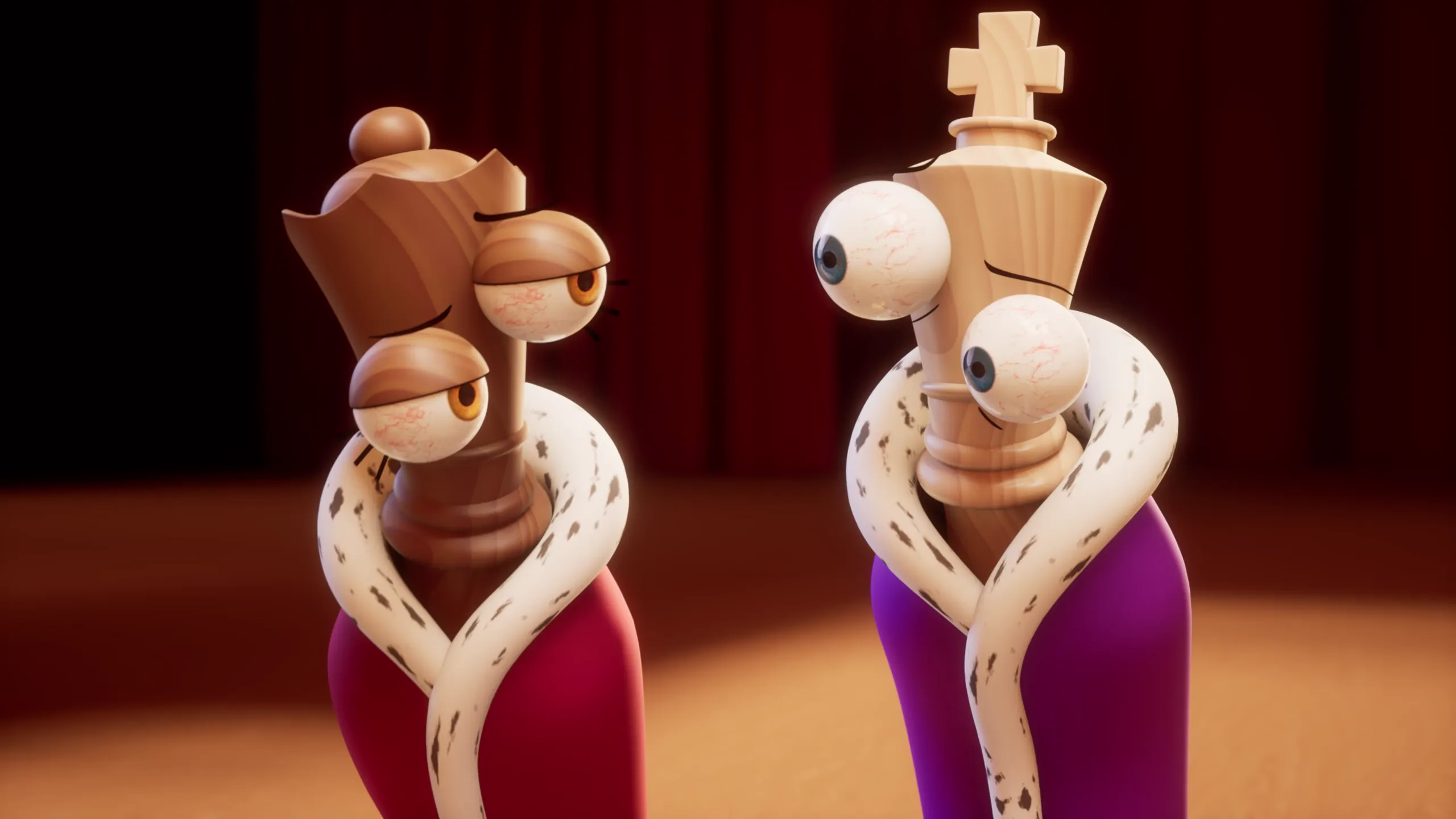
Despite her limited screen time, Queenie holds one of the most important places in the emotional story of The Amazing Digital Circus. Through her, the series explores Kinger’s past, the nature of abstraction, and the unusual effect darkness has on the minds of the Circus residents.
| Character Detail | Information |
|---|---|
| Name | Queenie |
| Human name | Destiny Best |
| Digital form | A chestnut-colored queen chess piece |
| Status | Abstracted |
| Husband | Kinger, the digital copy of Grant Best |
| Voice actor | Cassie Ewulu |
What Queenie Looks Like
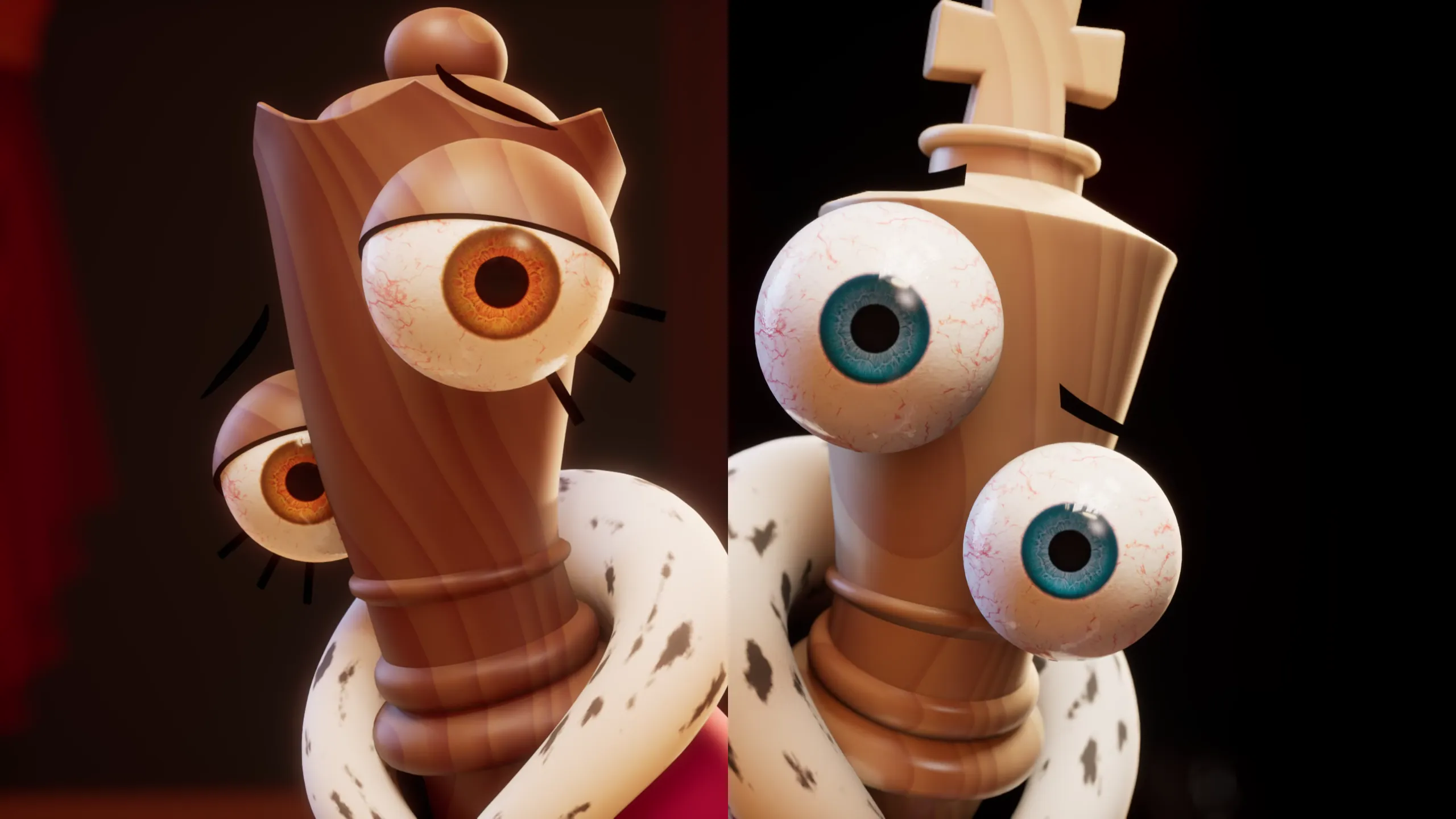
Before her abstraction, Queenie looked like a chestnut-colored wooden queen chess piece. Her design was almost identical to Kinger’s, featuring a tall chess-piece body, two large asymmetrical eyes, and hands separated from her body and covered by white cartoon gloves.
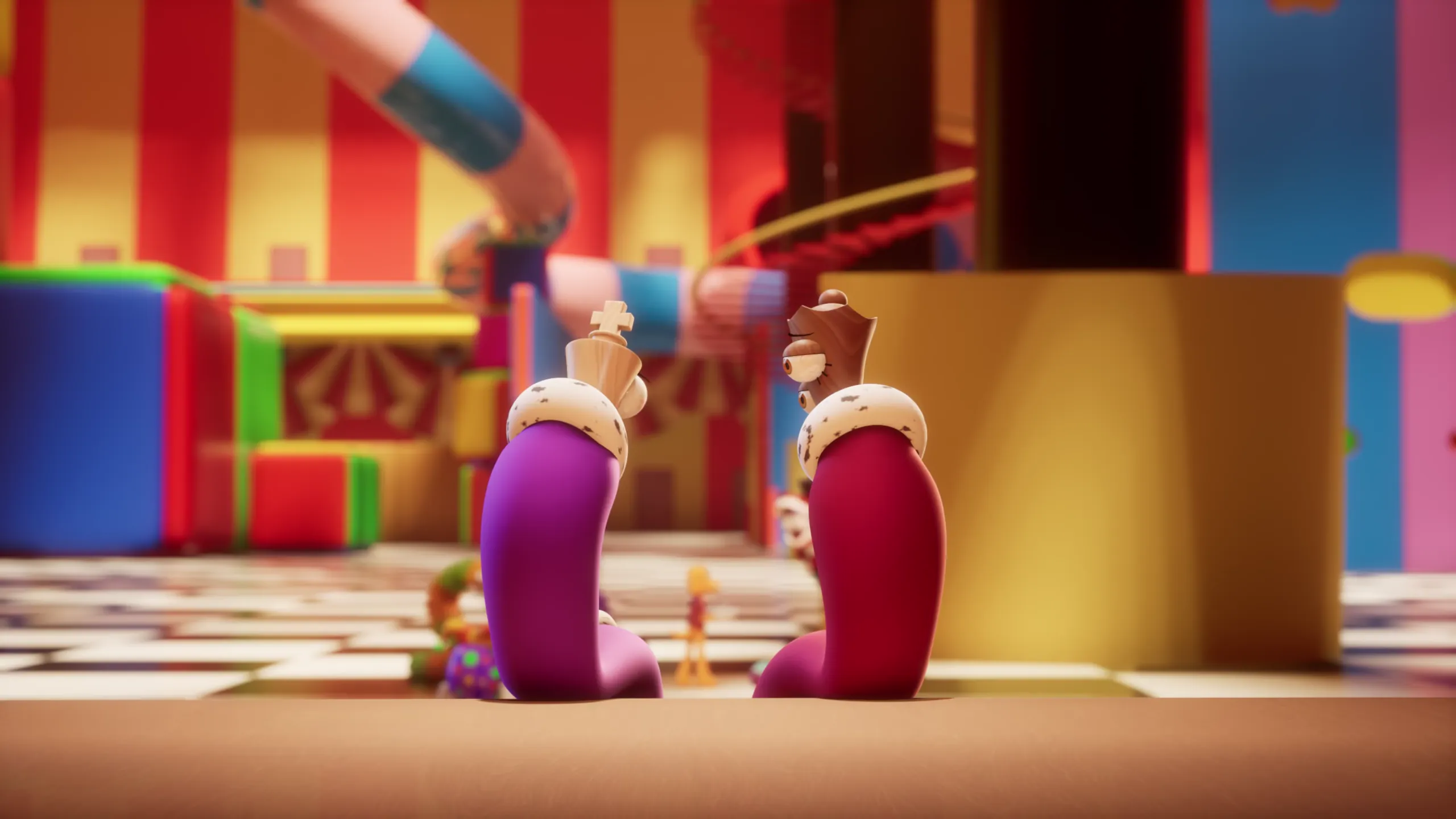
She could be distinguished from Kinger by her eyelashes, the position of her eyes, and her more regal outfit. Queenie wore a red robe with wide white fur trim decorated with black spots. This made her look like a literal queen standing beside her king husband. Their matching designs emphasize the connection between the characters. Kinger and Queenie were married in the real world, so inside the Circus, they received avatars based on the two most important chess pieces.
What Queenie Was Like Before Her Abstraction
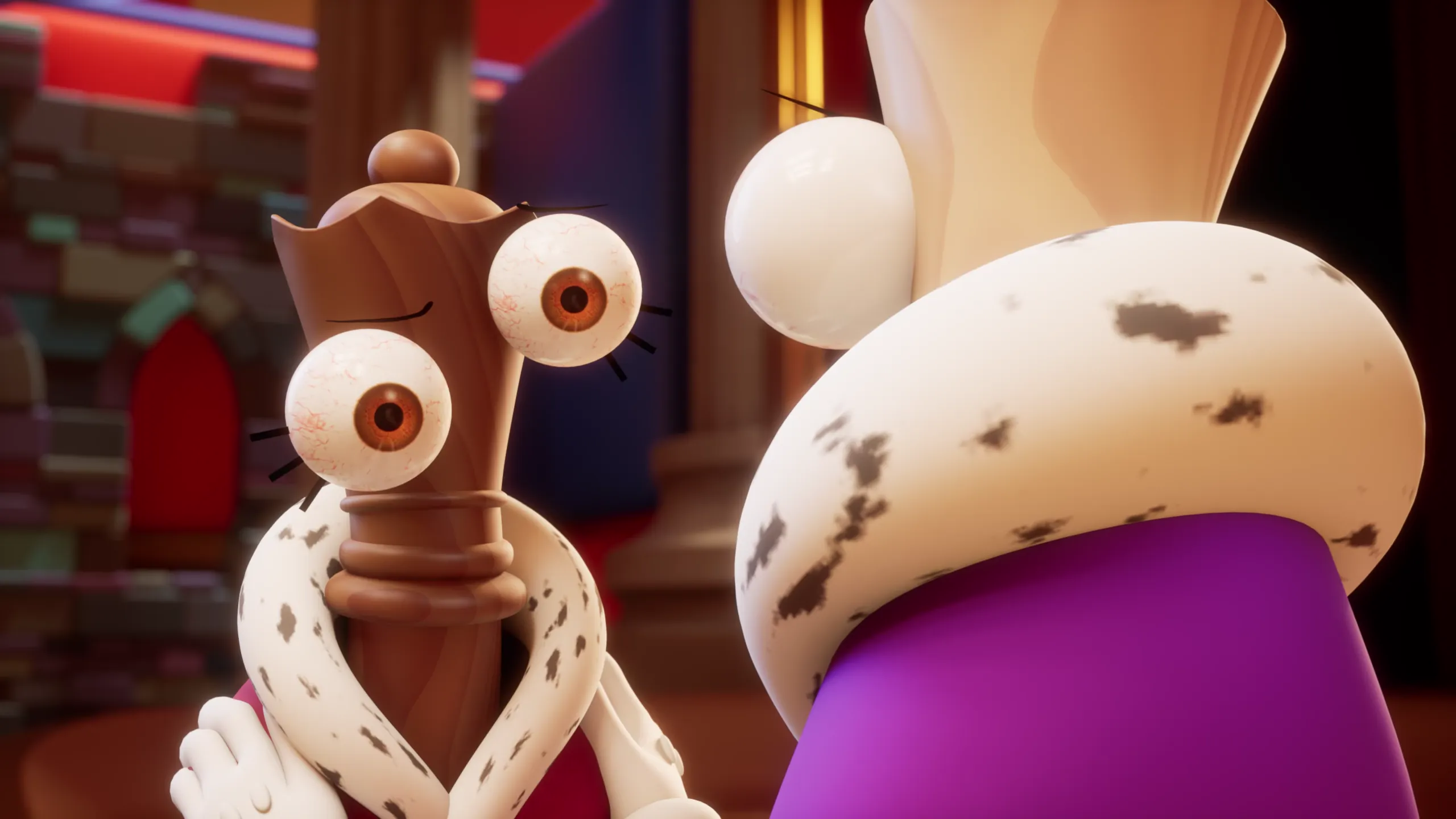
The series reveals Queenie’s personality mainly through Kinger’s memories. According to him, she was creative, cheerful, and deeply interested in entomology. Queenie loved insects so much that she changed her husband’s opinion of them. Kinger did not initially share her interest, but over time, he also began to enjoy studying bugs.
She also appears to have been confident and persuasive. Unlike the often confused and nervous Kinger, Queenie seemed better at finding meaning in the world around her and supporting the people closest to her. That is why losing her changed Kinger so deeply. To him, Queenie was not simply another Circus participant. She was the person who helped him maintain a connection to his former life.
Destiny Best Before the Digital Circus
In the real world, Queenie was named Destiny Best. During the 1990s, she worked as a programmer for C&A alongside her husband, Grant Best, the human original of Kinger. Destiny and Grant had two daughters, Anne and Sam. This makes their story especially painful. The digital copies of the couple became trapped inside the Circus, while their human originals continued living in the real world.
According to the character’s history, the digital versions of Destiny, Grant, and several other C&A employees became the first group of Digital Circus participants on October 15, 1999. Queenie lived inside the Circus for much longer than most of the characters familiar to viewers.
Queenie and Kinger’s Relationship
Queenie and Kinger remained close after entering the Circus. He continued to call her his wife and affectionately referred to her as “Honey.” Even after Queenie abstracted, she remained at the center of his memories.
Their relationship shows that the digital copies were not empty avatars. They retained the emotions, attachments, and important parts of the personalities of their human originals. Kinger did not simply know that Queenie had once been his wife. He continued to love her and experience her loss like a real person.
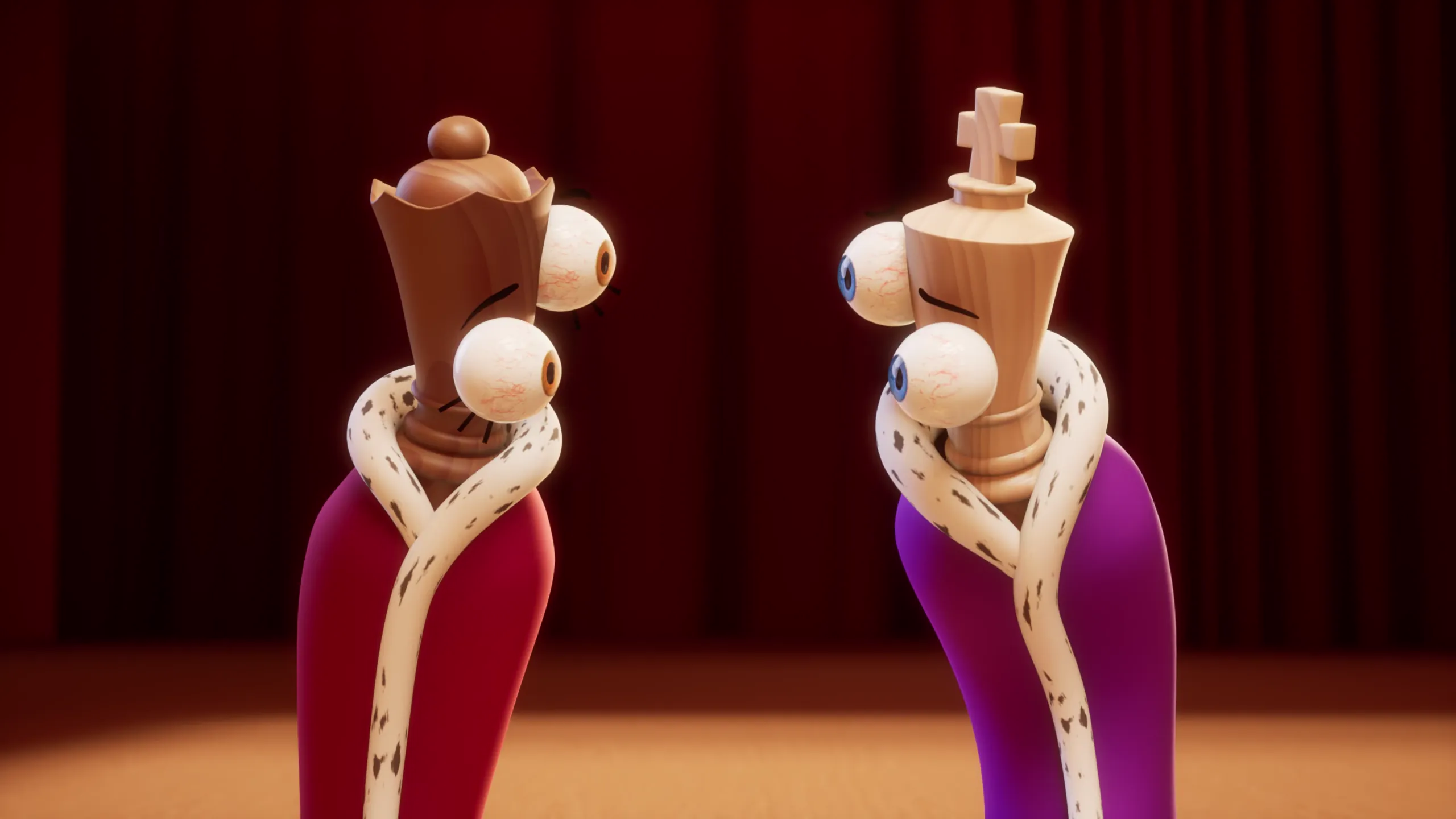
Queenie’s fate also changes the way viewers understand Kinger’s unstable behavior. His confused speech, memory problems, and unusual reactions become the result of many years spent inside the Circus and the pain of losing the person closest to him.
Queenie’s Abstraction
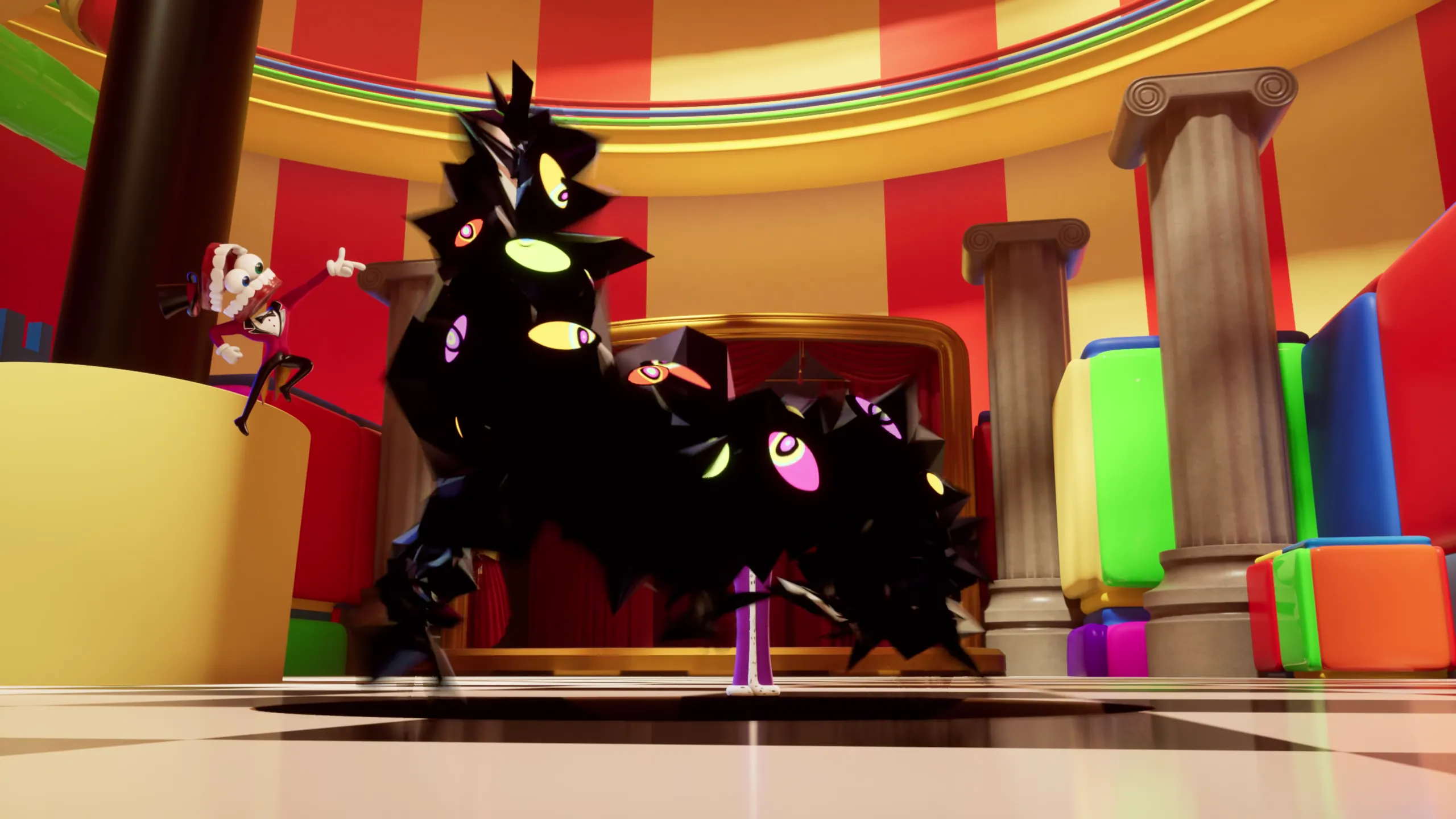
Queenie was the last member of the original group to abstract. Kinger was unable to remember the exact sequence of events that led to her psychological collapse. After abstracting, she became a large black creature with four short legs, a tall cone-shaped upper body, and many multicolored eyes. Her surface became uneven, while her form was constantly distorted by digital glitches.
Her abstracted appearance resembles Kaufmo and the other characters who lost their original identities. However, the scene involving Kinger suggests that something more than a chaotic digital monster may still remain inside Queenie.
Why Darkness Calms Queenie
One of the most important moments involving Queenie appears in Kinger’s memories. After her abstraction, the couple spends time together inside a pillow fort.
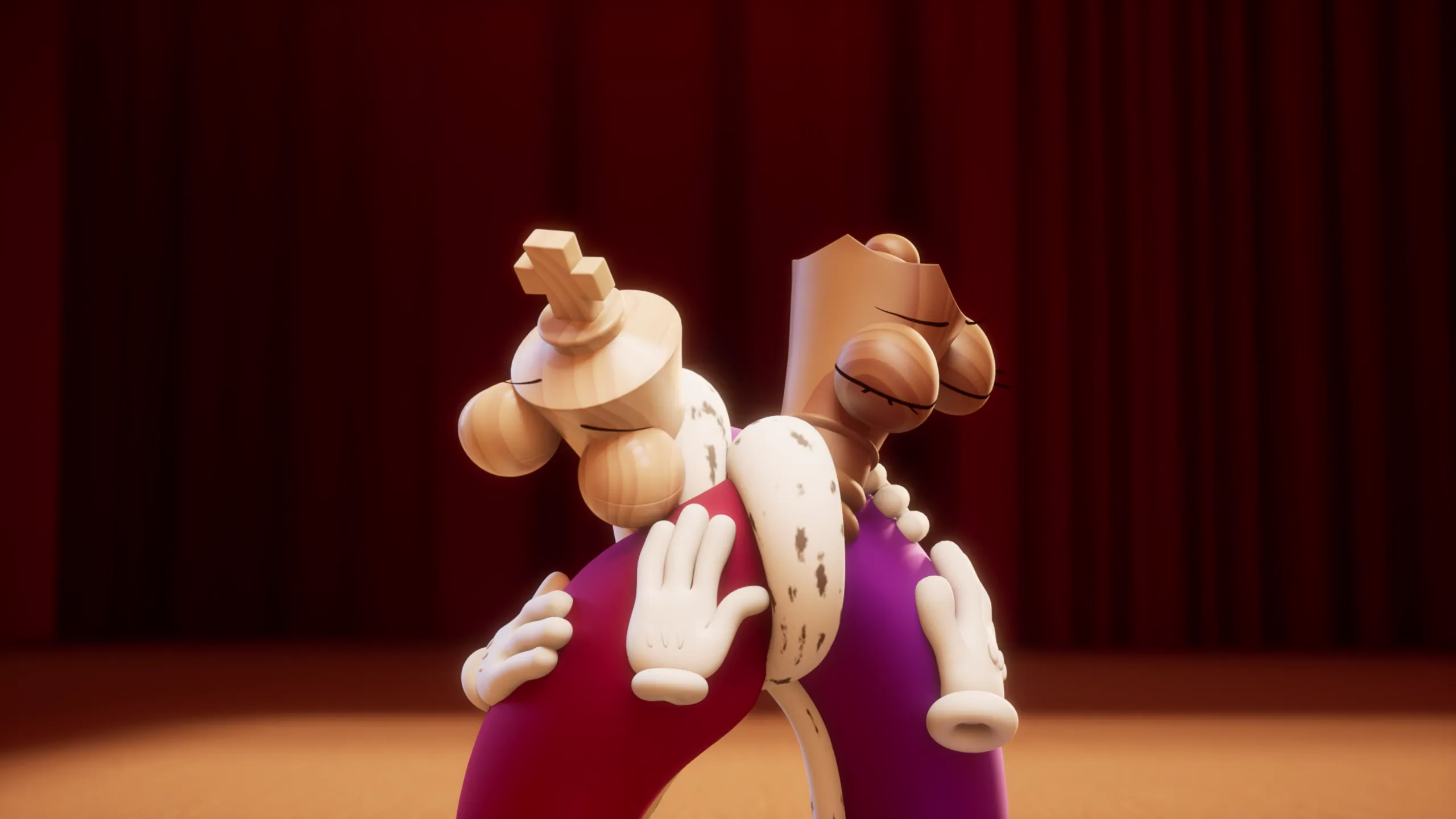
In the darkness, Queenie’s behavior changes. Her multicolored eyes move toward the front of her body, her sharp edges become smoother, and she appears noticeably calmer. Kinger approaches his wife and touches her face one last time. Queenie does not attack him. She closes her eyes and, for a brief moment, seems to recognize his touch. Afterward, she is sent to the Cellar with the other abstracted participants.
This scene becomes one of the strongest pieces of evidence that abstraction may not completely destroy a person’s identity. Part of Queenie’s consciousness may still exist inside her transformed digital body, while darkness temporarily suppresses the chaos and allows her to become calm.
Why Kinger Thinks More Clearly in the Dark
Queenie’s connection to darkness explains one of Kinger’s most important traits. In brightly lit spaces, he often appears distracted, nervous, and almost unable to maintain a consistent conversation. When the area around him becomes dark, however, his mind becomes clearer.
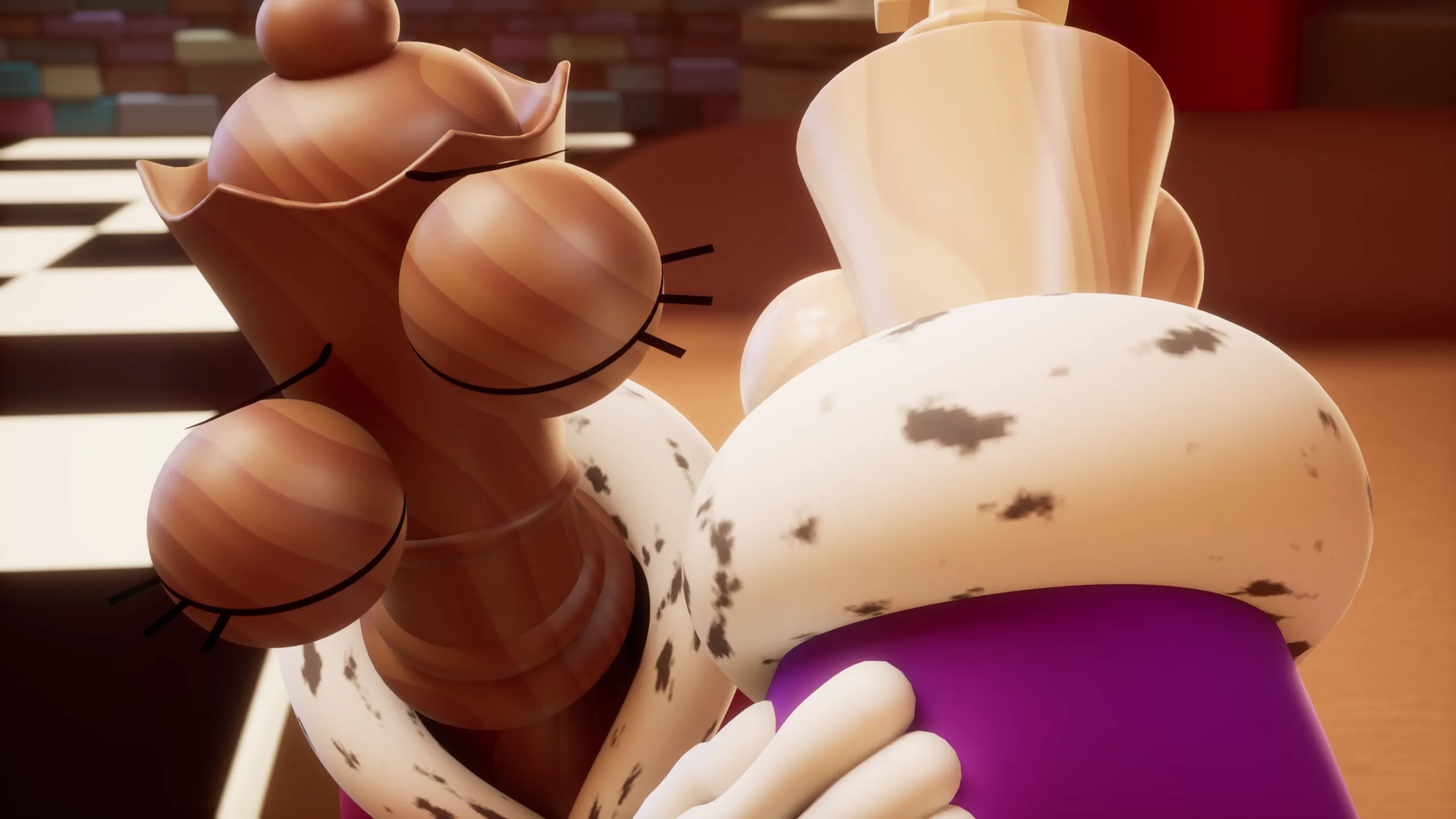
Darkness reminds him of the last peaceful moment he shared with his wife. Inside the pillow fort with abstracted Queenie, Kinger was able to feel closeness and safety again, even though the moment lasted only briefly. His preference for dark spaces is therefore more than a strange habit. It is an emotional connection to Queenie and a memory of the moment when she was still able to respond to him.
Queenie’s First Appearance
Queenie does not appear directly in the pilot episode, but viewers can see her portrait on one of the bedroom doors. The image is crossed out, just like the portraits of other participants who have already abstracted.
She later appears in Kinger’s flashbacks in “The Mystery of Mildenhall Manor.” This is where viewers first see her abstracted form and learn why darkness is so important to Kinger. The episode “hjsakldfhl” shows Queenie before her complete breakdown, including a conversation with her husband. These brief scenes gradually transform her from a background figure on a crossed-out portrait into a fully meaningful part of the story.
Queenie in Remember
In “Remember,” the series reveals what happened to the couple’s human originals. Destiny Best remains alive and is still married to Grant Best. Their real-world versions were able to preserve their family and continue living outside the Circus. This knowledge does not restore the digital Queenie to her former state, but it gives her story a sense of closure. Kinger learns that somewhere in the real world, their human originals are still together.
Near the end of the episode, abstracted Queenie is moved into a new environment resembling a massive aquarium. Instead of remaining locked inside the cold Cellar, the abstracted characters are given a calmer place to exist. Kinger watches Queenie as she moves through this new world.
She does not return to her original form, but she is no longer treated like a prisoner. She now has a place where she can exist more peacefully. For Kinger, this also creates an opportunity to be close to her again, even under completely different circumstances.
Why Queenie Matters to the Story
Queenie helps reveal that Kinger is not simply a comic madman. He is someone who has lived through a long and painful loss. His unusual behavior becomes easier to understand once viewers learn how many years he spent without his wife and how helplessly he watched her abstraction.
She also changes how the audience sees the abstracted characters. Before Queenie’s story, they may appear to be mindless monsters. Her response to darkness and Kinger’s touch suggests that memories, emotions, or fragments of their former personalities may still exist inside them.
Queenie represents a love that continues even after a familiar form has been destroyed. Kinger cannot bring his wife back, but he continues to remember her, speak about her, and search for any opportunity to remain close to her. That is why Queenie’s importance is not defined by her screen time. Her story shows that the memory of someone you love can survive years, digital collapse, and even the loss of a recognizable identity.