Rabbit Girl is a background clubgoer in Catching Up. However, the character’s brief, carefully framed shots make her more than scenery, because her expressions cue the audience on how the room reacts to Clay’s social stumbles. Therefore, Rabbit Girl functions as a silent barometer within the pilot’s neon‑lit club sequence: when Clay postures, when he melts down, and when the mood finally softens, her face tells you exactly where the crowd stands. Then, because editors return to the same cluster of teens multiple times, she helps stitch the club scenes into a single continuous evening rather than a set of disconnected skits. In addition, fans latched onto her because she looks like a real kid trying to enjoy a community‑center “club” while drama erupts beside her. As a result, “Rabbit Girl” became the default label for cataloging screenshots and discussing the pilot’s crowd dynamics.
Origin and first appearance
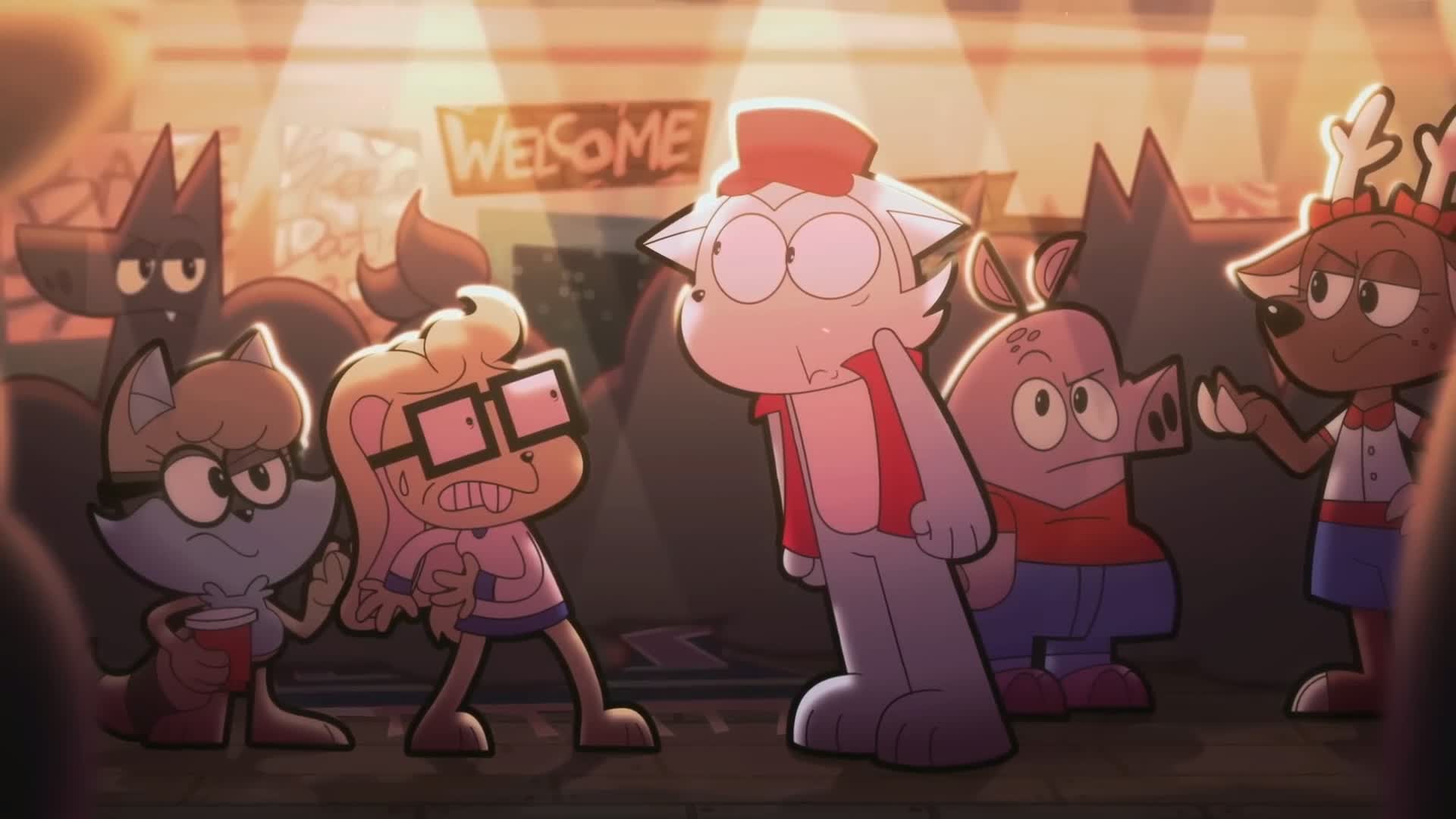
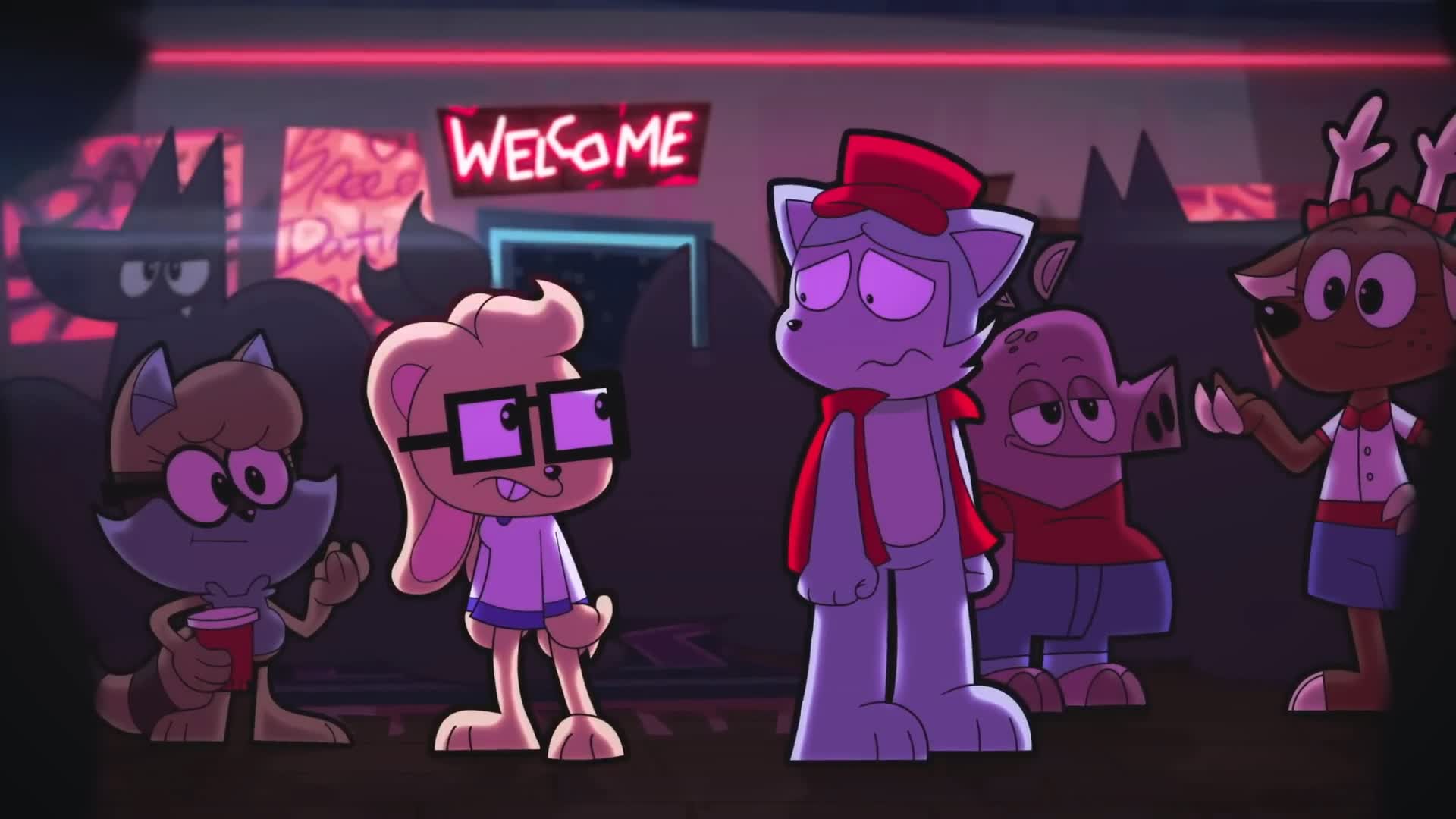
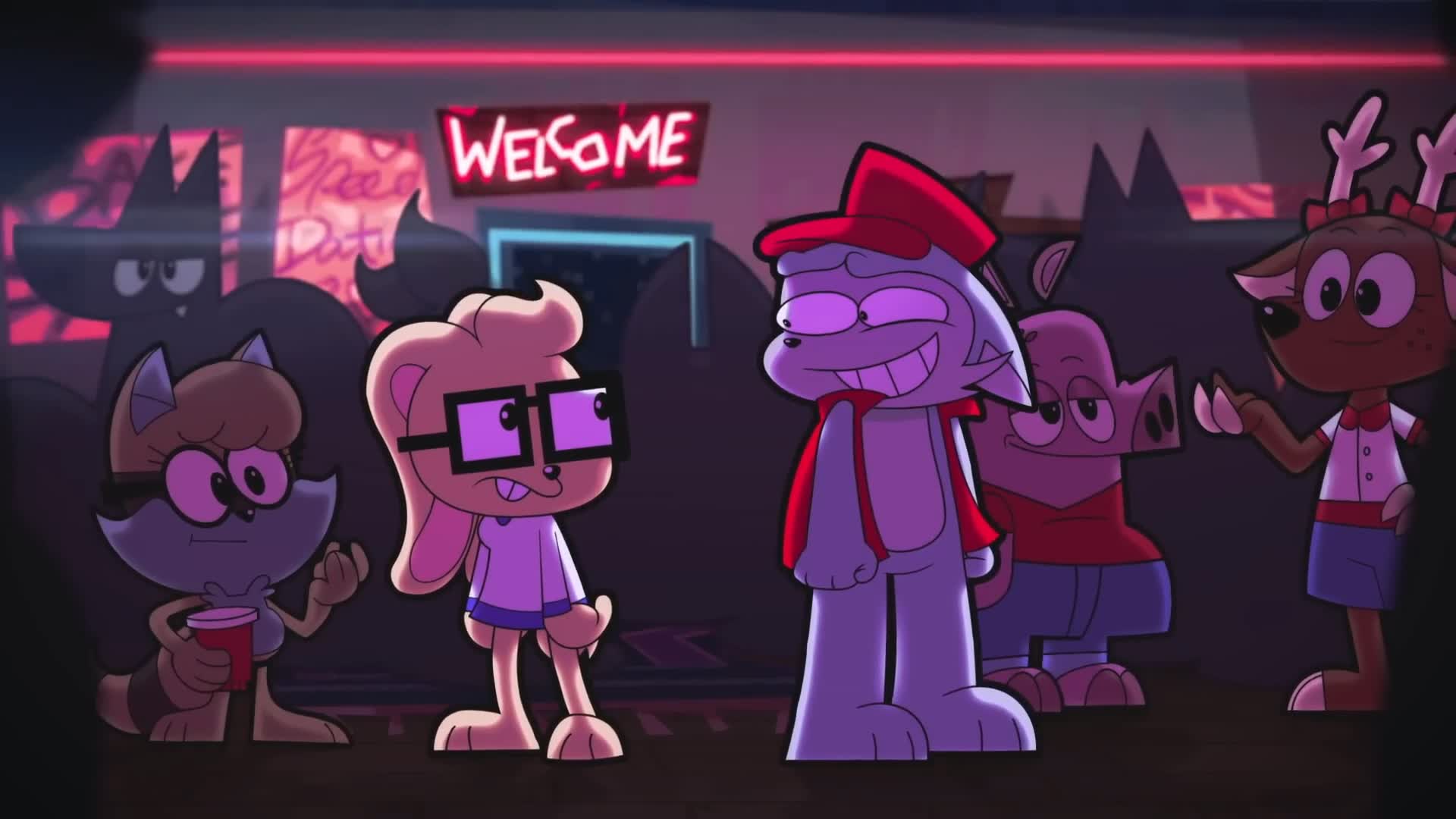
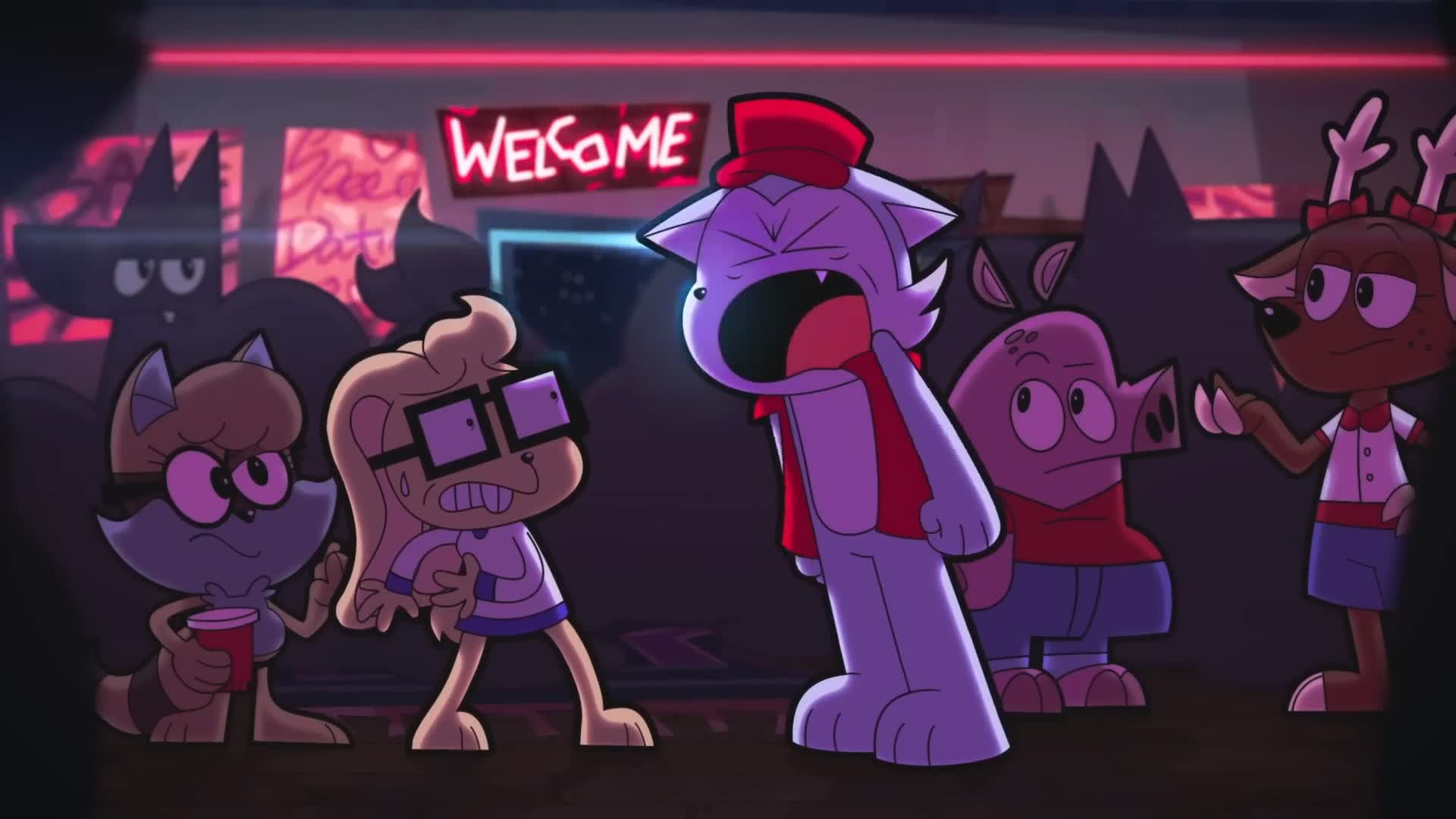
However much the episode centers on Clay and Rob, viewers first notice Rabbit Girl in the early bar‑area shots where the venue buzzes under purple and pink lighting. Then, as Clay drifts past a group chatting beneath a glowing WELCOME
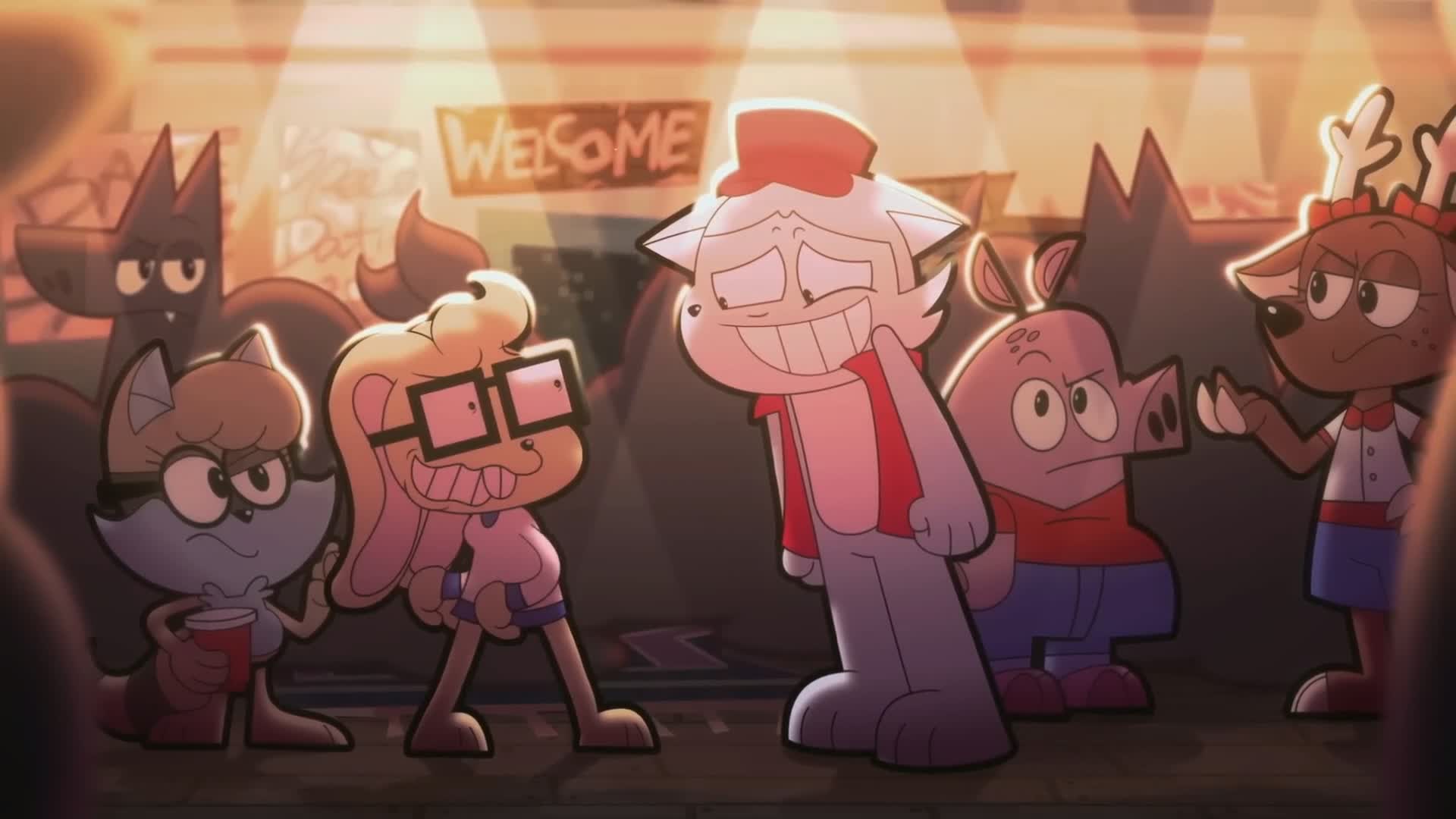
sign, the camera frames a small knot of teens that will recur throughout the night: a reindeer kid gesturing broadly, a rhino boy watching from the back, and the bespectacled rabbit near the middle who tracks conversations with wide, curious eyes. Next, the pilot cuts between DJ McNulty’s booth, a dance‑floor surge, and the bar counter where Roy tries his luck; each return to the entrance cluster finds the same rabbit silhouette reacting in small ways–head tilts, a step forward, a half‑smile that reads as encouragement even when she doesn’t speak. Consequently, when Clay’s patience snaps and he blurts out a frustrated line, her flinch helps sell the moment’s impact on the broader room. Finally, as the evening resolves under warmer lights, she appears again in the same cluster, now less tense, which cues that the conflict has cooled. As a result, her first appearance defines her role: a steady point of reference that humanizes the crowd and grounds the pilot’s “one bad night” feeling.
Personality and key traits
| Trait | Description |
|---|---|
| Observant and present | Rabbit Girl watches more than she speaks. Two or three micro‑expressions–raised brows, a quick glance to a friend–tell the audience how the room feels before and after a flare‑up. |
| Soft‑spoken empathy | She often angles her body toward whoever talks, signaling interest rather than judgment. The warmth in her posture balances the snappier energy from louder characters. |
| Conflict‑averse | When Clay raises his voice, she recoils and yields space instead of pushing back. The behavior reads as a teen who avoids embarrassment and values group harmony. |
| Grounded realism | Her reactions feel unperformed: no exaggerated poses, no winking to the camera. That naturalism makes the club look like an actual hangout night at a local venue. |
| Unofficial identity | The show never names her; “Rabbit Girl” is a descriptive fan label that stuck because of her distinctive silhouette and repeated placement in key crowd shots. |
Story arcs and development
Arc 1 – The entrance cluster as a social hub. Start: The pilot maps the venue with a wide shot that captures the neon WELCOME
sign and a handful of teens who seem to have claimed that corner. Then: Rabbit Girl serves as the cluster’s most readable face; as friends banter and Clay sidles past, she turns, listens, and calibrates to the noise level. As a result: The cluster becomes a narrative waypoint–each time the episode returns to it, the viewer can quickly measure how the night is going. Her quiet attentiveness turns background business into usable story information.
Arc 2 – Clay’s blow‑up and the recoil. Start: After a series of awkward encounters across the club, Clay’s composure breaks; he leans forward and shouts, filling the frame with raw frustration. Then: Rabbit Girl visibly startles, eyes widening behind thick frames, shoulders hunching as she edges back toward her friends. She doesn’t intervene, but she doesn’t gawk either; instead, she does exactly what a real teen would do–make room and hope it blows over. As a result: Her recoil scales the moment for the audience: this isn’t playful ribbing anymore, it’s a social flare‑up that chills the nearby chatter. The beat sells the pilot’s motif that small slights can snowball in uncomfortably public ways.
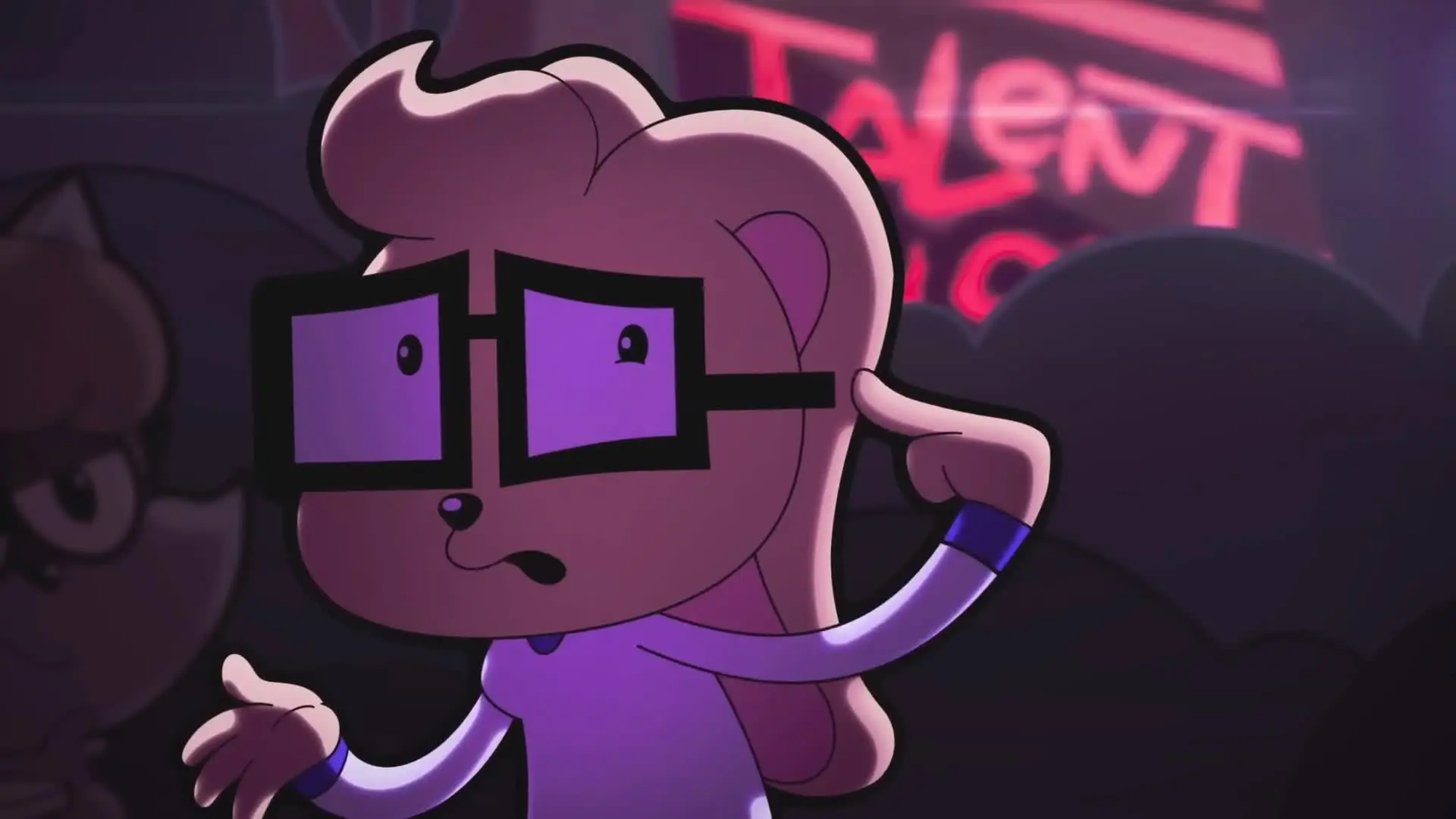
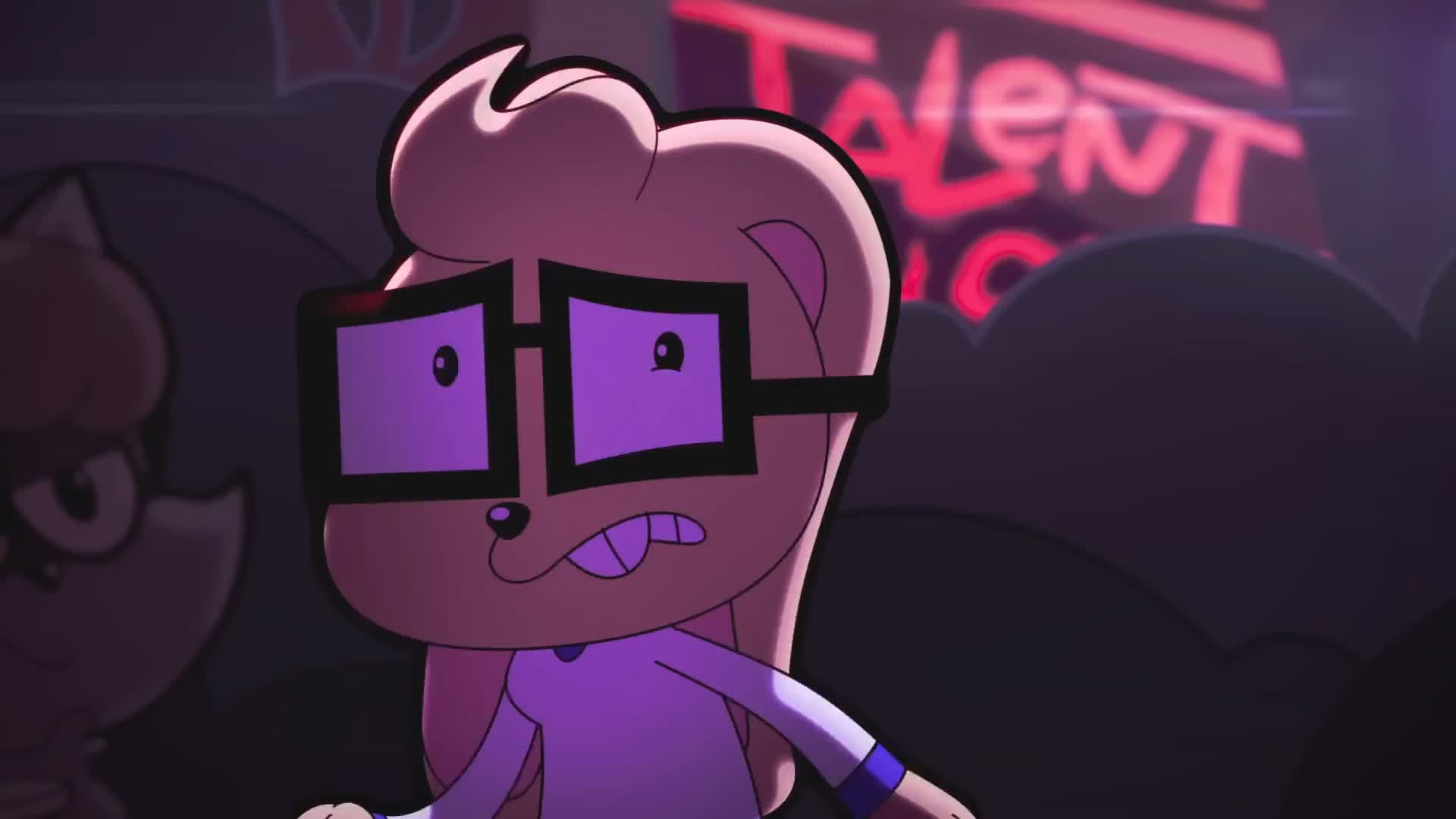
Arc 3 – Talent‑board tension and quiet curiosity (Spoiler). Start: During a brief detour away from the bar, the camera isolates Rabbit Girl near signage that hints at a talent night; the crowd hum softens, and her attention locks forward. Then: She processes whatever she’s seeing with a mix of intrigue and uncertainty–the expression that says, “Is this going well?” without words. As a result: The simple cutaway keeps the episode’s rhythm from flattening into party noise. She becomes a visual reset button, a quick reminder that many kids are just here to watch the spectacle, not to be it.
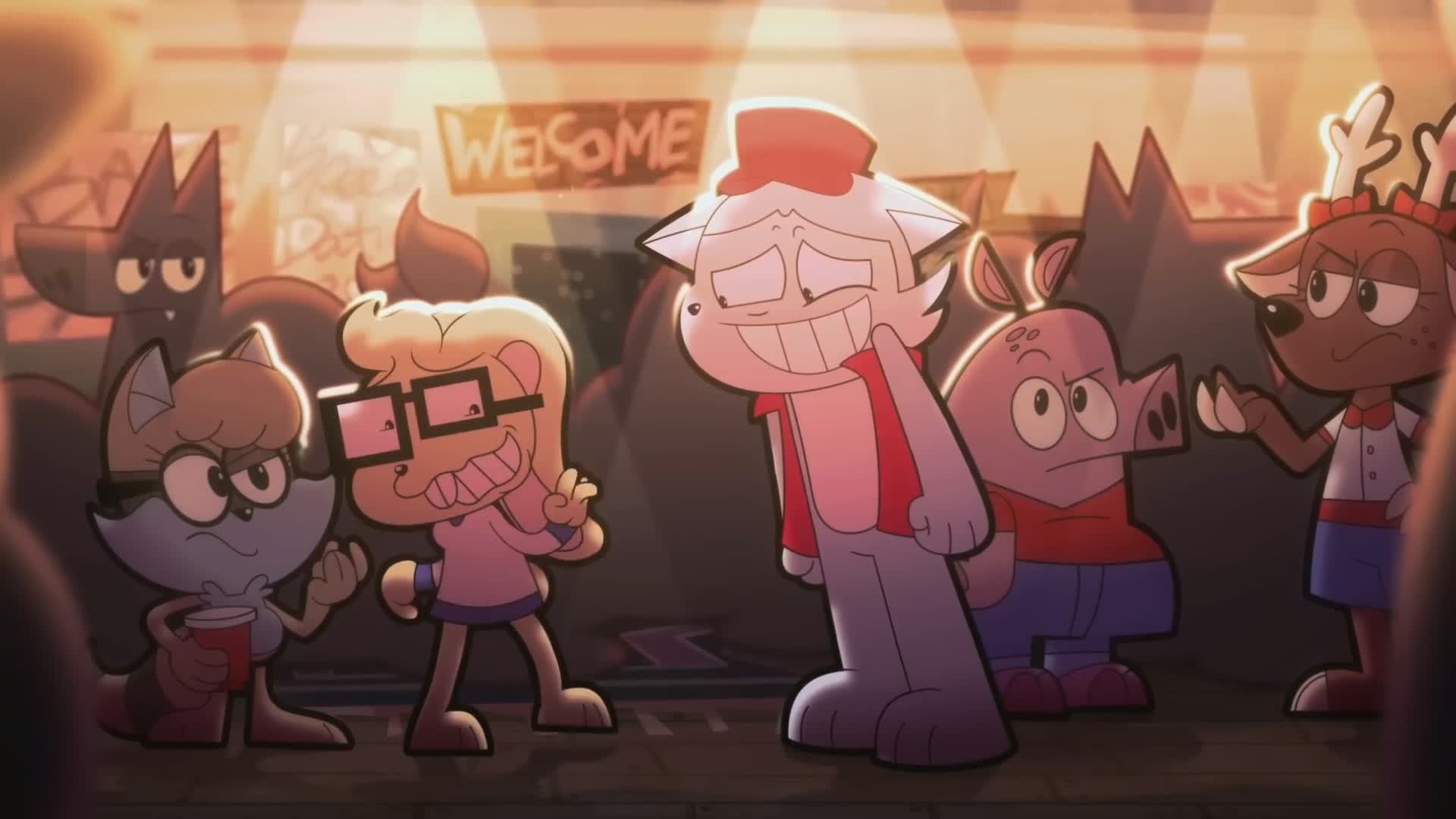
Arc 4 – Warm‑light release and restored normalcy. Start: Late in the night, spotlights shift from magenta to amber, and the entrance group returns to soft banter. Then: Rabbit Girl’s body language loosens; she leans in toward the center of her circle, glancing up at Clay as if checking whether the storm has passed. As a result: The moment functions as a wordless epilogue for the crowd. Even though the pilot never declares victory or failure for its leads, her posture tells us the evening has settled into something manageable again.
Relationships with other characters
| Name | Role vs. Rabbit Girl | Dynamics |
|---|---|---|
| Clay | Volatile focal point | She shares several frames with him and mirrors the room’s temperature in response to his behavior. When he yells, she recoils; when he softens, she leans back in. |
| Rob | Indirect catalyst | Rob pushes Clay to attend the club, which creates the environment for every group interaction. Though he and Rabbit Girl do not interact directly, his choices shape the night she witnesses. |
| Jessica Jacobs | Parallel presence | Jessica anchors the bar area while Rabbit Girl anchors the entrance cluster. Their cuts often bookend one another, mapping two poles of the venue’s social ecosystem. |
| Roy | Ambient show‑off | Roy’s breezy patter near the bar contrasts with Rabbit Girl’s quieter energy. Her unimpressed glances in wide shots help frame Roy’s charm as performance. |
| DJ McNulty | Sonic driver | When the DJ ramps the BPM, the crowd compresses and Rabbit Girl moves with it. His set indirectly forces her to negotiate space and react to new pressures. |
| Bouncer | Potential escalation | Security lurks at the edges of frames. The mere possibility of the bouncer stepping in raises the stakes for any argument that erupts near her group. |
| Club crowd | Peer cocoon | Her small circle provides safety and context. The way she checks faces around her before responding signals that social cues matter as much as personal feelings. |
Appearance, symbols, and recurring motifs
Visually, Rabbit Girl reads instantly. Then, the design leans on a few strong shapes–large rectangular glasses that bisect her face, rounded ears that sit high on the head, and a compact frame that keeps her from dominating shots. She typically stands square with a slight forward tilt, as if leaning into the conversation rather than commanding it. In addition, the lighting team washes her in the venue’s cool magenta‑violet palette, which bounces off the glasses and turns them into moving highlights; that’s why she pops even when half‑obscured by taller characters. Therefore, the glasses become her symbol: a literal frame through which the audience reads the room. Next, the editors repeatedly place her beneath signs–WELCOME
at the door, the Talent
lettering in a hallway–so text becomes another recurring motif that orients viewers to place and time. As a result, she doubles as a piece of navigational design and a person with a distinct, grounded vibe.
Fandom and alternative names
- Rabbit Girl
- Nerdy Bunny
- Glasses Bunny
- Entrance Bunny
- Talent‑Board Bunny
- Club Bunny
- Unnamed Rabbit Girl
Interesting details and quotes
- She has no confirmed dialogue; her contribution comes from timing and blocking, which is why rewatchers often notice her more the second time.
- Editors use her as a continuity anchor, returning to the same cluster to make the club feel like one sustained event rather than a montage.
- The character exemplifies the show’s reliance on reaction comedy; her micro‑expressions are tiny jokes that don’t interrupt the main action.
- Fans catalog frames where she shares space with Clay to track the rise and fall of the party’s energy.
- Because the pilot’s extras feel specific, Rabbit Girl frequently appears on character lists despite having no official name, a sign of efficient worldbuilding.
- Her silhouette pairs cleanly with neon signage and the booth geometry, making her easy to spot in crowd shots.
- The design contrasts with louder figures such as Roy and the Bouncer, providing a visual baseline of normal teen behavior.
WELCOME
– a recurring door sign that grounds several entrance‑area shots where she appears.Talent
– background lettering that frames her most focused close‑up, reinforcing her role as a spectator.- Over time, GIF sets and screenshot threads turned Rabbit Girl into a small fandom favorite for viewers who enjoy subtle crowd work.