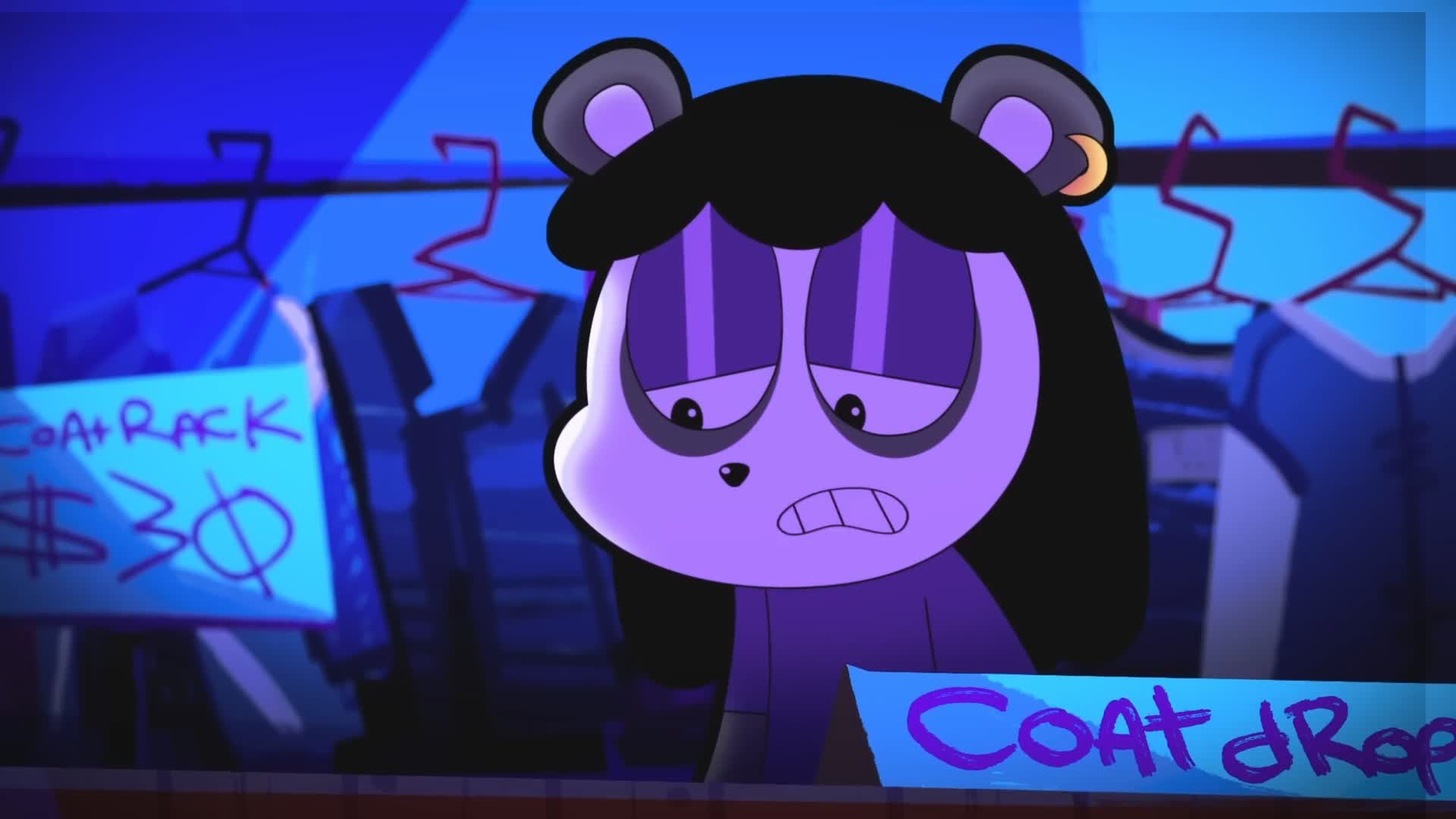
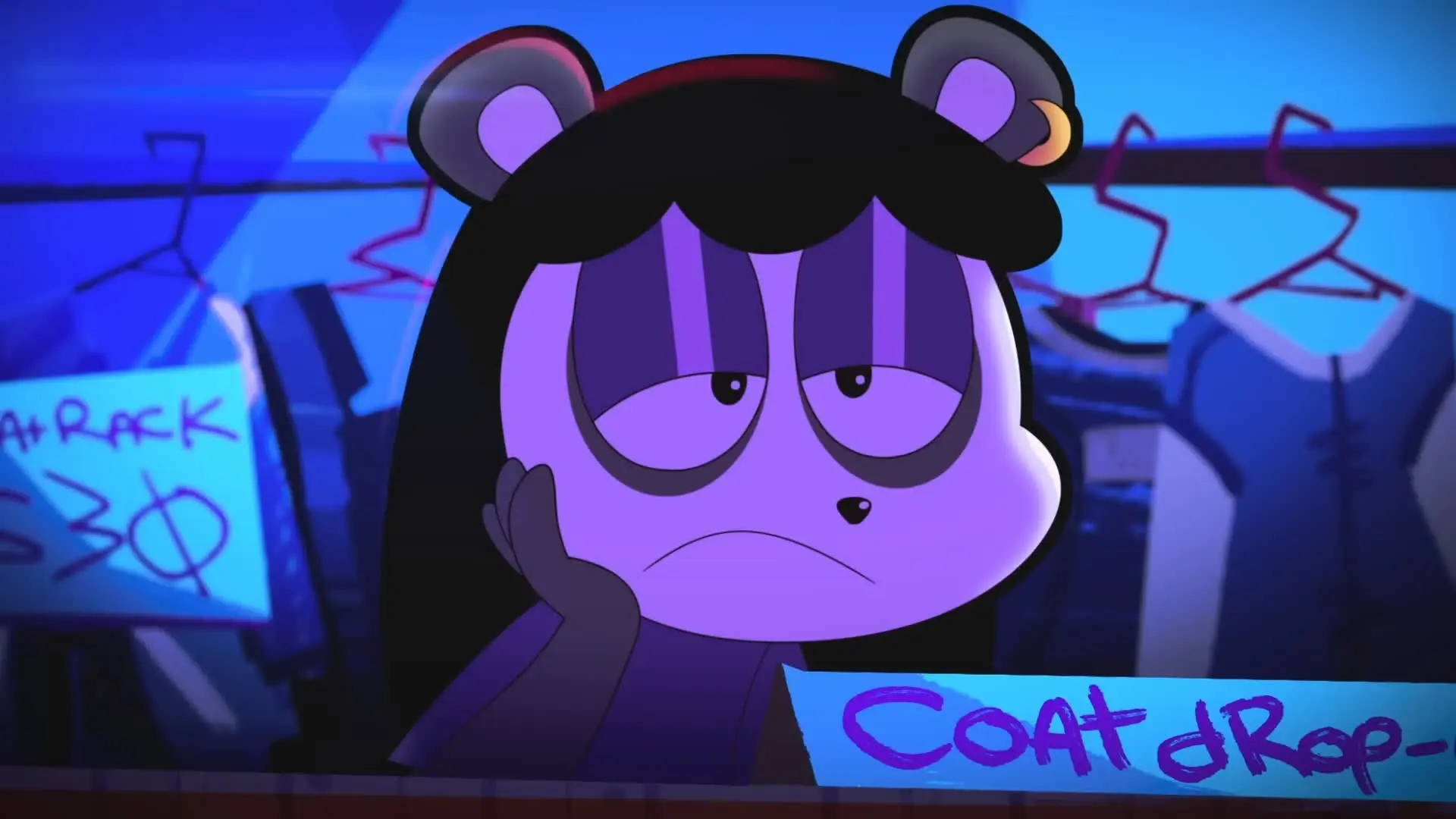
Jacket Girl is a background clubgoer and credited extra in Catching Up. However, the character stands out because she anchors the “coat” gag that keeps ricocheting through the pilot and exposes how casual favors turn into social leverage. Therefore, her small role helps frame the show’s core theme–teen politeness weaponized by status games–while giving Clay and Rob a problem they can’t finesse. Next, her placement at the bar with Jessica Jacobs makes her part of a recurring visual cluster that Clay keeps orbiting and misreading. As a result, even without much dialogue, she shapes the tone of “Clubbing”: the community center masquerading as a nightclub, the neon warmth that hides cold behavior, and the way a simple request becomes a running burden.
Origin and first appearance
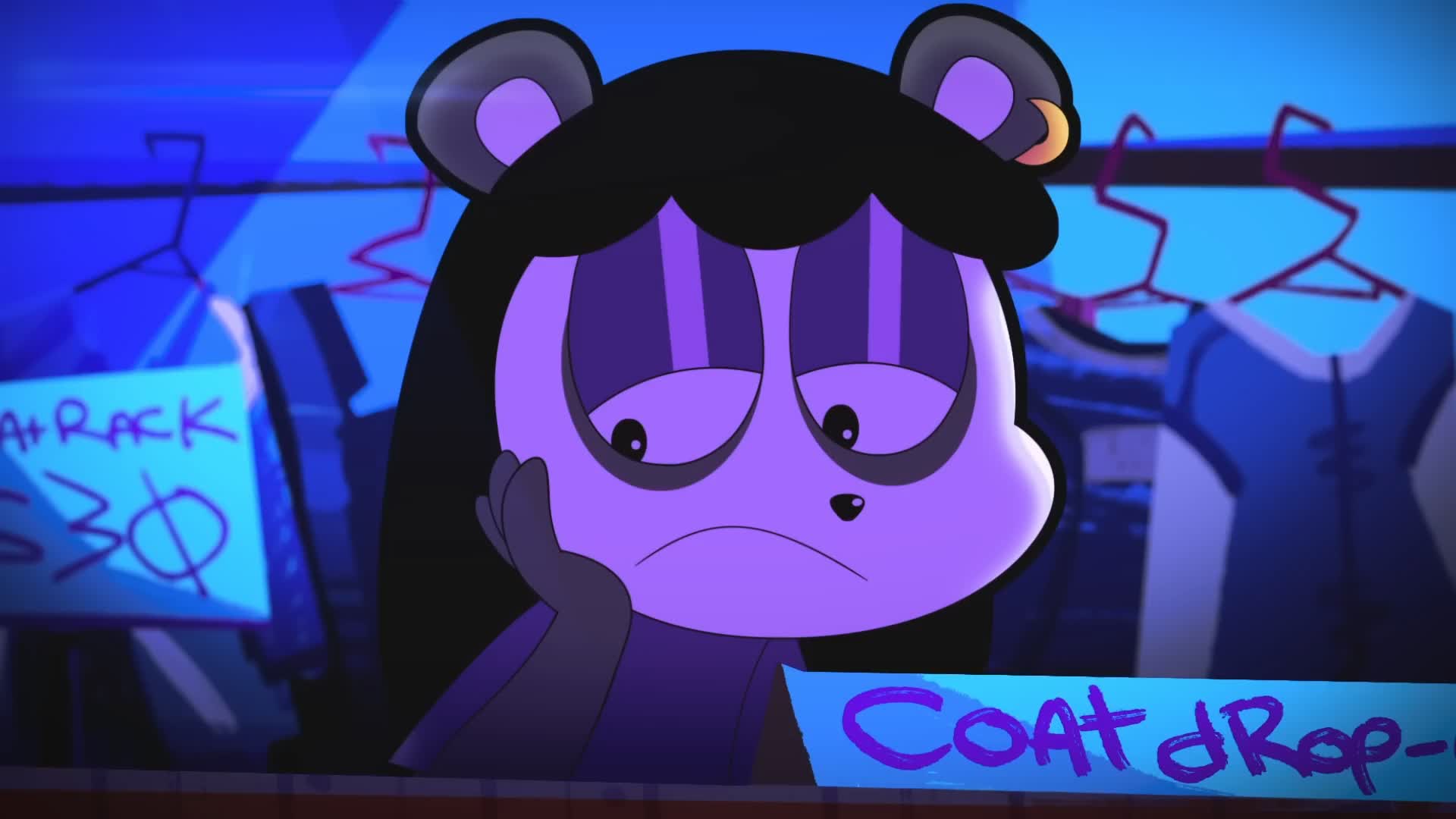
Jacket Girl first appears in the pilot, “Clubbing,” during the club-night at the community center. Then, while Rob and Clay arrive, Rob excitedly carries two girls’ coats; the moment sets up a chivalry bit that the episode keeps paying off. Clay spots the pair entering the venue, and Rob follows with the coats, eager to look gentlemanly. Next, inside the neon-lit hall, the same girls linger around the bar where Jessica Jacobs often stands, and the camera repeatedly finds them as Rob tries to chat. The coat prop stays in frame as a reminder of a promise Rob can’t gracefully end. Consequently, when Rob later attempts to return a coat, the girls insist it’s his problem now, which turns a small favor into a one-sided obligation. Finally, Clay–already frayed by a night of faux clubbing–snaps at them, creating one of the pilot’s sharper confrontations and giving the “jacket girls” label an in‑universe punch. As a result, her first appearance doesn’t just populate the background; it defines a social pressure that drives both leads into embarrassment.
Personality and key traits
| Trait | Explanation |
|---|---|
| Composed cool | She holds herself with easy confidence at the bar, rarely flustered. The relaxed posture and faint smirk read as social comfort, which contrasts with Clay’s visible anxiety. |
| Lightly condescending | Body language and timing suggest she treats Rob’s eagerness as a convenience. The gag lands because she never raises her voice; she just lets the “favor” linger. |
| Peer‑group aligned | She acts in tandem with the other girl from the duo, which turns a single interaction into a chorus of judgment. The pair’s unity matters more than any single line. |
| Plot amplifier | Her coat becomes a prop that follows Rob across the episode, pushing him back toward the bar and funneling Clay into his outburst. The character magnifies small stakes into conflict. |
| Minimal dialogue | The pilot gives her only quick beats; the humor relies on looks, gestures, and the lingering coat. That restraint keeps focus on Rob and Clay while still making the gag memorable. |
Story arcs and development
Arc 1 – The coat handoff. Start: On arrival, Rob takes two girls’ jackets to be polite, telegraphing his need to be liked. Then: Inside, the same pair–Jacket Girl included–treats the exchange as settled, not temporary. Rob tries to turn it back into a courtesy, but the conversation slides until the coat is effectively reassigned to him. As a result: The “favor” becomes a comedic burden that keeps him tethered to the bar, while Clay drifts into other mini‑disasters. The handoff arc also signals the club’s social economy: whoever cares most loses leverage.
Arc 2 – Roy’s interruption at the bar. Start: Roy bounces through the room and tries to charm the girls while Rob still has the coat slung over his arm. Then: Jacket Girl watches the exchange with amused detachment; the gag works because Roy’s patter doesn’t move the needle and the coat continues to mark Rob as the errand boy. As a result: The moment reframes the triangle: Rob is helpful, Roy is confident, and the girls are gatekeepers of attention. The arc underlines how the pilot uses micro‑encounters to measure status without blunt exposition.
Arc 3 – Clay’s blow‑up (Spoiler). Start: Clay, frayed by crowd noise and misfires, sees the same duo stonewalling Rob and snaps. Then: He raises his voice at them, effectively saying the quiet part–if they want a jacket carried, they should carry it themselves. As a result: The outburst clarifies his character flaw (blurting internal thoughts) while also puncturing the club’s politeness theater. Jacket Girl doesn’t escalate; instead, her calm reaction throws Clay’s loss of composure into sharper relief, which is funnier than a shouting match.
Arc 4 – From cameo to credit. Start: On screen she remains an unnamed extra during the episode proper. Then: She appears in credits and online cast lists as “Jacket Girl,” and fans quickly adopt the label to organize screenshots and discuss the coat gag. As a result: The character gains a second life in fandom as shorthand for the pilot’s social satire, and her credited voice actor, Miranda Parkin, becomes a trivia nugget viewers trade when mapping the show’s ensemble.
Relationships with other characters
| Name | Role vs. Jacket Girl | Dynamics |
|---|---|---|
| Jessica Jacobs | Bar companion | They appear together repeatedly at the bar. Their synchronized reactions make the “jacket girls” feel like a unit, which deepens the sense of social gatekeeping around Rob. |
| Rob | Polite target | He volunteers to carry the coats and can’t find a graceful exit. She treats his courtesy as a given, which turns his kindness into a standing obligation and a running joke. |
| Clay | Frustrated critic | He ultimately yells at the duo, voicing the audience’s impatience with one‑sided “favors.” The encounter spotlights Clay’s impulse control and makes her composure look deliberate. |
| Roy | Failed flirt | He tries a breezy approach while Rob still holds a coat. She offers little encouragement, which keeps the focus on the visual joke and Roy’s misread confidence. |
| DJ McNulty | Ambient backdrop | The DJ’s pounding set scores her scenes; the music and lights make the small coat dispute feel absurdly high‑stakes, which is the pilot’s tonal sweet spot. |
| Bouncers | Potential escalation | Security never intervenes with her directly, yet their presence raises the stakes of any disagreement in the room. The threat of authority hangs over Clay’s outburst. |
| Snazzy Jacobs | Extended social circle | Though not always next to her, the wider friend group reinforces how cliquish the club can feel to Rob and Clay. The more faces in the circle, the less room for Rob’s dignity. |
Appearance, symbols, and recurring motifs
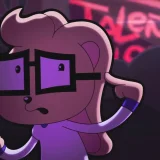
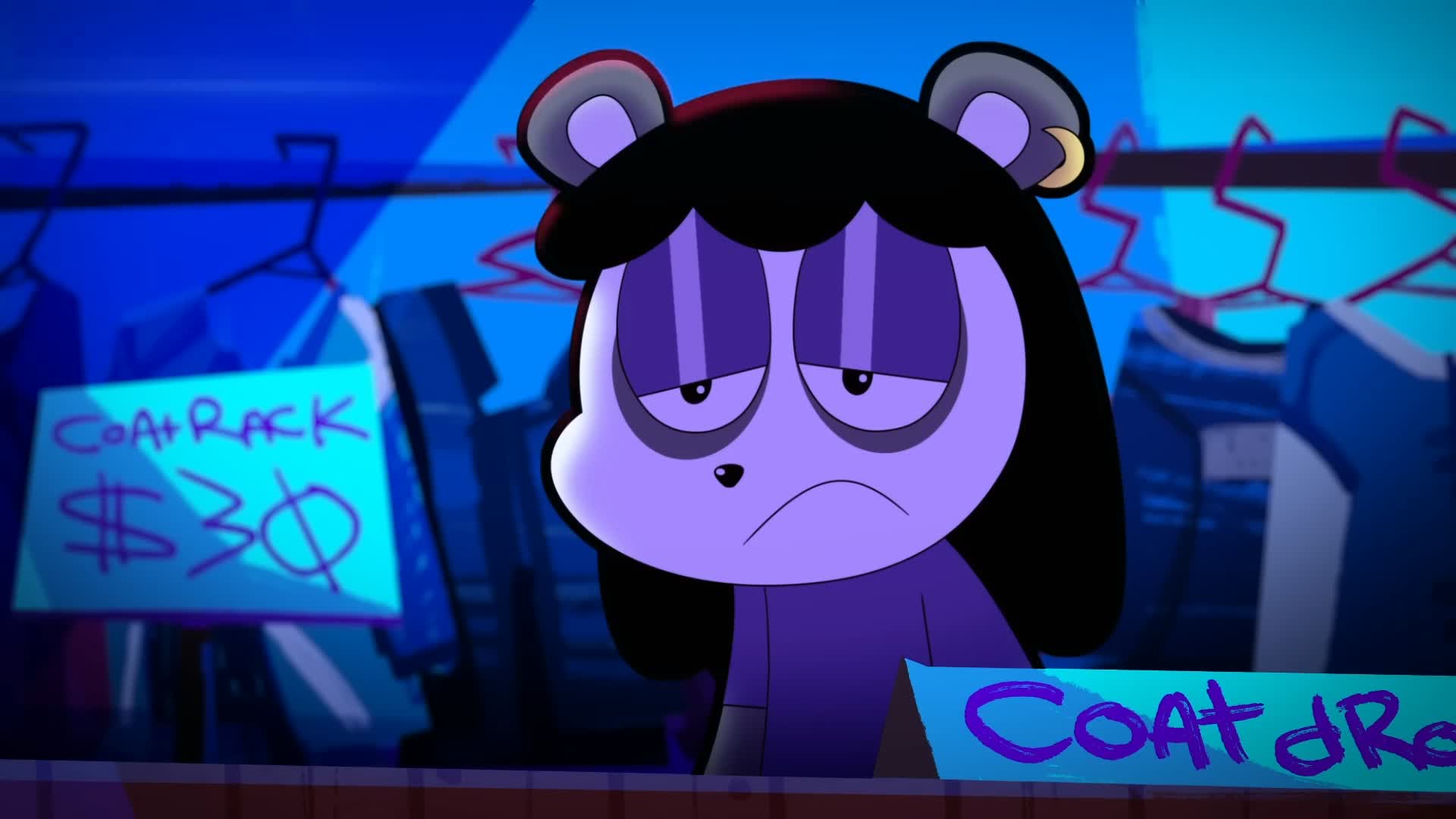
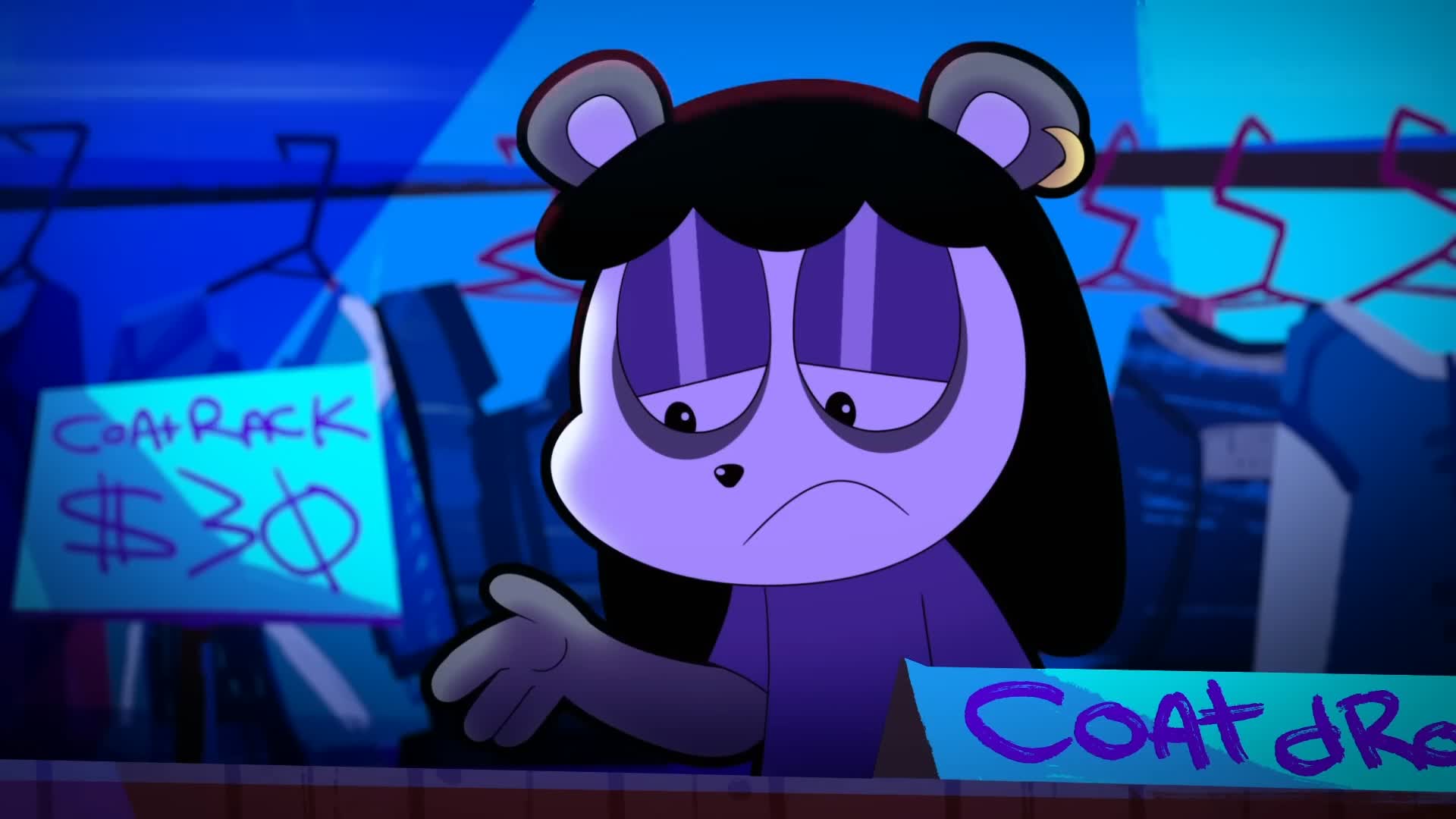
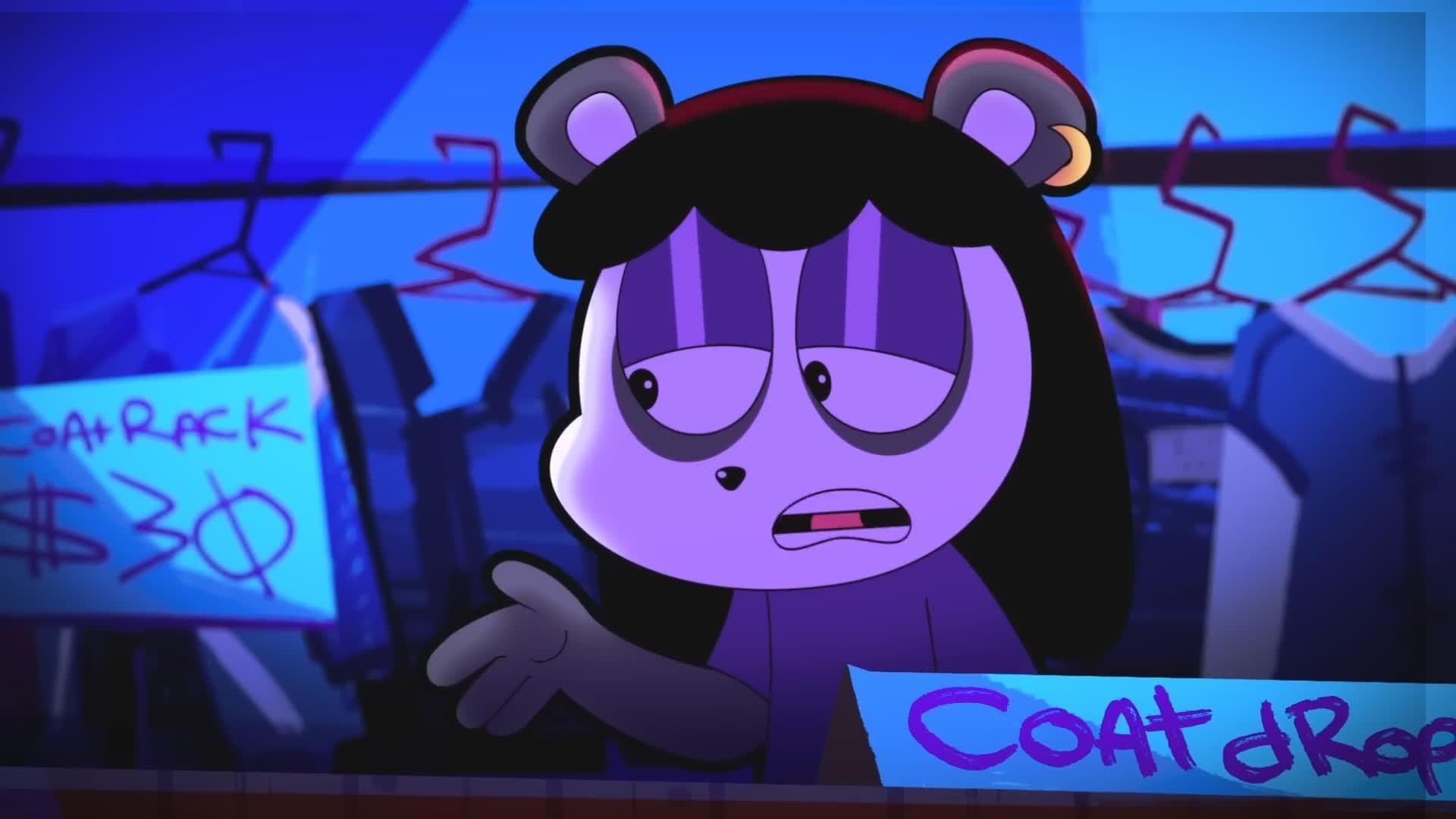
Visually, Jacket Girl reads as a modern teen with understated swagger: oversized square glasses, a soft blond swoop of hair, and casual clubwear that looks more practical than flashy. However, the most important element is not clothing but the prop that gives her name–an errant jacket that drifts in and out of shots as a quiet punchline. Therefore, the design cues steer attention to posture and micro‑expressions: a tilted chin, a sideways look at Rob, a half‑smile when Roy talks. Next, the club’s purple‑blue palette casts her in cool tones that match her measured demeanor. The coat becomes a symbol of emotional labor outsourced to the most eager person in the room, and the repetition turns it into a motif; every time Rob reenters frame still holding it, the show restates its point about courtesy being exploited. As a result, she communicates more through staging than lines, which is why the cameo lingers.
Fandom and alternative names
- Jacket Girl
- Coat Girl
- Jacket Girls (for the duo)
- Glasses Girl (bar)
- Blonde Jacket Girl
- Bar Girl
- Coat Carrier Girl
Interesting details and quotes
- Jacket Girl is credited in cast lists and databases and voiced by Miranda Parkin, a detail fans often cite when mapping the pilot’s ensemble and discussing the Catching Up Voice Cast.
- The “club” is a community‑center event dressed up with a neon sign, which makes the jacket dispute feel even pettier and funnier against the faux‑nightlife aesthetic.
- Behind‑the‑scenes notes describe the “jacket girls” confrontation as a late addition during production, showing how the team sharpened Clay’s breaking point.
- Her beats mostly rely on reaction shots. The performance leans on timing rather than lines, which suits the pilot’s rapid, overlapping gags.
- Fans use her as shorthand for the show’s social satire: a minor character whose calm entitlement triggers major embarrassment for the leads.
- The running coat prop doubles as blocking: it physically anchors Rob to the bar, preventing him from blending into the crowd or escaping the bit.
- Because the pilot packs many cameos, Jacket Girl exemplifies how the series makes background figures feel specific without full introductions.
It’s yours now.
– a brief line often quoted by viewers to summarize how a “favor” flips into a chore.- Credit rolls and online galleries preserve quick shots of the duo at the bar, which keeps the character present in fan edits and screenshot threads.