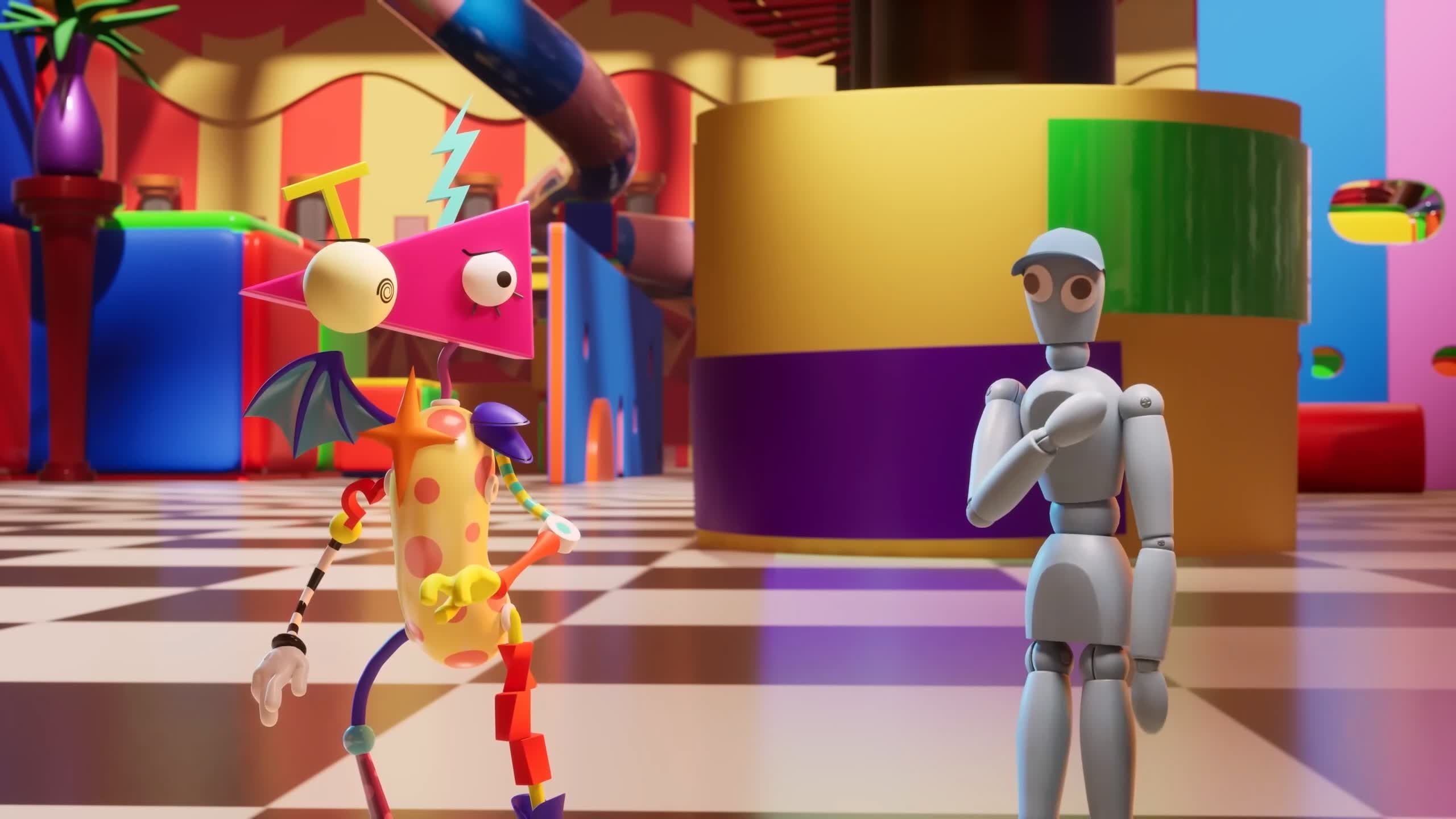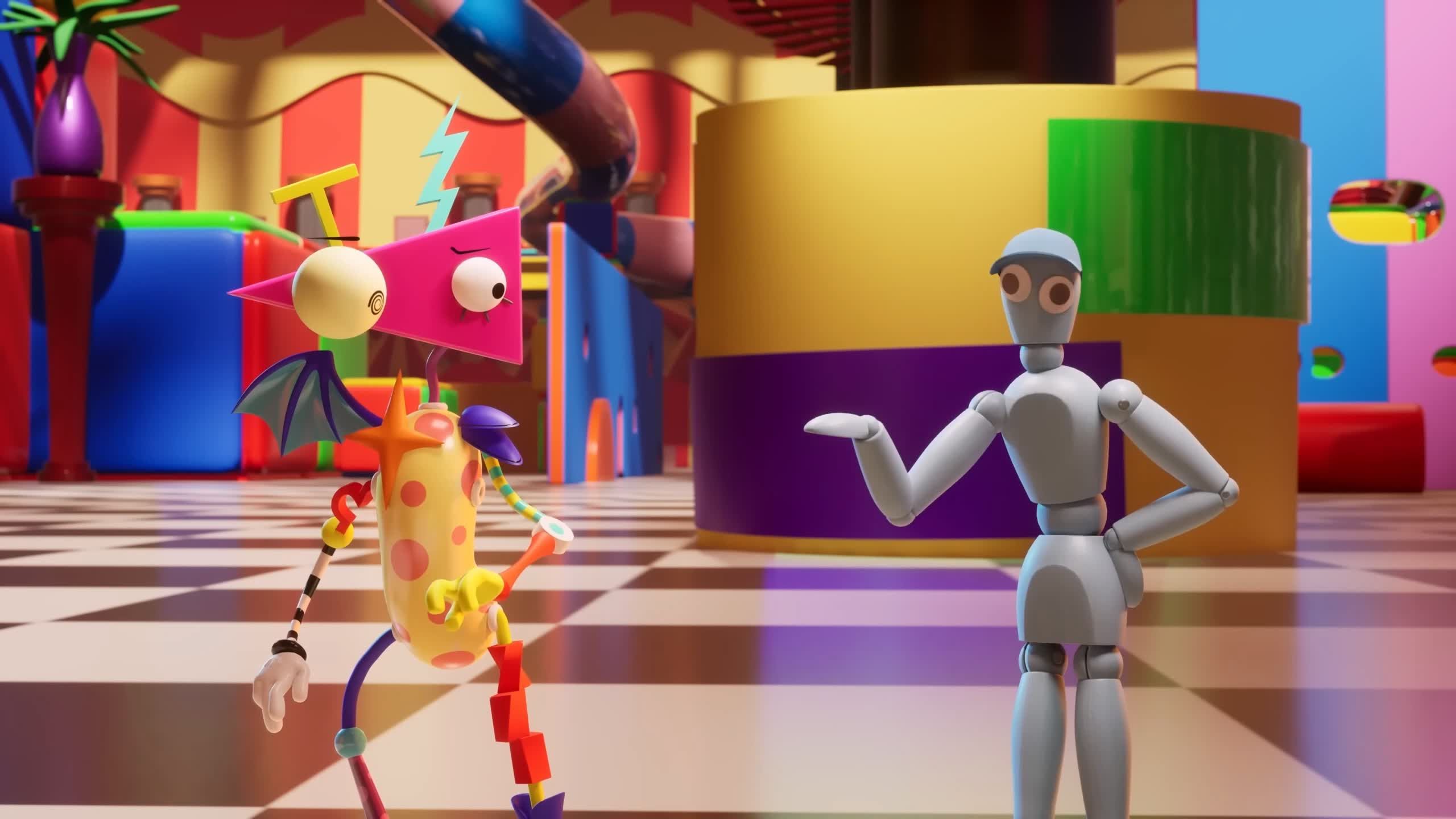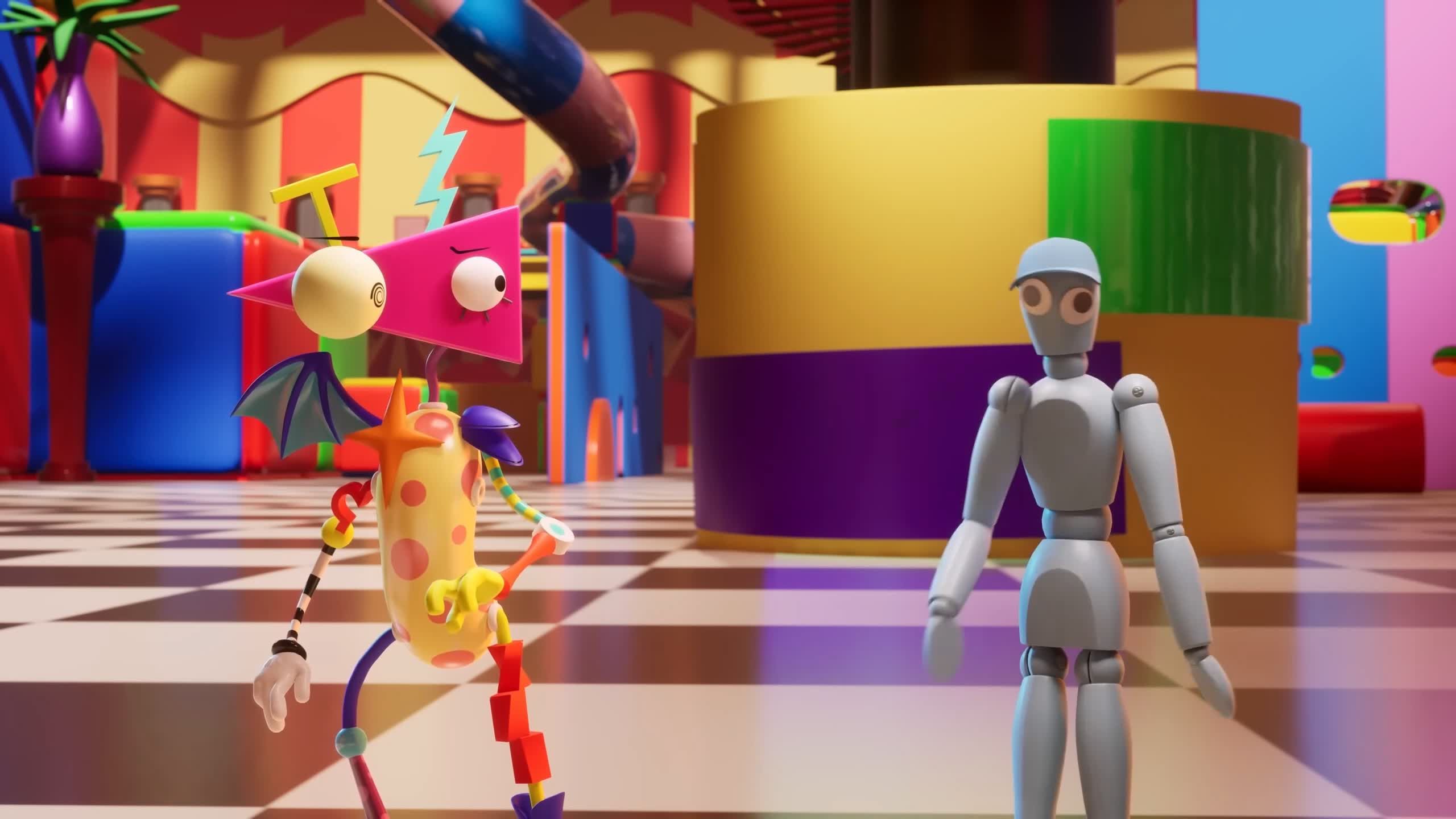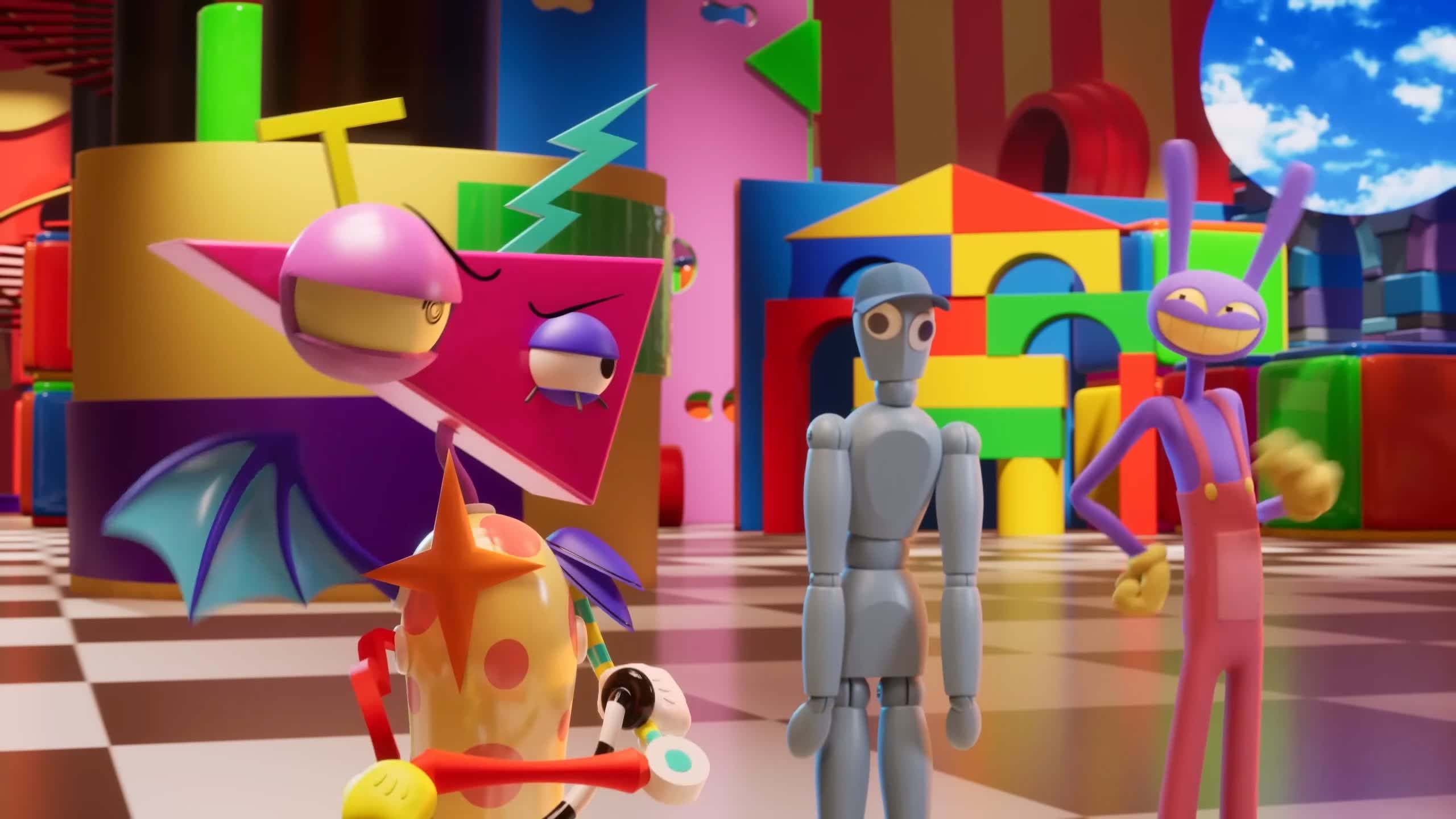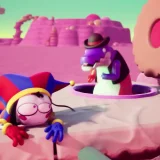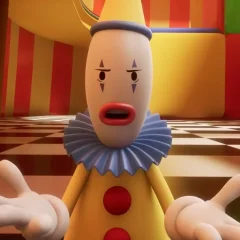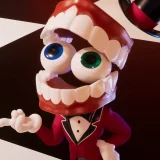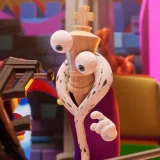
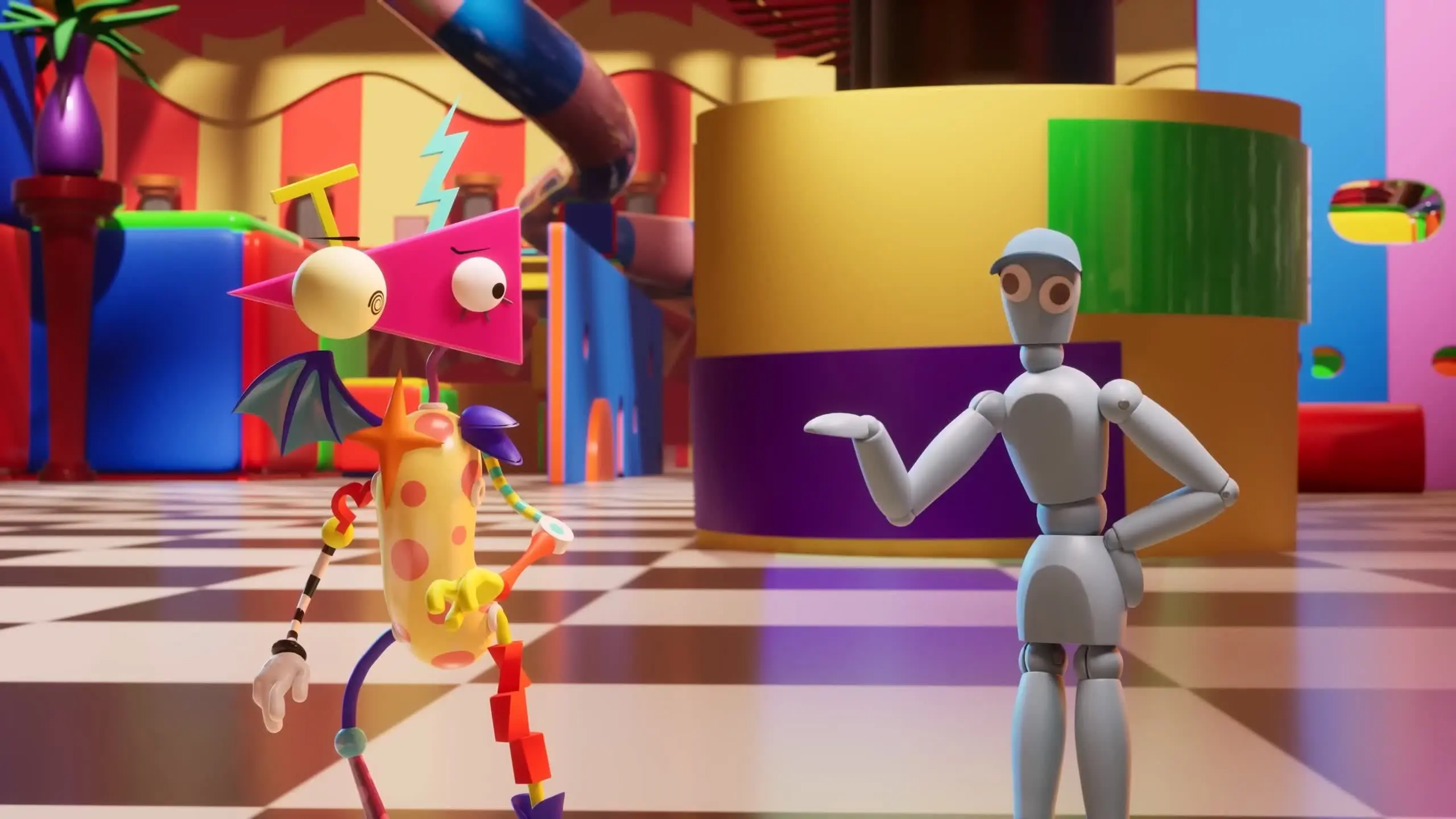
Ming makes their debut in Episode 6, “They All Get Guns”, entering the scene right after Caine lands the pun, “it makes an ass out of you and Ming.” Previously teased in a San Diego Comic-Con sneak peek, the character arrives as a joke payoff and immediately steals the moment by objecting to the assumptions built into the line.
That first appearance also contains Ming’s other memorable beat: the Favorite Character Award reveal at the end of the episode. What begins as a one-line gag turns into a second punchline when Ming walks onstage as the actual winner, making the character feel less like throwaway scenery and more like a deliberately precise comic interruption.
Character Design and Visual Style
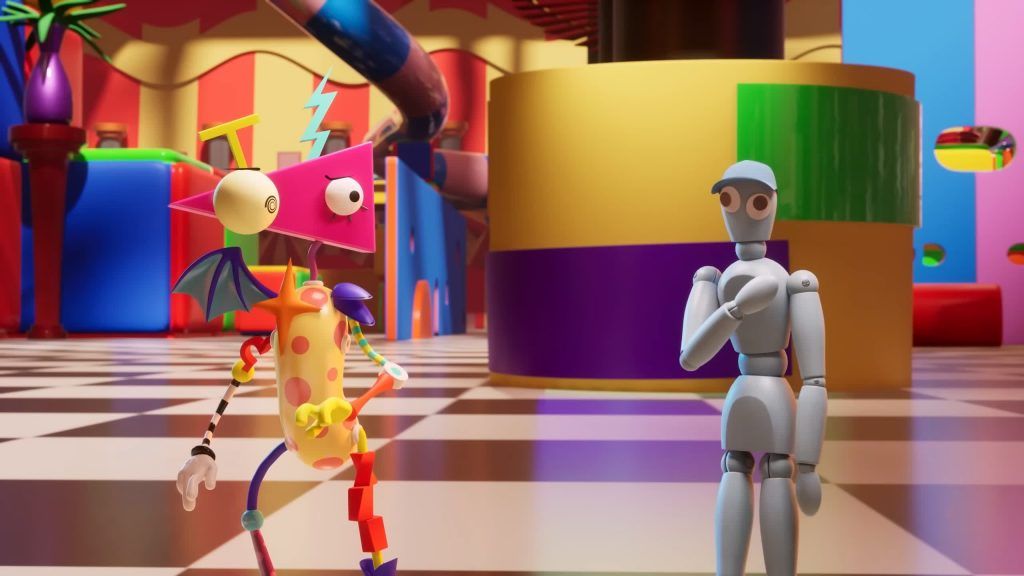
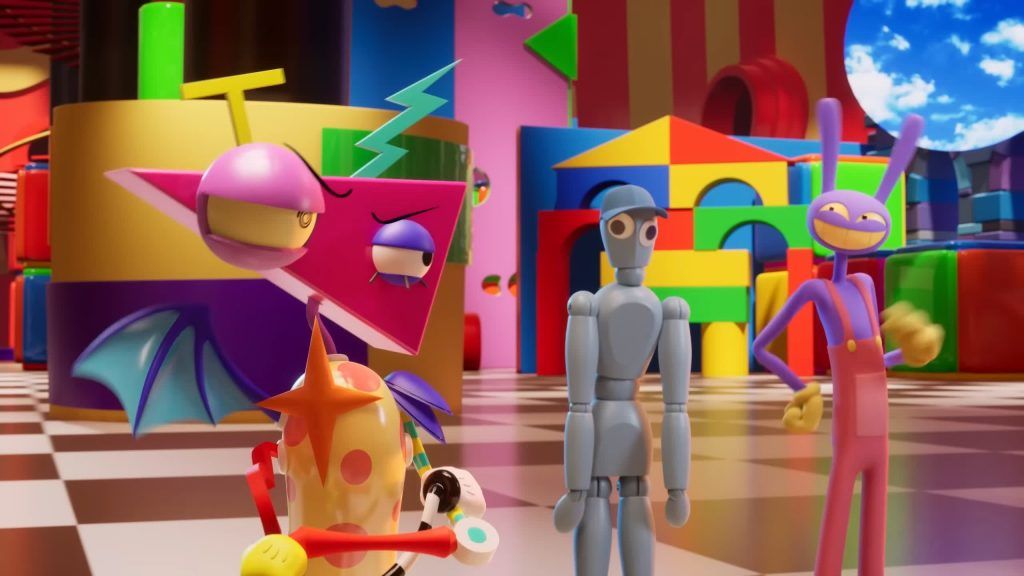
Visually, Ming resembles one of the blank mannequin-style Digital Circus characters, but with a distinct light blue-grey body, a blue baseball cap, and oversized googly eyes. That combination makes Ming look both unfinished and oddly expressive, which fits a character who exists for only a few beats yet still reads as instantly recognizable.
The eyes matter more than they first seem to. Unlike the more neutral mannequins used as background NPCs, Ming’s eyes look decorative rather than controllable, reinforcing the idea that the character was assembled as a highly specific gag construct instead of a fully functional resident of the map.
Personality Traits and Behavior
Ming’s personality is built around a dry, self-aware refusal to let Caine control the meaning of the joke. They introduce themself, correct the tone of the moment, and push back against being reduced to a punchline, which gives the character a surprisingly sharp sense of agency for such a brief NPC cameo.
That attitude gives Ming a meta quality without turning them into a lore-heavy figure. The humor comes from timing, diction, and the sudden seriousness with which Ming treats a stupid pun, making the character feel like a miniature satire of how the circus creates and discards meaning on the fly.
Relationships With Other Characters
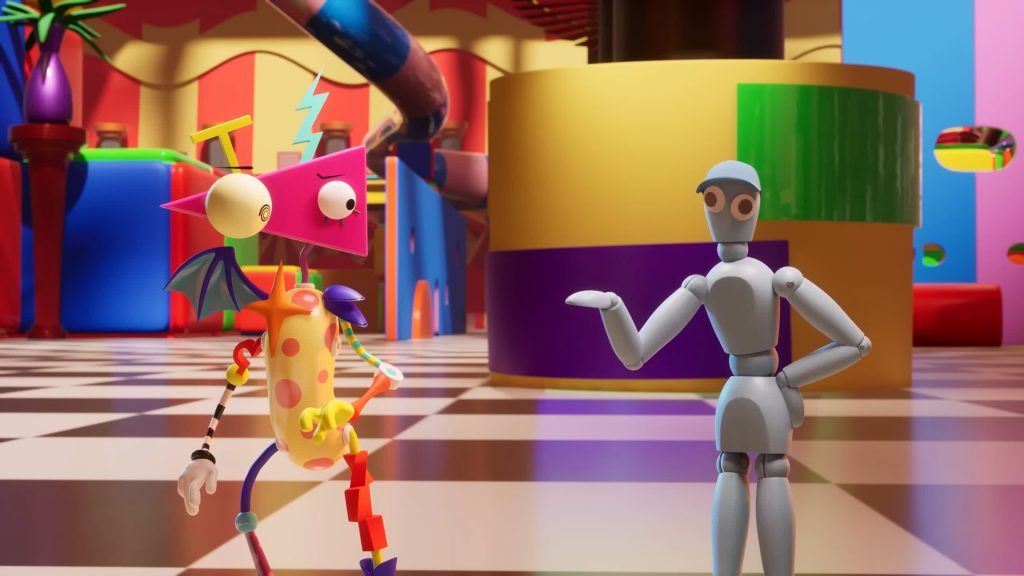
Ming’s most pointed interaction is with Zooble, whose confusion and assumptions set up the character’s entrance. Even in that tiny exchange, Ming reads as the kind of NPC who notices social foolishness instantly and has no patience for being misread by the humans or by the ringmaster.
The character’s relationship to everyone else is therefore less emotional than functional. Ming exists to expose a flaw in the room – people assuming too quickly – and then vanish once that flaw has been mocked. That is why the role feels so cleanly defined despite the limited screen time.
Current Status Through Episode 8
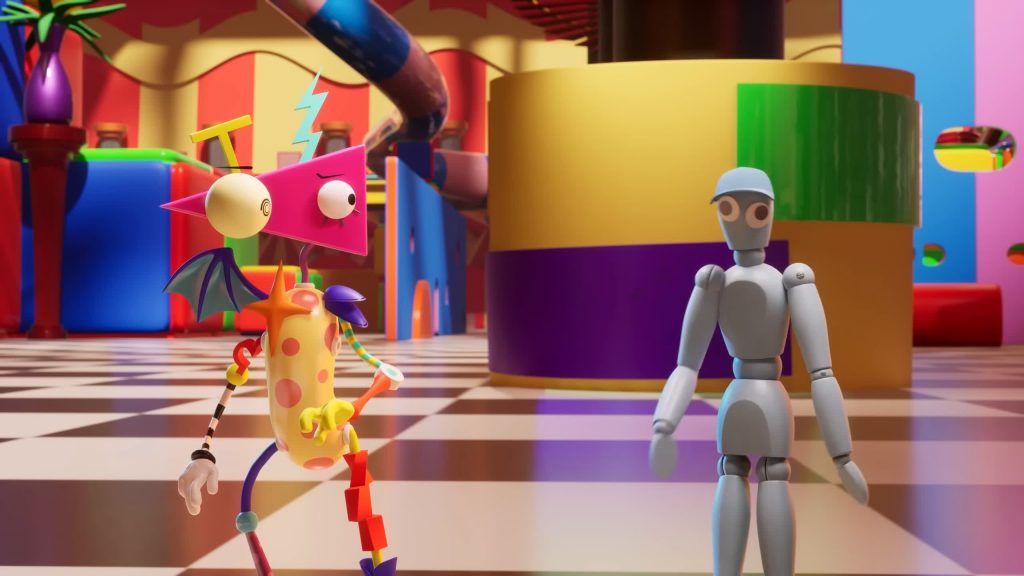
Through Episode 7, “A Day at the Beach”, Ming does not return, which preserves the character’s impact as a one-scene disruption rather than turning them into a recurring background fixture. That absence actually helps the joke age well: Ming remains tied to a single, perfectly timed entrance.
By the time the series reaches Episode 8, “hjsakldfhl”, the story has shifted into heavier revelations, Caine’s instability, and endgame-level tension, yet Ming is still kept out of the narrative. As a result, the character stands apart from the show’s larger mythology and remains memorable precisely because the series never tries to over-explain them.
Voice Actor and Localization
In the original English version, Ming is voiced by Chris O’Neill, better known online as OneyNG, and the role sits neatly inside the broader Digital Circus voice cast as a tiny but instantly quotable performance. The delivery is brief, flat, and exact, which is exactly what the joke needs.
That language dependence also explains why several dubs rebuild the name entirely rather than keep “Ming” unchanged. Localization notes tied to the character list alternatives such as Gerung in German, Pu in Polish, and Kiiy in Russian, showing how the character is designed around the mechanics of a punchline more than around a stable in-universe identity.
Symbolism and Community Appeal
As a mannequin NPC, Ming belongs to the same strange comic-horror tradition as side figures like Ghostly: characters who appear briefly, leave a disproportionate impression, and help define how elastic the Digital Circus can be from one scene to the next. Ming just does it through verbal wit instead of atmosphere.
Ming also stands out because, unlike adventure-specific threats such as Angel, the character is not built around danger, chase energy, or visual horror. Their entire function is rhetorical: stop the scene, embarrass the assumption, and leave.
That purity of purpose explains why Ming continues to stick in fan discussions alongside oddball NPCs like the Gloinks. Even without more screen time, Ming feels like the kind of joke-character only this series could invent – absurd, efficient, and weirdly unforgettable.